
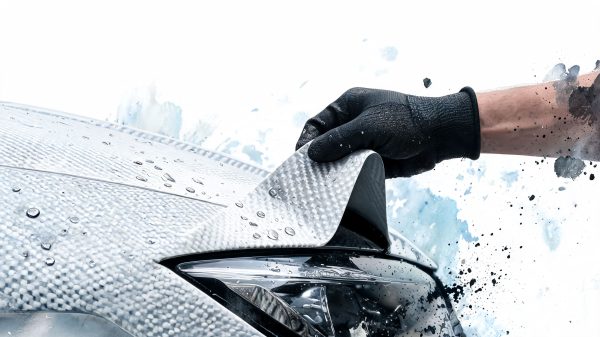
Your hood still looks fine, but it doesn't say anything. The paint is stock. The trim is ordinary. You want a custom look that feels sharper than a decal alone, but you're not ready to commit to repainting panels or buying real carbon fiber parts.
That's where white carbon fiber wrap fits. It gives you texture, contrast, and a more technical look than plain white vinyl, without turning the job into a permanent decision. For Jeep owners, truck builders, and tuner fans, it's one of the easiest ways to change the personality of a vehicle in a weekend.
Interest in this category isn't slowing down. The carbon fiber wrap market was valued at USD 1.91 billion in 2024 and is projected to reach USD 3.0 billion by 2030, according to Grand View Research's carbon fiber wrap market report. That same source notes search interest peaks in June and October, which tracks with what a lot of shops see in practice. People start projects before summer events, trail season, and fall show runs.
Giving Your Ride a Modern, Custom Edge
White carbon fiber wrap works because it lands in the middle ground most DIY customizers want. It's more aggressive than a plain white panel wrap, more flexible than painted accents, and far less risky than replacing parts just to chase a look.
On a Jeep, it can break up big flat body sections and make a hood or cowl stand out. On a truck, it can add contrast without going full chrome or blackout. On a tuner car, it gives you that motorsport-inspired texture while keeping the finish light, clean, and modern.
Where it makes sense
A few spots consistently look good in white carbon:
- Hoods and hood inserts for a statement piece that doesn't require repainting
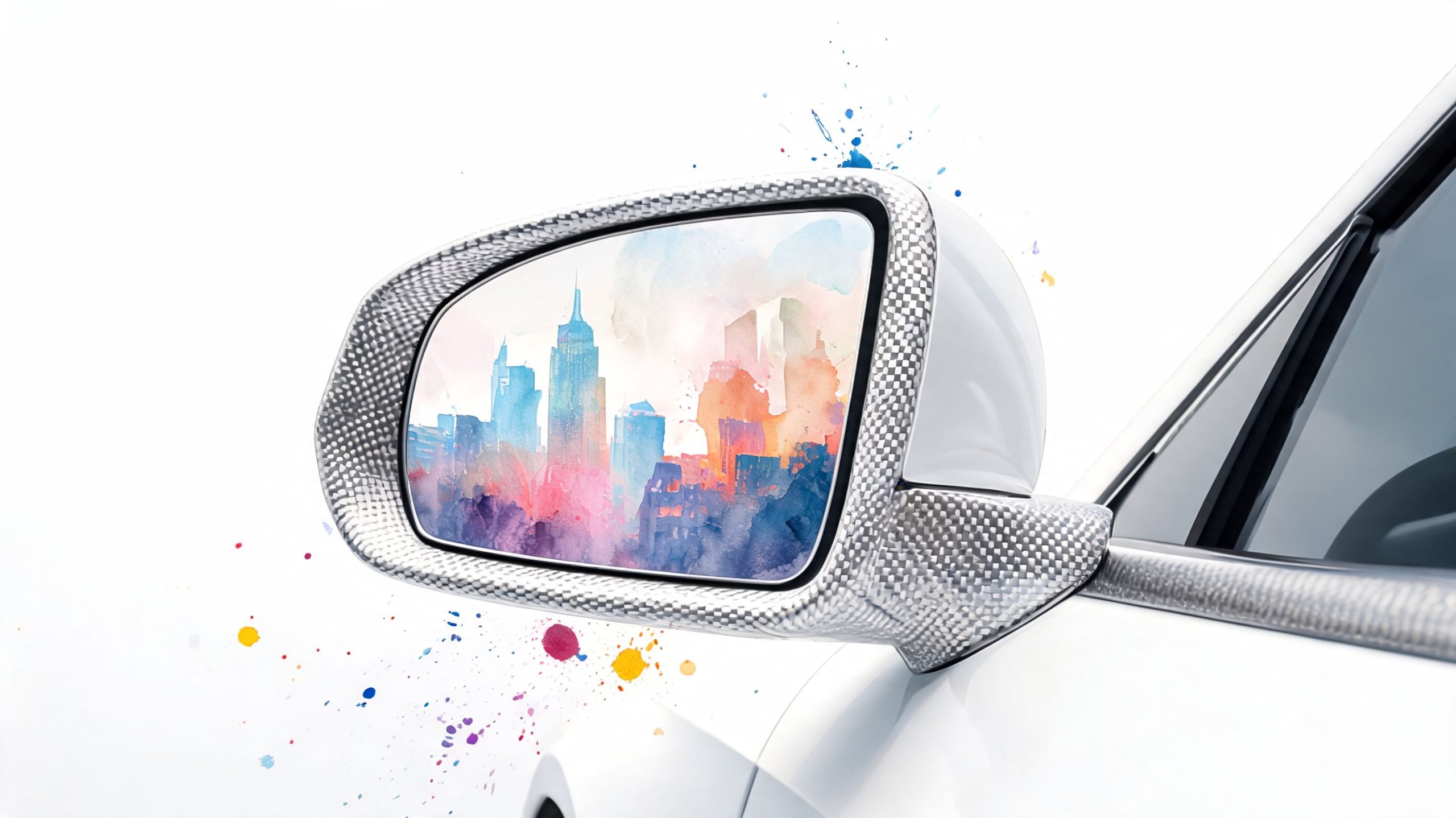
- Mirror caps when you want a small accent with high visual payoff
- Roofs and pillars for a two-tone look
- Interior trim panels on cars that need more texture than gloss vinyl gives
- Spoilers, diffusers, and trim pieces where carbon texture feels natural
Why people choose it
The appeal isn't just style. It's control.
You can test a look without changing the vehicle forever. You can wrap one panel now and decide later if you want to expand the theme. And if you're pairing graphics, white carbon gives decals a stronger backdrop than plain paint in a lot of cases, especially with military tributes, off-road branding, or motorsport-inspired accents.
Practical rule: If you want the vehicle to look customized but still intentional, use white carbon fiber wrap on parts that already read as separate design elements. Hoods, mirrors, spoiler blades, dash trims, and roof sections usually work better than random disconnected patches.
This material also fits the current market for personalization. Buyers want something premium-looking without stepping into premium-part pricing, and wrap gives them that path.
Understanding White Carbon Fiber Wrap
White carbon fiber wrap is a vinyl film with a carbon-style texture or pattern. It's designed to imitate the woven look of real carbon fiber, but in a white finish that reads cleaner and brighter than the typical black or charcoal version.
Some films are matte and textured. Others add gloss over the pattern so the weave pops under light. The finish changes the whole personality of the job.
Texture matters more than color alone
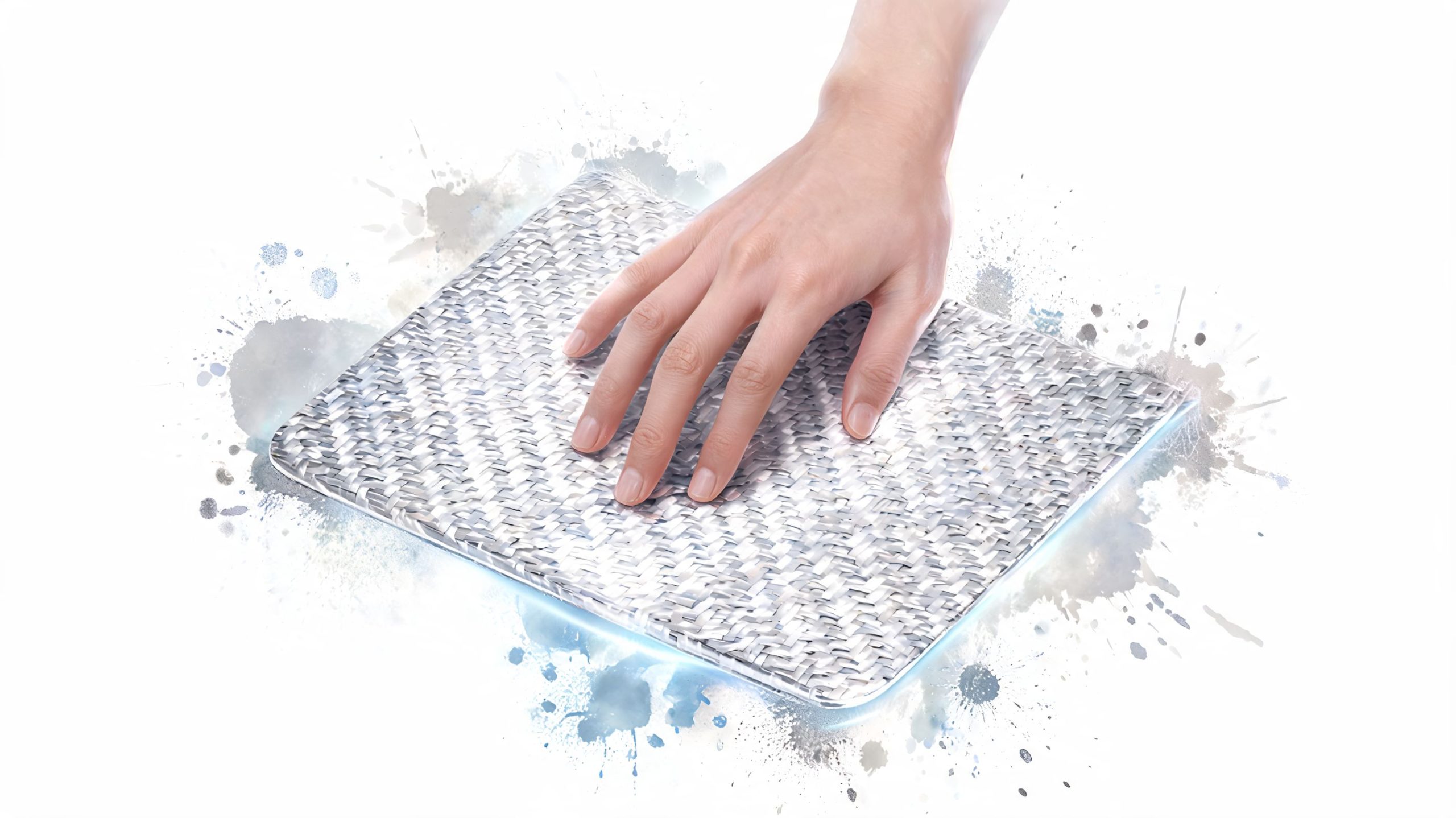
A lot of buyers shop by color first and regret it later. With white carbon, the surface character is what decides whether the wrap looks subtle, high-end, or cheap.
White carbon fiber wrap behaves much like wood finishes, where the same material appears raw, satin, or polished based on its top layer. A flatter textured film generally looks tougher and fits better on off-road builds. A glossier version tends to suit show cars and cleaner street builds.
Common terms you'll see include 3D, 4D, 5D, and 6D. Brands don't always use those labels the same way, so don't treat them like a strict industry standard. In practice:
- 3D usually means a more visible, tactile texture
- 4D and 5D often add more sheen and depth
- 6D is typically sold as a deeper, glossier visual effect
When buying, product photos help, but hand-feel and install behavior matter more.
Cast film and calendered film
This is one of the biggest buying decisions, especially for DIY work.
Cast vinyl is the better choice for complex shapes. It conforms more easily around curves, recesses, and edges. If you're wrapping mirror caps, hood vents, door handles, or contoured trim, cast film gives you a much better chance of a clean finish.
Calendered vinyl is usually the budget option. It can work on flatter sections and simpler accents, but it doesn't like deep channels or compound curves nearly as much. For small trim pieces or short-term looks, it may be fine. For harder panels, it's often where frustration starts.
A good example of a purpose-built film is Vvivid XPO White True R Carbon Fiber. It's listed at 3.9 mil thickness with a 5 to 7 year outdoor lifespan, and its polymer blend is designed to match automotive surface expansion and contraction in temperatures from -40°F to 180°F, which helps prevent peeling or delamination on vehicles exposed to real weather, as detailed on the Vvivid XPO White Carbon Fiber product page.
What you're actually buying
When you buy a quality white carbon fiber wrap, you're paying for four things:
- A believable pattern
- A film that can stretch without failing
- An adhesive system that allows repositioning
- A finish that stays consistent after heat and post-heating
Cheap white carbon usually fails in two places first. Around edges, and in the way the pattern catches light. If the weave looks fake from a few feet away, the whole job feels off.
Key Advantages and Potential Downsides
White carbon fiber wrap has real strengths, but it also exposes bad prep and rushed installation faster than plain vinyl does. That's why some jobs look sharp for years and others start lifting at the first edge.
What it does well
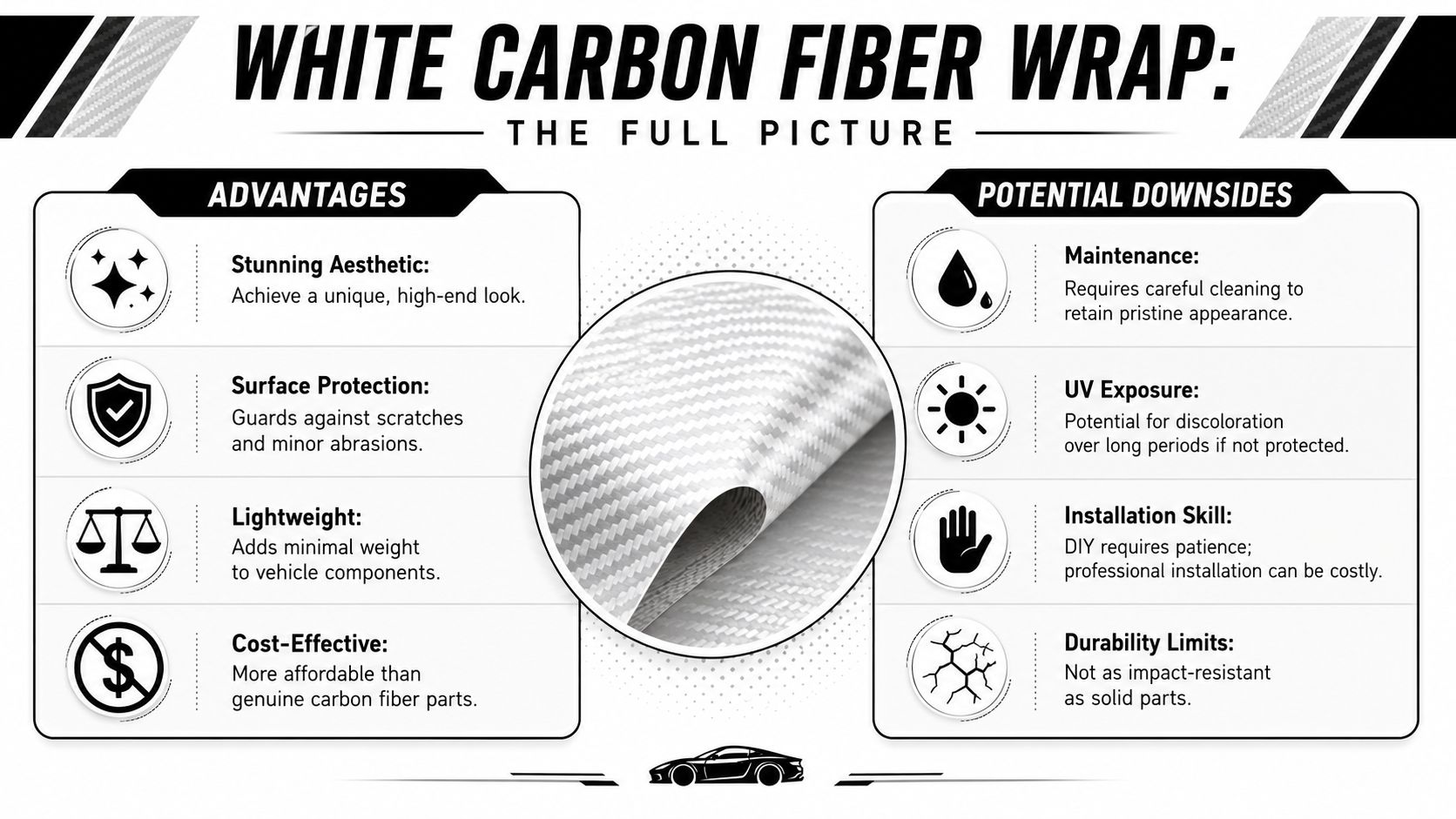
The biggest win is visual. White carbon gives you a performance texture that plain gloss or matte white can't replicate. It adds depth without needing bodywork or a permanent finish.
It also offers a sacrificial layer over the surface underneath. That won't make it invincible, but it can help take the abuse of light scratches, normal washing, and day-to-day wear better than bare paint alone.
Other strong points:
- Removability means you can change direction later
- Low added weight makes it practical for accent pieces
- Panel-by-panel flexibility lets you customize in stages
- Good contrast for overlaid graphics makes it useful for themed builds
Where people get burned
The biggest downside is that white shows mistakes. A trapped speck of dirt, a crooked pattern line, or silvering around an edge stands out more than it would on darker film.
DIY installers also run into trouble when they treat carbon-textured wrap like regular flat vinyl. It isn't the same. Stretch it too far and the pattern distorts. Overheat it and the finish can change. Underheat it and edges may not stay put.
A few trade-offs matter more than buyers expect:
- Cleaning takes more care because white surfaces reveal grime faster
- Heavy texture can hold dirt more than a smooth gloss film
- Cheap film can look plasticky under direct sun
- Tight recesses punish poor technique
A bad wrap job looks worse than stock. That's especially true with textured white film, because your eye catches every flaw.
For the right owner, those trade-offs are manageable. For someone who wants zero maintenance and zero learning curve, a simpler finish may be the better call.
Top Automotive Applications for a Custom Look
Some materials look better in theory than on the vehicle. White carbon fiber wrap isn't one of them. Used in the right places, it can transform a build without making it feel overdone.
Jeep and off-road builds
Jeep owners usually get the best results when they use white carbon as a functional-looking accent, not as random decoration. Hood centers, cowl sections, dash panels, and hardtop trim pieces all make sense because they already read as separate zones.
For trail rigs, a flatter textured white carbon tends to work better than a high-gloss version. It hides light scuffs a little better and doesn't create the same polished show-car vibe that can look out of place on an off-road setup.
A common pairing that works well is white carbon on a hood insert with a layered insignia, custom badge, or unit-themed graphic over the top. If you're designing your own overlay, a make-your-own custom car decal gives you more control over size and spacing than trying to force a generic sticker into a textured panel.
Trucks and daily-driven builds
Trucks benefit from broad, deliberate use. Roof sections, mirror caps, tailgate trim, and upper hood areas are the cleanest places to start.
What usually doesn't work is scattering the same material across too many unrelated parts. One wrapped trim piece can look intentional. Seven can look like leftover material.
Good truck applications include:
- Roof wrap for a two-tone break
- Mirror caps for a subtle modern accent
- Center hood area on sport trucks
- Interior dash and console trim on work trucks that need some personality
Tuner cars and street builds
On tuner platforms, white carbon works best where factory trim already hints at performance styling. Mirror caps, spoilers, interior bezels, radiator shrouds, and roof spoilers all make sense.
This is also where layering gets interesting. White carbon can serve as a background panel for number decals, script graphics, or minimalist branding. The key is restraint. Let the texture support the graphic instead of competing with it.
A walkaround video can help you judge how texture reads in motion and under changing light:
Pairing it with other decals
When you combine white carbon with another graphic element, contrast is everything. Black, charcoal, dark metallic, and clean line art usually read best over white textured film.
Use these rules:
- Keep the overlay simple when the texture is bold
- Avoid tiny intricate shapes on heavily contoured areas
- Test placement with masking tape first before peeling backing
- Leave breathing room around the graphic so the pattern still shows
Done right, the panel looks designed. Done wrong, it looks stacked.
Wrap vs Real Carbon Fiber vs Other Vinyl
If you're deciding between wrap, real carbon fiber, or a standard white vinyl, the right answer depends on what you care about most. Some owners want actual material performance. Most want appearance, manageable cost, and the option to change their mind later.
The strongest case for white carbon fiber wrap is value. A vinyl wrap that mimics genuine carbon fiber is typically 70 to 80 percent less expensive than buying and installing real carbon fiber composite parts, according to the MarketsandMarkets carbon fiber wrap release. That gap is why wraps keep winning on hoods, trim panels, mirror caps, and cosmetic accents.
White Carbon Fiber Wrap vs. Alternatives
| Feature | White Carbon Fiber Wrap | Real Carbon Fiber Part | Standard White Vinyl Wrap |
|---|---|---|---|
| Cost | Lower entry cost for the look | Highest cost | Usually simpler and budget-friendly |
| Appearance and texture | Carbon-style weave with visual depth | Genuine material and authentic structure | Smooth finish with no carbon texture |
| Weight | Minimal added weight as a film | Can reduce weight depending on the part | Minimal added weight as a film |
| Durability | Good for surface styling and everyday use | Best when you need an actual structural part | Good cosmetic coverage on simple surfaces |
| Installation difficulty | Moderate, especially on curves and recesses | Part replacement, fitment, and finishing may be required | Often easier than textured wrap |
| Repairability | Rewrap the affected section | Repair or replace the part | Rewrap the affected section |
| Best use case | Accent panels, trim, custom looks | Functional performance or premium builds | Clean color change without texture |
When real carbon fiber is worth it
Real carbon is the right call when the part itself matters. If you're replacing a spoiler, splitter, interior panel set, or another component because you want the actual material, wrap won't replace that.
But a lot of buyers don't need the part. They need the look. That's a different purchase.
When standard white vinyl wins
Plain gloss or matte white vinyl is still the better choice if you want a cleaner, simpler style. It also works well for windshield strips, broad flat panel accents, and designs where texture would fight the rest of the vehicle.
That's especially true when the vehicle already has strong styling lines and doesn't need extra pattern. A custom text windshield banner decal on a clean white or contrasting background can sometimes do more for the overall look than textured wrap on multiple small parts.
If you're chasing a premium visual effect without premium-part cost, white carbon fiber wrap is the sweet spot. If you're chasing actual composite performance, it isn't.
Installation and Maintenance Best Practices
A clean install starts long before the backing paper comes off. Most failures blamed on the wrap are really prep mistakes, edge mistakes, or heat mistakes.
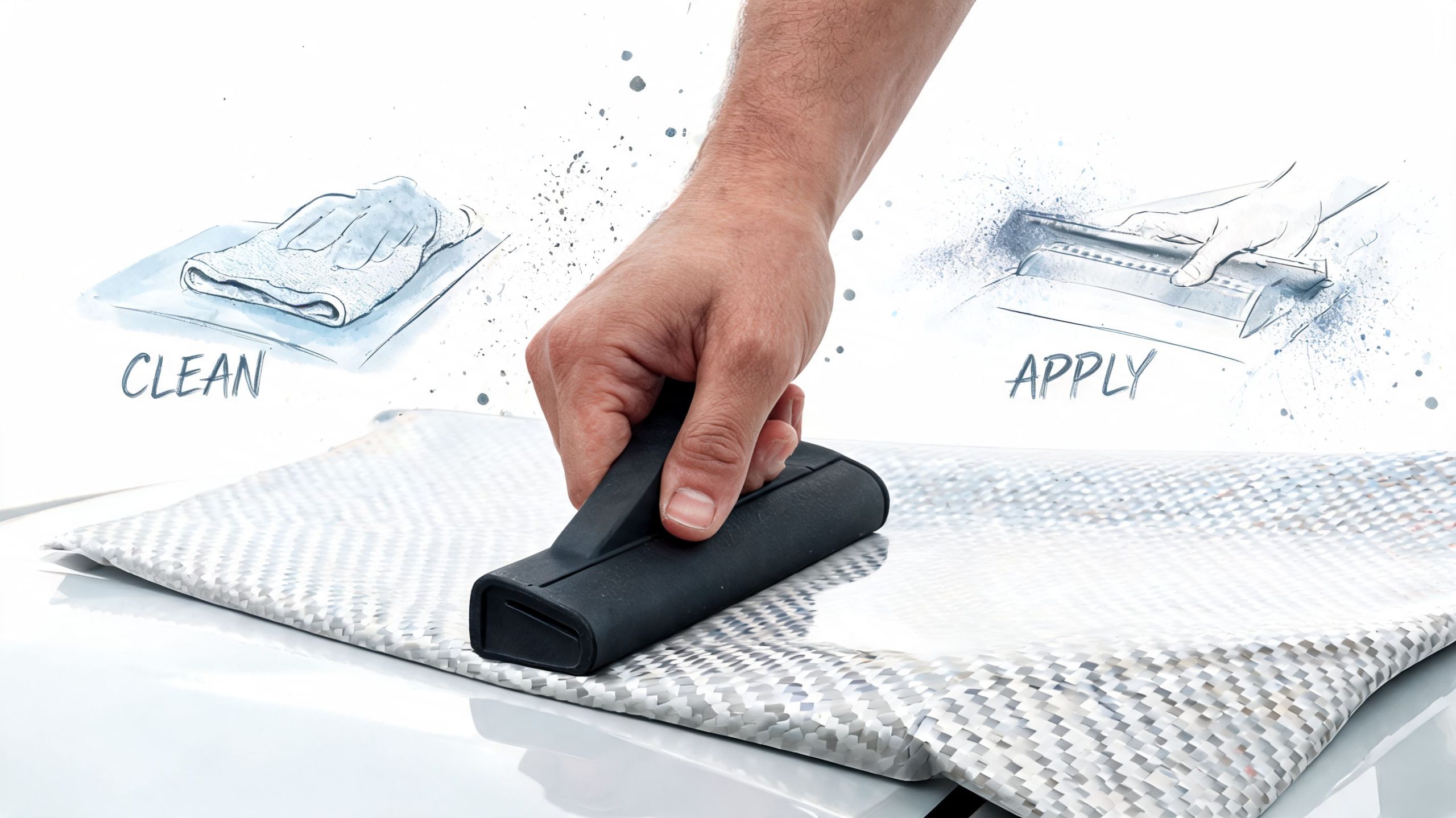
What to do before the film touches the panel
Wash the panel. Degrease it. Then inspect it in good light. If you can still feel wax residue, dust nibs, or adhesive from an old decal, the wrap will show it.
For DIY work, a controlled environment matters more than people think. Wind, direct sun, and dirty garage air make simple jobs harder fast.
Use basic wrap discipline:
- Measure bigger than you think you need. A little extra material gives you room to align pattern and manage edges.
- Dry-fit first. Hold the piece in place and identify deep recesses, corners, and relief-cut areas before peeling liner.
- Work from the center outward. That helps control air and keeps the pattern from drifting.
- Use heat to relax the film, not to force it. If you're pulling hard, stop and reset.
Why better film is easier to install
Not all adhesives behave the same. High-quality cast films such as Avery Dennison SW900 use dual-layer technology and EZ Apply RS™ air-release adhesive, which can reduce professional installation time by 20 to 30 percent and gives DIY installers more repositioning room on curved parts like hoods and door handles, as described on the Avery Dennison SW900 White Carbon Fiber listing.
That forgiving adhesive behavior matters most on the parts people struggle with first. Mirror caps. Hood corners. Door-handle cups. Tight trim transitions.
If you're adding a top-edge graphic after wrapping glass or nearby trim, a pre-cut piece like this Corvette windshield banner decal shows the value of using material that's already sized and transfer-taped instead of hand-cutting every element from scratch.
Don't overstretch textured film to chase one-piece perfection. A smart seam in a low-visibility spot looks better than a distorted pattern across the entire panel.
Keeping it looking good
Maintenance is straightforward if you stay consistent.
- Wash gently with non-abrasive tools
- Remove bugs and road film early before they stain textured areas
- Avoid aggressive polishing on textured finishes
- Check edges after heat cycles on newly wrapped parts
Textured white wraps reward regular cleaning. Neglect shows quickly, especially on front-end accents and lower panels.
Frequently Asked Questions About White Carbon Fiber Wrap
Is white carbon fiber wrap really waterproof?
It's better to think of it as weather-resistant, not magic. Many products are marketed as waterproof, but applicator feedback indicates white variants can have 10 to 20 percent higher water ingress than gloss blacks because of material porosity, according to this YouTube applicator discussion on exterior waterproof carbon fiber vinyl.
That doesn't mean white carbon can't be used outside. It means edge sealing, post-heating, and proper installation matter even more on vehicles that see mud, rain, pressure washing, or marine exposure.
Can I put a decal on top of white carbon fiber wrap?
Yes, but only if you treat it like a layered system. The same applicator feedback notes that success depends on using a quality cast vinyl decal like Oracal, prepping both surfaces well, and post-heating so the top graphic doesn't lift.
The mistake is stacking cheap decal film on textured wrap and expecting it to bond like glass. Simple shapes and solid contact areas work best.
Does textured white wrap get dirtier than gloss white?
In practical use, yes. Texture gives grime more places to hang on, especially around the front end, lower doors, hood vents, and trail-driven panels.
That doesn't make it a bad choice. It just means you should match the finish to how you use the vehicle. If you want the easiest cleaning routine, gloss is easier. If you want more visual depth and don't mind a little extra upkeep, white carbon is worth it.
Is it a good DIY project for a first timer?
Yes, if you start small. Mirror caps, interior trim, and flat accents are realistic. Full hoods with vents, aggressive curves, or complex recesses are where beginners usually waste material.
A first project should teach control, not test your patience.
If you're ready to personalize your ride with graphics that fit the look you're building, Custom Sticker Shop is a solid place to start. They're a family-run, veteran-friendly shop in Topeka, Kansas, making American-made automotive decals and graphics for Jeeps, trucks, tuner cars, military tributes, and everyday custom builds. Whether you need a windshield banner, hood graphic, or layered decal to pair with white carbon fiber wrap, they offer durable pre-spaced designs that install clean and ship fast.