
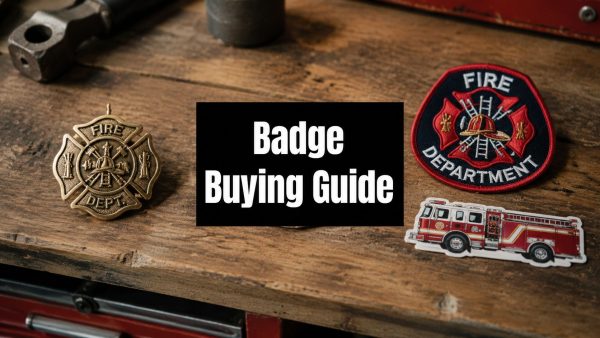
You're probably standing in the garage or scrolling on your phone, trying to turn a good intention into something you can put on a truck window, helmet, or display shelf. That's usually where fireman badges for sale gets searched, and it's also where people get tripped up, because the same phrase can mean a metal pin, a sewn patch, or a vinyl decal.
If you buy the wrong type, the result looks off fast. A rigid badge belongs on a uniform or in a case, a patch belongs on fabric, and a decal belongs on glass or paint. Once you sort that out, the rest of the decision gets a lot easier.
What Most Buyers Actually Mean by Fireman Badges for Sale
A lot of buyers start with the same thought, they want a tribute that feels right on a truck, a helmet, or a keepsake case. The problem is that fireman badges for sale can point to very different products, and the listing photo doesn't always make that obvious. I've seen people order a metal emblem when they really needed a rear-window decal, then wonder why it won't mount the way they expected.
That confusion usually falls into three camps. One buyer wants a metal duty-style badge that looks authentic in a display case. Another wants an embroidered patch for a gear bag or jacket. A third wants a vinyl graphic for glass, paint, or a locker door.

Start with the surface, not the photo
If the badge is going on a vehicle window, the item needs to behave like a decal. If it's going on a jacket, duffel, or turnout bag, it needs to handle stitching or heat application. If it's going into a shadow box or memorial frame, a rigid metal piece makes more sense.
Practical rule: choose the product by where it lives, not by how sharp it looks online.
That's the first filter I use with buyers. A parent buying a tribute for a firefighter's pickup doesn't need the same thing as a retiree ordering a keepsake for a shelf. The safest path is to identify the use case first, then compare materials and finish after that.
The Three Main Types of Fireman Badges
The market is easier to understand once you separate the three product families. A metal badge is a solid, raised piece meant to resemble a duty emblem. An embroidered patch is stitched thread on a fabric base. A vinyl decal is a graphic cut or printed for glass, paint, or smooth indoor surfaces.
Metal badges
Metal badges are the closest thing to a traditional duty piece. Public-safety badges are typically made from solid brass or nickel-silver alloy, then finished with electroplating so they hold detail and resist everyday wear, sweat, and moisture. The face is often color-filled with baked enamel or epoxy to keep insignia contrast readable after handling. SymbolArts on fire badge materials
A brass Maltese-cross pin on a uniform shirt is the classic example. It feels substantial, carries a formal look, and belongs in settings where you want a badge to read as a physical object, not just an image.
Embroidered patches
Patches are the middle ground. They're sewn or heat-applied to fabric, so they work on jackets, gear bags, blankets, and tactical-style apparel. They're softer, lighter, and usually less formal than a metal badge.
I like patches when the buyer wants visible tribute without the stiffness of metal. They hold up well on fabric, but they're not the right choice for glass or painted body panels.
Vinyl decals
Vinyl decals are the workhorse for vehicles. A rear-window decal, a cab-side tribute, or a locker graphic all benefit from a material that bends with the surface and installs cleanly. A vinyl option also gives you the most flexibility on color, size, and placement.
If you're shopping for a truck or SUV, this is usually the category that matches the job. If the surface is smooth and exposed, vinyl usually makes more sense than thread or metal.
Materials, Finishes, and What They Cost You Over Time
The cheapest-looking choice often costs more later, just in frustration instead of cash. Brass and nickel-silver give you the weight and crisp detail people expect from a badge, while vinyl gives you flexibility and easier placement. The trade-off is simple, metal feels more permanent, vinyl fits more places.
Brass, nickel-silver, and vinyl behave differently
Brass is the classic badge material. It has the stiffness to hold engraved detail and a familiar warm tone, but it wants basic care if you're carrying it daily or storing it where moisture gets trapped. Nickel-silver has a cooler tone and is often chosen for plated commemorative pieces because it keeps a clean, bright look.
Printed vinyl is the practical choice for windows and smooth body panels. It doesn't try to imitate a duty badge in three dimensions, it functions as a visible graphic that can live outdoors on glass. That makes it a better fit for a truck than a shelf piece.
Match material to exposure
A badge in a display case has a different life than a badge on a uniform shirt. A uniform pin sees abrasion, pocket pressure, and frequent handling. A window decal sees sun and weather, so the key question is whether the material is made for UV exposure and easy removal.
| Material | Best For | Typical Lifespan | Care Notes |
|---|---|---|---|
| Brass | Metal duty-style pins and uniform badges | Long-term with routine polishing | Wipe dry, avoid moisture traps |
| Nickel-Silver | Plated pins and commemorative pieces | Moderate to long-term, depending on use | Use a gentle cloth, skip abrasive polish |
| Printed Vinyl | Vehicle decals and window graphics | Outdoor use depends on the vinyl grade | Soap and water, no harsh solvents |
| Thread | Sewn patches and fabric gear | Long-term on fabric with normal wear | Wash according to garment care |
If you're buying for a truck window, you're paying for adhesion and outdoor behavior, not for the mass of a metal badge. If you're buying for a keepsake case, the opposite is true.
Sizing, Placement, and Customization Options
Most ordering mistakes happen after the buyer picks the right product family. The next question is size, and size changes everything on a vehicle. A small coupe rear glass has less usable space than a full-size truck, and that difference should shape the layout before anyone starts cutting artwork.
Pick the size by viewing distance
For side glass or a corner window, smaller decals are usually the cleaner choice. Window graphics in the 3 to 6 inch range are common when you want the tribute visible without covering too much glass. On a larger rear window, you can move bigger and still keep the graphic balanced.
Placement matters just as much. A lower corner on a side window feels subtle. The center of a rear window reads louder and works better when the badge is meant to be seen from behind. Cab sides and body panels need more restraint, since a design that looks perfect on glass can feel oversized on paint.
Customize for clarity, not clutter
Most buyers ask for a name, unit text, badge number, or a Maltese-cross variation. Those are useful additions when they help the tribute read cleanly. They become a problem when the layout tries to say too much in too little space.
The cleanest designs usually keep the main badge shape intact and use the extra copy sparingly. If you want a rear-window banner style instead of a compact decal, a dedicated layout like custom text windshield banner decal stickers makes the spacing easier to control. That matters on a real vehicle, because text that looks fine on a screen can get crowded fast once it's stretched across curved glass.
A simple rule helps here:
- Small glass area: keep to a compact badge, name, or initials.
- Wide rear window: use a fuller graphic with room around the edges.
- Painted panel: choose a layout with stronger contrast and fewer tiny details.
- Gift or memorial piece: prioritize legibility at arm's length, not road distance.

Department, Legality, and Impersonation Considerations
This is the part most listings skip, and it's the one buyers should take seriously. A tribute badge and an official-looking badge are not the same thing, especially on a public-facing surface like a car or truck. Many jurisdictions restrict the use of official seals, rank language, or designs that imply active duty when the wearer or owner isn't authorized.
What to avoid
An exact replica of a city fire department shield is risky if it includes the department name, seal, or rank structure. A design that looks like official identification can create confusion even if the buyer only meant it as support. That's why wording and symbol choice matter as much as shape.
What usually works better
A generic Maltese-cross decal is a safer tribute choice because it signals support without copying a specific department credential. Personal text like a family name, memorial line, or simple firefighter tribute wording is usually a cleaner route than official insignia. Placement also matters, since a badge centered where a credential might normally sit can be read very differently from a small memorial decal on a rear window.
Safer buying habit: if the design could be mistaken for a real department credential at a glance, slow down and simplify it.
If you want a public-facing tribute on a truck or window, choose symbols that honor the profession without mimicking an active badge. A response-team style decal, like truck decals response team decal stickers, can give you the look of service support without crossing into official identity. That distinction protects the buyer and keeps the tribute readable.
Installing and Caring for Vinyl Fireman Badges
Vinyl installs go wrong for predictable reasons. The surface wasn't clean enough, the decal was rushed, or the buyer moved it after it touched down. Do the prep once, and the decal usually goes on cleanly.
Install it like you mean to keep it
Start with a clean surface. Wash off road film, then wipe the area with a residue-free cleaner so the adhesive isn't fighting dust or wax. On glass, I prefer to dry-fit the decal with tape first so the spacing looks right before anything sticks.
Use firm squeegee pressure from the center outward. That pushes air out and helps the transfer tape release evenly. Once it's on, let it sit before washing the vehicle, because a fresh install needs time to settle.
Care after install and removal later
For most vinyl graphics, wait 24 to 48 hours before washing, especially if the weather is cool or damp. That gives the adhesive time to bond without early stress. If the decal is on a leased vehicle, removal should be done slowly with gentle heat so residue doesn't linger on the glass or paint.
Metal pins need a different routine. Keep them dry, wipe them with a soft polishing cloth, and don't leave them trapped in a sweaty pocket or a damp gear bag. The finish lasts longer when moisture doesn't sit against it.
For buyers who want to understand the same material logic on apparel graphics, create custom apparel designs is a useful reference point for how adhesive and transfer behavior change by surface. The exact material isn't the same as a vehicle decal, but the install discipline carries over.
How to Evaluate a Vendor Before You Order
A good vendor should answer practical questions without making you decode the listing. If the shop can't tell you what the badge is made of, how it should be used, or how it installs, keep looking. The right seller should make the decision easier, not fuzzier.
Ask five things before you buy
- Material specification: Is it brass, nickel-silver, embroidered thread, or vinyl?
- Outdoor suitability: Is the graphic made for glass, paint, or indoor display?
- Installation setup: Does it arrive pre-spaced and transfer-taped, or do you have to align loose pieces yourself?
- Resize flexibility: Will they adjust the artwork if your window, helmet, or case needs a different footprint?
- Fulfillment details: How is it shipped, and what does the return policy cover?
A shop that sells automotive graphics professionally should be able to answer those without hesitation. That includes whether a decal is designed for smooth windows, how it should be applied, and whether the layout can be scaled for a smaller rear glass or a wider truck cab.
Custom Sticker Shop fits that kind of workflow for decal buyers, because it produces American-made Oracal vinyl decals, pre-spaced and transfer-taped for easier installation, and ships as a made-to-order graphic rather than a loose generic sticker. That matters if you're trying to match a tribute badge to a real vehicle instead of a catalog thumbnail.
Fireman Badges for Sale Frequently Asked Questions
How long do vinyl decals last on a truck?
That depends on the vinyl grade and how the truck is used. For outdoor vehicle graphics, a professional-grade vinyl made for windows and body panels is the right starting point, not a craft-store sticker.
Can metal badges be worn by non-firefighters?
They can be bought as collectibles or commemorative pieces, but public display should stay clear of anything that implies official authority. If there's any chance of confusion, choose a tribute design instead.
What's the safest way to personalize without implying official affiliation?
Use a name, memorial line, or family tribute with a generic Maltese-cross style. Avoid department seals, exact shield copies, and rank language that could read as a credential.
What size works for a standard rear window?
There isn't one universal answer, because rear windows vary a lot by vehicle. Start by measuring the usable glass, then choose a size that leaves clean margins around the edges.
If you want a decal that matches the surface instead of fighting it, Custom Sticker Shop makes custom vinyl graphics for trucks, windows, and tribute builds. Visit Custom Sticker Shop to compare layouts, check sizing, and order a fireman badge graphic that fits the vehicle you drive.