
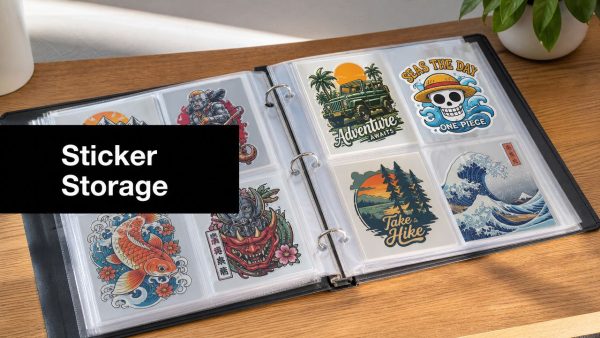
You probably know the feeling. A fresh stack of vinyl decals arrives, you set them on a desk “just for a minute,” and by the end of the week they're sliding around in a shoebox, catching dust, bending at the corners, and hiding the one design you wanted. A sticker storage album fixes that mess by giving each sticker a real place to live, so you can find it, protect it, and enjoy looking through it without flattening the whole collection onto a table.
For vinyl decal collectors, that matters more than it does for a casual childhood sticker stash. Your pieces may come on mixed sheet sizes, with die-cuts, transfer tape, release backings, and the occasional oversized graphic that never fit a random drawer in the first place. A good album keeps the collection readable at a glance while also making sure the stickers stay presentable for gifting, swapping, or resale.
The case for structure becomes obvious once collections get large. A 2022 simulation study for a Panini-style collection found that finishing 670 stickers took an average of 950 packets of 5 stickers each, costing about 3,800 BRL (Wikipedia's sticker album overview). That same source notes a 2016 estimate of 963 packets for a solo album build, with trading cutting the number by 30%, which is a good reminder that albums are not just for storage, they're part of how collectors manage duplicates and partial sets at scale.

Why Your Stickers Deserve a Real Home
The first time a vinyl decal gets bent in a drawer, you usually tell yourself it's fine. Then you notice the edge curl, the dust on the adhesive side, and the way the backing picked up lint from whatever else was rattling around with it. That's the moment a sticker storage album stops feeling like a hobby accessory and starts looking like basic protection.
Three problems it solves at once
A real album handles organization, protection, and display together. Without it, you end up using a pile of workarounds, a box for loose sheets, a folder for favorites, and a separate pile for duplicates that never stays separate for long.
- Dust and lint: Adhesive edges attract debris fast when stickers are left exposed.
- Bending and scuffing: Thin vinyl and die-cuts flatten badly when they're shoved under other items.
- Searching: Once a collection spreads past a few favorites, finding one design means dumping the whole stack.
That's why a structured album is useful early, not just after the collection gets huge. A tidy binder lets you browse by theme, check what you already own, and pull a sticker out without rediscovering the entire pile on the floor. If you ever buy decals for gifting or resale, that same structure also makes it easier to keep clean inventory separate from personal favorites.
A lot of collectors start with loose storage because it feels temporary, but stickers don't stay temporary for long. The designs you like most tend to be the ones you look at, handle, and move around the most, which is exactly why they need a home with some order to it. For a simple example of how people sort themed decals in everyday practice, this cat peeking decal collection shows how quickly a collection becomes easier to manage once it's grouped intentionally.
Practical rule: If you can't grab a specific sticker in seconds, the storage system is already doing too little.
What a Sticker Storage Album Actually Is
At the simplest level, a sticker storage album is just a book or binder with designated sections for stickers. That sounds plain, but the design matters because different collectors want different levels of flexibility. Some people want to rearrange pages constantly, others want a fixed display, and others want something that folds up small for travel.
The three basic formats
Think of the formats like a library catalog.
Binder albums are the editable card catalog. You can add pages, remove pages, and reorganize themes whenever your collection changes. That makes them a strong fit for vinyl decal collectors whose themes keep expanding, especially when new designs arrive in the mail and you want to slot them into an existing system.
Bound albums are more like a published book. The order is fixed, the page count is fixed, and the collection stays neat if you know you won't be changing it much. That can work for a finished set, but it's less forgiving when you keep discovering new designs.
Accordion or file-style albums are the folding reference shelf. They open fast, pack compactly, and work well for quick access. They're handy for travel or for a small holding set, but they're usually not the best answer when you're trying to build a deep, themed library.
The choice is really about how you collect. If you like sorting by Jeep, military, family, hunting, or mixed personal themes, a binder gives you room to keep moving sections around without rebuilding the whole system. If you want a permanent presentation piece, a bound book can work. If you mostly need a grab-and-go carrier, a file-style option is easier to stash in a bag.
The important part is that the album should match your habit, not fight it. A collector who adds designs often will get frustrated fast with a fixed format, while someone who wants a display piece may find a modular binder feels too loose.
Album Types and Materials Compared
The binder itself is only part of the decision. The ring shape, the page style, and the plastic all affect whether your stickers lie flat or slowly start pushing against the spine. A D-ring binder matters more than many collectors expect.
Why the ring shape changes everything
A D-ring keeps pages aligned more evenly than an O-ring. That reduces the curve that builds at the spine, so the pages lie flatter and the sticker backings are less likely to catch, bow, or press unevenly when you flip through the album. If you have ever opened an album that looks puffed in the middle and cramped at the edges, that is the kind of wear D-rings help prevent.
Page style matters too. Pocket pages are the easiest choice for many collectors because they keep individual stickers visible and separate. Full sleeve pages work better for larger sheets, while partitioned pages help when you want multiple small items grouped by theme without mixing them together. For a deeper DIY build, one guide recommends silicone-backed release pages or label backings as insert sheets, then placing them inside page protectors modified into partial pockets so the sheets stay seated but remain easy to remove and reinsert (DIY sticker album guide).
Material choice matters just as much. Archival polypropylene is the safer pick when you care about long-term storage, while standard clear plastic is usually the cheaper shortcut. If the collection includes decals you might resell, gift, or keep in clean condition for years, the extra care is worth it.
Collectors who keep vehicle graphics also feel this difference fast. A themed set built around off-road or Jeep designs, including a piece like this Jeep Life vinyl windshield banner decal, needs pages that can handle larger shapes without wrinkling the backing or forcing the corners to curl.
| Album Type | Page Material | Best For |
|---|---|---|
| D-ring binder | Archival polypropylene | Growing vinyl collections, mixed themes, resale-safe storage |
| D-ring binder | Standard clear pockets | Budget setups and short-term sorting |
| Bound album | Fixed sleeves or printed pages | Permanent, settled collections |
| Accordion/file album | Thin inserts or folder tabs | Travel, quick browsing, small active sets |
A good comparison resource for physical storage planning is storage archive boxes UK, especially if you are thinking about where the extra albums or duplicate stock will live when the binder is not on the table.

Sizing and Capacity for Real Collections
Most album mistakes start with one bad assumption, that one size fits every sticker. It doesn't. A small bumper-style decal, a full sheet of themed vinyl, and a weird die-cut shaped like a vehicle all ask for different pocket sizes and different amounts of breathing room.
Measure the sticker, not the album guess
If you're buying pages for standard sheets, measure the full sheet edge to edge, then choose a pocket that gives the sheet a little margin without letting it slide around. That matters for common sheet formats like 4×6, 5×7, and 8.5×11 because the backing can be larger than the visible art. Oversized or irregular die-cuts need even more attention, since a large Jeep graphic or full-vehicle kit may be too awkward for rigid, narrow pockets.
Loose individual decals are the easiest to sort, but they're also the easiest to lose. Small military insignias, name decals, and sliced bumper-sticker pieces can vanish inside an overbuilt album if the pages are too deep or the dividers are too vague. That's why it helps to think in buckets, not in one giant pile.
Plan for growth, not just today
A binder that looks neat when it's half full can become annoying quickly once you add new arrivals. Leaving roughly 20 percent empty capacity gives the album room to grow without forcing a rebuy or making the pages bow under pressure. That one habit keeps the system useful for longer, and it avoids the cycle of buying an album that feels perfect for two weeks and cramped after the next delivery.
Leave enough slack that flipping pages still feels easy. If the binder needs force, it's already overfilled.
For collectors who buy in waves, that extra space is especially useful when a shipment arrives by USPS or UPS and you need a place to file things immediately instead of stacking them on a desk. A smart album is less about perfection and more about staying ahead of clutter.
A Real-World Organizing System That Works
A Jeep owner with a mixed decal library usually doesn't need a fancy theory. He needs a system that lets him sort military tributes, fishing graphics, family stick figures, and JDM pieces without turning every new arrival into a fresh cleanup project. That's where a themed binder earns its keep.
Build the album like a working catalog
Start with labeled dividers for the main themes you buy. Military, Jeep, Family, Hunting, and JDM work well because they match how many collectors already think about their stickers. A printed cardstock header makes each section obvious, and clear sleeves keep the most-handled pages protected when you browse often.
The workflow matters as much as the labels. Fresh transfer-taped decals should go straight into the correct sleeve with the backing intact, because that keeps the sticker ready for later use while still protecting the finish. If the collection grows, leave one blank section near the back for new arrivals so you're not forced to reshuffle the whole binder every time a package lands.
A clean system also makes it easier to rotate what you see most. The pages you pull out often should sit near the front, while less-used archive pages can move farther back. That sounds small, but it saves time every week and keeps the album feeling active instead of buried.
If you're building decals that are meant to travel, gifting or resale becomes simpler when the collection is already sorted. A similar mindset applies to personal design projects, which is why a make your own custom sticker workflow pairs naturally with a well-labeled binder system.

DIY and Budget Album Builds
You don't need a collector-grade setup on day one. A basic D-ring binder, a pack of clear pockets, and a few repurposed insert sheets can make a perfectly serviceable sticker storage album that grows with you instead of fighting your budget.
Cheap parts that actually do the job
A lot of people start by using silicone-backed release pages or label backings as inserts, then sliding those into pocket pages so the stickers stay supported. Coin-collector pages can work for smaller die-cuts, and mini accordion files are handy when you want to carry a short stack in a bag. The point isn't to make the cheapest possible solution, it's to build something that won't force an immediate replacement.
Skip the cheap O-ring trap. It looks fine on the shelf, but once the album fills up, the pages start curving and the spine stops lying flat. That's the kind of wear that turns a neat binder into a frustrating one.
For a starter build, think in layers. Get a sturdy binder, clear pockets sized to your most common sheets, and simple divider tabs. If you later upgrade to a larger binder, the pages can move with you, which keeps the first purchase from becoming waste.
A good storage mindset also pays off outside the binder. When your supplies, back stock, and finished decals share the same room, learning to maximize storage space easily helps prevent your collection from spreading into every free surface.
A budget album isn't about pretending to be archival-perfect. It's about giving your stickers a cleaner home now, while leaving a path to upgrade later without starting over.
Common Mistakes and How to Avoid Them
The biggest mistake is treating every page like a storage bin. Once you overstuff a sleeve, the vinyl curls at the edges, the backing catches, and the album stops flipping cleanly. That's usually the moment the collector starts opening pages less often, which defeats the whole point of having the album in the first place.
The errors that quietly ruin a collection
Mixing incompatible items in the same sleeve is another one. Adhesive-backed stickers, loose memorabilia, and thick printed cards don't behave the same way, and when they share the same pocket, something gets damaged or hard to remove. Skipping dividers creates a different mess, because the album becomes a jumble where themes blur together and new arrivals never land where they belong.
Climate matters too. Heat, humidity, and direct sunlight are hard on paper, plastic, and adhesive surfaces. Even if a sticker looks fine today, repeated exposure can make storage look sloppy later.
Keep the album in a stable place, not near a sunny window or a damp corner. That one habit saves more wear than most accessories do.
Another overlooked issue is separation. If you keep personal favorites, resale stock, and gifting inventory in the same stack, mix-ups happen fast. A simple label system, plus a dedicated section for outgoing pieces, keeps those categories from colliding.
The refresh habit helps as well. One storage guide suggests revisiting the setup every two months and leaving room for growth, which acknowledges that collections change constantly (sticker storage solutions guide). You don't need a full overhaul each time, but a quick reset keeps the system honest.
Choosing the Right Setup for Your Collection
A casual buyer, an active theme collector, and a reseller all need different answers. The trick is matching the album to the job instead of buying a generic binder and hoping it solves everything by itself.
Three collector profiles
Casual buyer: A compact D-ring binder with a handful of clear pockets and a few dividers is enough if you only want to protect favorite decals. Keep the setup simple, start with the right page size, and leave some spare capacity so it doesn't feel full immediately.
Theme collector with hundreds of decals: Go with a sturdier D-ring binder, archival polypropylene pages, and labeled dividers for each major category. This is the profile that benefits most from a growing system, because the binder needs to absorb new arrivals without changing the structure every time.
Reseller or gifter: Use separate sections for personal stock and outgoing pieces, and make the divider labels obvious. Clean separation matters more here than decorative presentation, because mix-ups cost time and create avoidable handling.
A quick shopping checklist keeps the decision grounded. Look for D-ring construction, the right page size for your largest sheet, archival plastic if preservation matters, labeled dividers for theme control, growth margin for new arrivals, and a rotation routine so the most-used pages stay accessible. If a binder can't do those things, it's probably the wrong fit.
If you're ready to build a cleaner home for your decals, Custom Sticker Shop has the kinds of durable vinyl designs collectors usually end up organizing, saving, and gifting. Visit Custom Sticker Shop to browse premium decals that fit neatly into a well-planned album and make your collection easier to keep in order.