
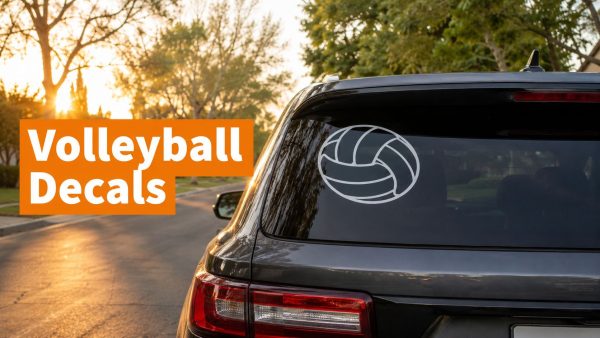
You're in the parking lot after practice, the trunk is full of knee pads and a net bag, and someone asks a simple question. What decal should go on the back window, the laptop, or the water bottle so it looks like the player, not just another generic sticker? That's usually where the buying process starts, and it's also where many players get stuck choosing between style, size, material, and where it should go.
Volleyball decals solve that problem because they turn a sport people already live every day into something visible on the vehicle, gear, or locker room wall. Volleyball's reach is huge, too. The FIVB's history page says the sport began in 1895 in Holyoke, Massachusetts, and now spans 220 affiliated national federations, with an early 1896 report already estimating 200,000 players across YMCA, YWCA, schools, and colleges. The NCVA's history page adds that more than 46 million Americans play volleyball, over 800 million people worldwide play at least once a week, and the game is played in over 60 countries. That's a lot of uniforms, family cars, team trailers, laptops, and water bottles that can carry the same visual identity.
What makes this buy different from grabbing any random sticker is that volleyball buyers usually have a real use case. A player wants something sharp and personal. A parent wants something that survives tournaments and car washes. A coach wants a gift that feels thoughtful instead of rushed. A fan just wants the design to say, clearly, “this is our sport.”
If you're also personalizing another item in the same style, a good example of a name-based decal format is the custom name decal stickers for Yeti tumblers. The same logic applies here, the right decal is less about browsing art and more about matching the graphic to the surface, the audience, and the way the item gets used.
Why Volleyball Fans Are Putting Their Sport on Everything
A lot of volleyball decal orders begin with a familiar scene. A parent gets home from a weekend tournament and notices the car still has snack wrappers in the cup holders, three team shirts in the back seat, and a player who wants something that feels more personal than a generic school sticker. A coach has a similar thought after a season ends, only the question shifts from “what goes on my car?” to “what makes a good team gift?”
The sport already fits daily life
Volleyball fans do not usually buy decals as decoration for decoration's sake. They buy them because the sport already lives in their routine, from practice runs to tournaments to gear that travels everywhere. That is why volleyball graphics show up on cars, windows, laptops, water bottles, trailers, and locker-room doors. The decal becomes a visible marker of identity, not just a design choice.
A good comparison is a name-based decal used on a tumbler or bottle, like the custom name decal stickers for Yeti tumblers. The same principle applies here. The right design fits the object, the setting, and the way it gets used.
The size of the sport helps explain that appeal. The NCVA's history page says more than 46 million Americans play, over 800 million people worldwide play weekly, and volleyball is played in over 60 countries. Those numbers matter because they show the audience is not narrow. A volleyball decal does not need explanation to nearly everyone in a school gym, a parking lot, or a club tournament.
A strong volleyball decal does one job fast, it tells people who the car, bottle, or laptop belongs to before they read a single word.
The best decal is the one that fits the actual use
That is the part many shoppers miss. A player usually wants movement and energy. A parent often wants a name, number, or team reference. A coach may want a design that feels appreciative without being overly flashy. A fan may care more about clean lines and team color match than about complex artwork.
So before you think about fonts or icons, think about where the decal will live. A laptop decal can be small and detailed. A vehicle decal has to read from farther away. A water bottle decal needs a shape that works on a curved, handled surface. Those choices decide whether the decal looks intentional or just pasted on.
The buying process gets easier when you treat the decal as a fit problem first and a style problem second. That mindset helps people avoid a design they like online that does not suit the surface they want.
What Volleyball Decals Are
A volleyball decal is a precision-cut vinyl graphic made to stick to a clean surface and stay there through regular use. That is a different product from a paper sticker with a glossy coat. Vinyl is built for cleaning, weather exposure, and repeated handling, while paper stickers are usually made for short indoor use. If a product page does not say what the material is, you are probably not looking at a decal that will last outdoors.

The main decal types buyers run into
Shoppers usually see three basic types.
- Die-cut vinyl decals. These are cut to the shape of the design, so the background is whatever surface you place them on. That gives a cleaner result on windows, laptops, and painted panels.
- Printed vinyl decals. These use ink for the artwork and a vinyl base to support the image. They work well for detailed graphics, but they still need the right vinyl structure underneath.
- Static-cling decals. These hold by grip instead of adhesive. They suit temporary indoor use and are a poor fit for everyday vehicle exposure.
A quality outdoor vinyl decal usually arrives pre-spaced and taped for transfer. That means the letters or graphic stay aligned while you apply them, then the carrier tape lifts away after you smooth everything down. It is one reason good vinyl decals feel easier to install than they first appear.
What the product page should tell you
A solid listing should tell you whether the decal is meant for glass, painted panels, laptops, or water bottles. It should also make clear whether the item is cut vinyl or a printed sticker. If the description leans on shiny photos but avoids material details, treat that as a warning sign.
The best listings speak like a sign shop, not a souvenir rack. They tell you what the decal is made for, how it is built, and where it will hold up best. That kind of detail matters for a parent comparing team gifts, a coach ordering sideline labels, or someone browsing custom soccer gift ideas and looking for the same kind of practical personalization.
Materials, Thickness, and Durability Explained
Vinyl thickness is usually described in mils, and that number gives you a fast clue about how a decal will handle. For exterior-use products, the common range is 2.5–4 mil. In the provided product example, one volleyball decal lists 2.5 mil vinyl with solvent-based adhesive for exterior application, while another specifies 4 mil printable vinyl rated for up to 5 years outdoors Stickylife volleyball decal. Those numbers are a practical benchmark because thicker films generally handle better, hide substrate texture better, and resist edge lift more effectively in outdoor use.
Why thickness changes the buying experience
Thinner vinyl can still work well in the right setting, especially on smooth indoor surfaces. But if you're buying for a daily-driven vehicle, a bumper, or any surface that sees sun and washing, thickness matters. A thicker film is easier to position without wrinkling, and it tends to settle more confidently on larger panels.
Practical rule: if the decal is going outside and staying there, start by checking the thickness before you fall in love with the design.
Adhesive type matters just as much. The provided product data says solvent-based acrylic adhesives are preferred for smoother long-term bonding on clean, non-porous surfaces like car windows, laptops, and water bottles Stickylife volleyball decal. That's the kind of adhesive language you want to see if the decal has to stay put through weather and handling.
Durability claims need context
Outdoor life expectancy depends on more than one factor. Vinyl thickness, adhesive quality, sun exposure, and installation all affect how long a decal looks good. If a listing says a decal is rated for outdoor use, that's useful, but it still doesn't tell you how the decal will behave on a curved hatch, a tinted rear window, or a textured panel.
Color also matters. UV-stable inks and laminated top coats usually help a printed decal hold color and resist scratches, but those features should be clearly described by the seller. If they're not, don't assume they're included.
For vehicle-oriented shoppers, it's worth comparing the decal to the kind of fit guidance you'd expect from a listing like the vinyl windshield banner decal stickers page. The important part isn't the exact vehicle, it's the mindset, material specs should help you predict real-world performance, not just shape.
Design Options for Every Kind of Volleyball Fan
Most volleyball decal pages show a narrow visual lane, player silhouettes, spikes, sets, serves, hearts, and slogans. That works fine if you already know what you want. It fails when you need the decal to speak to a specific role, like player, parent, coach, or fan.

Match the design to the buyer
A player-focused decal usually works best when movement matters. Spiker silhouettes, setters, and position-specific graphics feel active and direct, which is why they look strong on a laptop or rear side window.
A team spirit decal makes more sense when shared identity matters. Team logos, numbers, school colors, and club names work well on trailers, bumpers, and windows because they read quickly from a distance.
A family or parent-support decal usually needs more warmth than motion. Names, jersey numbers, and simple volleyball accents often do better than busy action art because the point is pride, not performance.
A coach-appreciation design should feel intentional, not loud. A clean text decal or a graphic with a short message often lands better than a high-energy player silhouette.
Beach, indoor, and custom text each solve different problems
Beach-volleyball styles often lean lighter and more casual, while indoor designs usually feel sharper and more structured. That doesn't mean one is better, it just means the visual tone should match the environment. A beach design on a lifted truck might feel playful, while an indoor team mark on a school laptop can feel more official.
Custom text is where a lot of buyers end up once they think through use case. Names, numbers, team years, or a short phrase can make the decal more personal without overcrowding the surface.
If you want broader personalization ideas outside volleyball, the custom soccer gift ideas guide from SoccerWares is a useful reference for how sports-themed gifts can be organized by recipient, not just by graphic style. That same thinking works here, too.
Sizing and Placement on Real Vehicles
The same decal can look sharp on one vehicle and awkward on another if the size is off. A compact coupe has less visual space, so a graphic that works on a pickup can feel oversized quickly. A full-size truck, by contrast, can swallow a tiny decal and make it look like an afterthought.
Choose the location before you choose the size
For windshields, the question is visibility first. Curvature, wiper movement, tint, and rear-window defroster lines all affect how well a decal bonds and how visible it stays. On vehicles with heavy tint or strong curvature, the decal may need a simpler shape and smaller footprint to stay readable.
For side windows, placement is usually easier because the surface is more predictable. These windows often work well for names, team graphics, and simpler silhouettes. On body panels and tailgates, larger designs have room to breathe, but panel contours can create adhesion challenges if the decal is too large or too detailed.
Bumpers are the most forgiving for short text or compact graphics, but they also sit in a rougher environment. Dirt, wash residue, and frequent contact make clean surface prep especially important.
A quick sizing reference
| Placement | Recommended Size Range | Notes |
|---|---|---|
| Windshield | Small to medium | Keep sight lines clear and avoid overly detailed cuts |
| Rear window | Small to large | Works well when defroster lines and tint are considered |
| Side window | Small to medium | Good for names, numbers, and compact logos |
| Body panel | Medium to large | Best for readable team or fan graphics |
| Bumper | Small | Keep the design simple and easy to read |
On vehicles, bigger is not always better. The right size is the one that reads cleanly from a normal viewing distance without fighting the surface.
A practical way to judge fit is to think about the vehicle type. A Jeep, truck, or SUV can carry a bolder layout, while a sedan often needs a tighter composition. If the design has long text, curved glass, or a lot of negative space, test how it would sit across the surface before you order.
Installing and Maintaining Your Decals the Right Way
A good vinyl decal can look expensive, and a rushed install can make it look cheap in five minutes. The surface matters, the temperature matters, and the sequence matters. Most problems come from skipping the prep.
Start with clean, dry, and patient
Wash the area first, then wipe it with isopropyl alcohol so you remove oils, wax, and road film. Let the surface dry fully. If the panel is dusty or greasy, the adhesive has to fight the contamination instead of bonding to the surface.
When you're ready to place the decal, line it up before you press hard. Use tape or a light hinge method if the design is larger than a palm-sized piece. Once it's aligned, smooth from the center outward with a squeegee so air moves toward the edges instead of getting trapped underneath.
Practical rule: don't rush the peel. If the transfer tape comes off too fast, bubbles and lifted edges usually follow.
Keep it looking clean after installation
For maintenance, stick to gentle soap and water. Harsh solvents can shorten the life of the finish, especially on printed decals. Regular hand washing is safer than aggressive scrubbing, and it gives you a chance to spot early edge lift before it grows.
If you use automated car washes, watch the first few passes carefully. Strong brushes and high-pressure edges can stress a decal that wasn't fully bonded yet. A decal that's been installed correctly usually settles in well, but the first stretch of use tells you a lot.
Removal should protect the surface
When it's time to remove the decal, heat helps. Warm the vinyl gently, lift a corner, and peel slowly so the adhesive releases cleanly. That approach reduces the chance of residue on glass and lowers the risk of stressing paint.
If you're choosing a decal for a leased vehicle or a vehicle you plan to sell, this matters more than many realize. Easy removal is part of the product's value, not an afterthought.
Ordering From Custom Sticker Shop
A lot of buyers get nervous right before checkout because they're not sure whether the design catalog is broad enough or whether the order process will be simple. Custom Sticker Shop is built for that kind of buyer. It offers more than 1,200 car and truck designs, including 295+ military tributes, 240+ Jeep graphics, and 165+ family options, all made as pre-spaced, transfer-taped vinyl for easier installation.

What matters most before you place the order
The store's production model is straightforward. Items are made in the U.S., shipping typically arrives in 5–8 days through USPS or UPS, and prices start at $7.99. Free U.S. shipping applies to orders of $25+, and the site also runs an unlimited Buy 2 Get 1 Free promotion, which helps if you want matching items for a vehicle, bottle, and laptop Custom Sticker Shop.
Payment is simple, too. Secure checkout supports PayPal, Venmo, Apple Pay, and major cards. That reduces friction for shoppers who want to place one order and be done with it.
Why the shop format helps first-time buyers
The pre-spaced, transfer-taped format is the biggest practical advantage for beginners. It means you're not trying to build the graphic from separate pieces on the glass or panel. You get a cleaner result faster, and the install is less intimidating.
The other advantage is range. A family-run, veteran-friendly shop with American-made production tends to feel more dependable for buyers who want a decal that matches their vehicle culture without feeling mass-produced. For volleyball shoppers, that means the same store that can handle sports graphics can also handle the rest of the family's personalized items without forcing you to learn a new ordering process.
Volleyball Decal Questions Buyers Ask Before They Order
How long will a quality outdoor volleyball decal last?
If the decal is made from outdoor-rated vinyl, the answer depends on the surface, exposure, and installation quality. The material notes earlier in this guide matter more than the graphic itself, because thickness and adhesive type decide how well the decal holds up on a daily-driven vehicle.
Can I personalize it with a name or number?
Yes, if the design format supports custom text. Name and number additions are common for player, parent, and team use cases, especially when the decal is meant for a car window, laptop, or water bottle.
Does Buy 2 Get 1 Free apply to mixed items?
For shopping convenience, the promotion is set up to help multi-item orders, so buyers who want more than one decal can usually use it to build a small matching set. Check the cart details before checkout so the discount is reflected correctly.
What if the decal arrives damaged or won't apply cleanly?
Start with the surface prep and application steps first, because many install issues come from residue, curvature, or rushed placement. If the product itself is damaged, contact the seller with photos right away so the issue can be reviewed while the packaging and decal condition are still clear.
If you want a volleyball decal that looks right on the first try, start with the use case, then match the material, size, and placement to the surface you have. Custom Sticker Shop offers a broad vinyl catalog, beginner-friendly transfer-taped decals, and fast ordering for players, parents, coaches, and fans who want something personal without overthinking the process.