
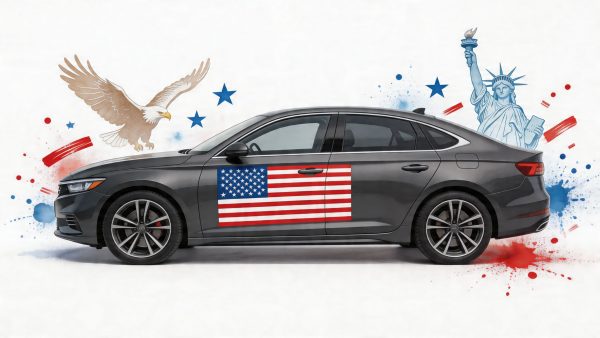
You’re probably in the same spot a lot of drivers are. You want something patriotic on your car or truck, but once you start shopping, the choices turn into a mess fast. One flag looks too glossy, another looks faded before it’s even on the backing paper, and half the listings don’t tell you what vinyl they’re using or whether the decal belongs on paint, glass, or both.
That confusion is normal. USA decals for cars seem simple until you realize one bad choice leaves you with crooked placement, cheap color, or a peeling edge after the first hard season. A patriotic decal should look clean, fit the vehicle, and hold up without turning chalky in the sun.
From a Kansas decal shop perspective, the pattern is easy to spot. Most regret comes from three mistakes: buying by picture alone, choosing the wrong material, and sticking the decal in the first open space on the vehicle. The people happiest with the final result usually slow down just enough to match the design, vinyl, and placement to their vehicle.
Showing Your Pride Without the Guesswork
A new truck is sitting clean in the driveway, and the decal search starts out simple enough. Twenty minutes later, the screen is full of options that all claim to be weatherproof, outdoor rated, or premium, with very little detail offering practical aid in your choice.
That is where buyers get tripped up.
In our shop, the disappointment usually comes from three preventable mistakes. People buy from a product photo without checking the vinyl grade, they pick a design that fights the lines of the vehicle, or they stick it wherever there is empty space instead of planning for visibility and balance. A USA decal carries more weight than a generic graphic. It says something about service, family, patriotism, or personal history, so the details matter.
A good result starts with the right order of decisions. Pick the message first. Then choose the style that fits the vehicle. After that, look at material, size, placement, and any state rules that affect where the decal can go on glass or body panels.
That process saves money and saves aggravation.
I have seen plenty of decals look great on a phone screen and disappointing on the vehicle a few months later. Gloss that looked sharp online can glare badly on a rear window. Cheap vinyl can shrink at the edges through one Kansas summer and winter. A flag that is too large for the panel can make a clean truck look busy instead of proud.
If you want a straightforward place to start, a full-color waving American flag outdoor decal works well for drivers who want a traditional patriotic look without getting into distressed or subdued styles too early.
The buyers who end up happiest in our experience are the ones who slow down long enough to match the decal to the vehicle and the conditions it will live in. That is the difference between a sticker you replace next season and a decal you are still glad you chose years down the road.
Decoding USA Decal Styles and Types
Flags outsell almost everything around national holidays for a reason. They’re instantly recognizable, they fit almost any vehicle style, and they can read as bold or restrained depending on color and finish.
Flag styles that say different things
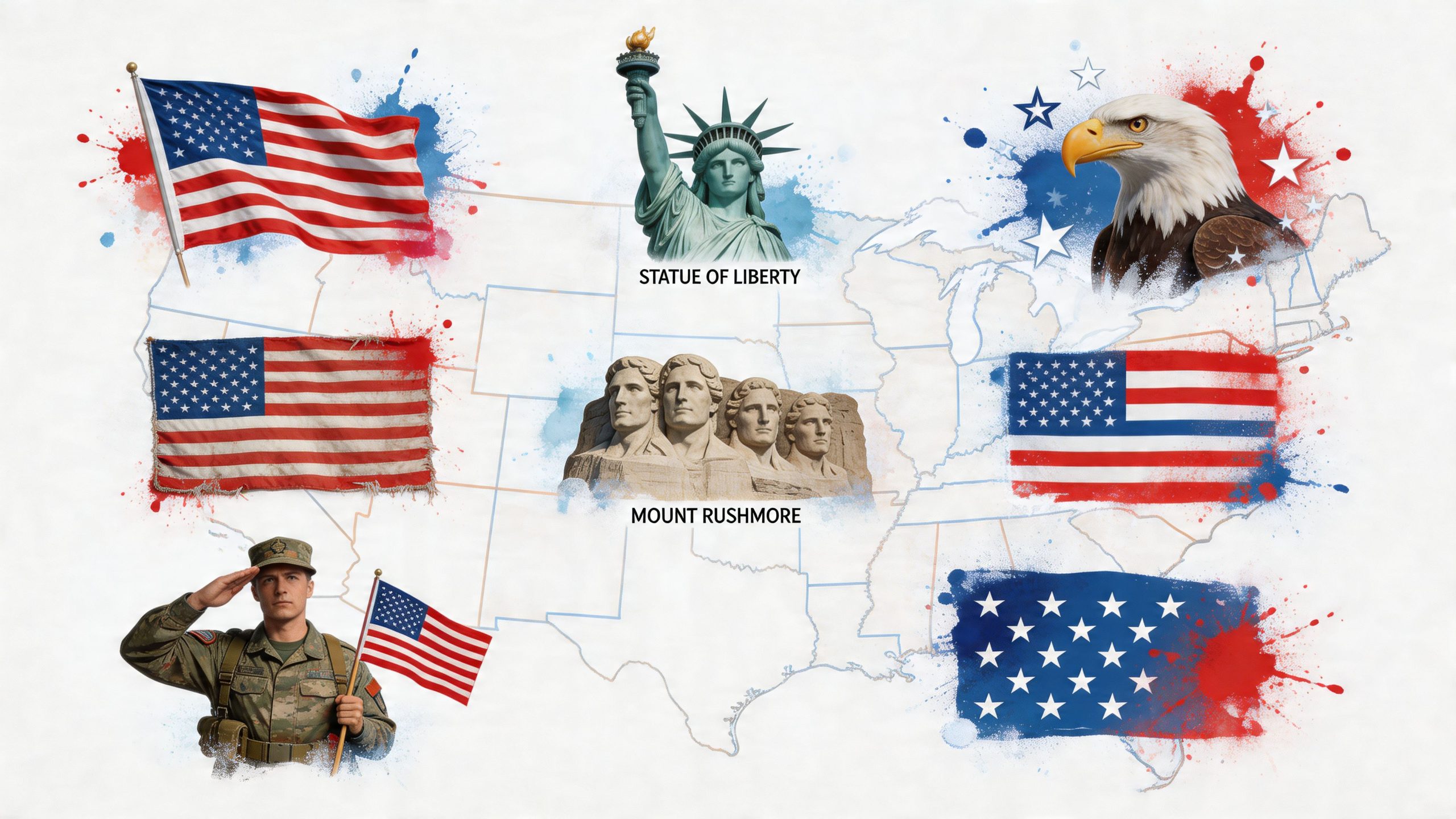
A full-color flag is the classic choice. It’s direct, bright, and meant to be seen. On a rear window or body panel, it gives off a straightforward patriotic look. If you like a visible, traditional statement, this is usually the place to start. A full-color waving American flag decal is a good example of that traditional look.
Subdued flags work better on darker vehicles, especially black, gray, olive, or sand-colored trucks and Jeeps. They look more tactical and less celebratory. That can be the right fit for veterans, off-road builds, and drivers who want respect rather than flash.
Distressed or tattered flag designs have a rougher feel. They’re popular on lifted trucks, trail rigs, and vehicles with other rugged graphics. They can look great, but they need the right vehicle to carry them. On a clean commuter sedan, they often feel forced.
Symbols beyond the flag
Some drivers want patriotism without using the flag itself. That opens the door to symbolic decals.
Common picks include:
- Bald eagle graphics that lean bold, traditional, and unmistakably American
- Statue of Liberty art that feels civic, historical, and slightly more urban
- USA map outlines that read quieter and more minimalist
- Military-themed symbols that combine patriotism with branch pride or remembrance
These designs usually work best when the driver wants the message to feel personal instead of broad. A map outline on a quarter window says something different from a full rear-glass flag. It’s more understated.
A decal should match the personality of the vehicle. A heavy-duty diesel, a Wrangler, and a lowered tuner don’t wear the same patriotic design the same way.
Text and slogan decals
Text-based patriotic decals can be strong, but they have the least room for error. Font choice matters. Spacing matters. So does tone.
Some slogans look clean on a windshield banner or rear glass. Others turn into clutter fast, especially if the text is too long or the script is hard to read. If you want wording, keep it short and intentional. A strong phrase beats a paragraph every time.
Here’s a simple way to choose style by mood:
| Style | Best fit | Overall feel |
|---|---|---|
| Full-color flag | Trucks, SUVs, rear windows | Classic, visible, proud |
| Subdued flag | Jeeps, dark vehicles, tactical builds | Respectful, restrained |
| Distressed flag | Off-road and rugged builds | Tough, worn-in |
| USA map outline | Daily drivers, minimalist owners | Quiet pride |
| Eagle or liberty symbol | Broad range of vehicles | Symbolic, traditional |
| Text-based design | Windshields, rear glass, custom builds | Personal, direct |
If you’re torn between designs, go simpler. Clean usually lasts longer stylistically than busy.
Why Premium Vinyl Is Essential for USA Decals
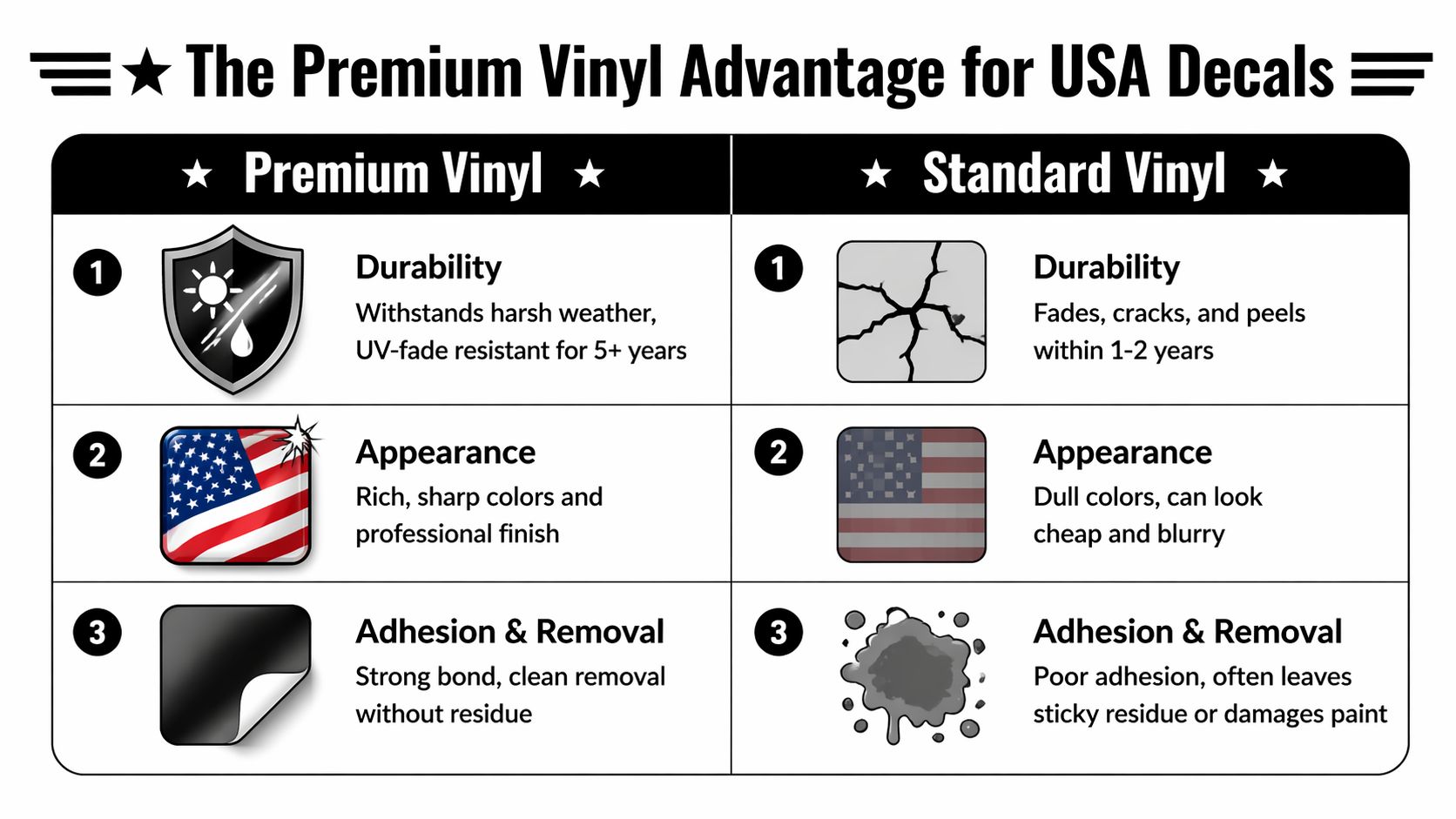
The biggest difference between a decal that lasts and a decal that disappoints is the vinyl. Not the artwork. Not the product photo. The material.
Cheap vinyl acts like a dollar-store poncho. It looks fine in the package, handles one little storm, then starts showing every weakness at once. Premium cast vinyl behaves more like a real rain jacket. It flexes, stays put, and holds up when temperature and weather keep changing.
What premium vinyl does better
For patriotic decals, color matters. Red can’t go dull. White can’t yellow. Blue can’t wash out into a lifeless haze after one summer. That’s where premium vinyl earns its keep.
Automotive-grade cast PVC films such as Oracal 970RA have elongation greater than 200%, which helps them resist cracking on curved surfaces during thermal expansion from -20°F to 180°F. In accelerated weathering tests, these materials showed less than 5% shrinkage after 5 years, compared with 15% to 20% for cheaper calendared vinyls, which can lead to peeling and adhesive failure, according to this automotive vinyl material guide.
That sounds technical, but the meaning is simple. Cast vinyl handles curves and weather swings better. Calendared vinyl is more likely to pull back, shrink, or fail at the edges.
Why red, white, and blue fade differently
Sunlight doesn’t attack every color the same way. Bright patriotic colors need better protection than a basic black cut decal. If the film and laminate aren’t up to the job, the fade shows quickly because the color contrast is the whole point of the design.
High-gloss overlaminates help preserve vibrancy and reduce abrasion. UV stabilizers matter too. Without them, sunlight starts breaking down the color over time. That’s why a premium flag decal keeps looking crisp while a bargain decal turns flat and tired.
A lot of online listings hide behind words like “weatherproof” or “durable.” Those words don’t mean much by themselves. Ask what vinyl is used, whether it’s cast or calendared, and whether the decal is rated for long-term outdoor use.
What usually fails first
Most low-end decals don’t fail all at once. They fail in stages.
- First the edge curls because the material starts shrinking
- Then the color loses depth and the whites stop looking clean
- Then the adhesive gives up on corners, seams, or curved sections
- Finally the whole decal looks old even if parts of it are still stuck on
Buy once for the weather your vehicle actually sees. Not the weather in a product photo.
For USA decals for cars, premium vinyl isn’t about showing off the fanciest material. It’s about avoiding the exact problems that make patriotic graphics look sloppy before their time.
Sizing and Placing Your Decal for Perfect Results
A well-made decal can still look wrong if the size or placement is off. That’s not a vinyl problem. It’s a proportion problem.
Most vehicles already have strong body lines, windows, badges, trim breaks, and panel shapes. Your decal has to work with those lines instead of fighting them. Good placement looks intentional. Bad placement looks like the owner got impatient.
Start with the vehicle, not the decal
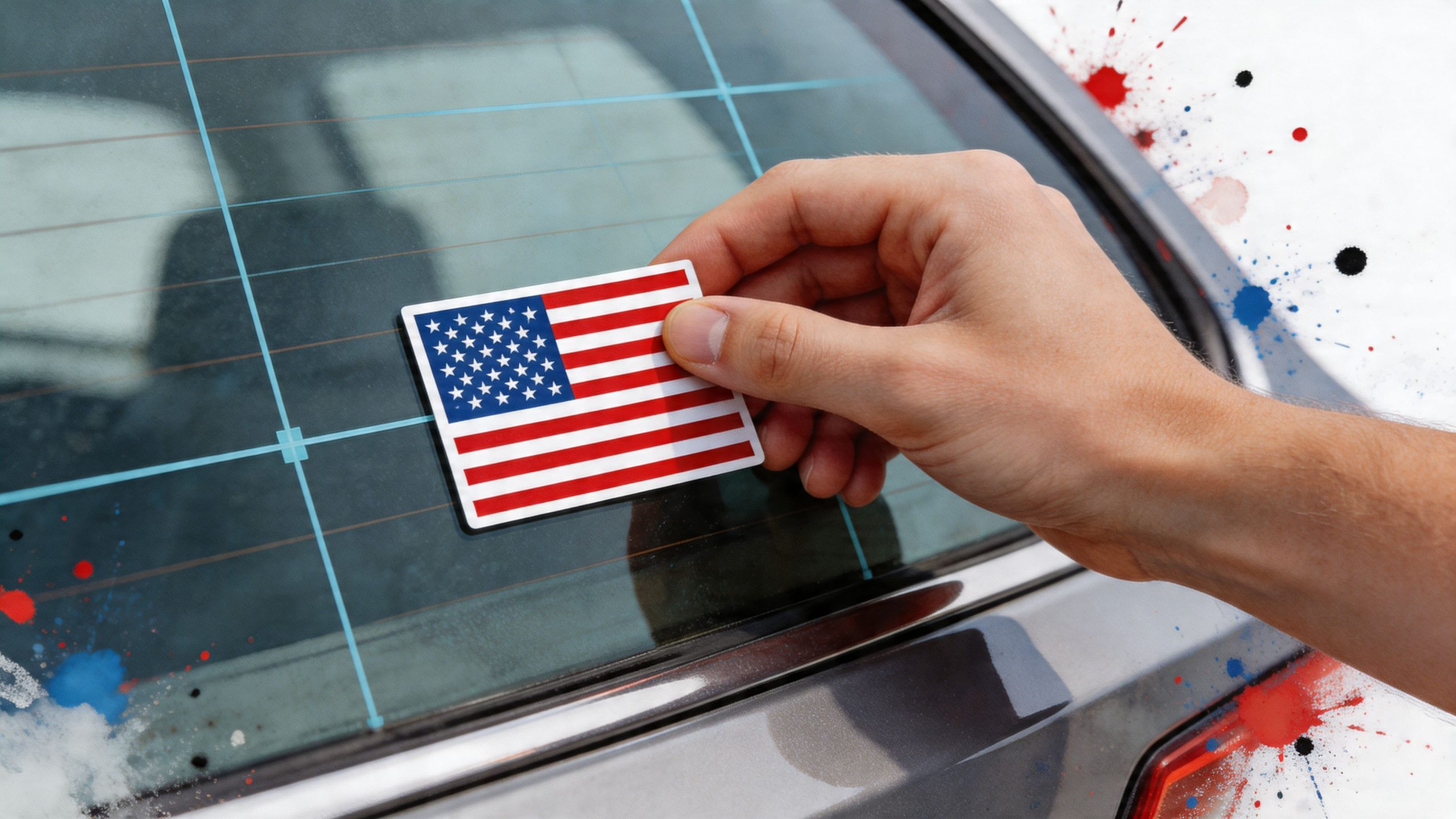
Before you order, stand back and look at the vehicle from the angle where the decal will be seen most often. Rear three-quarter view matters on trucks. Straight rear view matters on SUVs. Side profile matters on cars with quarter-window graphics.
Use painter’s tape to mark the rough footprint. That simple test catches a lot of mistakes before any backing paper comes off.
A few placements work consistently well:
- Rear window works for flags, text, and symbolic designs. It’s visible and usually easy to install on glass.
- Side quarter window fits smaller patriotic decals without overpowering the vehicle.
- Bumper or lower tailgate area is good for compact designs, but road grime can dull the look faster.
- Body panels can look excellent with premium vinyl, especially on trucks and Jeeps, but panel curves demand a better material and more careful install.
Use balance, not just empty space
People often choose a spot because it’s open, not because it’s right. Empty space alone isn’t the goal. Balance is.
A small decal can disappear on a large rear glass panel. A huge decal can swallow the side of a midsize SUV. You want enough visual weight to read clearly without making the vehicle look overdone.
Here’s a practical sizing mindset:
| Placement area | What usually works best | Common mistake |
|---|---|---|
| Rear windshield | Medium to larger designs with clear spacing | Going too tall and crowding defrost lines |
| Quarter window | Compact flags, symbols, short text | Picking detail too fine to read |
| Tailgate or body panel | Medium graphics with bold shapes | Ignoring curves and contour breaks |
| Bumper | Small, simple decals | Choosing intricate artwork that gets lost |
If you want wording, a clean custom text window decal often works better than trying to squeeze a long message into a tiny space.
A clean test before final application
Do one last check before install:
- Sit in the driver’s seat and confirm the decal won’t interfere with your view.
- Step back at least one parking-space length to judge scale accurately.
- Check symmetry against nearby lines like trim, window edges, or body seams.
- Look at it in daylight because bad placement shows up faster outside than in a garage.
Good sizing makes even a simple flag look custom.
Personalizing Your Patriotic Decal
You notice the difference fast in a parking lot. One truck has a clean flag and a short line of text that fits the build. The next has three fonts, six symbols, and a message nobody can read from ten feet away. Custom work only looks right when the design has a clear point.
That is why personalization should start with purpose. Decide what the decal needs to say before you pick colors, effects, or extra graphics. Pride, service, memorial, family name, hometown, branch affiliation, and off-road style all call for different design choices. The right combination feels intentional on the vehicle and still reads clearly a year later.
The veteran and service tribute approach
Military and veteran decals usually carry more weight than a general patriotic graphic. In the shop, the strongest tribute layouts are often the simplest. A flag paired with a branch name, unit reference, memorial date, or last name usually says more than a crowded collage ever will.
Color matters here too. Many service families prefer subdued tones, matte finishes, or clean one-color cuts because they feel respectful and easier to live with long term. Full-color prints can work, but they need restraint and enough contrast to stay readable on tinted glass or dark paint.
The Jeep and off-road approach
Jeep owners and trail rigs can carry bolder patriotic styling without looking forced. Distressed flags, stars, mountain outlines, and weathered textures fit the attitude of the vehicle better than polished showroom-style artwork.
Use some judgment, though. Aggressive graphics on a rig that sees mud, brush, and pressure washing need thicker film, solid adhesion, and shapes that do not peel at sharp points. Fine distressed detail may look good on screen and fail early on a fender that gets blasted every weekend.
The clean street-car version
A patriotic decal on a tuner, sport compact, or daily driver usually looks better with restraint. Small reverse flags, corner glass decals, and narrow text banners tend to match the lines of the car better than oversized graphics with heavy distressing.
If you want wording, a custom windshield banner decal for your own text gives you room for a unit name, family name, short slogan, or memorial phrase without forcing the design into a generic layout.
Details that actually improve the final result
Good customization comes from a few smart choices, not from adding everything available.
- Keep one main message. Flag plus branch plus one line of text is usually enough.
- Match the style to the vehicle. Rugged textures fit off-road builds. Clean cut vinyl fits modern cars and trucks.
- Choose readable fonts. Script fonts often look nice in proof and disappear on glass.
- Account for the surface. Tinted windows, metallic paint, and body contours all change how a design reads.
- Start with a clean surface. If glass has mineral staining or buildup, review this guide on removing water etching from car windows before applying a custom decal.
The best custom patriotic decals look personal because they are edited well. They tell one story, fit the vehicle, and hold up in real use.
Installation and Care for Long-Lasting Pride
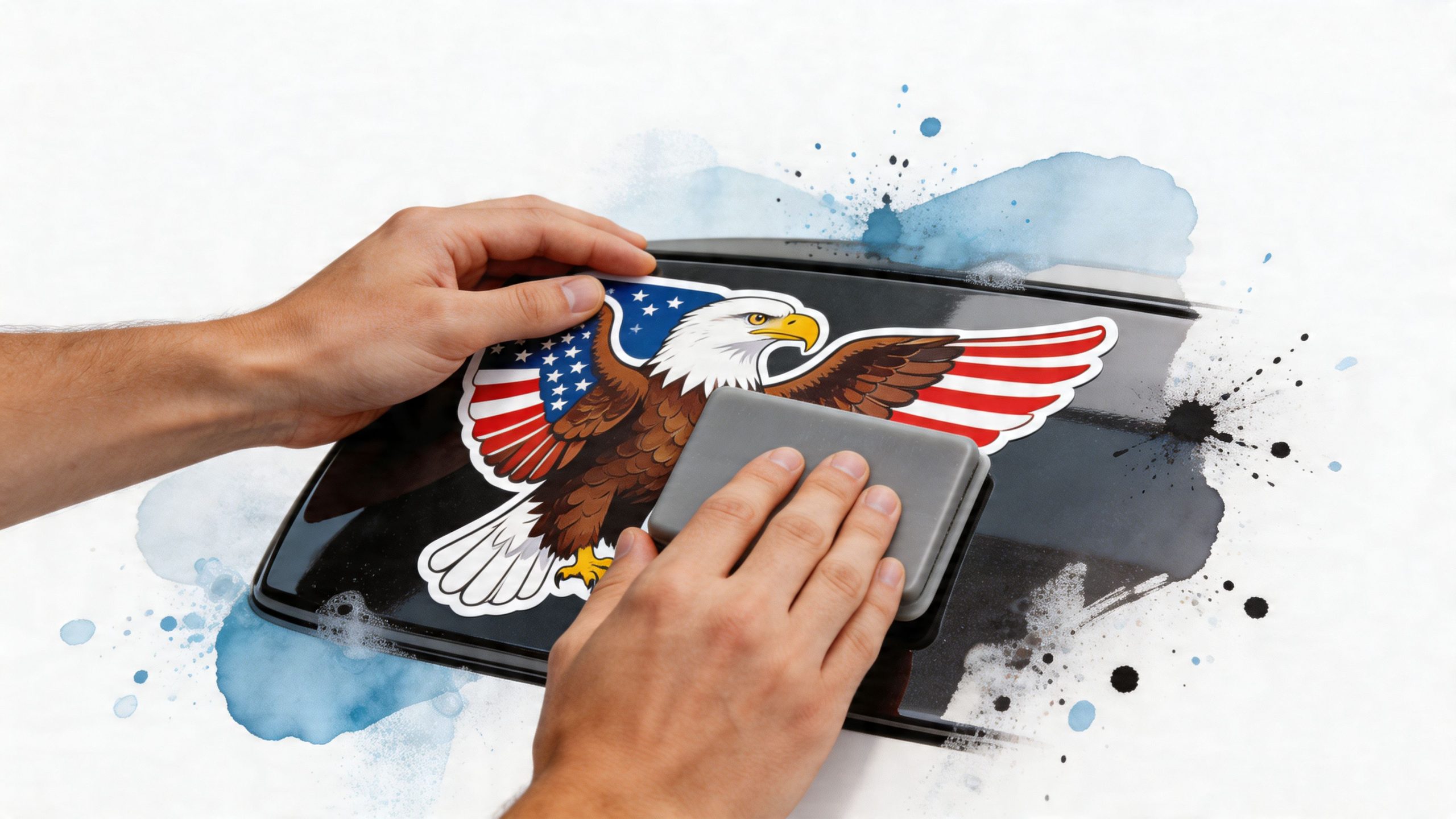
Even a good decal can be ruined in ten minutes by a rushed install. Most problems people blame on the vinyl start with a dirty surface, crooked alignment, or trying to lay the decal down in the wrong conditions.
Prep work that prevents bubbles and lifting
Clean means more than “looks clean.” Glass and paint can carry wax, dressing residue, road film, and mineral spotting that interfere with adhesion. If your windows have buildup from hard water, address that before you apply anything. A practical reference on removing water etching from car windows can help you figure out whether you’re dealing with simple film or etched deposits.
Once the surface is corrected, wipe it down carefully and let it dry fully. Don’t apply over moisture, soap residue, or fresh protectants.
A good install setup usually includes:
- A clean microfiber towel for final wipe-down
- Painter’s tape for alignment hinges
- A squeegee for even pressure
- Patience because rushing causes most bubbles and wrinkles
Dry method and wet method
Small windshield or glass decals often do well with a careful dry application. Line it up, hinge it with tape, peel the backing, and squeegee from the center outward. This keeps the decal from drifting around once adhesive touches the surface.
For some larger graphics or trickier placements, installers may prefer a wet method for extra slip during positioning. The key is using the right method for the decal style and surface, then fully working out fluid and air before the adhesive sets.
A quick visual walkthrough helps if you haven’t installed one in a while:
Aftercare that keeps the decal sharp
Freshly applied decals need a little respect at first. Don’t scrub at the edges, and don’t hit them with harsh chemicals. Hand washing is the safest route early on. If you use an automatic wash later, keep an eye on older edge areas and avoid anything that aggressively catches corners.
For long-term care, remember these shop rules:
- Wash with mild products. Harsh solvents are rough on both vinyl and laminate.
- Use soft tools. Abrasive pads dull the finish and can nick edges.
- Check corners occasionally. Catching a small lift early can save the whole decal.
- Avoid picking at edges. Fingernails do more damage than weather.
If the decal is made from quality material and installed on a properly cleaned surface, it should keep its shape and look far better than bargain graphics.
Navigating Legal and Visibility Rules for Car Decals
You line up a fresh USA decal on the rear glass, step back, and it looks perfect. Then the first real question hits. Can you still see clearly at night, and would an officer or inspector see it as legal? That question should come before the backing paper comes off.
After twenty-plus years around vehicle graphics, I can tell you the trouble usually does not come from the decal itself. It comes from placement. Rear windows, side glass, license plate areas, reflectors, and tail lamps are the spots that cause the most headaches because style and vehicle rules meet there.
The rule drivers miss most often
Start with your own state rules before you install anything on glass or near required equipment. Laws vary, and the details matter. Some states are strict about windshield and front-side-window obstructions. Others focus more on whether lights, reflectors, or plates stay fully visible. If your vehicle is due for a vehicle safety inspection, that is a good reminder to check decal placement with the same mindset.
Florida is a good example of why broad assumptions get people in trouble. Under Florida Statute 316.2004, drivers cannot place material on a vehicle in a way that blocks clear vision through the windshield, side wings, or side or rear windows, except where the law allows it. A patriotic decal can be completely fine in one location and questionable a few inches over.
Safe placement comes down to visibility first
A decal should never interfere with driving or hide equipment another driver needs to see.
Use these checks before final placement:
- Keep the driver’s view clear. This matters most on windshields, front side windows, and the main sight area of rear glass.
- Leave lights and reflectors uncovered. Even a partial overlap can create a legal issue and reduce visibility in bad weather.
- Keep license plates and registration marks fully readable. No corners covered, no frames blocked by vinyl.
- Check flag orientation before you install. The stars should face forward on the vehicle, which means the layout changes by side.
That last point gets missed all the time. A flag that looks correct as a flat decal can be wrong once it goes on the driver-side panel.
Small placement mistakes cause most problems
The common errors are usually ordinary ones. A rear-window flag sits too low and cuts into the mirror view. A quarter-panel graphic creeps onto a reflector. A decal near the plate frame makes numbers harder to read from an angle. None of that looks dramatic in the garage, but it can matter on the road.
My shop advice is simple. If a decal goes on glass, keep it modest and out of primary sightlines. If it goes near lights, plates, sensors, or cameras, give those parts more room than you think they need. Buyers who want a decal that lasts should make the right choice on day one, not just pick the spot that looks good in a product photo.
A clean install helps a decal stay put. Smart placement keeps it worth having.
Why Choose an American-Made Decal from Custom Sticker Shop
You order a flag decal online, wait a week, clean the truck, line it up, and get it on straight. Two months later the edges start lifting, the white has dulled, and the size looked better on a screen than it does on the vehicle. That is the kind of mistake buyers remember, and it usually starts with choosing the wrong shop.
A good patriotic decal supplier should make the buying decision easier, not force you to guess. The basics are simple. Use vinyl that is named and vehicle-grade. Show buyers what the decal is meant for. Give enough detail on sizing, transfer tape, and application that the product can be judged before it shows up in the mail.
What matters when you pick a shop
After 20-plus years around decals, I can say the same problems keep showing up. Cheap listings hide the material. Product photos make everything look larger than it is. Some sellers know how to market a design, but not how to build one that holds up on real paint and glass through heat, cold, washing, and sun.
Here is what I would check before ordering:
- Named vinyl material, not broad claims about being weatherproof
- Clear surface guidance for glass, painted panels, or both
- Pre-spaced or transfer-taped lettering when alignment matters
- Straight answers on outdoor life, not vague promises
- Installation help that shows the actual process, not only polished product shots
If the vehicle is driven daily, used for work, or kept street-legal in a stricter state, shop the same way you would prepare for a vehicle safety inspection. Visibility, readable plates, and clean placement are part of the purchase decision, not something to sort out after the package arrives.
Why a Kansas shop angle matters
A shop in Kansas tends to see decals the way a lot of drivers use them. Pickups that live outside. Jeeps that get muddy. Daily drivers that bake in summer and face hard freezes in winter. Veterans, ranchers, tradesmen, and families all want roughly the same thing. A decal that goes on clean, stays put, and still looks respectable down the road.
Custom Sticker Shop fits that practical standard. It is a family-run, veteran-friendly maker in Topeka, Kansas, and it has been operating since 2001. The company uses American-made decals with professional-grade Oracal vinyl rated for up to 7 years outdoors, offers more than 1,200 designs, and lists straightforward buying details such as prices starting at $7.99, free U.S. shipping on orders over $25, and a Buy 2 Get 1 Free offer, based on the publisher information provided for this article.
Those details matter because they answer the questions buyers should ask before they spend money. What is it made from. How long is it expected to last. Will it arrive in a format that installs cleanly. Will the design options match the vehicle instead of forcing a compromise.
The right decal is the one that still looks right later
Price gets attention first. Long-term fit is what matters after the decal is on the vehicle.
Use these questions before you buy:
| Question | Why it matters |
|---|---|
| What vinyl is this made from? | Material says more than photos do |
| Is it intended for glass, paint, or both? | The wrong surface choice leads to early failure |
| Is the decal sized for my vehicle, not just the listing image? | A good design can still look awkward when the scale is off |
| Will the placement stay legal and visible in my state? | A sharp look should not create preventable trouble |
| Can I install it cleanly without fighting the design? | Transfer tape and layout make a real difference |
A well-made USA decal should look like it belongs on the vehicle. It should survive weather, washing, and ordinary use without turning into a peeling corner on the back glass. If that is the goal, browse Custom Sticker Shop for USA-themed flags, military tributes, custom text, Jeep graphics, and other American-made vinyl designs built for long outdoor wear.