
A faded STP oval on the vent window of an old pickup can still stop people in a parking lot. It’s a small decal, but it carries the same charge as a period-correct wheel, a shifter knob worn smooth, or a race number hand-lettered on a quarter panel.
The Enduring Allure of the Red Oval
An STP sticker doesn’t work like most automotive decals. A lot of graphics are decorative first and meaningful second. stp oil stickers are the opposite. Even when someone applies one today just for the look, the decal still points back to a time when speed shops, gas stations, and race paddocks all shared the same visual language.
That’s why the red oval keeps showing up on very different machines. It looks right on a Petty-era stock car tribute, but it also works on a square-body truck, a CJ or Wrangler, a metal toolbox, and even a garage window. The logo is bold enough to stand on its own, yet simple enough that it doesn’t fight the lines of the vehicle.
Why the logo still lands
Three things give it staying power:
- It reads fast: The oval shape and strong color blocking make it legible at a glance.
- It carries motorsport history: People don’t see a random oil brand. They see racing heritage.
- It plays well with other vintage graphics: It sits comfortably beside period Ford, Mopar, Jeep, and speed shop decals, including classic window pieces like this Ford oval window decal style.
A good STP decal doesn’t need an explanation from the owner. Car people recognize it immediately.
What separates a good one from a forgettable one
The old appeal is easy. The hard part is choosing a version that still looks right on a modern vehicle. A cheap sticker can turn a classic logo into something that looks temporary, glossy in the wrong way, or badly proportioned. A well-made decal keeps the edges clean, the colors solid, and the shape true.
That’s where this subject gets more interesting than nostalgia alone. Buyers usually need two kinds of guidance at once. They want the story behind the sticker, and they want practical answers about materials, sizing, placement, and long-term durability. Both matter. A racing icon deserves better than bargain-bin vinyl.
The Story Behind the Sticker A Racing Legend
The STP decal earned its place the old-fashioned way. It showed up where car culture was loudest, hottest, and easiest to remember.
STP began in 1953 in St. Joseph, Missouri, founded by Charles Dwight Liggett, Jim Hill, and Robert De Hart with $3,000 in startup capital. The name stood for Scientifically Treated Petroleum. The company’s early history, its later sale to Studebaker-Packard, Andy Granatelli’s arrival, the broad gas-station rollout, and the racing connection are all outlined in this STP company history).
That origin matters because the sticker started as a mark tied to a real maintenance product, not a decorative logo created years later to trade on nostalgia. Owners saw it on shelves before they saw it on race cars.
The turning point
Andy Granatelli gave the brand its public personality. He understood a lesson that still applies to decals and sponsor graphics now. A logo becomes memorable when people see it under pressure, not only on packaging.
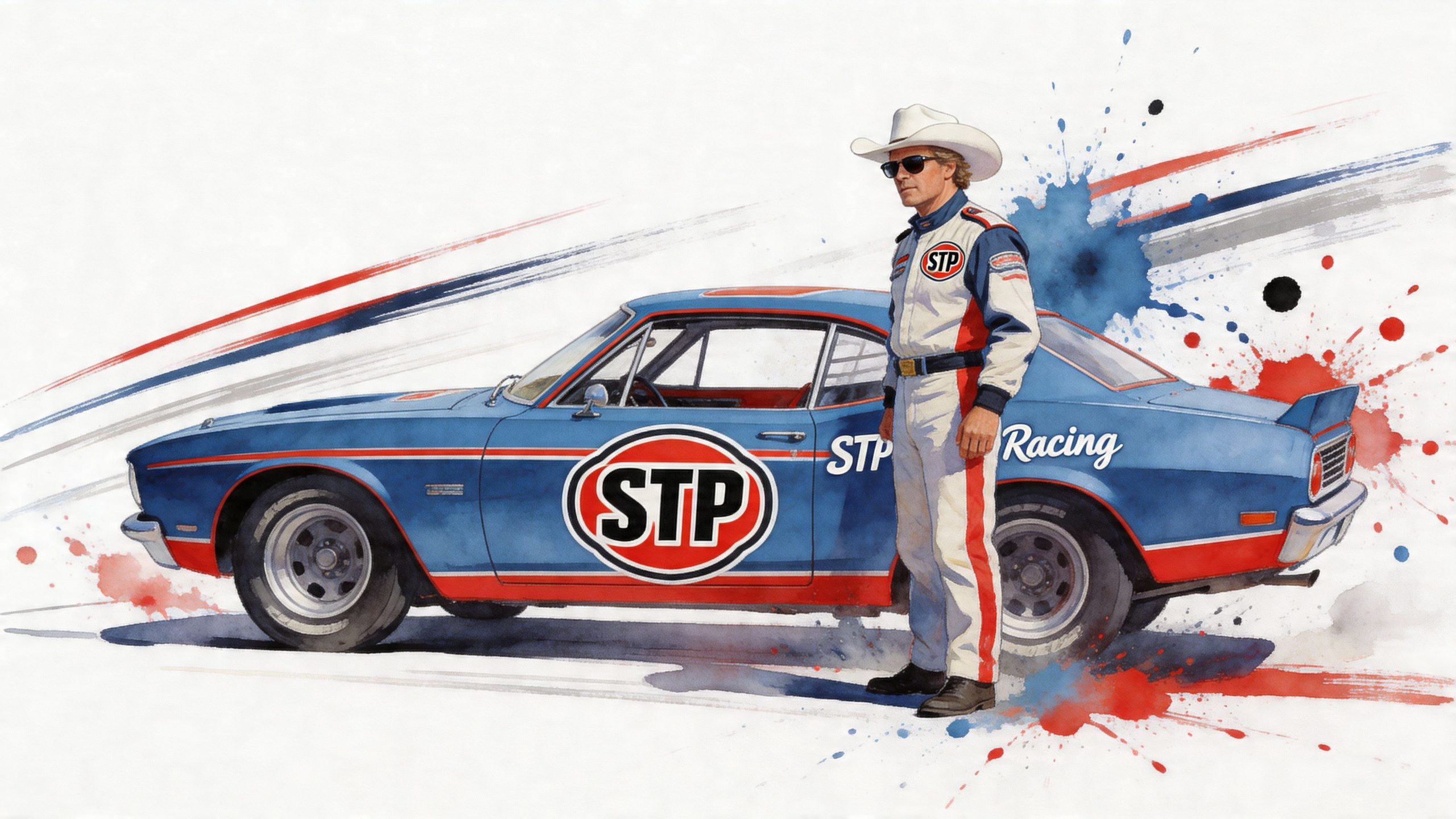
Starting in 1964, STP expanded into 200,000 gas stations and service stations nationwide, a rise described as 67,000% growth in the historical summary of STP linked above. That kind of exposure did two jobs at once. It put the product in front of ordinary drivers and burned the red oval into the visual memory of American performance culture.
Racing finished the job. Richard Petty’s #43 STP-sponsored Plymouth gave the logo its permanent home in stock car history, and Petty’s 200 career wins helped fix that association for generations of fans.
Historical takeaway: The sticker became iconic because it moved from the parts counter to the racetrack, then from the racetrack to garages, toolboxes, and side glass across the country.
That progression is why the decal still carries weight. People who apply one today are not just adding color. They are referencing a period when oil brands, race teams, and weekend mechanics all spoke the same language.
I have always liked that trade-off. The logo is simple enough to read in a second, but loaded enough with history that it does more than fill empty space on a window. A lot of vintage graphics lost that balance.
Collectors still pay real money for older STP pieces, which says a lot about their staying power. The appeal is not only adhesive and ink. It is memory, provenance, and a direct link to an era when brand loyalty was built at the track and reinforced at the service station. For modern owners who still care about what goes in the tank as much as what goes on the glass, practical fuel additive advice for Suffolk motorists sits in the same tradition. Use products that do a real job, then choose the badge with some honesty.
That is why an STP sticker still looks right on a restored muscle car, a period-correct stock car tribute, or a pickup with genuine garage-built character. The logo has history behind it, and owners can still use that history well if they choose the decal carefully.
What an STP Sticker Actually Represents
An STP sticker means more than “old racing brand.” On the right vehicle, it signals a specific kind of owner. Someone who pays attention to what happens under the valve covers, not just what looks good on the glass.
That reputation came from use. Drivers bought STP because they wanted extra help in tired engines, hot-running street cars, and weekend performance builds. The decal carried that mechanical reputation with it, so the logo came to stand for protection, tune-up culture, and the habit of trying to get a little more life out of real machinery.
The mechanical meaning behind the logo
The red oval built its identity around a few plain ideas that mattered to owners of older engines:
- Friction protection: Extra lubricant film appealed to drivers dealing with heat, load, and older oil formulas.
- Ring sealing: Anything associated with tighter sealing suggested a stronger-running engine with less blow-by.
- Noise control: If an additive helped calm lifter or valvetrain noise, owners noticed it fast.
- Confidence under stress: Street racers and hard-driving owners wanted products that sounded built for pressure, not gentle commuting.
Those points still make sense if you know period engines. Older tolerances, flat-tappet setups, and worn components created a market for products that promised a margin of protection. Whether every bottle delivered miracles is a separate question. The important part is what owners believed they were buying, and why the sticker earned its place in garages and on bodywork.
Why the sticker carried weight
A lot of decals represent a brand. The STP oval represented a maintenance mindset.
That difference matters.
Putting one on a car suggested the owner cared about oil, wear, heat, and longevity. It fit naturally on a stock car tribute, a muscle car with period speed parts, or a shop truck owned by someone who still keeps additives, spare plugs, and rags on a shelf in the garage. For readers who want a grounded look at what additives can and cannot realistically do, this guide on fuel additive advice for Suffolk motorists is a useful reality check.
What it means on a car now
Today, the decal works on two levels. First, it nods to American racing and parts-counter history. Second, it tells people you chose a logo with mechanical meaning behind it, not just a random retro graphic.
Placement decides whether that message lands properly. A modest side-glass, quarter-window, toolbox, or lower-fender sticker usually feels believable. An oversized decal slapped across the wrong panel can make even a good logo look costume-like.
I usually tell owners to match the sticker to the story of the vehicle. A restored muscle car can carry STP branding with almost no explanation. A patina pickup or garage-built street machine can wear it well too. On a modern daily, a smaller decal tends to work best because it reads as a respectful reference instead of forced nostalgia.
Spotting Fakes Authentic vs Reproduction Decals
Buying stp oil stickers gets tricky fast because people often mix up three different things. They say “original” when they mean old. They say “reproduction” when they mean decent. And they say “vintage style” when the piece is just a low-cost print with poor edge quality.
For collectors, authenticity matters. For drivers, durability matters. For most buyers, both matter enough that it’s worth knowing the difference before money changes hands.
What a vintage original tends to look like
An older sticker usually shows its age in honest ways. The print often has a different texture than a modern digital decal, and the backing paper, adhesive feel, and color aging tend to reflect its era. Fading, minor discoloration, and edge wear can support authenticity, but only if the sticker still looks coherent as a period piece.
The catch is that age alone doesn’t make a decal desirable. A brittle original with weak adhesive may belong in a collection sleeve, not on a vehicle that sees weather.
Collector rule: If your goal is display authenticity, buy the best surviving original you can verify. If your goal is road use, buy a reproduction made for road use.
What cheap reproductions get wrong
Low-end reproductions usually fail in the same predictable ways:
- Soft print definition: The oval outline and letter edges look muddy instead of sharp.
- Weak adhesive: Corners start lifting after sun, washing, or temperature swings.
- Thin, unprotected face stock: The surface scuffs easily and loses color sooner.
- Bad proportions: The logo may be close, but not quite right. Car people notice.
Many online listings also skip the details that matter most. They don’t specify vinyl grade, lamination, or intended outdoor life. That omission is a warning sign by itself.
What a premium reproduction should offer
High-fidelity reproductions often use 3-5mil calendered vinyl with a permanent acrylic adhesive, and they may be laminated to withstand over 1,000 hours of accelerated weathering, according to this decal production reference. The same source notes that these materials can deliver tensile strength up to 3x better than generic stickers.
That doesn’t make them “authentic” in the collector sense. It makes them fit for a different purpose. If the decal is going on paint, glass, or a toolbox that gets real use, those material choices matter more than period-correct paper stock.
STP Sticker Authenticity Comparison
| Attribute | Vintage Original (1960s-80s) | Low-Quality Reproduction | Premium Reproduction (e.g., Custom Sticker Shop) |
|---|---|---|---|
| Primary appeal | Collector value and period feel | Low purchase price | Road-use durability and clean appearance |
| Material | Original-era sticker stock | Usually unspecified | Often 3-5mil calendered vinyl |
| Adhesive behavior | Can be aged or unreliable | Commonly weak at edges | Permanent acrylic adhesive |
| Weather resistance | Depends on age and storage | Often fades or peels quickly | Can be laminated for extended outdoor exposure |
| Print quality | Era-correct texture and color aging | Frequently soft or off-register | Sharp graphics with consistent color |
| Best use | Collection, display, period memorabilia | Temporary use | Cars, trucks, glass, toolboxes, shop use |
| Main risk | Fragility during application | Short service life | Less collector cachet than true originals |
The practical decision
Ask one question first. Are you collecting history, or are you decorating something you drive? That answer narrows the field immediately.
If the decal is going on a restored car that lives indoors and appears at shows, you may want an original or a very faithful reproduction. If it’s going on a daily-driven truck, side glass, or a trailer that sits outside, modern vinyl is the smarter choice. The wrong buyer usually gets disappointed because they bought for nostalgia when they should’ve bought for use.
Choosing the Right STP Sticker Material Size and Style
A good STP decal choice comes down to three decisions. Pick the right material for the surface. Pick the right size for the panel. Pick a style that suits the vehicle instead of dominating it.
That sounds simple, but most decal mistakes happen because buyers only think about the logo itself. They don’t think about where the sticker is going, how long it needs to last, or how the body line beneath it changes the way the oval reads from a distance.
Material first
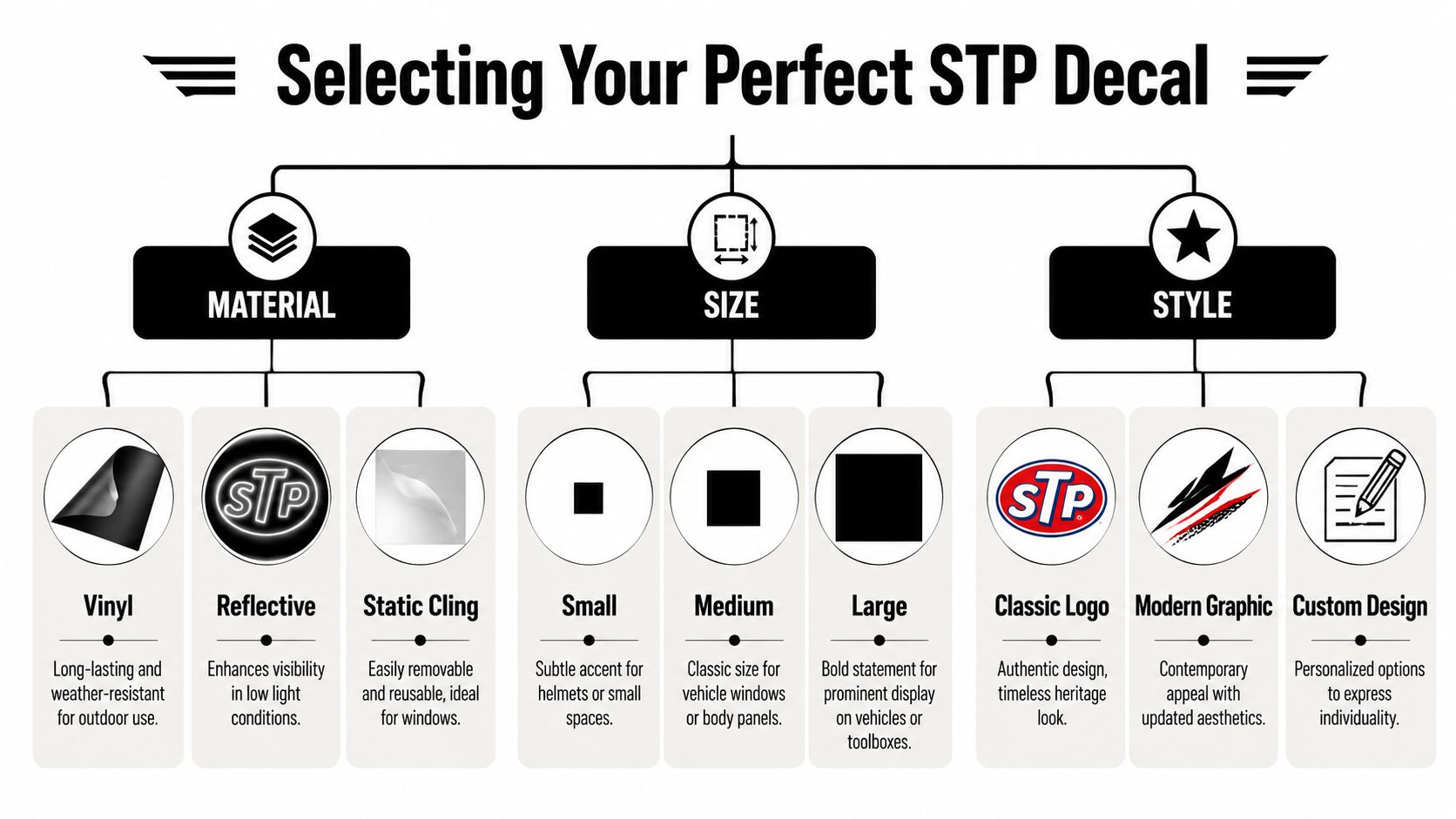
For exterior automotive use, vinyl is usually the default answer because it handles weather and washing better than bargain sticker stock. Within vinyl, buyers will run into printed decals, contour-cut decals, calendered vinyl, cast vinyl, reflective films, and static cling.
Here’s the short version:
- Printed vinyl: Good when the design needs multiple colors in one piece.
- Die-cut or contour-cut vinyl: Cleaner look when you want the logo shape without excess background.
- Calendered vinyl: A practical choice for flat or gently curved surfaces.
- Cast vinyl: Better for complex curves, recesses, and demanding body shapes.
- Static cling: Fine for interior glass use, not my first choice for long-term exterior duty.
If you want a better grounding in how vinyl graphics are produced, this explainer on get better commercial signage helps clarify what plotters do and why cut quality matters.
Size that fits the panel
Sizing is where taste shows. A decal can be perfectly made and still look wrong if the scale is off.
Use these placement-minded guidelines:
- Small format: Best for helmets, quarter windows, vent glass, and small toolbox lids.
- Medium format: Usually the sweet spot for door glass, rear side windows, and upright truck cab glass.
- Large format: Works on hoods, tailgates, garage cabinets, and trailer panels, but only when the surrounding graphics support it.
A window sticker can be surprisingly forgiving. A hood sticker is not. The larger the decal, the more obvious any sizing mistake becomes.
Style choices that actually work
The classic oval is still the strongest option because it doesn’t need embellishment. It reads as authentic, whether the car is restored, mildly modified, or built as a tribute piece. Variants with extra text or racing slogans can work, but they need a vehicle with the right visual context.
Three common directions make sense:
- Classic logo for period-correct or understated builds.
- Modern graphic treatment when the rest of the vehicle uses newer typography or mixed branding.
- Custom interpretation if you want the visual rhythm of the STP oval without directly copying a period sticker.
Matching the decal to the vehicle
A few practical pairings tend to look right:
- Classic muscle car: Side glass, rear quarter window, or toolbox in the garage.
- Jeep or off-road truck: Fender, hardtop glass, or rear side window.
- Garage décor: Cabinet door, mini fridge, parts washer splash panel.
- Motorcycle or helmet: Keep it small and let the logo act as an accent.
The best stp oil stickers usually feel like they belong to the machine. If they look pasted on as an afterthought, scale or placement was probably off from the start.
Placement and Installation Guide
An STP decal earns its place the same way any good period detail does. It should look like it belongs on the car, not like it was added five minutes before a cruise night. I always recommend mocking up placement first with painter’s tape, then stepping back across the driveway. What looks right at arm’s length can feel oversized, crooked, or visually heavy once the whole vehicle is in view.
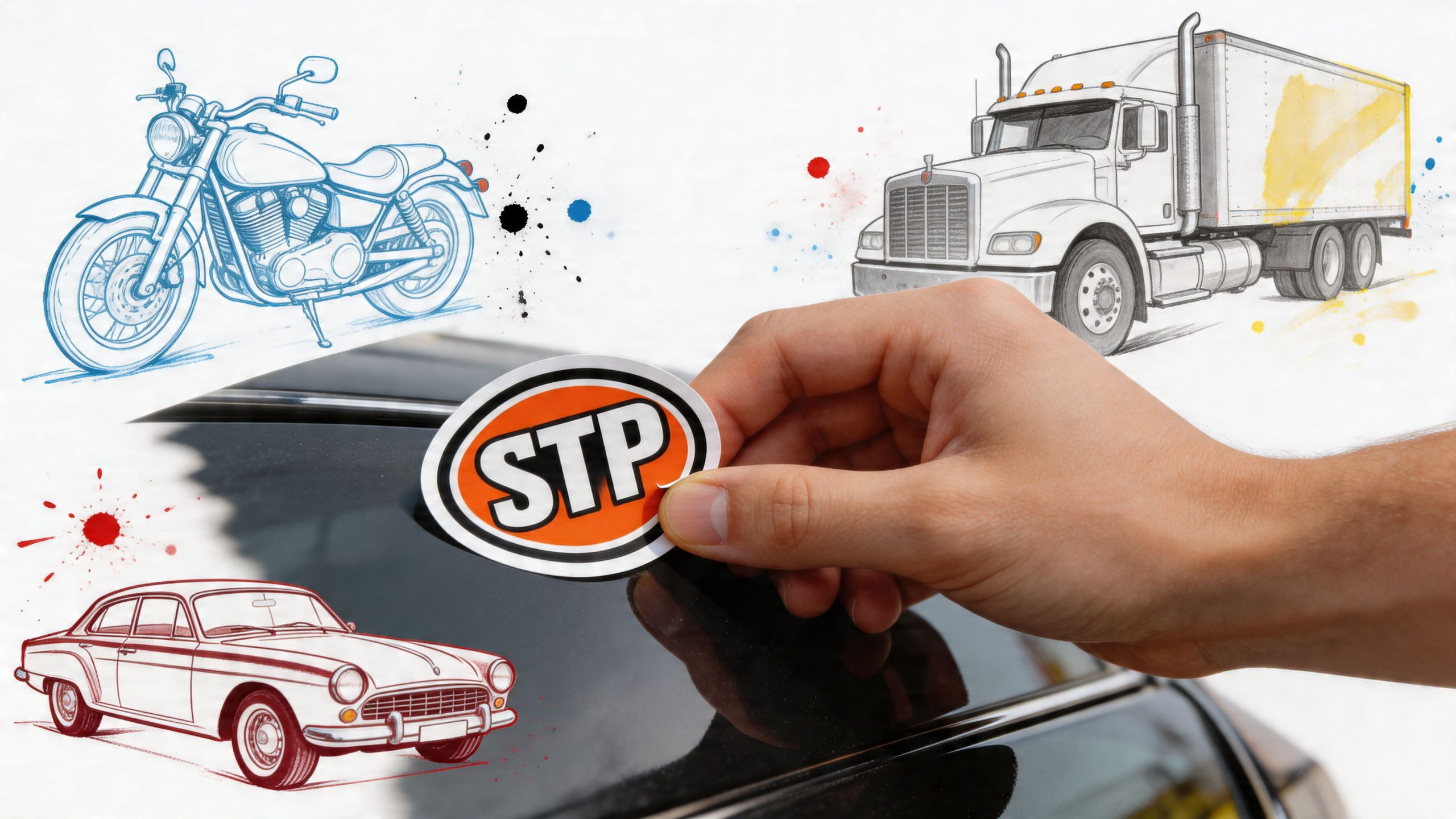
Placement that usually works
Good placement follows the body lines and respects the age and purpose of the vehicle.
- Quarter window: One of the safest choices for muscle cars, fastbacks, and vintage-style builds.
- Rear side glass: A natural fit on trucks, SUVs, and Jeeps. If you are judging the visual weight of a larger glass graphic, a Jeep windshield banner decal layout gives a useful reference point.
- Toolbox or garage cabinet: Smart choice for anyone who wants the racing look without committing to paint or glass.
- Fender or bedside: Best on flatter truck panels where the oval has room to read cleanly.
- Windshield corner: Small, tidy, and easy to live with on a street car that already has plenty going on.
A few spots cause trouble almost every time. Avoid textured plastic, trim breaks, tight compound curves, and any area that sees constant wiper contact. Vintage race cars often wore decals in bold places, but modern vinyl still needs a stable surface if you want clean edges and long service life.
Installation steps that prevent bubbles and lifting
Installing one well matters more than installing one fast. A careful ten-minute setup saves you from silvering, trapped air, and corners that start curling after the first hot day.
- Wash the area first: Remove dirt, wax, and road film.
- Wipe with isopropyl alcohol: Adhesive sticks best to clean paint or glass.
- Let the panel dry fully: Moisture at the edges is a common cause of early lift.
- Test-fit before peeling anything: Use small pieces of masking tape to set height and level.
- Use a hinge: Tape the decal across the top or center so it stays aligned while you work.
- Peel the backing slowly: Watch that the vinyl stays attached to the transfer tape.
- Squeegee from the center out: Short, overlapping strokes push air toward the edges.
- Use light heat only if needed: Gentle warmth from a hairdryer can help the vinyl relax over slight contours, especially in cool weather.
- Remove transfer tape low and slow: Pulling it back sharply is how corners get lifted.
- Leave it alone afterward: Give the adhesive time to bond before washing the vehicle or parking it out in harsh weather.
Temperature matters. Cold vinyl gets stiff. Hot panels make adhesive too grabby. In practice, a mild day and a cool, shaded surface give the cleanest result.
A quick visual walkthrough
Sometimes it helps to watch the hand movement and tape setup before doing it yourself.
Care after installation
Fresh decals need a little restraint. Wash with standard car soap, use a soft mitt, and keep high-pressure water away from the edges, especially during the first several days. On hood, cowl, and front-fender placements, check the perimeter during routine washes because those areas take more wind, heat, and debris than side glass does.
Shop habit: The first week matters most. Let the adhesive settle, skip aggressive cleaning, and resist the urge to pick at an edge just to “check” it.
Where to Buy and Custom Options
Buying STP decals is easy. Buying one that still looks right after a season on the road takes more care.
The trouble usually starts with marketplace listings that show a clean red oval in the thumbnail, then say almost nothing useful about the actual product. If the seller does not name the vinyl, does not say whether it is meant for exterior use, and does not show how the decal arrives, there is no real way to judge whether you are buying a display sticker, a short-term novelty, or something fit for a driver.
What the market gets wrong
A lot of buyer disappointment comes down to material, not artwork. The logo may look correct on a screen, but cheap film, weak adhesive, and poor cutting show up fast once the sticker sees sun, rain, heat cycles, and wash soap.
That is why I put more weight on the listing details than the glamor photo. A serious seller should tell you the vinyl brand or grade, whether the decal is rated for outdoor use, and whether it is printed, laminated, or cut from solid-colored film. If those basics are missing, keep scrolling.
What to check before you buy
Good listings answer practical questions before you ever place the order:
- Material type: Cast or calendared vinyl tells you a lot about expected performance and flexibility.
- Outdoor suitability: Exterior decals should be described for that job, not left implied.
- How it installs: Transfer-taped, pre-spaced lettering or logos are usually easier to place cleanly than loose pieces.
- Finish and color: Gloss, matte, metallic, and layered color builds can change how period-correct the decal looks.
- What you are buying: The seller should be clear about whether it is a vintage original, a reproduction, or a custom design inspired by the classic STP look.
For a working vehicle, trailer, toolbox, shop fridge, or race-themed garage wall, modern reproduction vinyl usually makes more sense than chasing an old paper decal or brittle original stock.
Custom sizing is where things get interesting. A standard reproduction is fine if your panel matches the era and proportions it was designed for. A custom order is better if you are fitting the logo to a quarter window, air cleaner lid, windshield banner, or a modern tailgate with very different dimensions. If you want that flexibility, a service that lets you make your own custom sticker gives you control over size, spacing, and finish instead of forcing a one-size-fits-all listing onto the car.
Reproduction versus custom interpretation
These are two different purchases.
A reproduction aims to match the familiar STP decal as closely as possible, which suits restorations, period-style builds, and collectors who care about visual accuracy. A custom interpretation keeps the spirit of the old racing decal but adjusts the scale, layout, or finish for a modern use case. That works well on newer trucks, track-day cars, helmets, cabinets, and shop equipment.
Neither choice is wrong. The right one depends on whether you are preserving history or borrowing from it.
Frequently Asked Questions About STP Stickers
Are quality STP decals safe for car washes
Usually, yes, if the decal is made from proper automotive-grade vinyl and installed on a clean surface. Hand washing is gentler, but normal washing is generally fine once the adhesive has had time to set. The weak point is almost always the edge, so that’s where you need to be careful.
Can I put one under the hood or in the engine bay
You can, but standard exterior vinyl isn’t automatically the right choice for every under-hood surface. Heat, oil mist, and textured plastics make that environment harsher than a side window or painted bedside. If you want the logo in the engine bay, ask for a material suited to that specific location.
Is glass or paint better for application
Glass is usually easier. It’s smoother, less porous, and more forgiving during installation. Paint can look excellent too, but it demands cleaner prep and more care around curves, seams, and wax residue.
Should I buy a vintage original or a modern reproduction
Buy the original if you want collectible history and don’t mind age-related fragility. Buy a modern reproduction if the decal is going on a driver, trailer, toolbox, or any surface that sees weather and regular handling.
Can I order a custom STP-style decal in a different size
Yes, and for many owners that’s the smartest route. Custom sizing helps the logo fit the panel instead of forcing the panel to fit the logo. That’s especially useful for quarter windows, banner layouts, garage cabinets, and one-off builds where off-the-shelf dimensions don’t quite work.
If you want a decal that’s made for real-world use rather than bargain-bin shelf life, Custom Sticker Shop is worth a look. They produce American-made vinyl decals in Topeka, Kansas using professional-grade Oracal material rated for up to 7 years outdoors, with pre-spaced and transfer-taped designs that install cleanly on glass, paint, and body panels. Their catalog covers automotive graphics, Jeep and truck decals, military tributes, family designs, and custom work, so you can choose a faithful period look or build something designed for your vehicle.