
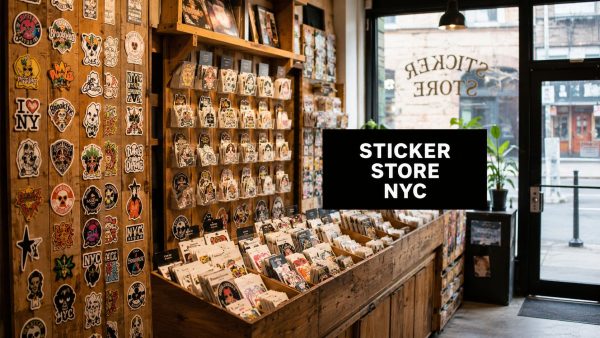
You're probably doing one of two things right now.
You're either walking around New York wanting a few cool stickers for a laptop, notebook, water bottle, or shop haul. Or you need something much more specific, like a custom car decal that won't peel after a few rainy weeks, fade in the sun, or turn into a frustrating install.
Those are two very different searches, and most guides blur them together. That's where people waste time. They search for a sticker store in NYC, visit a great stationery or gift shop, and leave with something fun but totally wrong for a windshield, body panel, tool box, or outdoor use.
Navigating Your NYC Sticker Search
New York gives you options for almost everything, and stickers are no exception. The city's retail sector includes 32,600 businesses and contributes $55 billion in taxable sales, which is a big reason even niche categories can survive in a crowded market, as outlined in the New York State report on NYC retail.
That scale is helpful, but it also creates confusion. If you type “sticker store in NYC” into search, you'll get a mix of souvenir shops, bookstore gift sections, stationery boutiques, artist markets, and occasional print shops. Those are not interchangeable.
Two sticker searches that look similar but aren't
The first search is casual. You want something eye-catching, city-specific, funny, artsy, imported, punk, anime-inspired, or handmade. For that, NYC is excellent. You can browse in person, find something unexpected, and buy it on the spot.
The second search is functional. You need a decal for a truck rear window, a Jeep hood, a tuner build, a memorial graphic, a family name set, or custom lettering that has to survive weather and washing. That search has tighter requirements. Material matters. Adhesive matters. File quality matters. Install prep matters.
Practical rule: Decide where the sticker is going before you decide where to shop.
If it's going on paper, plastic, a planner, or a laptop sleeve, local browsing works well. If it's going outside on a vehicle, glass, or anything exposed to weather, you need to shop by specification first.
Why local discovery still matters
There's still value in checking local shops, especially if you want inspiration. A strong retail presence often means a business is easy to find, easy to browse, and easier to trust at first glance. If you run a local brand yourself, our 2026 Google Business Profile guide is useful for understanding why some shops show up clearly in local search while others disappear into the noise.
The shortcut is simple. Start by asking one question: Do I want a cool sticker today, or the right decal for the job? That answer changes everything.
Where to Find Unique Stickers on the Ground
If your goal is discovery, not customization, shopping in person is still the fun part of the hunt. NYC has plenty of places where stickers show up as part of a broader creative retail mix. That usually means bookstore gift walls, stationery counters, indie design shops, museum stores, flea markets, and artist booths.

Best neighborhoods for browsing
East Village is where I'd point anyone looking for punk, zine-style, band-adjacent, or counterculture graphics. Shops there tend to reward wandering. You may not find a deep sticker-only selection, but you'll find personality.
SoHo is better if you want polished design, trend-driven packaging, giftable sets, and branded lifestyle graphics. Expect cleaner presentation and more curated inventory.
Brooklyn markets and maker spaces are where handmade and artist-run sticker culture is strongest. This is usually the best route if you want something that feels personal, small-batch, or tied to a local illustrator's style.
A quick visual pass through styles can help you narrow the trip:
| Area | Best for | Less likely to offer |
|---|---|---|
| East Village | Punk, graphic, underground styles | Clean custom vehicle graphics |
| SoHo | Curated gift and design stickers | Outdoor-rated specialty decals |
| Brooklyn markets | Artist-made, handmade, niche aesthetics | On-demand fabrication |
What to expect once you're inside
Most physical sticker sellers in NYC are set up for pre-made inventory, not technical production. That's the important distinction. They're built to display finished art, not to walk you through vinyl grades, transfer tape, overcut, or large-format install prep.
That fits the broader market too. While New York has a huge number of physical stores, the sticker market's growth is led by online channels, which hold 52.3% market share, according to Grand View Research's sticker market data. For custom work, especially anything durable or made to order, that shift matters.
Browse local when style is the priority. Shop specialist when performance is the priority.
If you want a feel for the kind of visual category spread buyers often look for online, this animal decal example gallery shows the difference between broad design inventory and what a typical storefront wall can realistically stock.

A practical way to shop in person
Use this order:
- Start with purpose: Are you buying for collecting, gifting, journaling, decorating, or outdoor use?
- Check the finish: Matte paper, glossy paper, laminated vinyl, and transfer decals are different products.
- Ask one direct question: “Is this made for outdoor use on a vehicle?” If the answer is vague, assume it isn't.
- Buy novelty locally: NYC is strong here.
- Don't force custom needs onto a gift shop: That's where people end up disappointed.
A lot of NYC sticker shopping is great. It just isn't all the same category.
Essential Questions for Any Sticker Seller
Buying stickers gets easier once you stop asking “Do I like this design?” and start asking “What is this made for?” Most bad sticker purchases come from category mistakes. People buy indoor stickers for outdoor use, paper labels for wet surfaces, or low-resolution art for large decals.

The five questions that matter most
- Material type: Ask whether it's paper, laminated vinyl, or cut vinyl. Paper is fine for journals and packaging. It's the wrong choice for cars, windows, and outdoor exposure.
- Water and sun exposure: Ask whether it's waterproof and UV-resistant. If the seller can't answer clearly, that's a warning sign for anything going outside.
- Adhesive behavior: Ask whether it's meant to be permanent, removable, or residue-light on removal. The right answer depends on whether you want a long-term mount or something temporary.
- Install method: Ask if it arrives ready to apply, especially for lettering or multi-part designs. Transfer tape and proper spacing matter.
- Expected lifespan: Ask how long it should last in the intended use case, not in ideal conditions on a sample board.
One question NYC buyers often forget
A practical gap for many local buyers is legal outdoor use versus simple outdoor durability. Those are not the same thing. A sticker can survive outdoors and still be a bad idea if someone plans to use it for unauthorized posting or street advertising.
The problem is that many local sellers don't spell this out. As noted in the discussion of NYC fly-posting enforcement and outdoor product confusion, buyers often don't get clear guidance on whether a product has a 7+ year outdoor rating like Oracal vinyl, or whether its intended use creates legal risk.
Ask two separate questions: “Will it last outside?” and “Is my intended use allowed where I'm placing it?”
What a good seller sounds like
A knowledgeable seller usually answers in specifics. They'll tell you if a sticker is for indoor novelty use, short-term branding, or long-term outdoor application. They won't dodge the material question.
A weak seller tends to answer with broad reassurance. “It should be fine” is not a spec. “People use these on cars” is not a spec either.
Use this quick filter when you're comparing sellers:
| Good answer | Weak answer |
|---|---|
| “This is laminated vinyl for outdoor use.” | “They hold up pretty well.” |
| “This version is removable.” | “It depends.” |
| “Send vector art for sharp large prints.” | “Just email whatever image you have.” |
If you're serious about quality, treat sticker buying more like ordering parts than buying souvenirs.
The Reality of Custom Decals In-Store vs Online
This is the part most local guides skip. If you need a custom vehicle decal, your odds of walking into a random NYC retail shop and getting the right product on the spot are low.
That isn't because New York lacks creativity. It's because most retail sticker shops are merch shops, stationery stores, gift stores, or artist boutiques. They sell finished pieces. They usually don't operate like a dedicated decal production shop with the right vinyl inventory, cutting setup, artwork workflow, and install prep.

Why the mismatch happens
A lot of search content around a sticker store in NYC focuses on novelty and stationery shopping. That leaves a gap for drivers who want custom automotive decals. As discussed in this NYC sticker shopping context piece, buyers looking for custom vehicle decals usually end up ordering online for 7-year durability vinyl rather than finding local on-site production.
That lines up with what happens in practice. The equipment and workflow for durable cut vinyl or custom automotive graphics don't fit neatly into a small browse-first retail model.
Here's the main trade-off:
| In-store option | Online specialist |
|---|---|
| Immediate purchase | Better customization |
| Good for novelty finds | Better material control |
| Easier casual browsing | Better fit for vehicle use |
| Limited fabrication depth | Stronger decal-specific workflow |
What works and what usually doesn't
What works in-store: pre-made decals, artist stickers, novelty packs, simple logo stickers, and impulse buys.
What usually doesn't: same-day custom windshield banners, multi-color layered cut graphics, niche vehicle-specific designs, large outdoor decals, and anything requiring clear install prep.
To understand how made-to-order sticker businesses think about fulfillment and setup, Trendlytic's guide to POD stickers is useful. It doesn't replace a decal specialist's workflow, but it does show why custom production behaves differently from shelf retail.
The product expectations also differ. A custom order often needs cleaner files, approval steps, production sequencing, and shipping. A retail sticker wall needs none of that.
After you compare categories, the gap becomes obvious. This custom decal example image reflects the kind of made-for-install work people often expect from local stores, even though most local shops aren't built around that service model.
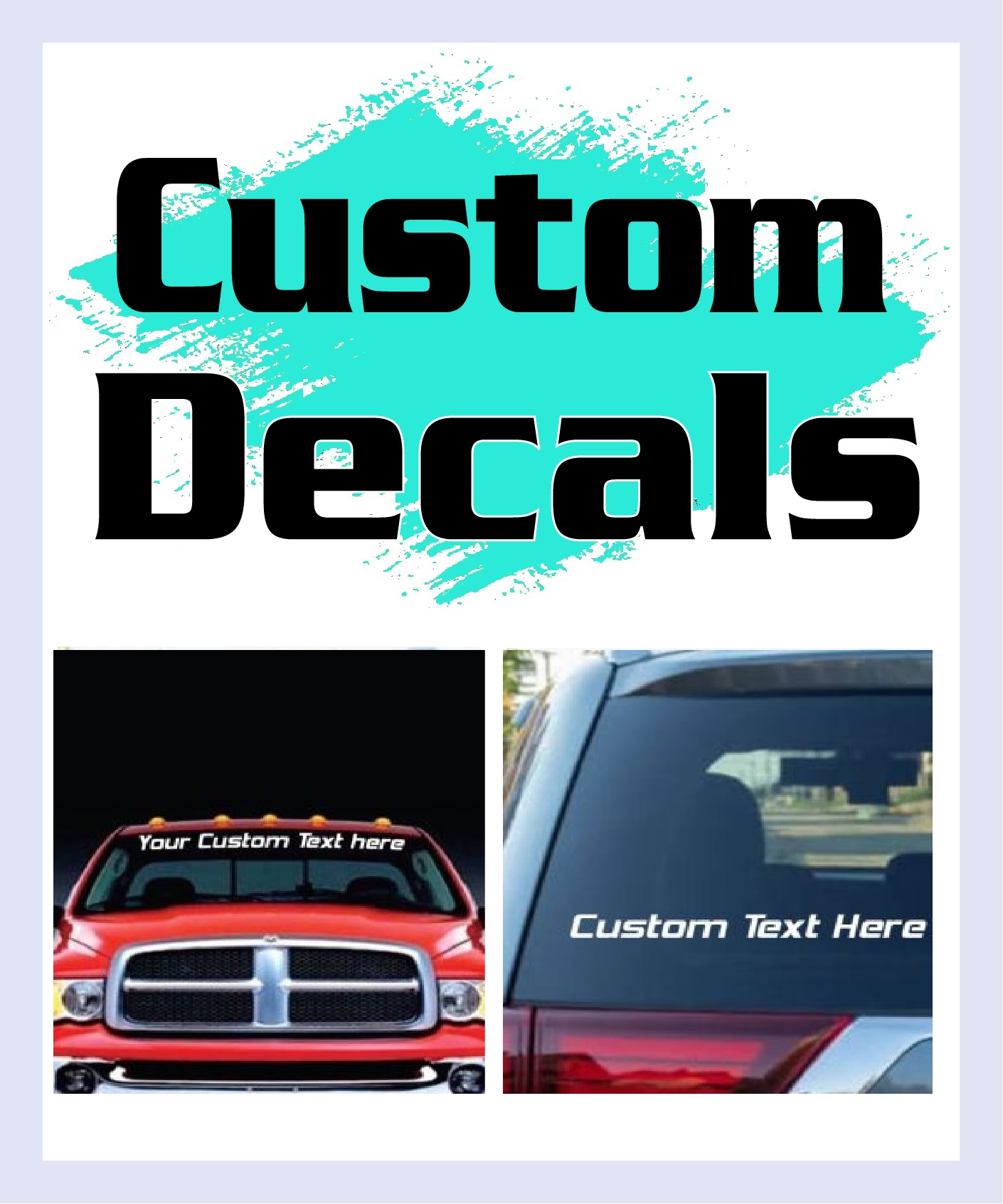
A quick visual can help illustrate the distinction further.
If the decal has to fit a vehicle, survive weather, and install cleanly, convenience matters less than specialization.
That's why “buy local” and “buy the right product” sometimes point to different answers.
A Deep Dive into Vehicle Decal Specifications
Vehicle decals are where small technical details make a big difference. People often focus on the design first, but cars and trucks punish weak materials fast. Heat, rain, washing, glass curves, and textured paint surfaces expose every shortcut.

The material spec you actually want
For automotive use, Oracal vinyl is the kind of material name worth knowing. Professional-grade automotive decals often use Oracal vinyl rated for 7-year outdoor use, and production quality also depends on processes like a 15 to 20% overcut to support cleaner, more bubble-free application, according to this decal production overview.
That single spec already separates serious vehicle decals from most gift-shop stickers.
A few practical points matter more than buyers realize:
- Cut vinyl vs printed sticker: Cut vinyl is often the better fit for lettering, names, windshield banners, and simple graphic shapes.
- Transfer tape matters: If the design has separate letters or elements, transfer tape keeps spacing intact during install.
- Pre-spaced layouts save frustration: Without proper spacing, alignment becomes guesswork.
- Outdoor rating isn't optional: Cars live outside, even when owners think of them as garage-kept.
Why file quality breaks orders
Large decals expose bad artwork fast. A file that looks acceptable on a phone screen can fail badly on a door panel or rear window. Pixelation is a common reason larger graphics get rejected or remade.
That's why vector artwork is the standard request for custom jobs. It scales cleanly. If you only have a low-quality screenshot, expect limits. Sellers can sometimes simplify or redraw, but that depends on the design.
Send the cleanest art you have. If it's going on a truck window, a blurry source file won't magically sharpen in production.
Matching the decal to the placement
Different vehicle zones need different thinking.
| Placement | What matters most |
|---|---|
| Rear window | Readability, clean transfer, weather resistance |
| Hood or body panel | Scale, edge cleanliness, high-resolution art |
| Side glass | Proper sizing and alignment |
| Small accent spot | Fine detail and adhesive behavior |
If you want a feel for common truck-oriented applications, this truck decal example shows the sort of placement buyers often target.

The main point is simple. For automotive work, “looks good online” isn't enough. The decal has to be built for the panel it's going on.
Understanding Prices Shipping and Value
A sticker from a bookstore bin and a custom outdoor vinyl decal are not competing products. One is an impulse buy. The other is closer to a small fabricated graphic. If you compare them as if they should cost the same, the custom option will always seem expensive.
It makes more sense to compare outcome. A cheap novelty sticker that curls, fades, or fails on install wasn't cheaper if you have to replace it or scrape it off.
What you're really paying for
With custom or vehicle-focused decals, the value usually comes from a few things working together:
- Material quality: Outdoor-rated vinyl costs more than paper stock.
- Production handling: Clean cuts, transfer tape, and spacing reduce install errors.
- Customization time: Even simple custom text needs setup.
- Shipping and packaging: A decal has to arrive flat, clean, and ready to apply.
For online ordering, patience is part of the exchange. In the custom decal category discussed earlier, buyers often need to accept a 5 to 8 day shipping window rather than expecting same-day local pickup. That wait is usually the price of getting the right material and production process instead of settling for what happens to be hanging on a rack.
Why shipping cost changes buying behavior
A lot of sticker carts die at checkout, especially when the buyer feels the shipping charge outweighs the item. CartBoss has a helpful write-up on the impact of shipping on abandonment rates, and the core lesson applies here too. Buyers don't just evaluate product price. They evaluate the full landed cost.
That's why specialist offers can matter more than sticker-by-sticker list price. Free shipping thresholds and bundle promos often make an online order stronger value than it first appears, especially if you're buying several decals at once for a truck, Jeep, toolbox, or family set.
The practical recommendation is straightforward. If you want novelty, buy locally and enjoy the instant gratification. If you want durability, clean install, and custom fit, order from a specialist and judge the purchase by how it performs after months outside, not by how fast you got it.
If you need durable vinyl decals instead of novelty stickers, Custom Sticker Shop is the practical place to start. They make premium American-made decals using professional-grade Oracal vinyl rated for up to 7 years outdoors, offer more than 1,200 car and truck designs, pre-space and transfer-tape orders for easier installation, and typically deliver in 5 to 8 days. Prices start at $7.99, free U.S. shipping applies to orders $25+, and the unlimited Buy 2 Get 1 Free offer makes multi-decal orders much easier on the wallet.