
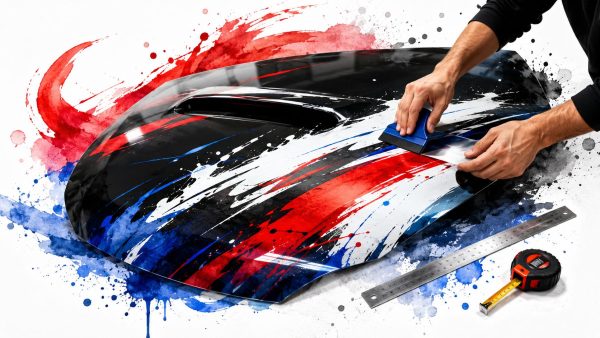
You're probably looking at your hood right now and thinking one of two things. Either it's too plain, or it already says something about the vehicle that you've outgrown.
That's where hood decals for cars make sense. The hood is the first panel observed from the front, and it's one of the biggest uninterrupted surfaces on the vehicle. A good decal can sharpen the whole look. A bad one can look crooked, glare in your face, lift at the edges, or leave you regretting the install every time you walk up to the car.
In a family-run vinyl shop, you learn fast that buyers don't just need design ideas. They need honest guidance about material, placement, paint compatibility, installation, cleaning, and removal. That's what decides whether a hood graphic becomes part of the vehicle or just another short-lived mod.
More Than a Sticker A Statement on Your Hood
Car owners have been using the front end to send a message for a very long time. The tradition goes back to 1911, when Rolls-Royce added the Spirit of Ecstasy hood ornament, part of a larger era when the hood became a strong symbol of status and identity in automotive design, as noted in this history of hood ornaments.
That front-end expression didn't disappear. It changed form. Adhesive vehicle graphics grew into mainstream automotive styling in the mid-20th century, and factory hood decals were firmly established by the performance era. One well-known example is the Pontiac Trans Am hood bird, first offered under option code WW7 for the 1973 model, part of the shift that made hood graphics a recognizable feature rather than an oddball custom touch, according to this history of car decals.
That's why a hood decal never feels like “just a sticker” when it's done right. It sits in the same place older cars carried ornaments, scoops, blackout treatments, and performance graphics. It's the visual handshake of the vehicle.
Why the Hood Matters More Than Other Panels
A door decal can look good. A rear window graphic can add personality. But the hood has more visual authority because it's broad, flat enough to show a design clearly, and tied closely to how the car presents itself.
Three common reasons owners choose hood decals for cars:
- They want a stronger identity. Jeep owners often want a tougher trail-ready look. Muscle car owners want heritage styling. Truck owners want something that breaks up a large painted surface.
- They want contrast without repainting. Vinyl changes the look without committing the vehicle to permanent bodywork.
- They want the modification to feel intentional. A hood decal can tie together wheels, grille, stripe packages, and windshield banners.
A hood decal works when it looks like the vehicle should have come that way.
If you're shopping for a vehicle-specific style, this Jeep Wrangler hood decal design is a good example of how a graphic can frame the hood rather than just occupy space.
Choosing Your Canvas Materials and Sizes Explained
Most installation problems start before the backing paper ever comes off. They start with the wrong vinyl, the wrong finish, or measurements taken by eye.
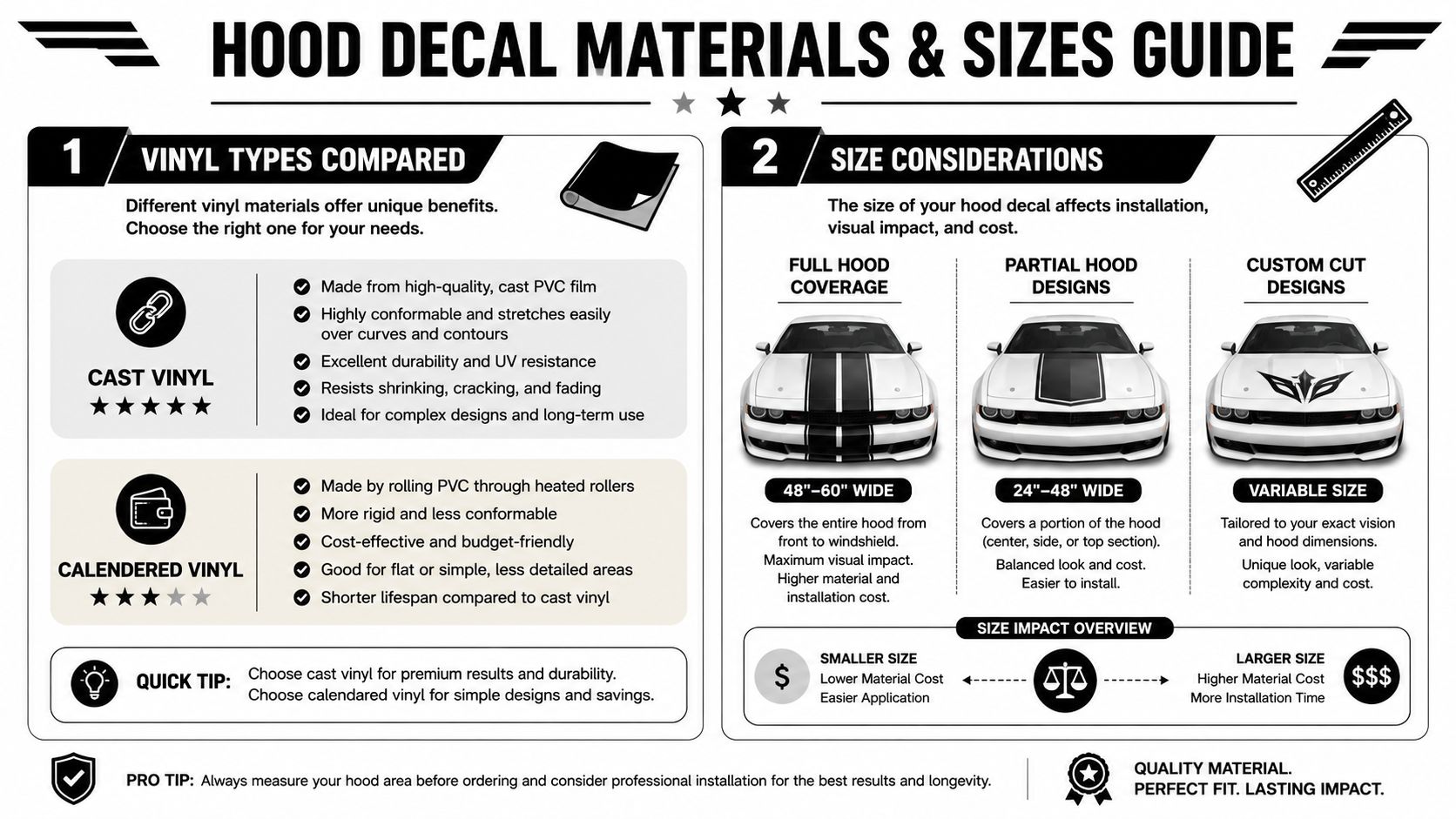
Cast vs calendered vinyl
The simplest way to explain it is house paint. Premium paint lays down smoother, lasts longer, and handles exposure better. Budget paint might look fine at first, but it shows its limits sooner. Vinyl behaves the same way.
Here's the practical difference:
| Material | Best use | What it does well | Where it struggles |
|---|---|---|---|
| Cast vinyl | Long-term hood graphics, contours, premium installs | Conforms better, stays more stable, handles curves and recesses more gracefully | Costs more |
| Calendared vinyl | Flatter surfaces, shorter-term graphics, budget-focused installs | Lower upfront cost, usable on simple layouts | Less forgiving on curves, more likely to fight you on complex hood shapes |
On a flat older hood, lower-grade material can sometimes be acceptable. On a modern hood with vents, washer nozzles, edge breaks, cowl transitions, or sculpted lines, cheap film often tells on itself.
Finish matters more than people think
The finish changes both the style and the daily driving experience.
- Gloss vinyl reflects more light and tends to blend better with glossy factory paint.
- Matte vinyl gives a more subdued, tactical, or blackout look.
- Metallic films can pop hard in sunlight, but they can also become visually busy on already complicated body shapes.
A finish that looks great in photos can feel wrong in real traffic. On hoods especially, glare matters. A graphic lives in your field of view more than a fender decal does.
How to measure a hood the right way
Don't measure only the widest point. That's how people order graphics that look oversized near the windshield and undersized near the nose.
Use this process:
- Find the actual placement area. Decide whether the decal will sit centered, cowl-biased, nose-forward, or full-span between body lines.
- Measure width in more than one place. Front, middle, and rear hood widths can differ.
- Measure usable length. Account for washer nozzles, vents, scoops, badges, and body creases.
- Check edge clearance. Leave room from hood edges unless the design is made to wrap or terminate on a body line.
- Mark centerline and reference points. Painter's tape helps you visualize scale before ordering.
Practical rule: If a hood has strong creases, measure the flat visual field inside them, not the entire sheet metal width.
If you want to test scale before committing, a custom car decal order lets you work from your own dimensions and layout instead of guessing from a generic size chart.
Designing Your Look Placement and Style Tips
Some owners know exactly what they want. Most don't. They know the mood they're after, but not the shape, proportion, or placement that will get them there.
Three common owner styles
A Jeep owner usually wants something that adds edge without clutter. Side-aligned hood graphics, cowl-focused text, and military-inspired silhouettes tend to work because they follow the shape of the hood instead of fighting it.
A veteran or patriotic driver often wants a tribute graphic that reads clearly from a distance. Those designs work best when they use strong contrast and leave enough painted space around them so the message doesn't disappear into the panel.
A tuner or JDM fan usually leans toward sharper shapes, rising lines, offset placement, or motorsport influence. Those decals can look excellent on smaller hoods, but they need restraint. If the hood, windshield, and side glass all compete for attention, the car starts looking pieced together.
Placement changes the whole vehicle
Centered graphics look formal and balanced. They suit symmetrical designs, hood birds, and broad blackout treatments.
Offset graphics feel more aggressive. They work especially well on off-road builds and modern trucks because asymmetry can echo the vehicle's lines.
Cowl-biased graphics keep more open paint toward the nose and put the emphasis closer to the windshield. That can make the hood look shorter and wider.
A few style checks help before you order:
- Match the body language. Angular vehicles usually suit harder-edged graphics.
- Use contrast on purpose. A black decal on a dark gray hood can look refined, but it may read softer than expected.
- Respect the hood features. Scoops, vents, and nozzles should look integrated, not like obstacles the design forgot.
If you're mocking up concepts before buying, studying AI image prompt engineering can help you create better preview images and compare placement ideas before any vinyl gets cut.
If the decal only looks right in a close-up product shot, it's probably not right for the vehicle.
The Perfect Application A Step-by-Step Installation Guide
Most DIY installs fail for boring reasons. Dust on the panel. A hood that's too hot. Not enough squeegee pressure. Pulling transfer tape too fast. The process isn't mysterious, but it does reward patience.
A quick visual helps before you start.
Start with the panel, not the decal
GM's installation guidance is a solid benchmark for large hood graphics. It specifies that the hood and surrounding air should be 70°F to 90°F (21°C to 32°C), the surface should be cleaned with 70% isopropyl alcohol, and the adhesive should be worked down with firm, overlapping squeegee pressure from the center outward, as shown in this GM hood decal installation sheet.
That matters because pressure-sensitive adhesive doesn't forgive contaminated paint. Wax residue, oils, detail spray, or road film all reduce bond quality.
Use a simple prep sequence:
- Wash first. Remove dirt and grit before alcohol touches the paint.
- Dry completely. Water hiding near hood edges can creep back into your work area.
- Wipe with 70% isopropyl alcohol. Use a clean microfiber.
- Do a final dust check. Hood decals show contamination fast because they cover such a visible panel.
Wet method vs dry method
There isn't one “correct” method for every hood decal. Large graphics often benefit from a wet approach because it gives you a little more control during alignment. Dry installs usually grab faster and can be cleaner in skilled hands.
The trade-off looks like this:
- Wet application helps with positioning and can reduce trapped bubbles on larger pieces.
- Dry application works well when the decal is simpler, the installer is experienced, and the hood shape is straightforward.
A useful companion read on handling outdoor vinyl in rougher-use vehicle areas is this guide to durable truck bumper stickers. The panel is different, but the lessons about edge handling and exposure translate well.
A shop-floor install routine that works
Set the decal on the hood with the backing still on. Center it. Step back. Check body lines, grille center, washer nozzles, and windshield alignment before you tape anything.
Then follow this order:
- Create a hinge with masking tape. Usually across the middle for larger hood graphics.
- Peel one section at a time. Don't expose the whole adhesive side unless the decal is very small.
- Squeegee from the center outward. Overlap your strokes. Don't chase bubbles randomly.
- Remove transfer tape slowly. Peel back at a low angle.
Here's the video version if you prefer to watch the motion and tool handling:
Sensitive finishes and modern surface problems
Many generic guides become inadequate when considering these factors. Matte paint, ceramic-coated hoods, and textured films can all change how vinyl behaves. General installation guidance for large decals notes that wet application can improve positioning and reduce bubbles, but hood-specific advice on sensitive finishes is still a common gap, as discussed in this large decal installation overview.
A few practical rules matter:
- Matte paint: Use clean tools and avoid dragging hard plastic across the surface. Matte finishes can mark more easily.
- Ceramic-coated surfaces: Bond can become less predictable if the coating is fresh or slick. Test adhesion in an inconspicuous area first.
- Textured films or wraps: Expect less contact area and more edge risk. Some graphics will not hold well long term on heavily textured surfaces.
One product detail that is very helpful on DIY installs is when decals arrive pre-spaced and transfer-taped. It reduces stretching during handling and keeps multi-part graphics aligned before they ever touch the hood. Custom Sticker Shop offers decals in that format, which can make larger hood layouts more manageable for first-time installers.
Slow hands beat fast hands on hood installs. Most mistakes happen when the installer tries to “save time” in the first minute.
Beyond Aesthetics Practical and Legal Considerations
A lot of buyers still judge a hood decal by one standard. Does it look good in photos? That's too narrow.
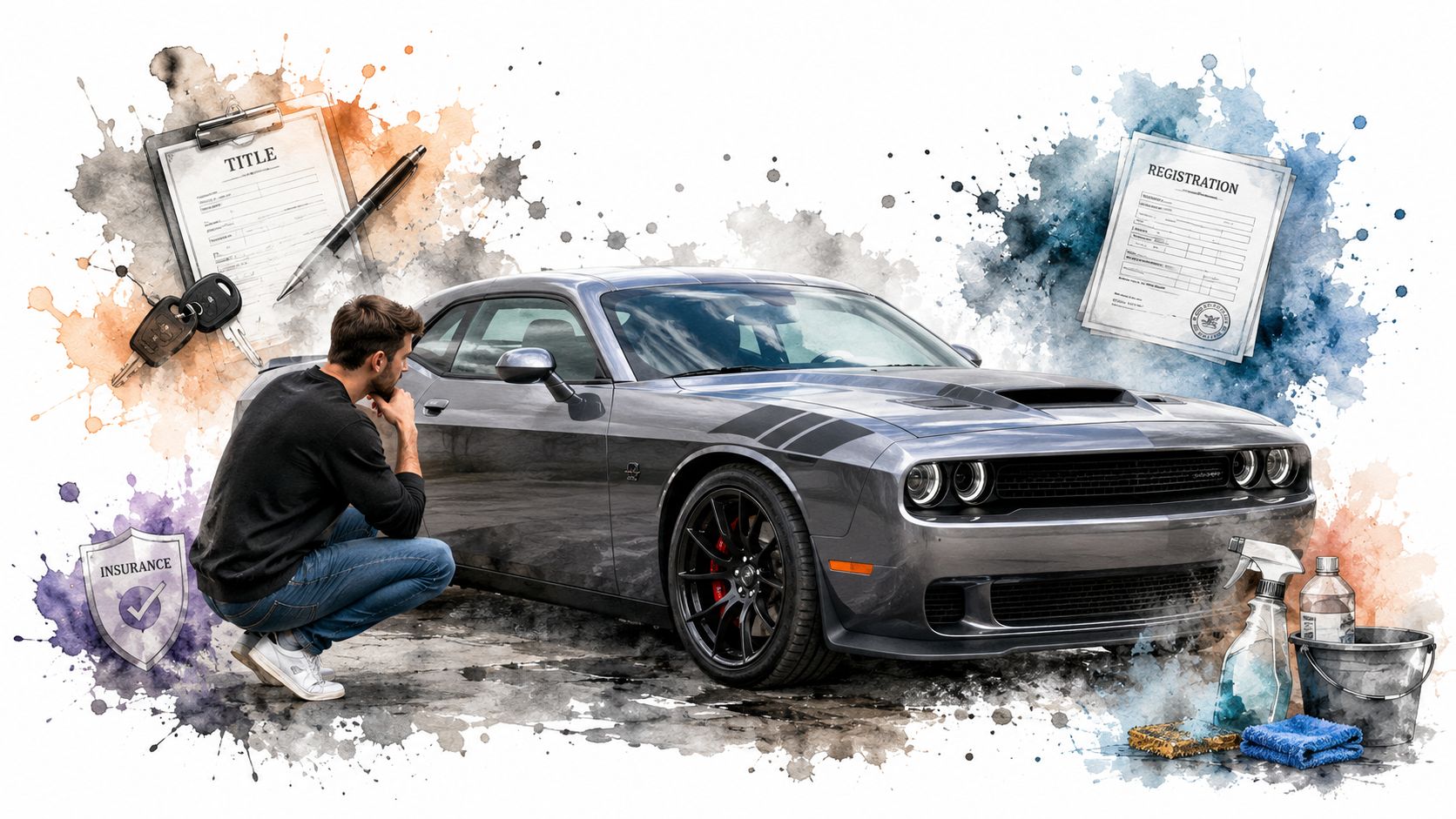
Large hood graphics can change how the vehicle feels to live with day after day. That's especially true with dark finishes, metallic films, and wide coverage designs that remain in your line of sight from the driver's seat.
The real ownership trade-offs
One often-missed issue is glare. Some finishes reflect more than buyers expect, especially when the sun is low or the hood has a steep angle. Other finishes reduce reflection but can absorb heat differently.
Another concern is surface temperature and paint behavior over time. Mainstream product pages often present hood graphics as a reversible styling upgrade, but they rarely answer practical questions about daytime glare, hood-surface temperature, and paint health in long-term ownership. That gap is specifically noted in this overview of hood graphic performance considerations.
Here's the balanced view:
- Dark hood graphics can change the visual brightness of the hood and may alter how the panel behaves in full sun.
- Metallic or glossy films may create more visible reflection depending on hood angle.
- Removal years later can be simple or stubborn depending on sun exposure, film quality, and how well the surface was prepared.
Legal and common-sense checks
Most hood decals for cars are legal if they stay on the panel and don't interfere with safe operation. Problems start when owners treat the hood as a billboard and forget that driving still comes first.
Use a quick checklist before ordering or installing:
| Check | Why it matters |
|---|---|
| Driver visibility | Nothing should distract or obstruct your normal view over the hood |
| Vehicle identity | Avoid graphics that could be confused with official emergency or law enforcement markings |
| Reflectivity | Highly reflective films can become annoying in bright daylight |
| Body feature clearance | Hood vents, nozzles, and panel edges shouldn't force awkward trimming that leads to lift |
Good-looking vinyl that annoys you every sunny afternoon is a bad purchase.
Care Removal and Protecting Your Investment
Once the decal is on, the job shifts from installation to ownership. Most hood graphics age well when owners wash them properly and catch little problems early. Most of the ugly failures come from neglect, harsh cleaning, or letting a small lifted edge turn into a peeling corner.
Washing without shortening decal life
Hand washing is the safest routine. Use normal car-wash soap, a clean mitt or microfiber, and rinse dirt off before you wipe across the decal.
A few habits help a lot:
- Wash with the edge, not against it. Scrubbing into an exposed edge encourages lift.
- Use mild products. Harsh solvents and abrasive compounds can dull or damage the film.
- Be careful with pressure washers. If you use one, keep the spray from attacking the decal edge directly.
Check the perimeter during routine washes. If you see a corner starting to lift, deal with it right away instead of waiting for heat, rain, and airflow to make it worse.
Removal without turning it into body-shop work
Sooner or later, styles change. The key to removal is patience and controlled heat.
Use this sequence:
- Warm the decal gently. A hair dryer or low, controlled heat helps soften adhesive.
- Lift a corner carefully. Use a fingernail or plastic edge, not a metal blade.
- Peel slowly. Pull at a low angle instead of yanking straight up.
- Clean residue in stages. Start mild and test your cleaner before getting aggressive.
Older vinyl usually doesn't punish impatience. It rewards the opposite.
If residue remains, keep the process gentle. Work with safe adhesive-removal methods for automotive paint, then follow with a clean wash. The goal isn't just getting the film off. It's getting it off without trading one cosmetic problem for another.
Finding and Ordering Your Perfect Hood Decal
By the time you buy, three decisions matter more than anything else. Material, size, and placement. Get those right, and most style choices become easier because the decal already fits the vehicle and the way you use it.
Start with the hood itself. A flat, simple hood gives you more flexibility. A modern hood with vents, creases, and coating treatments demands more caution. Then decide whether you want a subtle accent, a side-runner graphic, or a large center treatment that becomes the face of the vehicle.
What to confirm before you click order
Use a short pre-purchase check:
- Vehicle fitment: Generic dimensions aren't enough if the hood shape is unusual.
- Finish choice: Think about daily glare, not just the product photo.
- Install method: Be honest about whether you're doing this yourself or handing it to a shop.
- Removal expectations: If you like changing styles often, choose accordingly.
If you want to tie the hood into the rest of the vehicle, a custom text windshield banner decal can help create a more complete look without overloading the body sides.
The better orders are usually the simple ones. Buyers who measure carefully, leave room around body lines, and choose a finish that suits both the vehicle and its intended driving environment usually end up happiest with the result. The hood doesn't need noise. It needs intent.
If you're ready to put a graphic on the most visible panel of your vehicle, Custom Sticker Shop is worth a look for hood, windshield, and body decal options. It's a veteran-friendly, family-run shop in Topeka, Kansas, producing American-made vinyl decals with a wide catalog of vehicle styles, custom text options, pre-spaced transfer-taped layouts, and buyer-friendly shipping and bundle offers.