
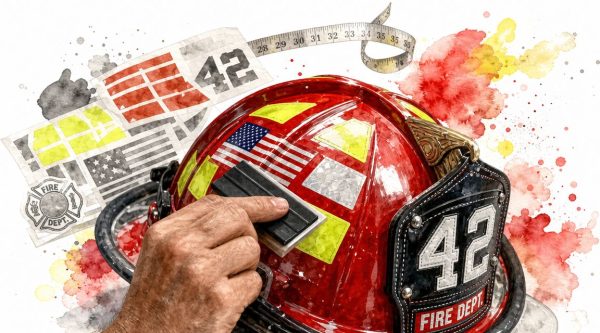
You're probably looking at a helmet right now, or thinking about ordering decals for one. Maybe your old markings are peeling at the corners. Maybe you just got assigned to a company and want your lid squared away before the next shift. Or maybe you're a newer firefighter and you're trying to figure out what belongs on a helmet because you want to do it right the first time.
That instinct is the right one.
A firefighter's helmet isn't fashion gear. It's part of your working identity on scene. The markings on it help other firefighters, company officers, and command figure out who you are, what company you're with, and sometimes what role you're filling without wasting words. Good helmet decals support visibility, accountability, and role recognition. Bad ones turn into clutter, peel off at the edges, or create confusion when things get loud, dark, and fast.
There's also a cultural piece to this. Fire service tradition matters. Pride in your company matters. Memorial markings matter. But the tradition means more when it's tied to function and discipline, not just looks. If you're going to put anything on your helmet, it ought to belong there, fit the helmet correctly, and stay put under real use.
More Than Just a Sticker An Introduction to Helmet Decals
A clean helmet with the right markings tells people something before you ever speak. It tells them you respect the job, your department, and the basics of accountability. That matters more than people think.
Firefighter helmet decals stickers became much more standardized after the 1970s as departments pushed for better incident identification and accountability, and the FDNY leather helmet marking system remains a widely recognized example of how shield and number arrangements identify rank and company at a glance, supporting scene recognition and command-and-control in modern operations according to fire helmet decal guidance. That shift is why marked helmets are now normal in the field instead of plain lids with little or no visual information.
Why markings matter on the fireground
When visibility drops and the radio gets busy, quick recognition matters. A helmet marking can help an officer identify a member across a room, on a ladder, or moving through a chaotic front yard. It can also help mutual aid crews understand who they're looking at without stopping to ask.
Practical rule: If a decal helps another firefighter identify you faster and more accurately, it's doing its job. If it only adds flash, it probably doesn't belong on your helmet.
That doesn't mean every decal has to be sterile or stripped of personality. Tradition has always lived alongside utility in the fire service. Company pride, memorial designs, and service-themed graphics all have a place when they don't interfere with department markings or operational clarity. If you want something that reflects that side of the job off-scene or on personal gear, a Thin Red Line fireman American flag decal fits that role better than crowding a working helmet with too much extra material.
The right mindset
Think about helmet decals the same way you think about glove straps, flashlight placement, or hood storage. The question isn't whether something looks good. The question is whether it works, whether it lasts, and whether it helps or hurts when conditions get ugly.
A lot of probies get hung up on the look first. Veterans usually go the other direction. They care whether the marking stays stuck, stays readable, and lines up with department practice. That's the standard worth following.
Choosing Your Decal Materials and Durability
You come back from a few runs, wipe the lid down, and notice the edge of a helmet decal already starting to curl. That usually isn't an application problem. It's a material problem that started at the order screen.
A working helmet takes heat, soot, UV, door-frame bumps, glove contact, and repeated cleaning. Decals that look fine in a product photo can fail fast once they're asked to live on a curved shell in real firehouse conditions. That matters because buyers keep asking for reflective and glow-style markings, while many product pages still say very little about how those materials hold up after real use, as shown in Firefighter.com's helmet decal listings.
What each material does well
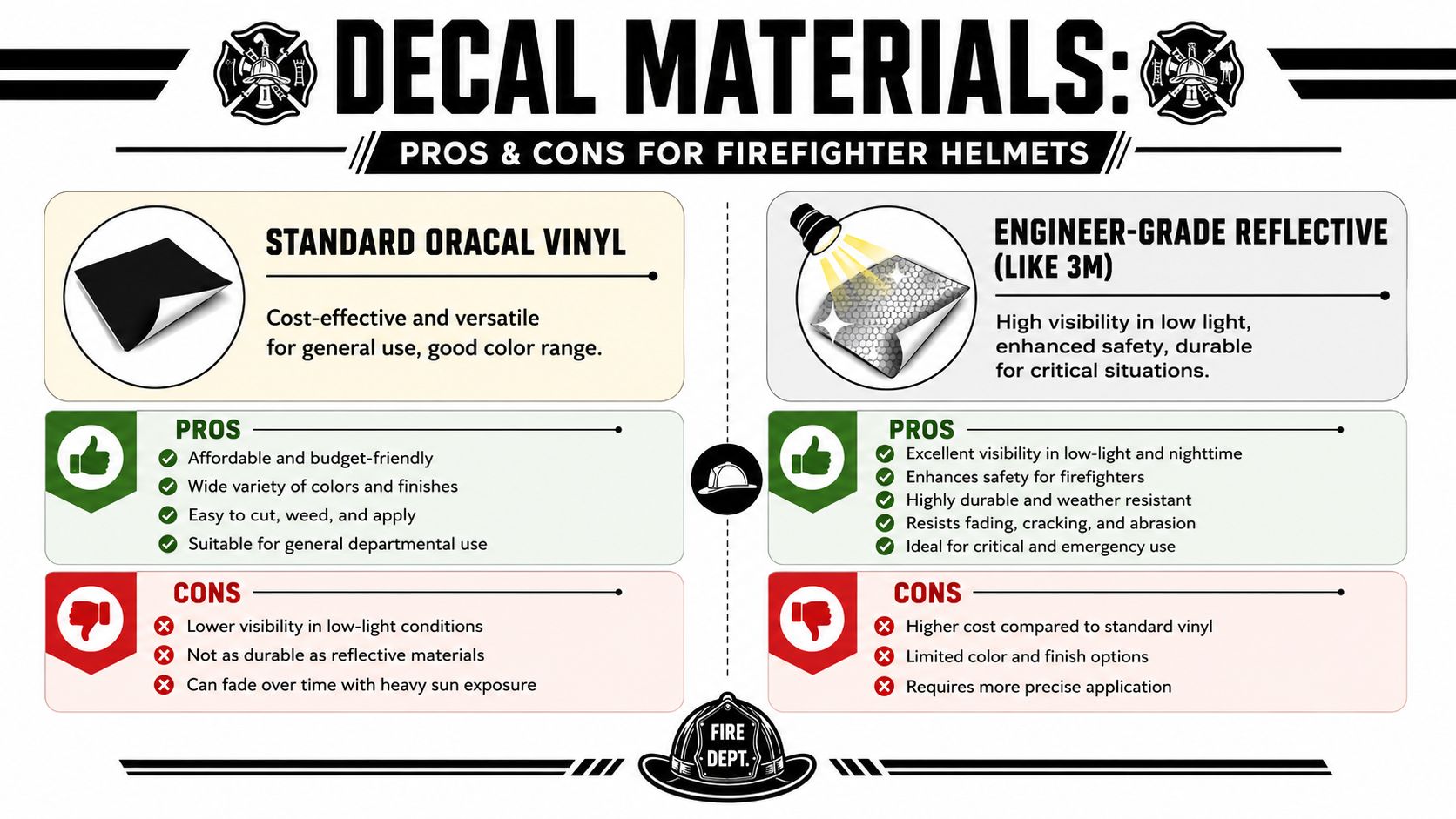
Standard vinyl is usually the best fit for simple graphics, memorial decals, and low-profile identification marks. It conforms better to curves, gives you more design options, and tends to go down cleaner on shells that aren't perfectly flat. For many firefighters, that makes it the practical choice for anything that does not need added night visibility.
Reflective film earns its place when fast recognition matters. Helmet numbers, company identifiers, and rank markings benefit from a material that kicks light back under headlights, scene lighting, and portable lamps. The trade-off is stiffness. Some reflective products are less forgiving on tight curves, and once an edge starts lifting, soot and grime work under it quickly.
Photoluminescent material serves a narrower purpose. It can help with passive visibility after light exposure, but it still has to survive the same wear as any other helmet marking. Department approval matters here, and so does placement. A glow decal buried on a high-contact corner won't stay useful for long.
Firefighter Helmet Decal Material Comparison
| Material Type | Visibility Day/Night | Heat Resistance | Average Lifespan | Best For |
|---|---|---|---|---|
| Standard vinyl | Good in daylight, depends on color at night | Varies by product and placement | Varies by use and care | Custom graphics, memorial decals, general marking |
| Reflective film | Strong in daylight and better in low light | Varies by product and placement | Varies by use and care | Numbers, letters, role ID, high-visibility markings |
| Photoluminescent | Visible after light exposure in dark conditions | Varies by product and placement | Varies by use and care | Passive visibility aids where approved by department |
Good material selection starts with the job the decal has to do. Identification markings need clarity first. Pride decals and memorial pieces need controlled size, good adhesion, and enough restraint that they do not compete with operational markings. If you want background on production methods, this article on choosing between screen printing or vinyl explains why vinyl usually makes more sense for smaller custom orders and curved applications.
What fails first is usually predictable. Edges lift. Corners catch. Large decals bridge across curves instead of laying into them. High-contact spots get chewed up by routine handling long before the center of the graphic wears out.
That is why I tell younger firefighters to be careful with aggressive full-graphic designs on a working lid. A personal piece like this Punisher skull flag fireman firefighter red line vinyl decal may be better on a locker, travel mug, rear truck window, or gear case unless your department allows it on helmets and the size stays under control.
The old rule still holds. Buy for the fireground first, and for looks second.
Veteran-owned shops usually understand that difference better than generic sticker sellers. They know a helmet decal is not wall art. It has to stay readable, stay attached, and respect the culture and markings of the job.
Sizing Placement and Department Regulations
You step off the rig into smoke, glance across the scene, and need to know who is who without hesitation. That is where helmet markings earn their place. Size and placement are not cosmetic choices. They affect identification, accountability, and how cleanly your helmet communicates on the fireground.
Fit the helmet, not the catalog photo
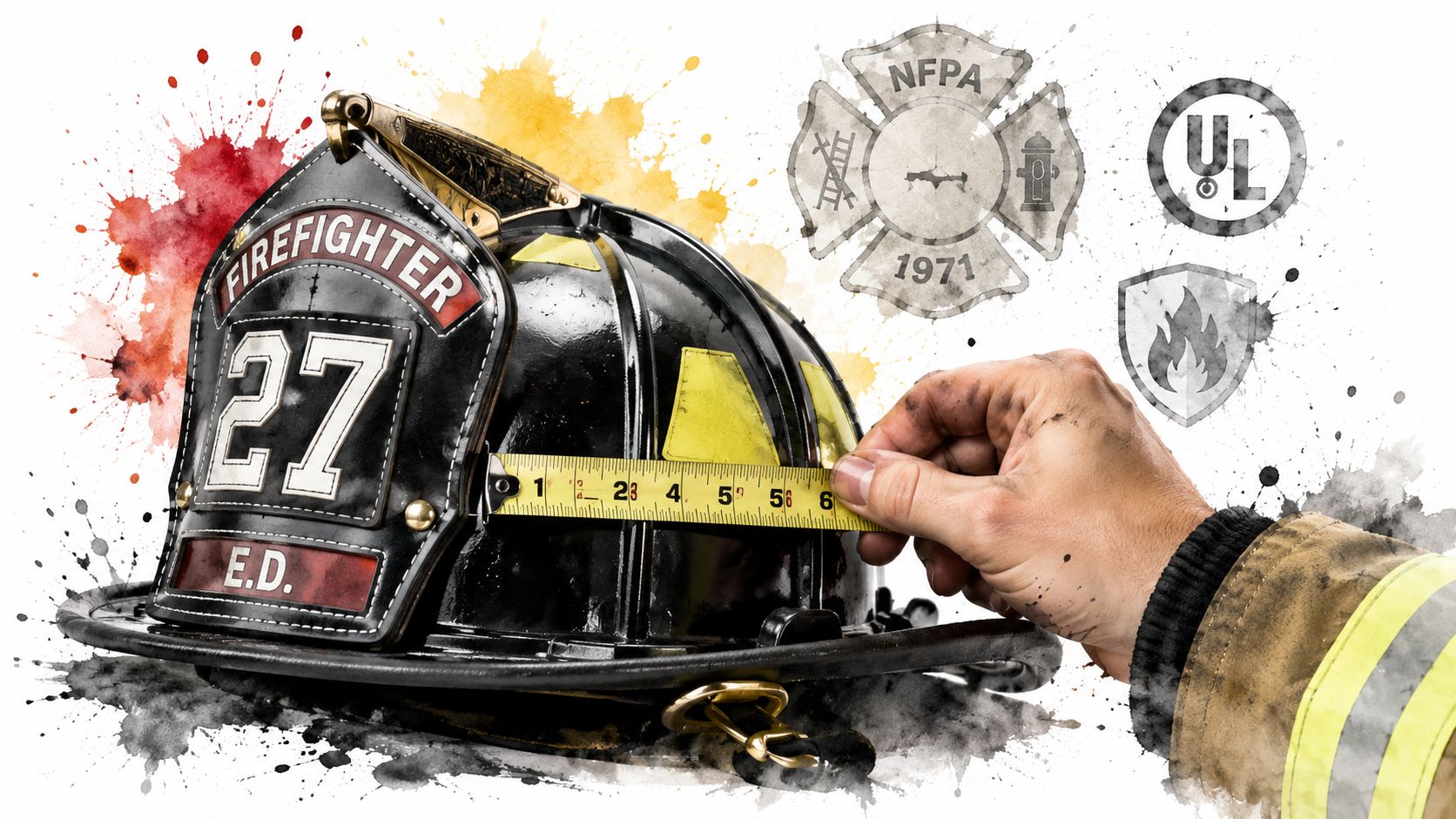
Every helmet shell has its own curves, ridges, and breaks in surface. A decal that looks balanced in a product photo can wrinkle, lift, or look crooked once it hits a real helmet. Bigger is not better here. Large graphics lose edge contact faster, crowd required markings, and can make the lid harder to read at a glance.
Start with the actual panel you plan to use. Measure the usable space, then subtract space near bends, seams, and transitions. If the decal fills the whole area on paper, it is usually too large for a working helmet.
A quick field check saves a lot of regret:
- Measure the panel you have: Use the flattest section, then account for the curve at the edges.
- Mock up the footprint: Tape a paper cutout in place and look at it from both sides and from a few feet away.
- Protect readability: Company ID, rank, and assignment markings need clear separation.
- Stay out of wear points: Brim edges, common grab spots, and storage contact areas take abuse first.
I tell younger firefighters the same thing every time. If you have to force the design to fit, it does not fit.
Department rules come first
Helmet markings usually follow local practice for a reason. The helmet has to identify the firefighter fast, match the department system, and avoid adding confusion at the wrong time. If your department assigns certain locations for company numbers, rank indicators, accountability markers, or certification decals, keep those areas clean and consistent.
That includes personal and memorial decals. A piece with meaning, such as an in-memory fireman firefighter crest decal, still has to stay secondary to required identifiers and department standards. Tradition matters in the fire service, but tradition also includes discipline. A clean, readable helmet shows respect for the job and for the people working beside you.
Veteran-owned shops usually understand this better than generic sticker sellers. They know a helmet decal has to hold up on a curved shell, stay in its lane, and support the marking system your crew already uses.
A helmet should answer questions fast. Who are you, what is your assignment, and can that be read under stress.
A Guide to Flawless Decal Application
Most decal failures get blamed on the vinyl. Most of the time, the actual problem is the install.
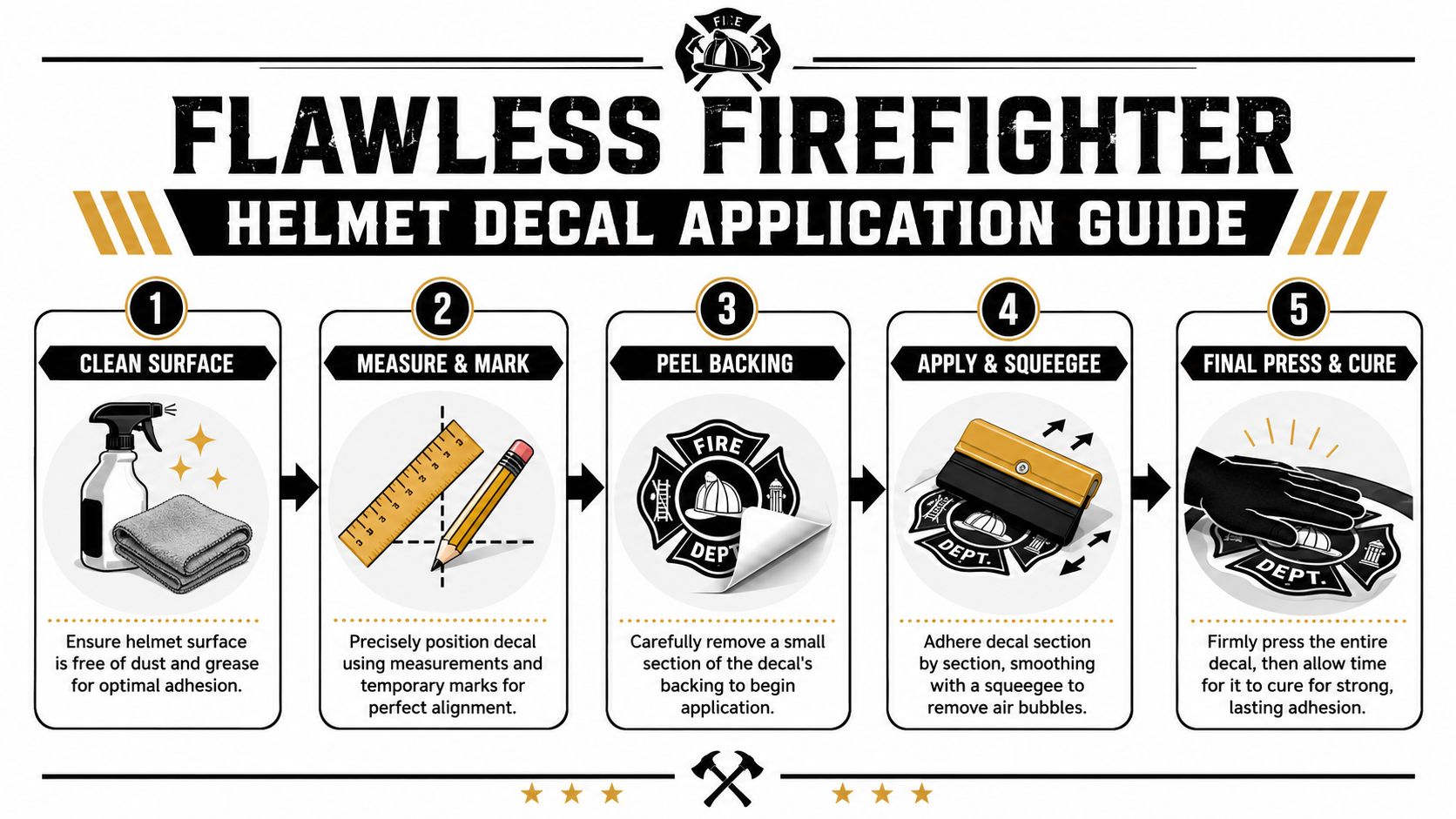
A successful decal installation depends on three key stages: surface preparation, alignment, and air-evacuation. A practical method shown in an installation demo is to clean the helmet with alcohol, let it dry completely, then apply the decal panel by panel while pressing from the center out to remove trapped air that can cause edge lift over time, especially on curved surfaces, as demonstrated in this helmet decal installation video.
The install sequence that works
Start with a clean shell. Not “looks clean.” Actually clean. Dirt, fingerprints, smoke film, and leftover residue from old adhesive will beat a new decal every time.
Follow a disciplined sequence:
Clean with alcohol
Wipe the target area thoroughly. Then let it dry all the way. Don't rush this.Set alignment before peeling
Hold the decal in place and check sight lines from more than one angle. On traditional helmets, side panels and crown transitions can make a centered decal look crooked once it's fully seated.Apply in sections
Don't try to force a large piece around multiple curves all at once. Work panel by panel.Press from the center out
Use a squeegee, a wrapped card, or firm thumb pressure. Push the air to the edge instead of trapping it under the film.Finish the edges
The last pass matters. If the edges aren't seated, they'll start catching dirt and lifting early.
For a visual walkthrough, this embedded demo shows the pacing and hand pressure you want to copy during install:
Trouble spots and fixes
Curved fire helmets create predictable trouble spots.
- Small bubble in the middle: Work it outward with steady pressure before the adhesive fully settles.
- Wrinkle near a sharp curve: Lift that section carefully and re-lay it with less material tension.
- Edge won't stay down: Stop and inspect the surface. Contamination is usually the culprit.
- Crooked placement: If you see it early, correct it early. Hoping it will look better later never works.
Clean surface, patient alignment, and bubble removal beat brute force every time.
Maintaining Your Helmet Decals for the Long Haul
You come back from a job, wipe down the helmet, and notice a corner starting to lift. That is the time to act. On the next run, that same edge can catch more grime, take more abuse, and leave the number or shield harder to read when someone needs to identify you fast.
Helmet decals live in a rough environment. Smoke residue, sun, repeated handling, rack wear, and cleaning habits all shorten their service life. Decals that fit the helmet correctly and sit flat on the panel usually last longer. Decals that span awkward curves or hang too close to edges tend to fail sooner. That is one reason sizing and placement matter well after installation day.
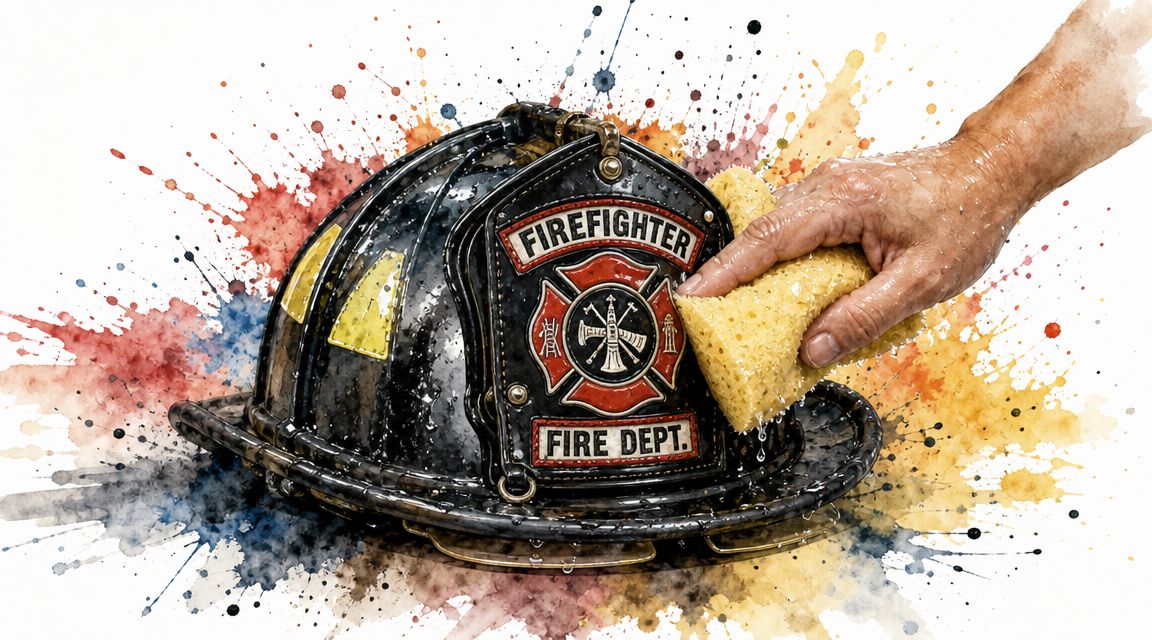
What good maintenance looks like
Treat the decals like any other piece of identification equipment on the helmet. If they help other crews, command, or mutual aid companies recognize assignment, rank, or company markings, they deserve the same routine attention as the rest of the helmet setup.
Check them during regular gear inspection. It takes seconds.
Look for these signs:
- Lifting corners: Once dirt and moisture get under the edge, the bond gets weaker fast.
- Cracked film: The decal may still be attached, but legibility and reflectivity drop.
- Dull reflective surface: If it does not catch light cleanly anymore, it is not giving you the visibility you bought it for.
- Residue packed along the edge: That usually means the edge is no longer sealed well.
- Torn or scuffed sections: Heavy wear often means replacement makes more sense than trying to save it.
A beat-up decal is not a mark of seniority. It is a worn identifier.
Cleaning without ruining the bond
A lot of decal damage happens in the bay, not on the fireground. Hard scrubbing, strong solvents, and picking at edges with a glove nail or tool will shorten decal life in a hurry.
Use mild soap, water, and a soft cloth or sponge. Wipe the surface clean without grinding debris into the film. Be especially careful around corners and cut edges, because that is where failure usually starts. If the decal is already cracked or peeling, cleaning will not fix it. It will confirm that replacement time is close.
There is a trade-off here. You want the helmet clean enough to inspect and present properly, but not so aggressively cleaned that you strip away markings your department relies on. Good maintenance means preserving function first.
If your department has written standards for helmet markings, follow them. If it does not, use common sense and officer guidance. Keep decals readable, reflective if required, and consistent with company practice. That respects both the job and the tradition behind the helmet.
Order with Confidence from a Veteran-Friendly Shop
By the time you order firefighter helmet decals stickers, the hard decisions should already be made. You should know what belongs on the helmet, what material fits the job, what size the shell can handle, and how you're going to install it without rushing the process.
That's the difference between buying a decal and setting up a working helmet correctly.
What to look for in a decal shop
Don't shop by artwork alone. Shop by whether the seller seems to understand real use.
A solid shop should make it easy to tell what material you're getting, whether the design is suited to curved surfaces, and how the decal is supposed to be installed. If the listing is all style and no practical detail, be cautious. Fire service markings aren't novelty labels. They need to hold up, stay legible, and arrive cut cleanly enough to apply without a fight.
Here's what matters most:
- Material clarity: You should know whether you're ordering standard vinyl, reflective film, or another specialty option.
- Clean production: Sloppy cuts and poor transfer setup create avoidable install problems.
- Practical designs: Small, readable, helmet-friendly layouts beat oversized art every time.
- Supportive service: If you have a question about fit or application, you should be able to get a straight answer.
Why veteran-friendly businesses appeal to firefighters
A veteran-friendly shop often approaches the work with the right mindset. Respect for service, attention to detail, and no-nonsense communication go a long way. That doesn't automatically guarantee a better decal, but it usually points you toward people who understand that symbols tied to service aren't casual purchases.
That matters for firefighters. So does buying from a family-run operation that seems built around durability instead of gimmicks.
When you order, keep your standards simple. Choose what serves the job. Keep the design clean. Follow department rules. Install it carefully. Replace it when it stops performing.
A sharp-looking helmet is fine. A readable, durable, regulation-friendly helmet is better.
If you want decals from a veteran-friendly, family-run source, Custom Sticker Shop is worth a look. They've been making American-made vinyl decals since 2001, use professional-grade Oracal vinyl, and focus on clean production and straightforward ordering. For firefighters who want personal decals, memorial graphics, or service-themed designs from a shop that respects military and first responder culture, it's a practical place to start.