
You’re probably standing in the accessory aisle with a small packet in your hand, looking at a decal that would take your truck, Jeep, or daily driver from plain to personal in about ten minutes. That’s the appeal of autozone car decals. They’re easy to find, easy to buy, and easy to install if you pick the right one.
That convenience matters. A lot of enthusiasts don’t want to wait on a full custom order just to add a windshield banner, a flag, a logo, or a small bedside graphic. Sometimes you want something today.
Your Guide to AutoZone Car Decals
AutoZone built that kind of convenience at scale. The company operates 7,710 stores globally and opened 53 new locations in a recent quarter, which is a big reason its accessories are so accessible for drivers across the U.S., Mexico, and Brazil, according to Fox 13’s coverage of AutoZone’s store expansion. If you need a decal on the same day you buy wiper blades or cleaning supplies, few chains are easier to rely on.
That doesn’t mean every decal on the peg is the best choice for your vehicle.
A lot of buyers lump all decals together, but the trade-offs are real. One decal is made to survive years of sun and washing. Another is made to look good long enough for a season. One fits a flat rear window just fine. Another struggles on a curved panel and starts lifting at the edges because the material or adhesive isn’t up to the job.
The real buying question
The question isn’t whether AutoZone decals are “good” or “bad.” The better question is this:
Buy the off-the-shelf decal if you want a fast, simple visual upgrade. Look elsewhere if you want exact sizing, a personal design, or a graphic you expect to keep on the vehicle for years.
That’s the split most enthusiasts eventually run into. Off-the-shelf works for impulse buys, simple statements, and common styles. It’s often good enough for now.
Custom work is for the owner who cares about fit, finish, color, and lifespan.
Who benefits most from a shelf decal
AutoZone decals make the most sense for a few common situations:
- Quick personalization: You want to break up a stock look without waiting on design proofs.
- Small graphics: Window corners, simple logos, and accent pieces are low-risk buys.
- Test-fitting a style: You’re not sure whether you want a banner, side graphic, or emblem long-term.
- Gift purchases: A branded or themed decal is an easy add-on for another enthusiast.
If that sounds like you, AutoZone is a solid starting point. If your vehicle is a long-term build, or you care about the difference between “looks fine” and “looks factory-clean,” material and construction start to matter much more.
What Decal Types Can You Find at AutoZone
AutoZone’s decal section usually breaks into a few distinct product types. If you know what each one is meant to do, you’ll make better choices and avoid sticking the wrong material in the wrong place.
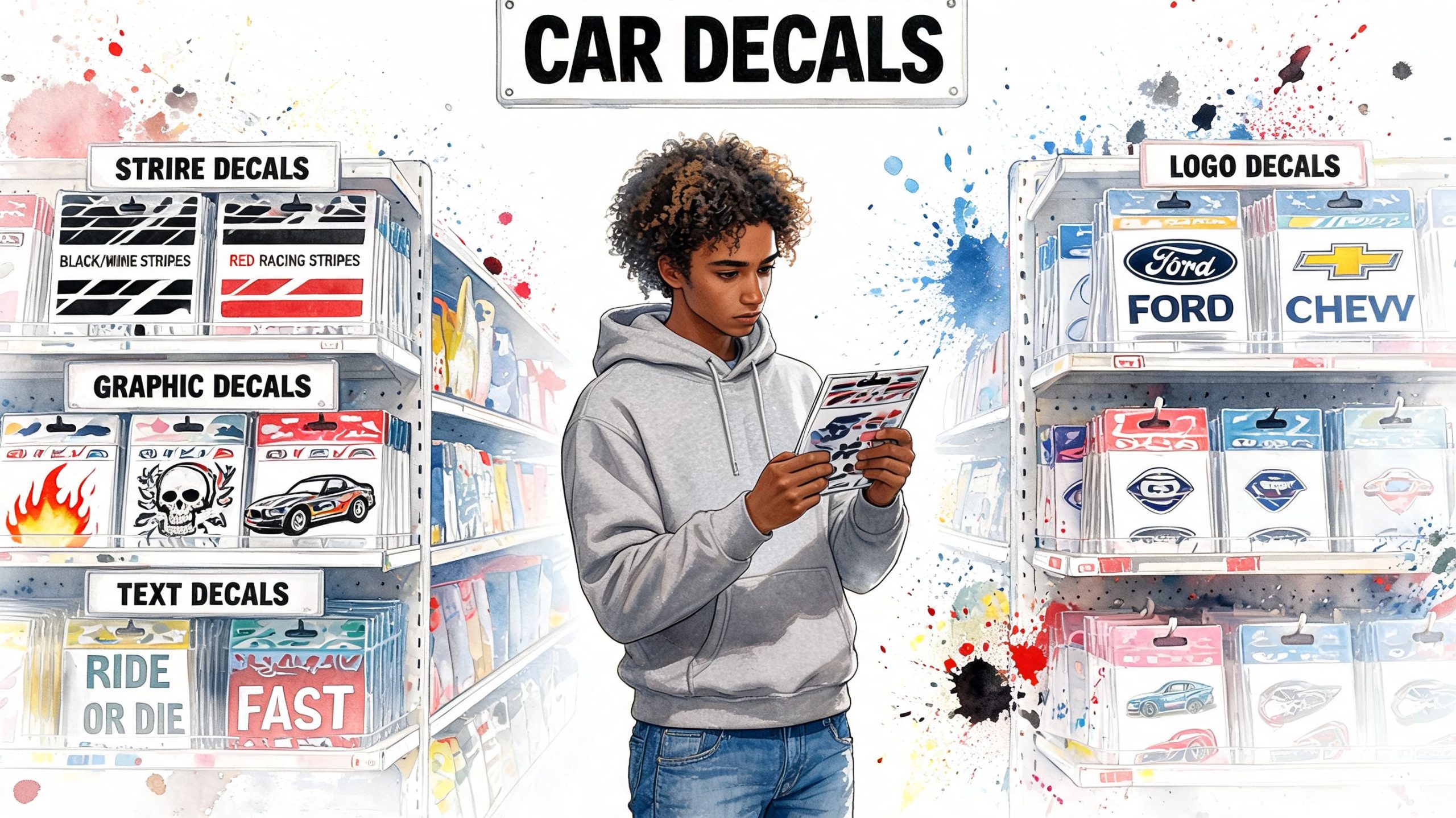
Die-cut vinyl graphics
These are the closest thing to the clean “painted-on” look people usually want. A die-cut decal removes the background material and leaves only the letters or shape. That matters on glass and body panels because it avoids the cheap boxed-sticker look.
Use these when you want:
- Simple text or symbols: Brand names, initials, flags, silhouettes.
- Cleaner edges: Better visual integration on windows and smooth paint.
- Less visual bulk: No printed background to trap dirt around a clear border.
They’re usually best on flatter areas. A basic die-cut decal can struggle if you try to force it over compound curves, textured plastic, or panel seams.
Printed stickers and logo decals
These are common for sports logos, novelty graphics, character art, and multicolor designs. They’re easy to sell because they grab attention on the rack. They’re also usually the fastest way to add color without going fully custom.
The downside is that printed decals often look more like stickers than graphics. If the edge line is obvious, or the laminate and adhesive are average, they can age faster than a well-made cut vinyl piece.
For a quick windshield corner, toolbox sticker, or rear glass accent, they’re fine. For a hood, bedside, or large body-panel application, they often look temporary.
Metallic and 3D emblem-style decals
Beyond simple vinyl, AutoZone’s aisle also carries aluminum-based decals from brands such as Chroma Graphics that use metallic substrates and paint-safe foam tapes to resist abrasion, chemicals, and temperatures from -40°F to 180°F, as shown in AutoZone’s Chroma Graphics product listing.
Those pieces solve a different problem than flat vinyl. They’re for people who want texture, thickness, and a badge-like look.
A metallic emblem can look more at home on a grille, fender, or tailgate than a flat sticker ever will.
They also tend to hold up better in harsher use. If your truck sees brush washes, road grime, and weather swings, a rigid emblem-style product often outlasts a standard sticker.
Where each type works best
A simple way to choose:
| Decal type | Best use | Weak point |
|---|---|---|
| Die-cut vinyl | Windows, smooth flat paint, subtle custom look | Less forgiving on complex curves |
| Printed sticker | Multicolor art, novelty graphics, quick add-ons | Can look temporary on large exterior areas |
| Metallic or 3D emblem | Grilles, tailgates, fenders, badge-style accents | Less flexible for custom sizing |
If you’re leaning toward text across the windshield, it helps to look at purpose-built options like custom text windshield banner decals because that format needs the right proportions more than a generic shelf decal does.
Understanding Decal Durability and Lifespan
Most buyers focus on the design first and ask about lifespan later. In practice, the material stack matters just as much as the artwork.
Sun is the first enemy. Heat is the second. Water, washing, road salt, and poor prep finish the job.
What UV lamination actually does
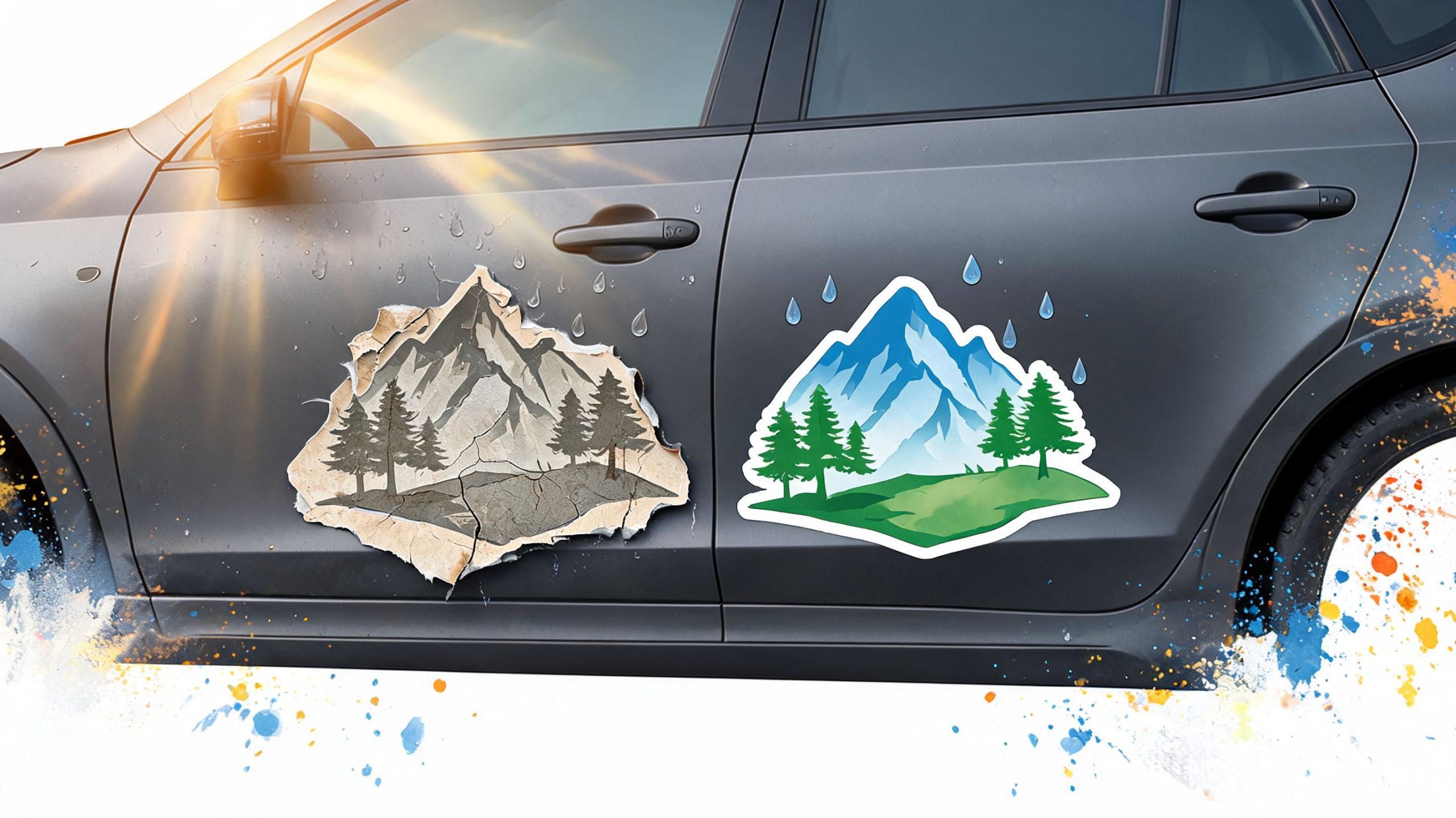
Some premium decals sold through major retailers specify high-grade vinyl with UV-resistant lamination. That protective layer matters because it absorbs damaging UV wavelengths, helping the decal hold color and adhesion for 3-5+ years, while non-laminated vinyl can degrade 50-70% faster, based on AutoZone’s Fanmats product information.
That sounds technical, but the practical outcome is simple. Better lamination slows fading, brittleness, and edge failure.
If you’ve ever seen an old sticker turn chalky, crack at the corners, or lose color unevenly, that’s usually the material losing the fight against sun exposure and weather.
Why some decals fail early
Early failure usually comes from one of four things:
- Weak surface prep: Wax, road film, and oils stop the adhesive from bonding correctly.
- Poor installation temperature: Cold surfaces stiffen the film and make adhesion less reliable.
- Cheap material stack: Thin film and vague “weather resistant” labeling often tell you very little.
- Bad maintenance habits: Harsh cleaners and aggressive scrubbing shorten a decal’s life.
One maintenance mistake shows up all the time. People wash around graphics with whatever is under the sink. If you want a plain-language explanation of why that’s a bad move, this guide on why dish soap harms vehicle paint is worth reading. The same kind of harsh washing routine that strips and stresses paint protection can also work against decal edges and finish over time.
Practical rule: If a decal listing tells you it’s weather resistant but doesn’t tell you what the face film, laminate, or outdoor rating is, assume you’re buying on appearance, not on lifespan.
What to look for before you buy
When you compare autozone car decals or any other option, check for specific signs of quality:
- Laminated printed surface: Especially important for exterior color graphics.
- Application method: Transfer-taped and pre-spaced graphics usually install cleaner than loose small pieces.
- Intended location: Glass, painted metal, textured trim, and curved panels all ask different things of a decal.
- Clear durability language: Specific outdoor ratings are more useful than broad packaging terms.
Durability doesn’t come from one feature. It comes from the whole build, plus the way you install and maintain it.
AutoZone Decals vs Custom Vinyl Graphics
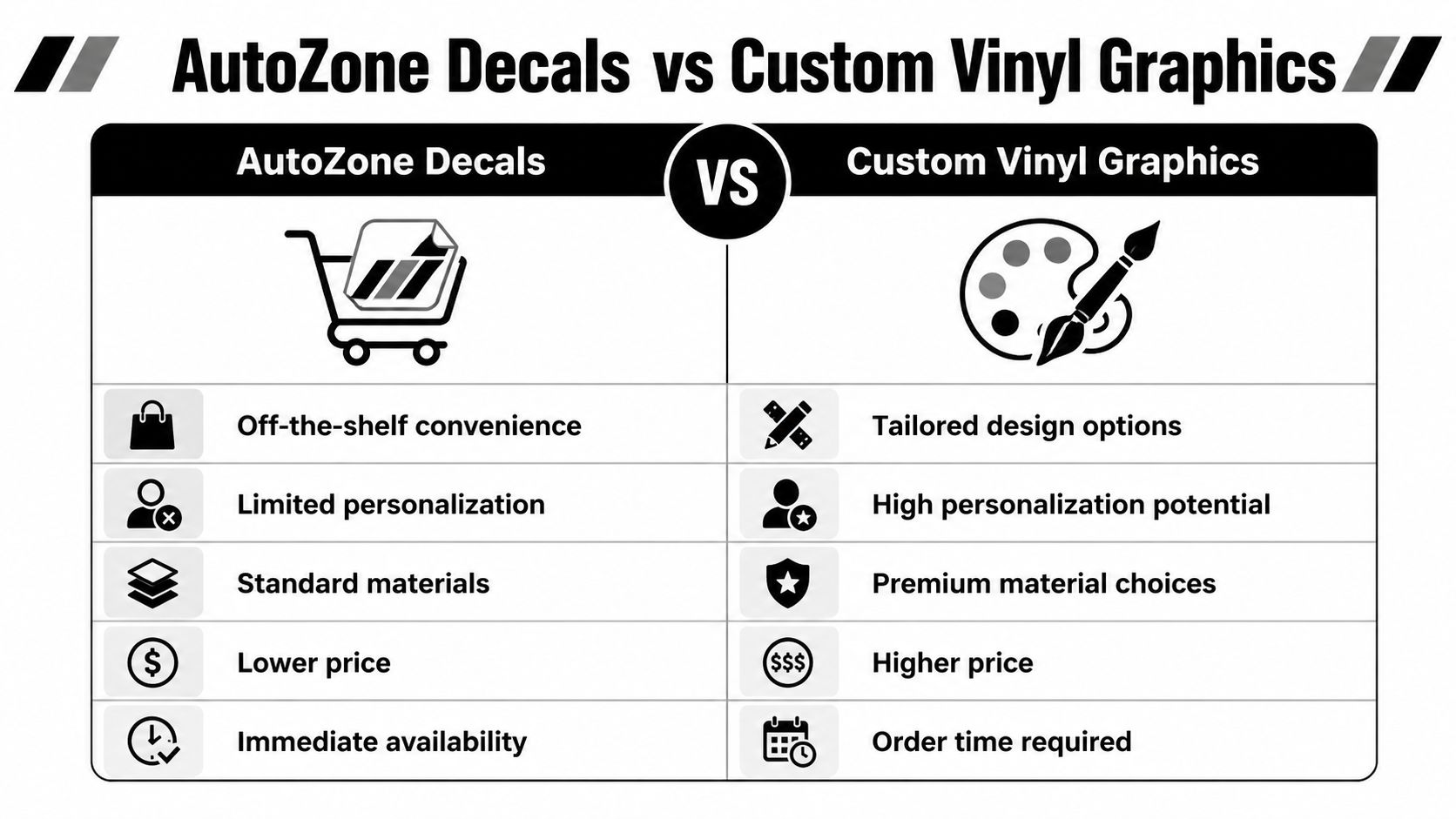
The decision now takes a practical turn. Shelf decals win on speed. Custom vinyl wins on control.
If you need something this afternoon, AutoZone has the advantage. If you care about matching the exact width of your windshield, fitting a body line, choosing a specific font, or knowing what vinyl you’re getting, custom work is the stronger option.
Convenience versus specification
Most off-the-shelf decals are built to appeal to the broadest audience possible. That means generic sizes, common themes, and packaging language that stays broad enough to fit many products. That’s not automatically bad. It’s just limiting.
Specialty decal makers usually work the opposite way. They focus on fitment, layout, and material disclosure. That matters if your vehicle isn’t stock-looking, if your application area is unusual, or if you want a cohesive style instead of a random accessory.
Off-the-shelf versus custom decals
| Feature | AutoZone Decals (Off-the-Shelf) | Custom Vinyl Graphics (e.g., Custom Sticker Shop) |
|---|---|---|
| Availability | Immediate if your local store has it | Requires ordering and waiting |
| Design options | Limited to stocked styles | Built around your text, layout, or vehicle style |
| Sizing | Standardized packaging sizes | Better suited to exact placement |
| Material transparency | Often broad terms like weather resistant | More likely to specify exact vinyl type and outdoor rating |
| Best use | Fast personalization and simple accents | Long-term builds and personalized graphics |
| Value over time | Fine if expectations are modest | Better if durability and fit matter more than speed |
The biggest difference is transparency
A key difference is disclosure. AutoZone listings often use terms like “weather resistant” or “outdoor durability,” but they rarely give a guaranteed lifespan. By contrast, specialist sellers can be much clearer. One example is the use of professional-grade Oracal vinyl rated for up to 7 years outdoors, which gives buyers a much stronger benchmark, as noted in this AutoZone-related comparison point on durability transparency.
That doesn’t mean every custom decal is automatically superior. Plenty of online sellers are just reselling low-grade material with nicer mockups. But when a seller tells you the vinyl line, the outdoor rating, and how the graphic is prepared, you’re buying with your eyes open.
If you care about long-term value, the best decal isn’t the cheapest one on the rack. It’s the one you won’t feel like replacing in six months.
Design freedom changes the result
This is the part enthusiasts notice right away. Custom graphics let you dial in proportions. A windshield banner can sit correctly instead of looking too tall. A bedside stripe can follow the body line instead of fighting it. A hood graphic can be sized for your exact model, not a generic panel estimate.
That’s why vehicle-specific styles tend to look more intentional. For example, if you like aggressive truck graphics, a purpose-built option such as a Ford Ranger Raptor style graphic decal shows what happens when a design is made for a specific visual language rather than a universal shelf peg.
Who should buy which
AutoZone decals are the better choice when:
- You want something today
- You’re decorating a small area
- You’re experimenting with style
- You don’t need exact fitment
Custom vinyl is the better choice when:
- You want a unique design
- You care about exact dimensions
- You expect outdoor longevity
- You want the graphic to feel integrated with the vehicle
That’s the key difference. One is convenient. The other is deliberate.
A Practical Guide to Buying and Installing Decals
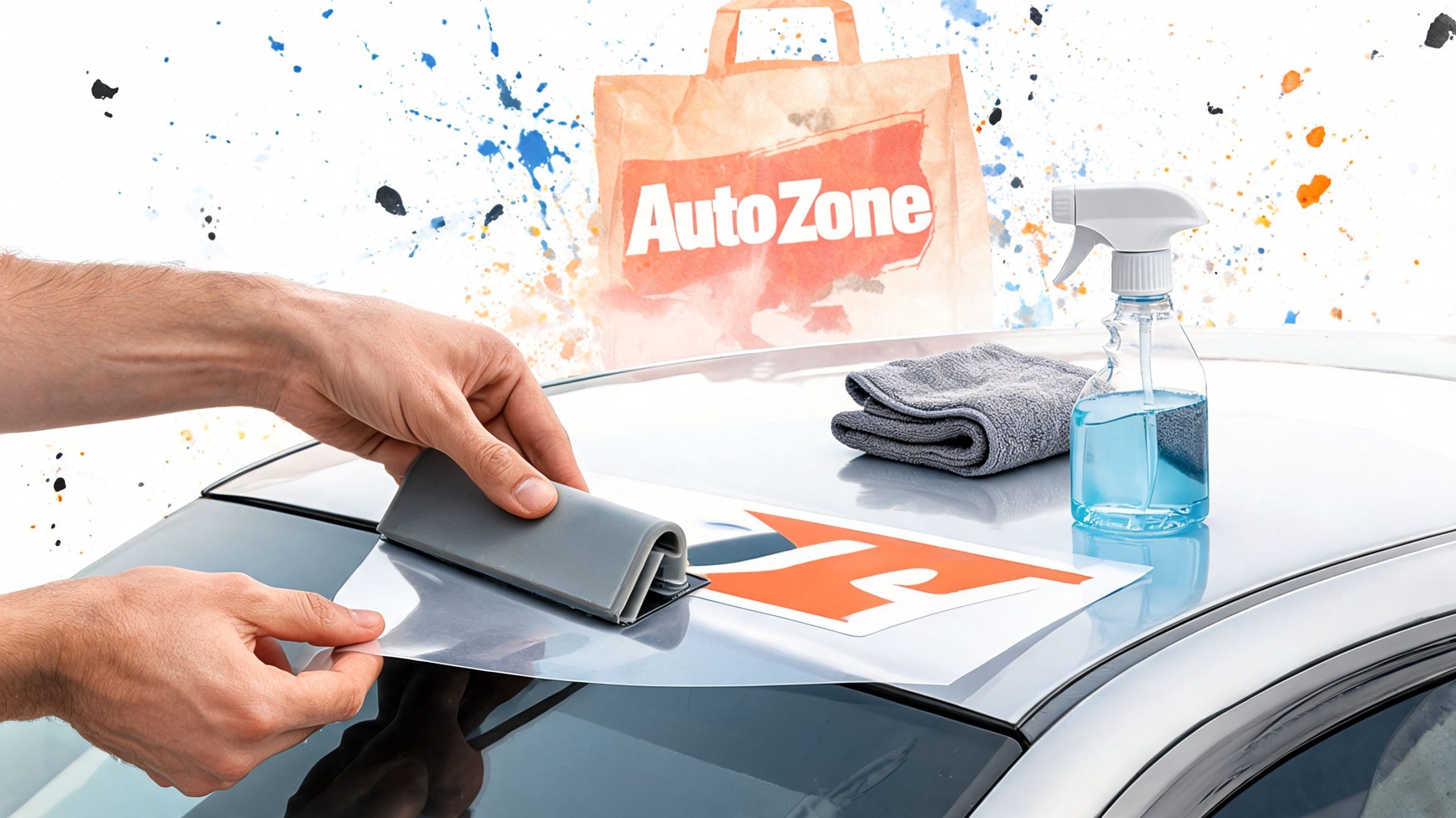
Good material can still look bad if you rush the install. Most decal problems blamed on the product are prep problems, alignment mistakes, or poor placement choices.
Before you buy
Start with the panel, not the graphic.
Measure the space where the decal will go. Check width, height, nearby trim, body lines, and whether the panel curves more than you first noticed. A decal that looked perfect in the package can look undersized on a full-size truck door or oversized on a compact rear window.
Also think about contrast. Matte black on dark tinted glass works. Light silver on silver paint usually disappears. If the whole point is visibility, pick a color that separates from the panel behind it.
A few buying checks help avoid regret:
- Check the application area: Glass is easier than textured plastic or heavily curved sheet metal.
- Look at edge complexity: Tiny details and thin script demand a steadier install.
- Buy from verified sellers: The FTC has documented car wrap scams where victims lose over $10,000, which is a strong reminder to stick with reputable retailers and secure checkout options, as explained in the FTC’s car wrap scam alert.
- Match the product to the job: A novelty sticker and an exterior body graphic are not the same purchase.
A cleaner install in simple steps
Use this process for most transfer-taped vinyl decals:
Wash and dry the area
Remove dirt first. Then wipe the exact install zone with isopropyl alcohol to remove wax, oils, and residue.Test-position the decal
Hold it in place with painter’s tape. Step back and check body lines, trim gaps, and level.Use the hinge method
Tape one edge so the decal can flip up like a door. Peel the backing, then lower the graphic in a controlled way.Squeegee from the center outward
Use firm, overlapping passes. That pushes air out and seats the adhesive evenly.Remove transfer tape slowly
Pull it back at a sharp angle, not straight up. If part of the vinyl lifts, stop and press it back down.
For readers who want a visual walkthrough, this install video covers the pacing and hand pressure that make a big difference:
Common mistakes that ruin a good decal
Don’t install on a dirty panel and assume the adhesive will “grab anyway.” It won’t hold the way it should.
Avoid these habits:
- Rushing cold installs: Cold vinyl gets stiff and less forgiving.
- Stretching the decal into place: That often creates tension and later edge lift.
- Ignoring cure time: Let the adhesive settle before heavy washing.
- Buying blind from unknown sellers: If you want personalized graphics, stick with established shops offering secure payment options, such as make-your-own custom car decals from a verified storefront.
A patient install beats a fancy decal applied badly every time.
The Best Decal Alternative for True Car Enthusiasts
Enthusiasts usually outgrow generic shelf decals.
That’s not an insult to autozone car decals. They serve a purpose well. They’re accessible, fast, and often good enough for a quick styling change. But once you care about the build as a whole, “good enough” starts to feel temporary.
Where custom starts to make sense
A serious Jeep owner wants graphics that fit the body and still look right after mud, sun, and repeated washes. A truck owner wants bedside or hood graphics that align with the lines of the vehicle instead of looking like an afterthought. Military-themed buyers usually want a design that means something personal, not just a generic patriotic sticker pulled from a rack.
That’s where custom alternatives separate themselves. You get more control over proportion, placement, color choice, and the overall tone of the vehicle. You can keep it subtle, go full off-road style, or build a theme around service, family, hunting, fishing, or tuner culture.
Built to last versus bought for now
The best way to think about it is simple:
- Off-the-shelf decals are for fast gratification.
- Custom vinyl graphics are for owners who plan to live with the result.
The more your vehicle reflects your identity, the less sense it makes to decorate it with the same graphic anyone can grab on the way to buy oil and washer fluid.
If you view your car or truck as transportation, a shelf decal is enough. If you view it as your project, your hobby, or part of your identity, custom is usually the better investment.
That doesn’t mean every panel needs a full graphic package. Sometimes the right move is one properly sized windshield banner, one tailgate graphic, or one clean tribute decal made from better material and installed with care. Small, intentional choices almost always age better than impulse styling.
Frequently Asked Questions About Car Decals
Can car decals go through an automatic car wash
Usually, yes, after the decal has had time to bond properly. Touchless washes are gentler than brush washes. If the decal is freshly installed, wait before washing so the adhesive can settle. If you already see lifting edges, avoid automatic washes until you fix them.
How do you remove an old car decal without damaging the paint
Use gentle heat from a hairdryer, then lift a corner slowly with your fingernail or a plastic edge. Pull back gradually instead of yanking upward. If adhesive remains, use an automotive-safe adhesive remover and finish with a clean wash.
Are vinyl decals reusable
No. Once you remove a vinyl decal, the adhesive and film usually distort. Even if you manage to peel it off in one piece, it won’t go back down cleanly or hold the same way again.
If you’re ready to skip the generic aisle and get something made for your vehicle, Custom Sticker Shop is worth a look. They produce American-made decals with professional-grade Oracal vinyl rated for up to 7 years outdoors, offer a wide range of military, Jeep, family, truck, and custom-text designs, and package graphics for easier bubble-free installation. For enthusiasts who want a decal that feels intentional instead of temporary, that’s the better lane.