
You've found the song that belongs in the room. Maybe it's your first-dance track, the lyrics your parent always played, or a line that says exactly what you can't. Then the shopping gets strangely difficult: the same words appear as a paper print, a stretched canvas, and a vinyl decal, each promising to become the perfect keepsake.
Don't choose by image alone. Song lyrics wall art is a format decision before it's a shopping decision. The material controls how permanent the piece feels, how easily you can install it, how clearly the text reads, and whether it suits a living room, rental bedroom, nursery, hallway, or memorial space.
Why Song Lyrics Wall Art Feels Different From Generic Prints
Generic wall art usually has one job: support the room's colors and proportions. Lyrics have another job first. They carry a memory, relationship, place, or emotion, so the piece needs to feel intentional rather than merely coordinated.
That emotional weight changes what “right” means. A delicate paper print may be ideal for a wedding gift because it feels personal and frameable. A canvas may better suit a living room where the lyrics need visual authority. A removable decal can work beautifully in a rental or dorm, but it won't create the same heirloom feeling as a framed piece.
Start with the memory, not the listing photo. Ask yourself whether you want the artwork to feel:
- Permanent and gift-worthy, which points toward a framed print or canvas.
- Large and expressive, which usually favors canvas.
- Flexible and removable, which makes vinyl more practical.
- Quiet and readable, which calls for restrained typography and enough negative space.
The words also need to survive the room visually. A lyric that feels moving when sung can become cluttered when printed too small, stretched across a busy background, or installed where people can't read it comfortably.
Buyer's rule: Choose the medium that matches the emotional role of the piece, not the format that looks best in a marketplace thumbnail.
For inspiration beyond standard lyric listings, explore That Blanket Co word art styles. Seeing how words can become the main visual element, rather than an afterthought over a photograph, helps clarify whether you want typography-led art, a bold statement, or a softer keepsake.
Comparing Prints, Canvases, and Vinyl Decals
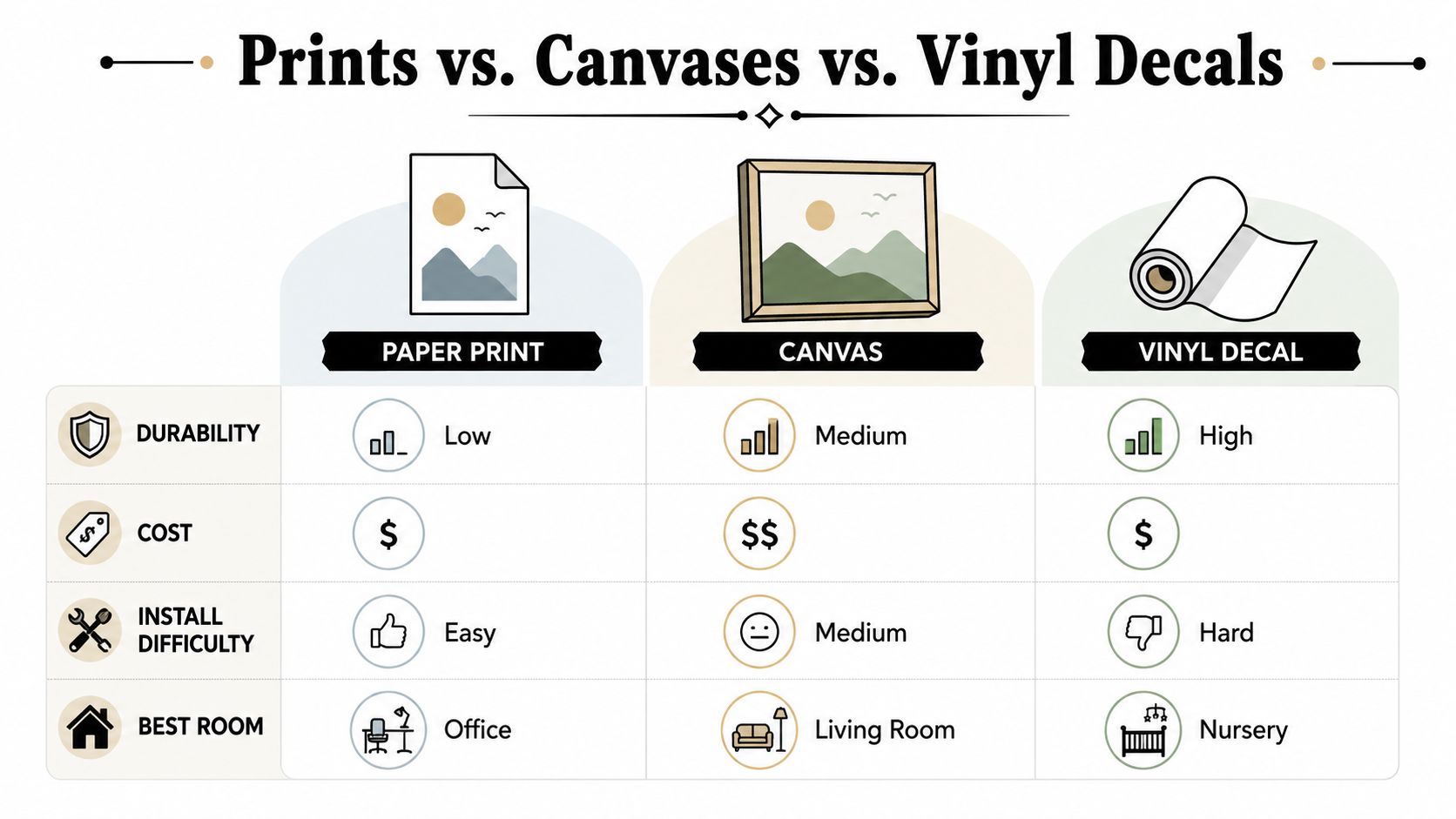
The quick comparison is simple. Prints offer the most design flexibility, canvases create the strongest statement, and vinyl decals win when removability and budget matter most.
| Format | Best For | Indoor Lifespan | Install Effort | Typical Cost |
|---|---|---|---|---|
| Paper print | Offices, gifts, galleries | Depends on paper, ink, frame, and light | Easy | $ |
| Canvas | Living rooms, statement walls | Durable with proper care | Medium | $$ |
| Vinyl decal | Rentals, nurseries, temporary décor | Roughly 3–6 years indoors for common wall decals | Hard | $ |
Paper prints
Choose a print when you want the broadest choice of fonts, layouts, colors, and frame styles. Paper is also the easiest format to give, replace, or move between rooms. The drawback is vulnerability. Unframed paper can crease, curl, and show moisture damage, while direct sunlight can shorten its attractive display life.
A print makes the most sense for an office, gallery wall, guest room, or meaningful gift where the recipient may want to choose the frame. It's also the strongest option when the lyrics need fine typography, because a sharp paper surface handles small text better than textured canvas.
Canvas
Canvas gives lyrics more physical presence. It fills a large wall without requiring a separate frame, and its surface can make a simple typographic design feel like a finished furnishing rather than a poster.
The trade-off is less delicacy. Fine lettering can lose some crispness against canvas texture, especially when the design uses thin strokes or tightly packed lines. Pick canvas for a living room, music room, or statement wall where the piece should anchor the space, not for a small lyric excerpt that depends on razor-sharp reading.
Vinyl decals
Vinyl is the practical choice for renters, children's rooms, dorms, and awkward walls where a framed object would be inconvenient. Common wall decals use roughly 3–4 mil adhesive vinyl and are often rated for about 3–6 years indoors on suitable surfaces, according to technical guidance on wall decals.
Vinyl demands more installation skill than a print. Surface preparation, transfer tape, lettering size, and wall texture all matter. Stronger adhesive can improve bonding on difficult surfaces, but it can also make removal harder. Before ordering, understand how the product moves from from sketch to factory specs, because production choices affect the finished piece's consistency and usability.
If you're evaluating adhesive lettering for another surface, the installation principles behind a pre-spaced vinyl windshield banner are useful, though wall vinyl has different surface and removal requirements.
How to Install Vinyl Lyric Decals Without Bubbles
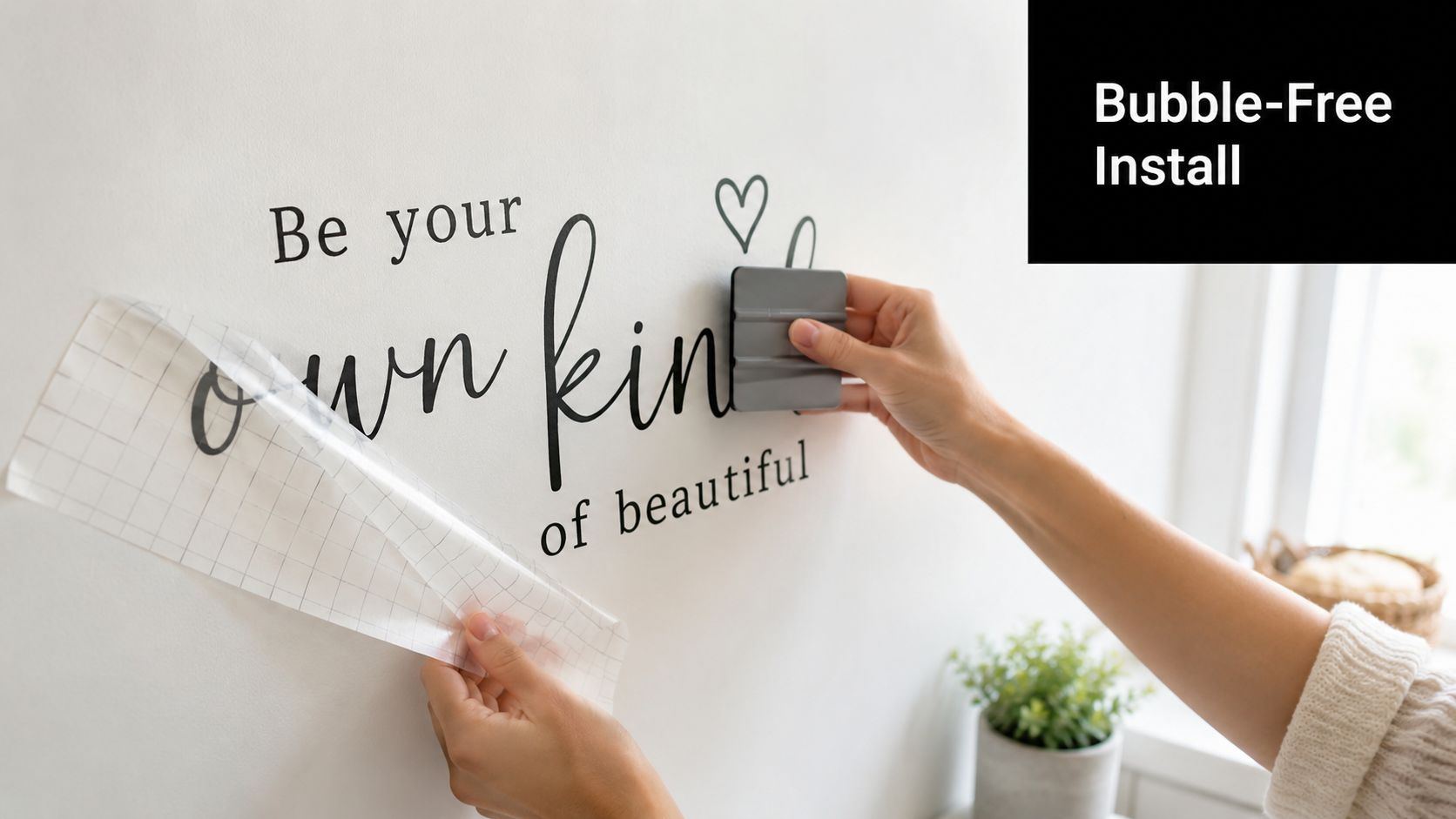
A vinyl lyric decal only looks effortless after it's installed correctly. The safest approach is slow, visible, and boring. Rushing creates wrinkles, stretched letters, and air pockets that become harder to fix.
Prepare the wall first
The wall must be smooth, clean, and fully dry. Dust, grease, loose paint, and textured surfaces prevent the adhesive from making consistent contact. Wipe the area with a clean, lightly dampened cloth, then let it dry completely. Don't install over fresh paint, flaking paint, wallpaper seams, or heavy orange-peel texture.
Lay the decal flat and rub over the transfer tape with a squeegee, old bank card, or similar rigid edge. This reattaches letters that may have lifted during shipping and helps the transfer tape grip the design.
Use a hinge for long lyrics
Position the decal with low-tack masking tape across its top edge. This creates a hinge. Fold the design upward, slowly peel away part of the backing paper, and cut or fold the exposed backing away without touching the adhesive to the wall prematurely.
Lower the decal gradually while pressing from the center outward with the squeegee. Use overlapping strokes and steady pressure. Don't press randomly across the design, because that can trap air between letters and create uneven tension.
For long lines, work in manageable sections. Keep the backing paper close to the wall as you peel it away, rather than pulling it sharply outward. That angle gives you more control and reduces the chance of stretching thin lettering.
This custom text window decal guide can also help you understand how pre-spaced lettering and transfer materials behave, although a painted wall needs gentler handling than glass.
Watch the movement before attempting a large installation. The video below shows the basic application rhythm and tool handling.
Fix the problems while they're small
- Air pocket: Lift the nearest edge carefully, then press the vinyl down again from the pocket's edge toward the opening.
- Lifted letter: Rub the transfer tape or letter back down with firm, even pressure. If the adhesive has picked up dust, it may not recover fully.
- Wrinkle: Don't pull hard. Lift the affected area slowly, smooth the vinyl toward the wrinkle, and reapply.
- Transfer tape won't release: Press the tape back onto the lettering, burnish it again, and peel it away at a low angle.
Paper, Ink, and Frame Choices That Affect How Long Prints Last
A lyric print's appearance years from now depends on the sheet, ink, mounting, glazing, and light exposure. Product photography rarely makes those details obvious, so read the specification panel before judging the design.
Archival song lyrics wall art is commonly produced on 230–260 gsm heavyweight or fine art paper, using pigment-based or archival inks. According to the personalized lyric print specifications, heavier acid-free paper helps reduce yellowing and supports sharper typography, while pigment inks improve fade resistance. Some specifications claim 90+ years of archival performance under proper indoor conditions, but treat that as a controlled-condition claim, not a promise for a print hung in direct sun or a damp bathroom.
Read the listing like a buyer
Look for these details:
- Paper: Acid-free, archival, heavyweight, or fine art paper is preferable to an unspecified sheet.
- Ink: Pigment or archival ink is a stronger signal than generic “high quality” printing.
- Mounting: Acid-free backing and careful mounting reduce avoidable deterioration.
- Glazing: Glass protects well, while acrylic weighs less and is safer in busy rooms. Anti-glare glazing improves readability near windows, though it can cost more.
- Placement: Even strong materials perform better away from direct sunlight, condensation, and high humidity.
Paper weight doesn't make a print indestructible. It makes the sheet more stable and substantial, which matters when the design has clean margins, long lines, or a large frame.
For broader advice on choosing proportions, glazing, and presentation, these framing tips for movie posters apply well to lyric prints too. The right frame should protect the work without competing with the words.
Sizing and Placement for Every Room
Measure before you browse. Lyrics need enough scale for comfortable reading, but oversized text can dominate a small room and make the piece feel like signage.
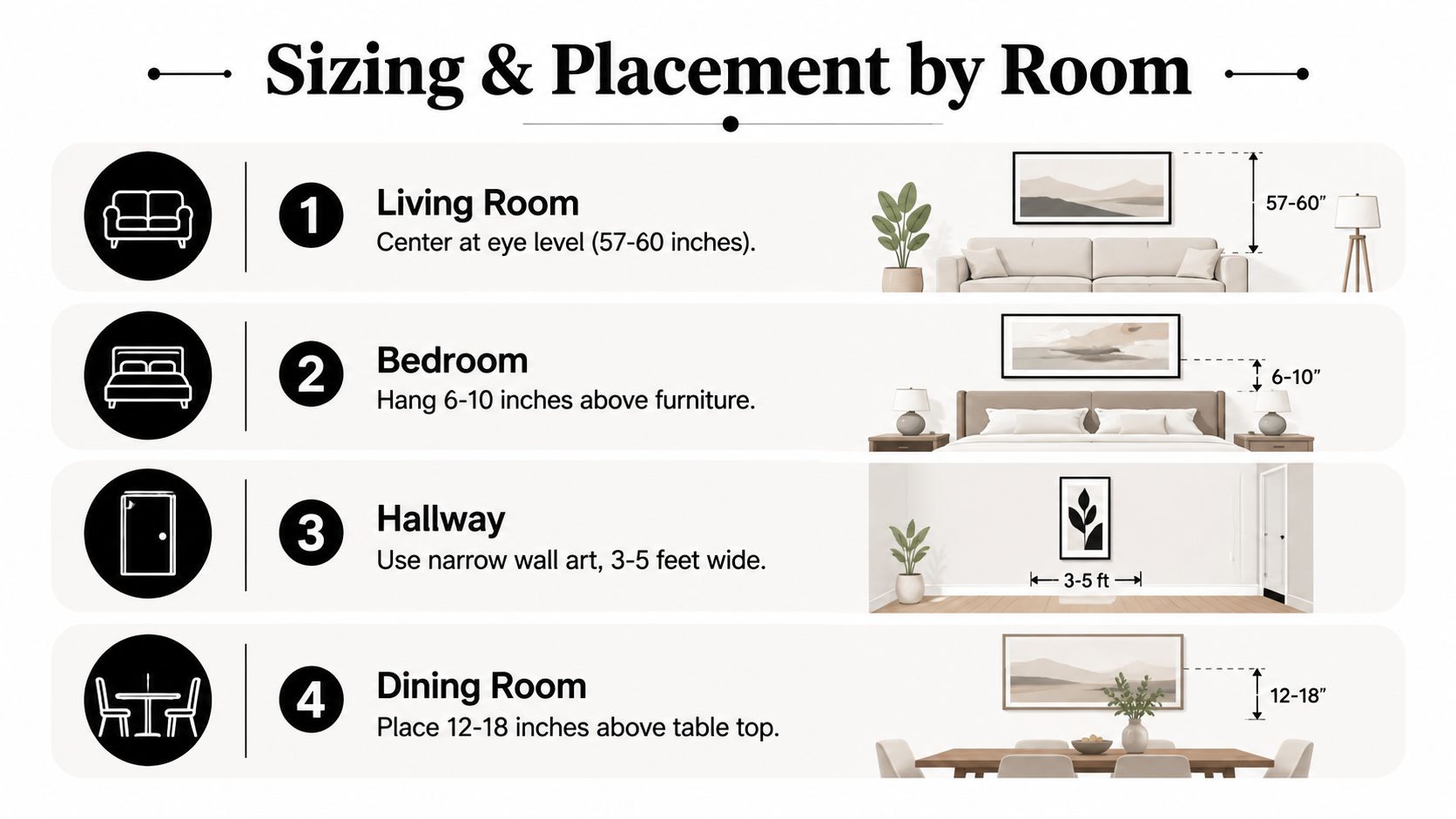
In a living room, center the artwork around the room's visual eye level, usually near the line created by seated viewers. Above a sofa or console, let the furniture establish the artwork's width. A lyric piece that's too narrow looks stranded, while one that stretches far beyond the furniture feels disconnected.
Use the room's furniture as your guide
- Living room: Center the piece at eye level and align it with the sofa, media cabinet, or main seating area.
- Bedroom: Place the art above the bed or dresser with a comfortable gap, so it feels connected without becoming a headboard.
- Hallway: Choose a narrow layout or stacked arrangement that suits the wall's shape and keeps the text readable as people pass.
- Dining room: Keep the lyric piece visually related to the table rather than hanging it near the ceiling.
A useful rule is to choose artwork that occupies a substantial portion of the furniture width without copying it exactly. Measure the furniture, measure the available wall, and compare the design's actual printed area, not just the outer frame dimensions.
For vinyl, test the layout with removable painter's tape before committing. Mark the top and side edges, step back, and read the words from the room's normal entry point. Rental-friendly placement also requires a realistic removal plan. Smooth painted walls are safer than textured walls, and a small test area is smarter than trusting a product photo.
Typography needs breathing room. If the lyric runs long, choose a larger format or a shorter excerpt. Shrinking the lettering to fit every word usually sacrifices the emotional impact you were trying to preserve.
Copyright and What You Can Safely Print
The phrase “it's just a quote” doesn't automatically make song lyrics safe to reproduce. Lyrics are written works, and copying them onto products for sale can involve rights that the customer, designer, or marketplace doesn't control.
Personal display and commercial reproduction aren't the same situation. A buyer may want a short excerpt for a private keepsake, while a seller is making and distributing a product that contains protected text. The legal answer can also depend on the song, the territory, the amount used, and how the artwork is marketed. There isn't a universal safe word count that clears every lyric.
That's why some custom-art vendors restrict certain songs or ask customers to confirm permission. Search results show strong interest in personalized pieces for weddings, memorials, anniversaries, and first dances, but product listings often leave the rights question unexplained. Commissioned lyric art listings illustrate the demand for customization, not automatic permission to reproduce every requested song.
Safer paths for meaningful artwork
- Use original writing: A personal line, vow, letter excerpt, or poem avoids copying a commercial song.
- Choose public-domain material: Verify the work's status in your jurisdiction rather than assuming an old song is automatically free to use.
- Ask the seller: Find out whether the vendor has a licensing process or limits certain lyrics.
- Use a short, meaningful excerpt: This may reduce risk, but it isn't a blanket legal guarantee.
- Keep private and commercial use separate: Don't assume a design suitable for personal display can be resold.
For a wedding or memorial, the best substitute isn't a generic inspirational phrase. It's often a short original message that captures what the song means to the people receiving it. That keeps the piece personal without pretending copyright rules don't apply.
Room-by-Room Styling Ideas That Actually Work
A first-dance lyric print belongs in a wedding gift, but it shouldn't necessarily look like event signage. Use a restrained excerpt, generous margins, and a frame that matches the couple's home. Place it beside a wedding photograph or on a bedroom console, where the meaning feels private rather than performative.
A dorm room needs a different approach. Above a lofted bed, a vinyl decal can use the vertical wall area without taking up desk space. Keep the line short, choose a font with strong letter shapes, and avoid placing text where bedding or shelving will interrupt it.
In a home recording studio, lyrics can become part of the route into the room. A narrow framed print in the hallway works better than a crowded collage because the words have room to breathe. Pair it with a small instrument detail or monochrome music reference, not several competing posters.
A nursery calls for softness. Choose a short folk lyric or original line in muted typography, then pair it with calm illustrations rather than a high-contrast concert-poster treatment. The wording should remain meaningful as the child grows, so avoid a design that depends entirely on a temporary theme.
The same principle applies to music-themed accessories. A small guitar with wings band sticker can complement a studio or teen bedroom, but keep the wall art as the primary message. One strong lyric piece usually feels more considered than a wall covered with unrelated references.
Your Quick Buying Checklist Before You Order
Start with the room. Choose paper for flexible gifting and crisp typography, canvas for a statement wall, or vinyl when you need a lightweight, removable installation.
Measure the wall and the furniture before opening the checkout page. Confirm the design's visible text area, not only the advertised frame or sheet size, and make sure the lettering will read comfortably from the room's usual standing or sitting position.
Confirm the lyrics. Check spelling, punctuation, line breaks, and the legal status of the excerpt. If the seller can't explain the material, ink, adhesive, or licensing position, don't guess on their behalf.
Finally, look for specific product details. A reliable listing should identify paper or vinyl type, printing method, framing or transfer materials, surface requirements, and removal guidance. Durable lyric art is a long-term décor choice, so a few minutes of checking can prevent an expensive emotional mistake.
Custom Sticker Shop offers made-to-order vinyl decals and custom text designs for buyers who want lyric-inspired lettering on windows, walls, and other smooth surfaces. Visit Custom Sticker Shop to explore a practical vinyl option and choose a design that fits your room, message, and installation plan.