
You're probably looking at a palm tree sticker because you want your vehicle to say something simple without looking overdone. Maybe it's beach-town nostalgia, a South Carolina connection, or just a clean silhouette that works on glass and paint better than most graphics do.
That's a good instinct. A palm tree sticker is one of the easier decal styles to live with long term, but only if you buy the right material, size it correctly, and install it with some patience. I've seen great designs ruined by bargain vinyl, crooked placement, and rushed application. The fix usually starts before the sticker ever touches the car.
There's also a reason this design has staying power. In South Carolina, the palmetto has deep historical roots tied to the Fort Moultrie victory and later became a lasting state emblem, which helps explain why palmetto imagery still shows up on flags, apparel, art, and vehicle decals today, as noted by the South Carolina Picture Project's history of the palmetto tree.
Choosing the Right Palm Tree Sticker Material and Size
Most buyers start with the artwork. For a vehicle, start with the material instead. A palm tree sticker can look sharp in the listing photo and still fail early if the seller doesn't tell you what vinyl they're using, how it's cut, or whether it's meant for outdoor use. That's common on large marketplaces, where design variety usually gets more attention than durability details, especially for drivers in sunny or coastal areas, as seen in these small palm tree decal marketplace listings.
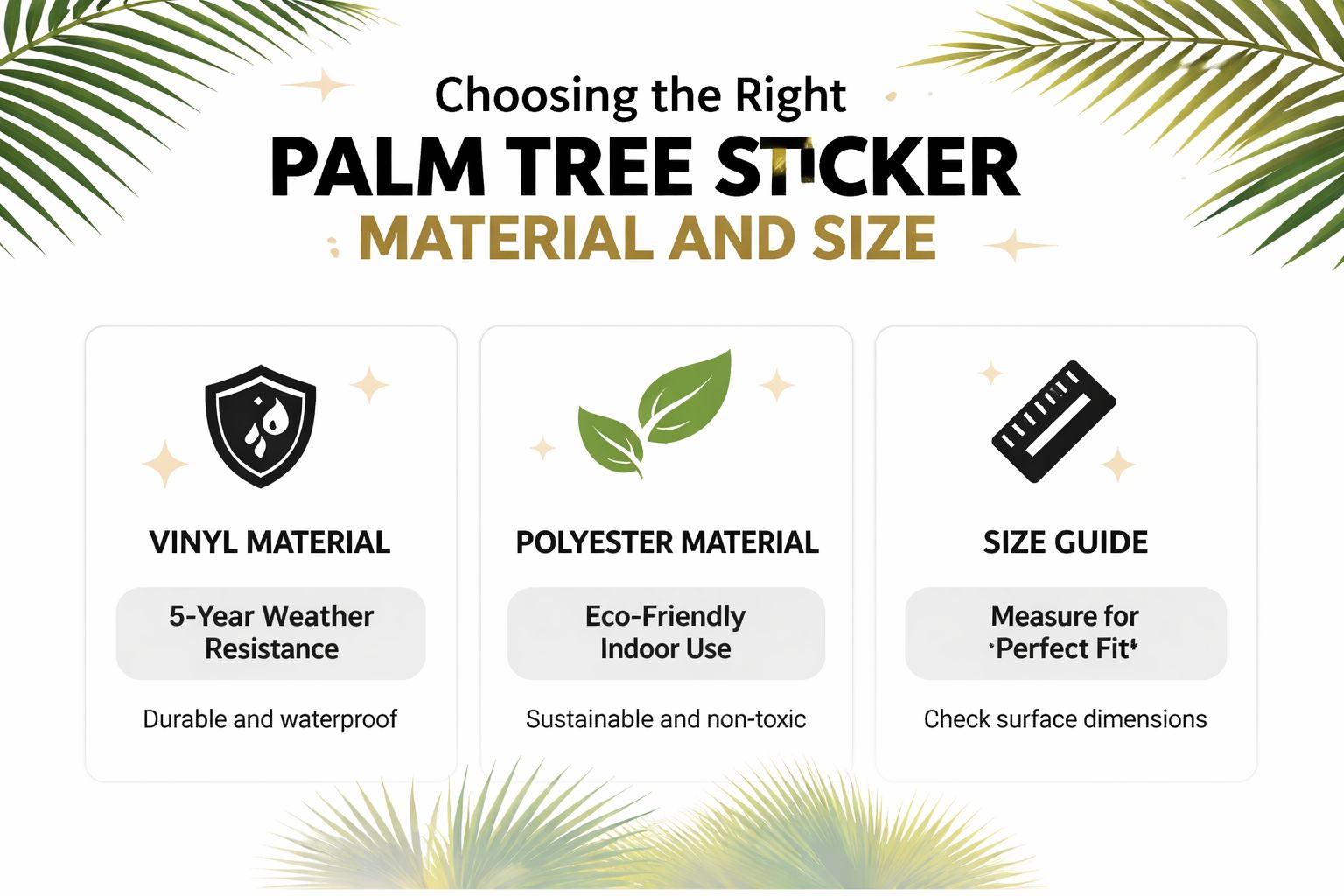
Pick vehicle vinyl, not craft sticker stock
For a car, truck, or Jeep, professional-grade vinyl is the safe choice. Oracal vinyl is a common benchmark in the trade because it's built for outdoor exposure, conforms well to flat and gently curved panels, and doesn't feel flimsy when you peel and apply it. Premium automotive graphics made from professional-grade Oracal vinyl are rated for up to 7 years of outdoor durability, engineered to handle UV, moisture, and temperature shifts when they're installed and maintained properly.
Craft stickers and decorative planner-style stickers aren't in the same category. They may work on a laptop, tumbler, or notebook, but they usually don't hold up on exterior vehicle surfaces where sun, wash cycles, and road grime test the adhesive every week.
A quick comparison helps:
| Material type | Best use | What works | What doesn't |
|---|---|---|---|
| Professional vinyl | Cars, trucks, Jeeps, rear glass, body panels | Holds shape, resists weather, installs cleanly | Costs more than hobby-grade stock |
| Printed sticker paper | Indoor decor, short-term use | Cheap, colorful | Poor choice for long-term vehicle use |
| Thin craft vinyl | Cups, temporary projects | Easy to cut | More likely to shrink, curl, or fade on a vehicle |
If you want a tropical look with cleaner lines, a die-cut silhouette works better than a full printed rectangle. If you want sunset colors or a beach scene, printed graphics can look great, but they need proper outdoor construction. A good example of a style that suits vehicles well is this Ainokea Aloha Hawaii car decal, where the artwork is simple enough to read at a glance.
Practical rule: If the listing talks only about style and never names the vinyl, assume you're taking a gamble.
Size it to the panel, not the product photo
A palm tree sticker that looks perfect on a product mockup can look awkward on your actual vehicle. Measure the actual surface before buying.
Use these rough sizing habits:
- Small decals work best on quarter windows, fuel doors, and lower corners of rear glass.
- Medium decals fit most rear windows, tailgates, and bedside panels without taking over the vehicle.
- Large decals belong on bigger surfaces like Jeep hardtops, truck rear glass, or broad side panels.
Three checks prevent bad sizing decisions:
- Measure the clean flat area: Don't measure edge to edge if trim, curves, or defroster lines reduce usable space.
- Stand back from the vehicle: A decal should look intentional from several feet away, not crowded up close.
- Match the vehicle's proportions: A compact sedan needs restraint. A lifted truck can carry more visual weight.
Gloss vinyl usually gives a sharper, freshly detailed look. Matte can look more understated, especially on darker vehicles. Neither finish fixes poor material quality, so make that decision after you've confirmed the sticker is built for automotive use.
Where to Place Your Sticker for Maximum Impact
Placement changes everything. The same palm tree sticker can look subtle on one vehicle and misplaced on another just by moving it a few inches.

On a sedan, the cleanest spot is usually the lower corner of the rear window. It reads well, doesn't interrupt the body lines, and keeps the design visible without turning the back glass into a collage. On a crossover or SUV, a palm tree sticker often looks better slightly higher, where the glass area gives the design some breathing room.
A Jeep Wrangler gives you more freedom. Rear side glass, the lower tailgate area, and the hardtop glass can all work. The trade-off is clutter. Jeeps attract decals, and too many competing shapes make even a good design disappear.
A truck is different again. A single palm tree on the rear glass can look crisp and balanced. A bedside placement can work too, but body-panel decals need more thought because door seams, wheel arches, and reflections can distort the shape.
Do the tape test before peeling anything
Masking tape saves people from a lot of regret. Tape the decal, still on its backing, exactly where you think it should go. Then step back.
Check these things:
- Sightline: Does the sticker follow the vehicle's lines, or does it tilt against them?
- Obstructions: Will a rear wiper hit it. Will a door seam cut through it. Will a trim edge crowd it.
- Balance: Does it look centered to the panel, not just centered to your eye while standing close?
A decal usually looks best when it aligns with the vehicle's shape, not when it's centered by guesswork.
Placement mistakes that age badly
Windshields are the obvious risk. Local rules vary, so check what's allowed before placing any sticker where it could affect driver visibility. Rear windows are safer, but even there you need to respect wiper travel and defroster lines.
If you want a more regional look than a generic tropical silhouette, a palmetto design like this South Carolina liberty palm tree decal fits naturally on rear glass and small side windows because the shape is strong and readable without needing a lot of space.
The best placements usually feel almost underdone at first. That's a good sign. Loud placement choices tend to wear on you faster than clean ones.
How to Apply Your Decal for a Bubble-Free Finish
Application is where a quality palm tree sticker either starts looking professional or starts looking homemade. The good news is that the process is simple if you slow down and use the right method.
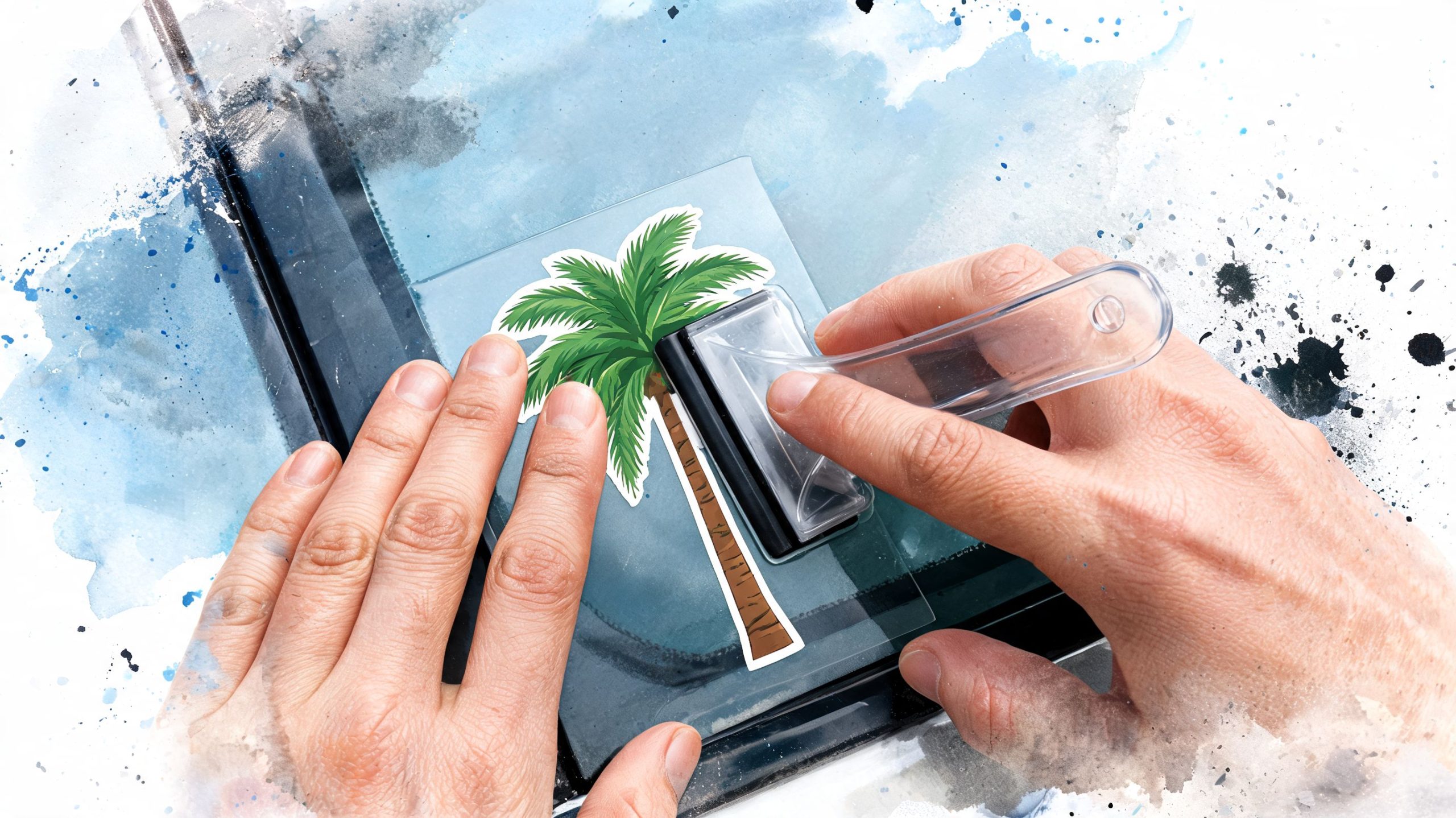
Professional-grade automotive decals typically use a multi-layer setup with a clear laminate for protection and a transfer tape layer that keeps the design aligned during installation. When that type of decal is applied to a properly cleaned surface, the transfer-tape method is tied to a 98%+ successful first-application rate, according to this overview of the PET vinyl sticker manufacturing process.
Get the surface ready
Cleaning is the part people rush, and it's the part that decides whether the adhesive bonds or fights you. Wash off visible dirt first if needed, then wipe the application area with an alcohol-based cleaner to remove wax, road film, fingerprints, and silicone residue.
Use a lint-free towel. Let the surface dry fully.
Don't apply a decal to a panel that's hot from direct sun or freezing cold to the touch. You want a stable surface, not one that makes the vinyl too soft or too stiff while you're working.
Use the hinge method
The hinge method keeps the decal from wandering when you peel the backing.
Position the decal first
Hold the sticker in place with small pieces of masking tape. Check level and spacing from a few angles.Create a center hinge
Run a strip of masking tape vertically through the middle of the decal. Now the design can't shift left or right.Peel one side at a time
Lift one half, peel the backing paper away from that half, and cut or fold the backing out of the way.Squeegee from the hinge outward
Use firm, overlapping strokes. Push air toward the outer edge instead of trapping it under the vinyl.Repeat on the second side
Remove the remaining backing and work from the center toward the edge again.
Don't press randomly. Controlled strokes do the work. Random rubbing just moves bubbles around.
For a visual walkthrough, this install video gives a useful look at decal handling and pressure technique:
Remove the transfer tape the right way
After you've squeegeed the decal down, don't rip the transfer tape off fast. Peel it back slowly at a sharp angle. Keep it low and close to the surface.
If a small part of the palm fronds or trunk lifts with the tape, stop. Lay the tape back down, squeegee that area again, then retry. Intricate designs need a little patience here.
A few final shop habits make a big difference:
- Use a felt-edge squeegee if you have one: It's gentler on the top layer.
- Work in good light: You'll catch trapped air before it settles.
- Wait before washing: Give the adhesive time to settle instead of testing it the same day.
The cleanest installs don't come from speed. They come from alignment, prep, and even pressure.
Maintaining and Removing Your Vehicle Sticker
A good palm tree sticker doesn't need much maintenance, but a little discipline helps it stay sharp. The decal itself may be durable, but the edges are still the first place abuse shows up.
Premium automotive graphics made from professional-grade Oracal vinyl are rated for up to 7 years of outdoor durability when they're properly applied and maintained. That's a strong service life for something exposed to sun, rain, road grit, and regular washing.
How to care for it
Treat the decal like a finished exterior surface, not like a disposable label.
- Wait before the first wash: Give the adhesive time to settle after installation.
- Wash with your hands when possible: A soft mitt and normal car soap are easy on edges.
- Be careful with pressure washers: Don't aim high pressure directly at the decal edge.
- Dry it, don't scrub it: Aggressive rubbing at corners can start lift over time.
If your vehicle lives outdoors full time, expect the environment to matter. Strong sun, salt air, and repeated temperature swings are harder on every exterior graphic. That doesn't mean the sticker will fail early, but it does mean maintenance habits matter more.
How to remove it without hurting the surface
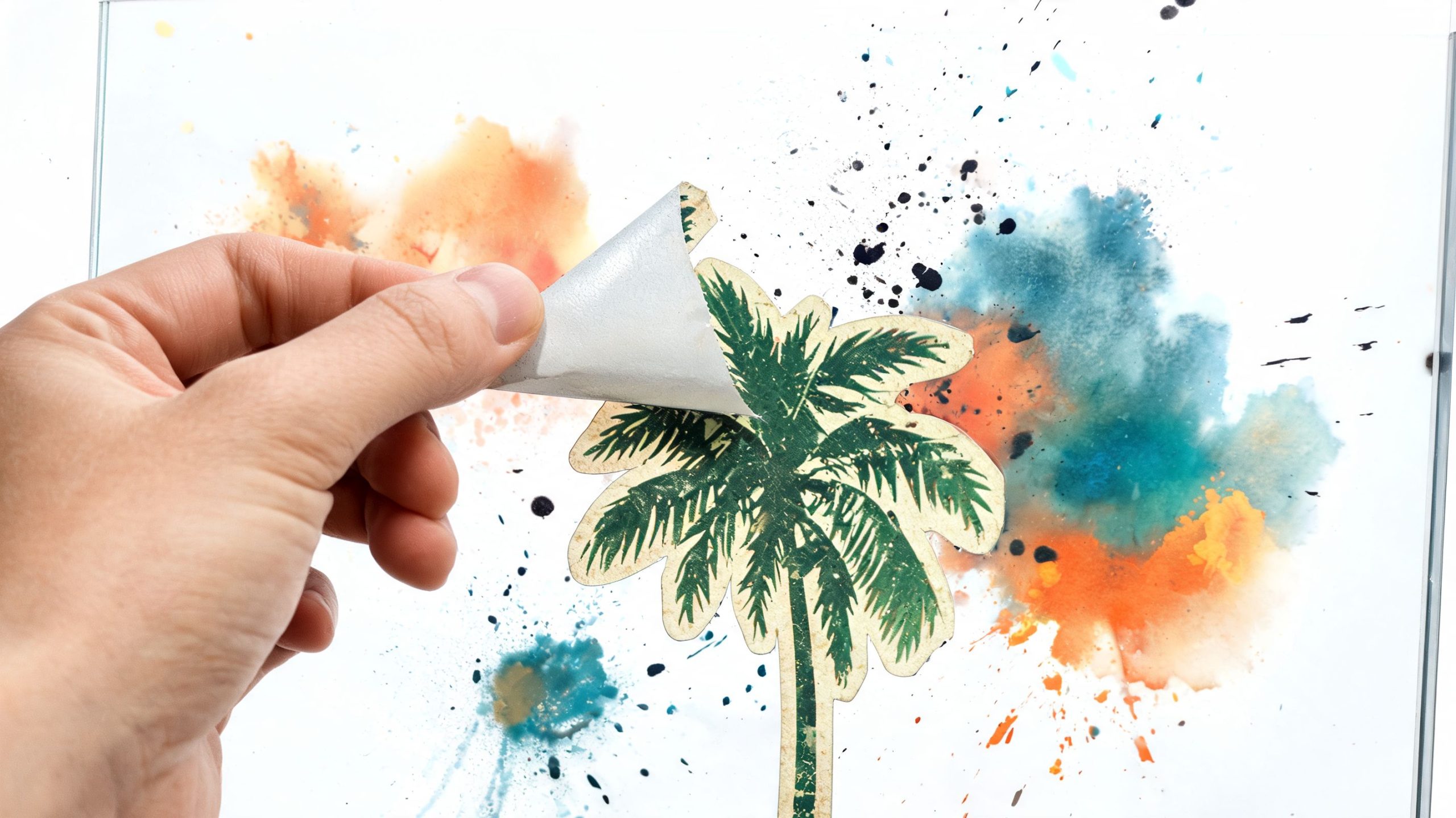
Removal should feel controlled, not forceful. Start with gentle heat from a hair dryer or a carefully used heat gun. You're trying to soften the adhesive, not cook the panel.
Then peel slowly from one corner. Pull the vinyl back over itself instead of yanking it straight away from the surface. That reduces stress on paint and helps the adhesive release more cleanly.
If residue remains:
- Use adhesive remover sparingly: Test on a small area first.
- Use a soft cloth, not a razor blade: Metal tools create damage far faster than residue does.
- Finish with a fresh cleaning pass: Remove leftover film before applying anything new.
Slow removal saves paint. Fast removal saves only a few minutes.
If the sticker has been on for a long time, don't be surprised if the surrounding paint looks slightly different at first. That's often weathering on the exposed paint, not damage from the decal.
Fixing Common Sticker Application Problems
Most install problems look worse than they are. People see one bubble or one lifted edge and assume the whole palm tree sticker is ruined. Usually it isn't.
The most common root cause is basic prep. Manufacturing quality control data indicates that improper surface preparation causes about 8% to 12% of premature peeling issues in field conditions, which is why thorough cleaning matters before you ever start.
Small bubble in the middle
If the bubble is tiny, wait a day first. Some minor air pockets settle on their own.
If it stays, use a fine pin to make the smallest possible opening at the bubble edge, then press the air out with your thumb or squeegee wrapped in a soft cloth. Don't stab through the center unless you have to.
Edge won't stay down
This usually comes from dust, leftover wax, or not enough pressure during install. Warm the area slightly, press it down again, and hold steady pressure for a few seconds.
If the edge picked up contamination during application, you may never get a perfect bond there. That's why cleaning does so much of the heavy lifting before the decal goes on.
Wrinkle or crooked section
A small wrinkle near the edge can sometimes be lifted and reset immediately. A wrinkle pressed firmly into place is harder to hide.
If the decal is visibly crooked, don't keep pushing forward and hope it improves. Stop early, lift carefully if the vinyl allows it, and rework that section before the adhesive fully settles.
Intricate piece stayed on the transfer tape
Palm fronds and thin trunk details can do this. Lay the tape back down, rub that exact area more firmly, then peel the transfer tape back slower and flatter.
The panic response is always the same. “I've ruined it.” Most of the time, you haven't. You just need to fix the issue before it turns into a permanent one.
What to Look For When Buying Decals Online
Online shopping makes it easy to find a palm tree sticker. It also makes it easy to buy a decal that looks good on screen and disappoints in person.
The first thing I'd look for is whether the seller names the material. If you see Oracal vinyl, outdoor rating details, and clear mention of automotive use, that's a stronger signal than a listing that talks only about style. Product pages should also show the cut style clearly. A die-cut decal and a printed rectangular sticker aren't interchangeable just because they share the same artwork.
Signs the seller understands vehicle decals
A solid decal seller usually gives you practical information, not just lifestyle photos.
Look for these:
- Material clarity: The vinyl type should be named, not hidden behind phrases like “premium quality.”
- Outdoor rating: If a decal is meant for vehicles, the listing should say so plainly.
- Application method: Transfer-taped and pre-spaced decals are easier to install cleanly than loose multi-piece graphics.
- Shipping expectations: Fast fulfillment helps, and a 5 to 8 day delivery window is a useful benchmark in this category.
- Real value offers: The market is growing with vehicle personalization, and reputable sellers often stand out through quality materials plus practical pricing such as entry-level prices around $7.99 and multi-buy promotions rather than racing to the bottom on cheap stock.
A trustworthy seller also makes customization straightforward. If you want a specific size, mirrored layout, or a cleaner one-color version, the shop should make that easy to request.
Don't judge value by sticker price alone
The cheapest decal often becomes the expensive one if it shrinks, fades, or peels early. Buying better vinyl once is usually less frustrating than buying bargain decals repeatedly.
That same logic shows up in other custom goods. If you've ever ordered a sewn item like a custom embroidered daisy patch, you already know the difference between something made to hold up and something made just to look good in a thumbnail. Materials and finishing matter.
If you want a custom palm tree sticker, many buyers get the best result by choosing a seller that lets you make your own custom sticker with clear material specs, size options, and installation-ready prep instead of settling for a generic listing with vague details.
The best online decal shops don't win on hype. They win on clear specs, dependable vinyl, and graphics that arrive ready to install.
If you want a palm tree sticker that's built for real vehicle use, Custom Sticker Shop is a strong place to start. They use professional-grade Oracal vinyl, offer ready-to-apply automotive decals, and make it easy to choose something that fits your car, truck, or Jeep without guessing on quality.