
You’re probably here because you’ve got a truck, a connection to the fire service, and a decal idea in your head that matters more than simple decoration. Maybe you want your personal pickup to reflect your station pride. Maybe you’re honoring a spouse, parent, or retired captain. Maybe you’re outfitting a support vehicle and trying to stay respectful, sharp, and legal at the same time.
That’s where people often get tripped up.
A firefighter decal can look clean and meaningful, or it can look cluttered, cheap, or too close to official apparatus markings. The difference usually comes down to three things: tradition, material, and placement. If you understand those, you can build something that looks right on the truck and feels right to the job.
I spent years around rigs where markings weren’t random. Every shield, color, and panel meant something. That mindset carries over to firefighter decals for trucks. Good graphics don’t just say who you are. They show that you understand the culture behind the symbol.
More Than a Sticker A Symbol of Service
A firefighter usually doesn’t slap a decal on a truck for the same reason somebody adds a fishing brand sticker or a mountain outline. There’s history behind it. Pride too. Sometimes grief. Sometimes gratitude.
I’ve seen a young volunteer put a simple Maltese cross on the rear glass of his pickup after finishing probation. I’ve seen a wife order a memorial decal after her husband retired. I’ve seen a battalion chief keep one understated shield on his tailgate because he didn’t need to explain himself to anybody. Different trucks. Same instinct. They wanted the vehicle to say, subtly yet clearly, “This life is part of who I am.”
The old roots still matter
Modern firefighter insignia didn’t come out of a marketing department. The tradition goes back to Henry T. Gratacap, an FDNY volunteer firefighter who established the modern firefighter helmet badge tradition between 1821 and 1836, helping create the visual hierarchy of helmet colors and insignia that still influences firefighter graphics today, according to this fire service traditions history reference.
That matters because the fire service has always used visuals for identification and trust. Colors marked function. Symbols marked company and rank. A badge on a helmet wasn’t just decoration. It told people something useful, fast.
Today’s truck decals carry that same DNA. A helmet shield, a scramble, a thin red line flag, crossed tools, or a company number all work because the fire service already understands symbols at a glance.
Practical rule: If a decal means something in the bay, it’ll mean something on your truck too.
Pride should still stay grounded
There’s also a personal side to this that people don’t talk about enough. Firefighters and families carry risk that follows them home. If you’re dealing with an injury issue related to the job, a solid legal guide for injured public safety officers can help you understand the bigger picture.
For many people, the decal becomes a marker of that life lived in service. Not flashy. Just honest.
Some owners want a classic patriotic look, and a design like this Thin Red Line fireman American flag decal fits that lane when it’s used with some restraint. One clean graphic often says more than a whole rear window covered edge to edge.
- For active firefighters: Choose symbols tied to your role, station, or service identity.
- For family members: Tribute decals work best when they feel respectful, not oversized or theatrical.
- For retirees: Simple rank, years served, or a company identifier often ages better than trend-driven art.
The best firefighter decals for trucks don’t just show support. They carry forward a visual tradition that has been part of the fire service for nearly two centuries.
Choosing the Right Decal Material and Finish
Material decides whether your decal looks solid for years or starts curling after one rough season. Truck owners feel this fast. Sun bakes the hood. Road grime hits the rocker panels. Rear windows get scrubbed. Cheap vinyl usually gives up early.
It's similar to tires. If you only drive fair weather pavement, one setup may be fine. If your truck sees heat, rain, wash cycles, and daily use, the wrong material becomes obvious.
Start with the job the decal has to do
Some decals are mostly visual. Others need to hold color, resist edge lift, and stay readable at night. A memorial shield on a rear glass corner has a different job than a reflective panel on a support or department vehicle.
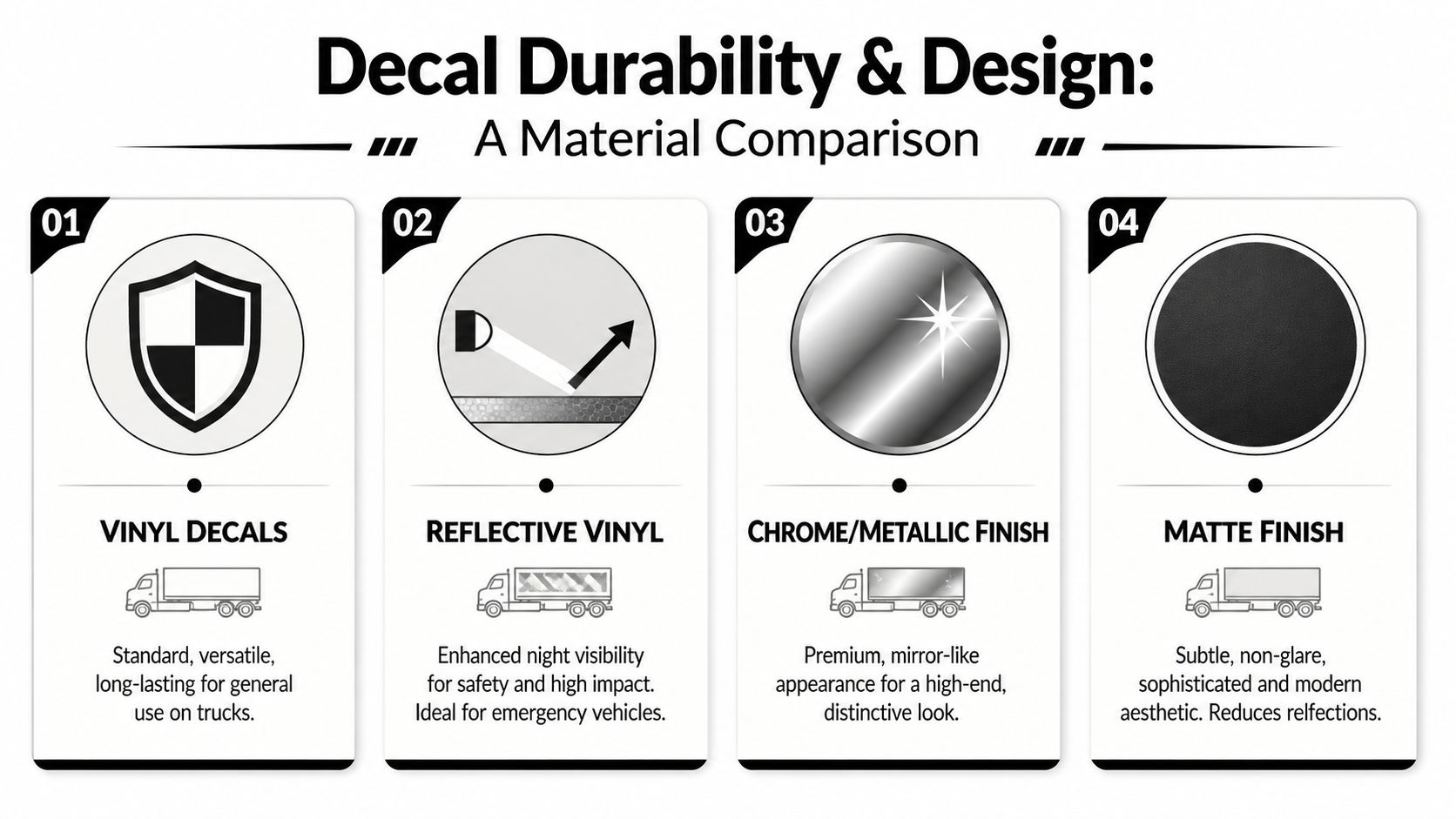
That’s why terms like standard vinyl, reflective vinyl, matte, and metallic matter. They aren’t just style labels. They affect durability, visibility, and maintenance.
A simple way to compare common options
| Vinyl Type | Outdoor Durability | Best For | Key Feature |
|---|---|---|---|
| Standard vinyl | Good for general exterior use | Tailgates, rear glass, body panels | Versatile everyday choice |
| Reflective vinyl | Strong outdoor performance | Night visibility, support vehicles, bold safety-minded designs | Returns light toward headlights |
| Metallic or gold effect vinyl | Good when properly applied | Classic fire service lettering and tribute graphics | Premium visual depth |
| Matte vinyl | Good for low-glare looks | Modern builds, blacked-out trucks, subtle designs | Soft non-gloss finish |
Reflective material is where function shows up
On apparatus graphics, reflective sheeting is part of visibility and compliance. On personal trucks, it’s optional, but still useful. According to this fire apparatus graphics overview, high-intensity reflective sheeting like 3M Diamond Grade can increase visibility from 1,000 to 2,500 feet in fog or rain, and premium reflective vinyl such as ORALITE or Scotchlite often lasts 7 to 10 years outdoors.
You don’t need apparatus-grade material for a personal pickup. But if you want a rear window shield or tailgate graphic that catches headlights cleanly at night, reflective film earns its keep.
Reflective vinyl isn’t just for show. It changes how a decal reads after dark.
Finish changes the personality of the truck
Gloss is the classic choice. It pops on red, white, silver, and black trucks. It also matches the typical look for clean automotive graphics.
Matte is quieter. On a newer black or gray pickup, matte black-on-glass or matte gray-on-body can look professional and understated. That’s a good fit for owners who want fellow firefighters to notice the decal before the general public does.
Metallic and gold-effect finishes fit a different tradition. Fire service insignia has a long visual connection to formal lettering and ceremonial detail. Gold-look vinyl on a door, rear glass, or memorial piece can look sharp if the design is simple. Too much of it starts to look busy.
What new buyers usually miss
A lot of first-time buyers focus only on the artwork. Experienced installers look at the surface first.
- Flat panel or curved panel: Flat tailgates are forgiving. Deep body curves demand better material and better application.
- Paint or glass: Glass is often easier to clean and apply to. Painted surfaces need more attention to wax, polish, and contamination.
- Daily driver or weekend truck: A daily driver needs tougher material choices because it lives through more weather and washing.
- Subtle or high-contrast: A white truck can swallow pale silver graphics. A dark truck usually gives more contrast options.
My rule of thumb from the shop floor
If the truck lives outside, buy better vinyl than you think you need.
That doesn’t mean every decal has to be premium reflective. It means you should match the material to the vehicle’s real life. The cleanest art in the world still looks bad if the film shrinks, cracks, or lifts at the edges.
For firefighter decals for trucks, I’d keep it simple. Use standard premium vinyl for most body and glass graphics. Use reflective vinyl when night visibility matters. Use metallic or gold-effect film sparingly, where tradition adds value instead of clutter.
Sizing and Placing Your Firefighter Decal
Placement is where a good design either tightens up or falls apart. I’ve seen beautiful decals ruined by being too small for the panel, too large for the window, or stuck in a spot where the body lines chop the design in half.
Most truck owners ask two questions. How big should it be? Where should it go? The answer starts with how the truck is used and how visible you want the message to be.
Use the truck’s natural zones
Every pickup has a few spots that naturally carry graphics well. Think in terms of clean panels and sightlines.
- Rear glass corners: Best for smaller shields, Maltese crosses, names, or station numbers.
- Center rear glass: Good for a wider design if you still preserve driver visibility.
- Tailgate: Best place for a bold statement piece.
- Rear quarter glass on extended cabs: Great for compact decals with a clean silhouette.
- Lower body panels: Better for subtle text or strip-style designs than detailed insignia.
Match scale to the panel
A common mistake is treating every decal size like it works everywhere. It doesn’t. A small corner-window decal can disappear on a full-size truck, while a large scramble can overwhelm a midsize tailgate.
Use these rules of thumb:
- Small decals fit best on corner glass or quarter windows.
- Medium decals work on rear windows and door-sized areas.
- Large decals belong on tailgates, full rear glass spans, or broad side panels.
- If the graphic crosses body seams, simplify it. Complex designs don’t survive broken surfaces well.
A Ford F-150 tailgate can visually carry a larger center graphic than a Jeep Gladiator’s narrower rear panel. A Chevy Silverado rear window often handles wide text well, but detailed artwork needs breathing room around third brake lights and sliding window sections.
Leave margin so the decal can breathe
This is the part many overlook. Don’t size the graphic to the full available space. Size it to the usable space.
Leave room around the edges. Let the body panel frame the decal instead of crowding it. When a design sits too close to molding, hinges, wiper paths, or window trim, it looks accidental.
A decal looks professional when the truck seems designed around it, not when the decal looks squeezed in afterward.
Placement examples that usually work
Here are a few layouts I recommend often:
- Quiet and professional: A single station shield on the driver-side rear glass corner.
- Balanced tribute build: Maltese cross on one rear glass corner, memorial text on the opposite corner.
- Tailgate statement: One centered fire service emblem with no extra clutter nearby.
- Supporter truck: Thin red line flag on rear glass, small and offset, not stretched across the full back window.
This quick install video helps show what careful alignment looks like before you ever peel backing paper:
Check visibility before you commit
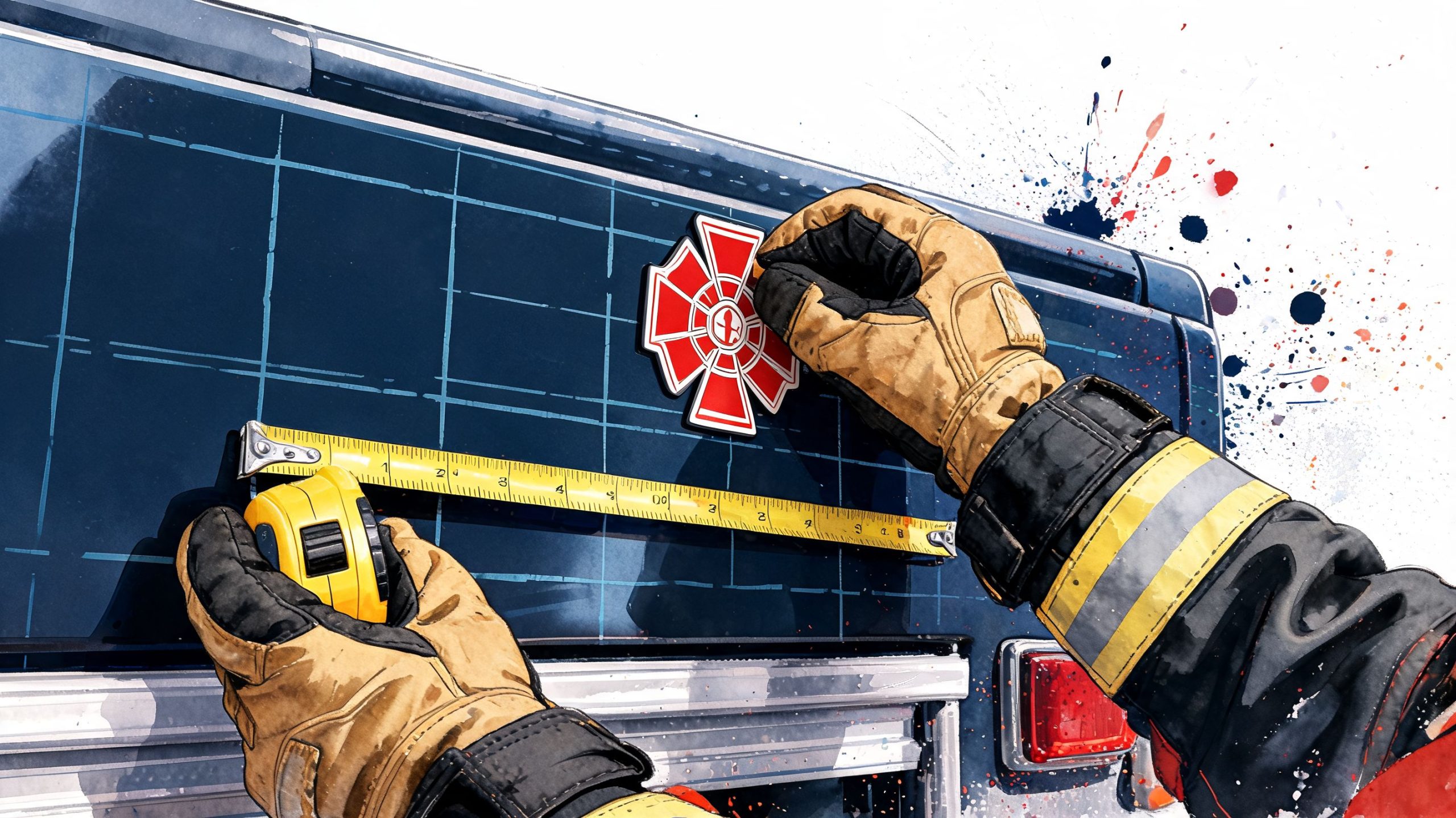
Before final install, tape the decal in place and walk around the truck.
Look at it from:
- Straight behind the vehicle
- A rear three-quarter angle
- Driver eye level
- A few parking spaces away
You’re checking for balance, not just readability. A firefighter decal should look like it belongs on the truck at every angle.
Keep it clean, not crowded
If you already have hunting decals, brand logos, family stickers, or off-road graphics, count them before adding fire service artwork. Too many competing messages cheapen the strongest one.
I tell people to pick one priority. Service identity, memorial, station pride, or patriotic theme. Once you know the priority, placement gets easier. The truck stops feeling like a bulletin board and starts reading like a deliberate build.
Customizing Your Firefighter Truck Decal
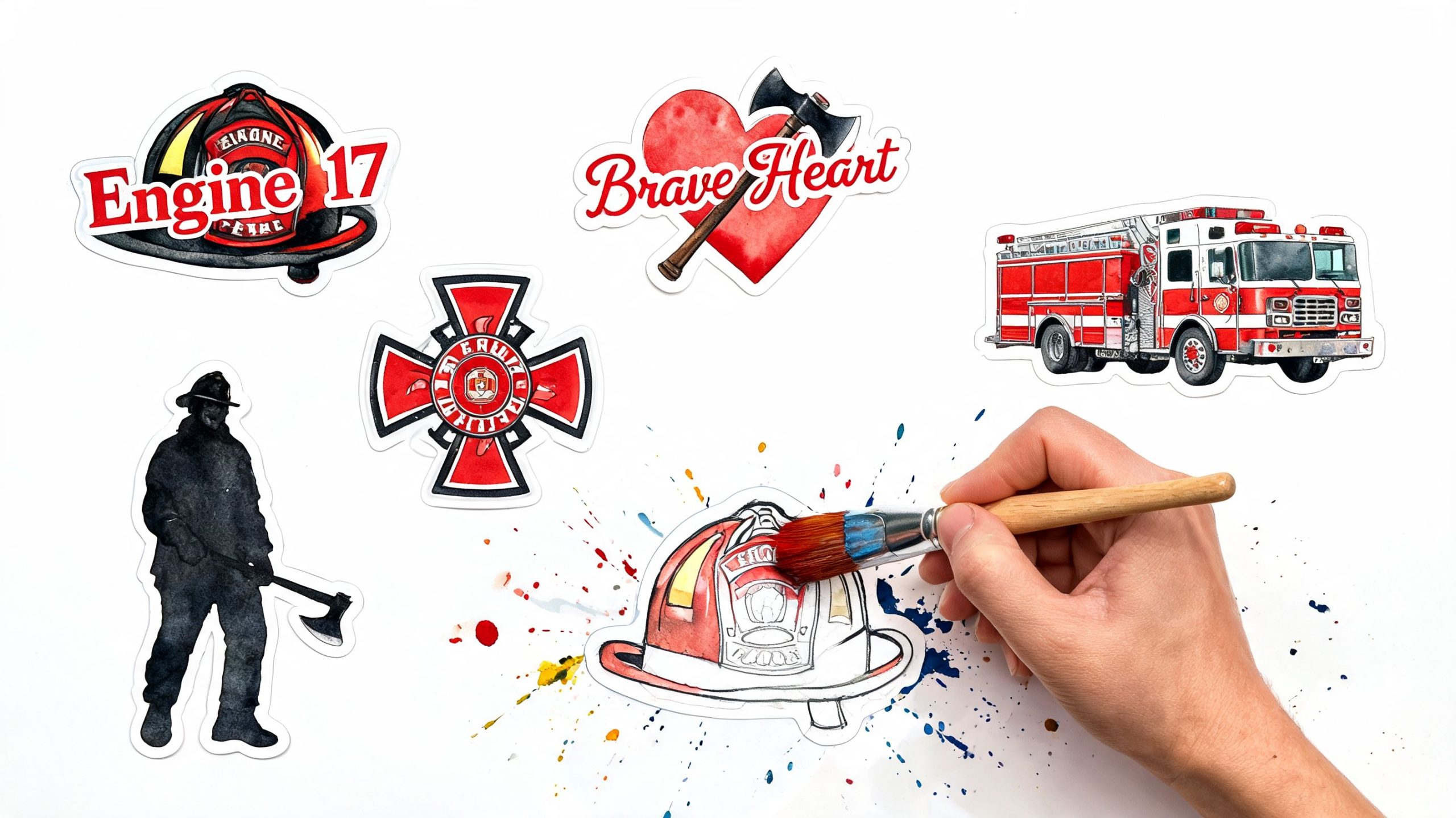
Customization is where this gets personal. Not generic. Not pulled off a shelf with no connection to your life. The best custom firefighter decals for trucks usually come from one clear story.
A captain retires after a long career, and his crew wants a tailgate decal with his company number and helmet silhouette. A firefighter’s daughter wants a rear-window tribute that honors both her dad and the department he served. A volunteer wants his station number worked into a Maltese cross because he doesn’t want a design that looks like everybody else’s.
That’s the kind of customization that lasts.
Start with one meaningful element
People often make the design better by using less.
A strong custom decal usually begins with one anchor:
- a station number
- a last name
- a helmet shield
- a Maltese cross
- a scramble
- a Thin Red Line motif
- a memorial date or phrase
Once that anchor is set, the rest of the design should support it, not compete with it.
For someone honoring a retired engine officer, a clean build might be gold-effect lettering with a company number and crossed bugles only if those symbols fit the person’s actual rank and story. For a firefighter spouse, a smaller rear-glass design with a name and simple cross often feels more sincere than a giant multi-image collage.
Color should work with the truck, not fight it
Color choice is emotional, but it still has to work on sheet metal and glass.
A red graphic on a red truck can disappear unless there’s contrast around it. White, black, or reflective silver may read better. On black trucks, red and white both stand out. On silver trucks, black and matte charcoal often look cleaner than bright tones.
Here’s a good way to understand it:
| Truck Color | Decal Colors That Usually Read Well | Look |
|---|---|---|
| Black | White, red, reflective silver, gold-effect | High contrast |
| White | Black, red, blue, gold-effect | Classic and crisp |
| Red | White, black, gold-effect | Strong service look |
| Silver or gray | Black, red, matte charcoal | Modern and clean |
Small personal touches matter more than people expect
One of my favorite designs was simple. A rear corner decal with a last name, station number, and a small helmet icon. That was it. No oversized slogans. No extra flames. No five competing symbols.
Another strong approach is a fully personalized design made from scratch, especially if the truck owner has a specific combination of text and imagery in mind. Tools that let you make your own custom sticker are useful when off-the-shelf artwork gets close but not close enough.
Keep the design honest. If the symbol suggests a role, company, or rank, make sure it matches real service history.
Popular customization directions
Some designs come up again and again because they connect well with the fire service:
- Station pride builds: Company number, city name, and a shield.
- Family support decals: “Fire wife,” “Fire family,” or a name paired with a respectful icon.
- Memorial pieces: Dates, initials, helmet, and restrained tribute language.
- Patriotic designs: Flag elements blended with a fire service symbol.
- Retirement decals: Years served, rank title, and company identifier.
The best custom decals tell the truth
That’s the standard I’d use.
A good firefighter truck decal shouldn’t pretend. It should reflect real service, real family connection, or real respect for the job. If the artwork does that, even a simple one-color design can carry more weight than a complicated full-window layout.
Your Step-by-Step Decal Installation Guide
A clean install isn’t magic. It’s prep, alignment, patience, and pressure in the right order. Most bad installs happen before the decal ever touches the truck.
Get your tools together first
You don’t need a full wrap bay. You do need a few basics.
- Squeegee: A proper vinyl squeegee gives even pressure.
- Painter’s tape: Useful for test placement and hinge setup.
- Tape measure: Eyeballing center usually goes wrong.
- Microfiber towels: Use clean ones only.
- Surface cleaner: Pick something safe for paint or glass and free of residue.
- Pin or air-release tool: For the occasional trapped bubble.
If you’re installing a long windshield graphic, studying a pre-sized product like this Ford Super Duty windshield banner style can help you understand how long layouts are structured and transferred.
Surface prep decides the whole job
Wash the area first. Then clean it again where the decal will sit. Dirt, wax, dressing, and invisible film all interfere with adhesion.
Glass usually installs easiest because it’s smooth and easy to degrease. Painted panels need more attention, especially if they’ve been recently waxed or detailed.
Shop-floor reminder: If the panel feels slick from polish, the vinyl may not stay put the way you expect.
Use the hinge method for anything larger
For medium and large decals, I recommend the hinge method.
- Tape the decal in position with backing still on.
- Step back and check level, spacing, and margin.
- Run a strip of painter’s tape across the center or along the top as a hinge.
- Peel one side of the backing away.
- Cut the released backing.
- Squeegee from the hinge outward with firm overlapping passes.
- Repeat on the other side.
This keeps the decal from drifting or folding onto itself. It also reduces the panic that happens when a large graphic suddenly goes loose in your hands.
Squeegee with control, not brute force
Short overlapping strokes beat random swipes. Work from the middle out. Keep tension even. If the transfer tape starts lifting the decal, slow down and press the vinyl back to the panel before continuing.
For smaller decals, hand placement matters as much as tool pressure. Don’t stretch the film by pulling too hard. Let the adhesive and squeegee do the work.
Aftercare makes the install last
Once installed, leave it alone for a bit. Don’t scrub it right away. Don’t pick at edges. Let the adhesive settle.
Long-term care is simple:
- Hand wash gently when possible.
- Avoid aggressive scraping on rear glass decals.
- Don’t direct high-pressure water at the edges from close range.
- Check corners occasionally if the truck lives in heavy sun or severe weather.
Safe removal without paint damage
If you ever need to remove the decal, use heat and patience. A heat gun on low or a hair dryer softens the adhesive. Peel slowly at an angle. Clean leftover adhesive with an automotive-safe remover.
Don’t attack it with a razor on paint. Don’t yank cold vinyl off like duct tape. Most removal damage comes from rushing.
A first-time installer can absolutely get a professional-looking result. The trick is acting more like you’re doing a rig check than a race. Slow is clean, and clean is fast enough.
Legal and Safety Considerations for Truck Decals
This is the part too many decal sellers skip. A firefighter-themed decal on a personal truck is not the same thing as graphics on official apparatus.
That distinction matters for safety, public trust, and sometimes the law.
Personal pride doesn’t equal apparatus authority
Official fire apparatus graphics are governed by visibility standards. According to this fire truck graphics article covering NFPA 1900 Section 4.21, reflective striping on apparatus must cover a minimum of 25 percent of the front with a minimum height of 4 inches, and at least 50 percent of the cab and body length at the same 4-inch minimum height. The same source notes that aerial apparatus outriggers must include reflective material.
That requirement is for apparatus. Not your personal pickup.
Where people get confused is the space in between. Existing aftermarket guidance often doesn’t clearly explain how personalization interacts with required reflective areas or where the compliance boundaries are, a gap highlighted in this discussion of truck decal compliance confusion.
Don’t make a personal truck look like an emergency vehicle
This is the cleanest rule I can give you. Your truck can show affiliation without suggesting official authority.
Avoid:
- Large layouts that mimic department apparatus striping
- Graphics that appear to identify the truck as an active emergency response unit
- Placement that reads like official command signage
- Personalization that covers or imitates regulated reflective zones on department-owned vehicles
If you’re marking an actual department truck, check departmental policy and apparatus requirements before adding anything aftermarket. If it’s your own truck, keep the design clearly personal.
Public recognition is good. Public confusion is not.
Window laws and color issues still matter
State and local rules can affect what’s allowed on glass, windshield banners, side windows, and colors associated with emergency signaling. Those rules vary. That’s why I tell owners to check their state motor vehicle rules before ordering a large rear-window or windshield piece.
A few practical guardrails help almost everywhere:
- Keep the driver’s view clear: Don’t block sightlines with oversized graphics.
- Be cautious with windshield banners: Make sure they don’t exceed local limits.
- Use red themes carefully: Fire service colors are meaningful, but don’t combine them in ways that suggest emergency lighting or official unit markings.
- Stay truthful with text: If you weren’t assigned the role, rank, or company title, don’t put it on the truck.
Respect protects the symbol
This is bigger than avoiding a ticket. The public reads fire service imagery as authority, service, and trust. If a personal truck looks too close to an emergency vehicle, it blurs that line.
So yes, personalize your truck. Honor your station. Support your family member. Memorialize a career. Just do it in a way that respects the difference between service identity and official apparatus marking.
That’s how you keep firefighter decals for trucks looking sharp without stepping into confusion you never meant to create.
Why Choose Custom Sticker Shop for Your Decal
A good decal shop should understand more than artwork. It should understand why firefighters care about symbols, why truck owners care about durability, and why volunteers often need to watch every dollar.
That last point gets ignored all the time.
A lot of sellers talk about premium materials and custom options, but they don’t say much about how smaller or volunteer departments can manage cost across multiple vehicles. That affordability gap is real, and this fire service decal pricing discussion points out that many suppliers overlook budget-conscious volunteer operations while noting value-driven pricing and volume deals like Buy 2 Get 1 Free.
What matters in a decal supplier
If I were judging a shop for firefighter decals for trucks, I’d look for a few basics first.
- Material quality: The vinyl needs to hold up outdoors, not just look good in product photos.
- Clean production: Pre-spaced, transfer-taped decals save time and lower install frustration.
- Real customization: Names, station numbers, and layout adjustments should be possible.
- Practical pricing: Especially for firefighters buying more than one decal or outfitting multiple vehicles.
- Responsive service: Questions about sizing, placement, and install should get clear answers.
Why that fit matters for the fire service
Firefighters don’t usually buy this stuff casually. They’re buying with intent. That makes trust important.
Veteran-friendly and family-run businesses often understand that mindset better because they’re used to customers who care about service, symbolism, and straightforward communication. American-made production matters too, especially for buyers who value consistency and want to avoid the gamble of unknown material quality.
Value isn’t just the sticker price
A cheaper decal that shrinks, fades, or fails during installation isn’t the better buy. A well-made decal that arrives ready to install and lasts through weather, wash cycles, and daily driving usually gives better value in practice.
That’s especially true if you’re ordering:
- Matching decals for both sides of a truck
- A tribute set for family vehicles
- Multiple unit identifiers
- Extras in case you change vehicles later
Good production saves time. Good materials save replacement headaches. Fair bundle pricing helps firefighters and volunteers stretch the budget without settling for junk.
The best shops make the process easier
By the time you order, you shouldn’t still be guessing about material, size, or placement. A solid shop helps you narrow those choices so the final decal fits the truck and the meaning behind it.
That’s what separates a random online sticker seller from a supplier that serves the fire service community well.
If you’re ready to order something that reflects the job with the respect it deserves, take a look at Custom Sticker Shop. They offer durable American-made decals, practical customization options, and value-minded deals that make sense for firefighters, families, and volunteer departments alike.