
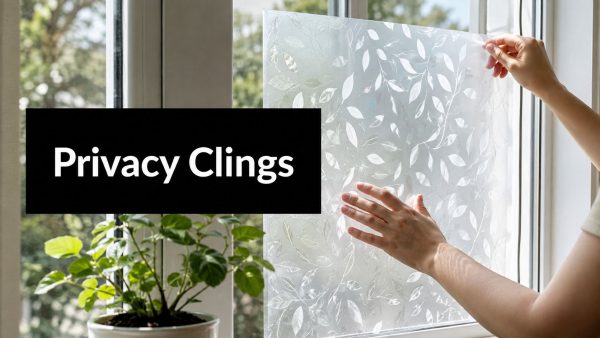
You open the living room curtains and realize the street can see straight into your space every evening after sunset. You want privacy, but you don't want to turn the room into a cave, drill hardware into a rental, or commit to a look you may regret later. That's the spot where vinyl window clings for privacy make sense, especially if you're comparing them with broader window privacy treatments and trying to find something that feels lighter than curtains but less permanent than a full glass replacement.
For a lot of homeowners and renters, the real question isn't whether a window covering looks nice. It's whether it solves the privacy problem in a way that fits the room, the lease, and the amount of daylight you want to keep. If you keep reading, you'll get a clear way to judge cling types, opacity, installation, and where each option makes sense. The part most guides skip is the one that matters most, whether the film still protects you when the lights are on at night.
When a Window Needs Privacy Without the Commitment
A renter in a first-floor apartment usually wants the same thing a homeowner does, just with fewer headaches. They want to stop neighbors from peering in, keep the room bright, and avoid anything that needs a drill, a glue gun, or a weekend they can't get back. Vinyl window clings for privacy sit in that middle ground, they're more minimal than drapes and far less permanent than a professionally finished glass treatment.
That's why people keep coming back to them for bathrooms, bedrooms, street-facing living rooms, and even glass doors that need a visual softener without blocking light. The appeal is simple, they let daylight stay part of the room while changing what someone outside can see. If you've ever wanted privacy without the visual weight of fabric, this category solves that specific problem cleanly.
The best way to think about them is as a reversible decision. You can try a look, live with it, and remove it later if your needs change. That flexibility is exactly why these products show up in both renter-friendly spaces and homes where the owner wants a lighter alternative to full curtains.
If you're sorting through options, think of this guide as a filter rather than a shopping list. By the end, you'll know how to separate temporary cling films from longer-life adhesive versions, which surface looks work best, and what level of privacy you need in a given room. The one question that still trips people up is night privacy, and that's where the next sections get very practical.
What Vinyl Window Clings for Privacy Actually Are
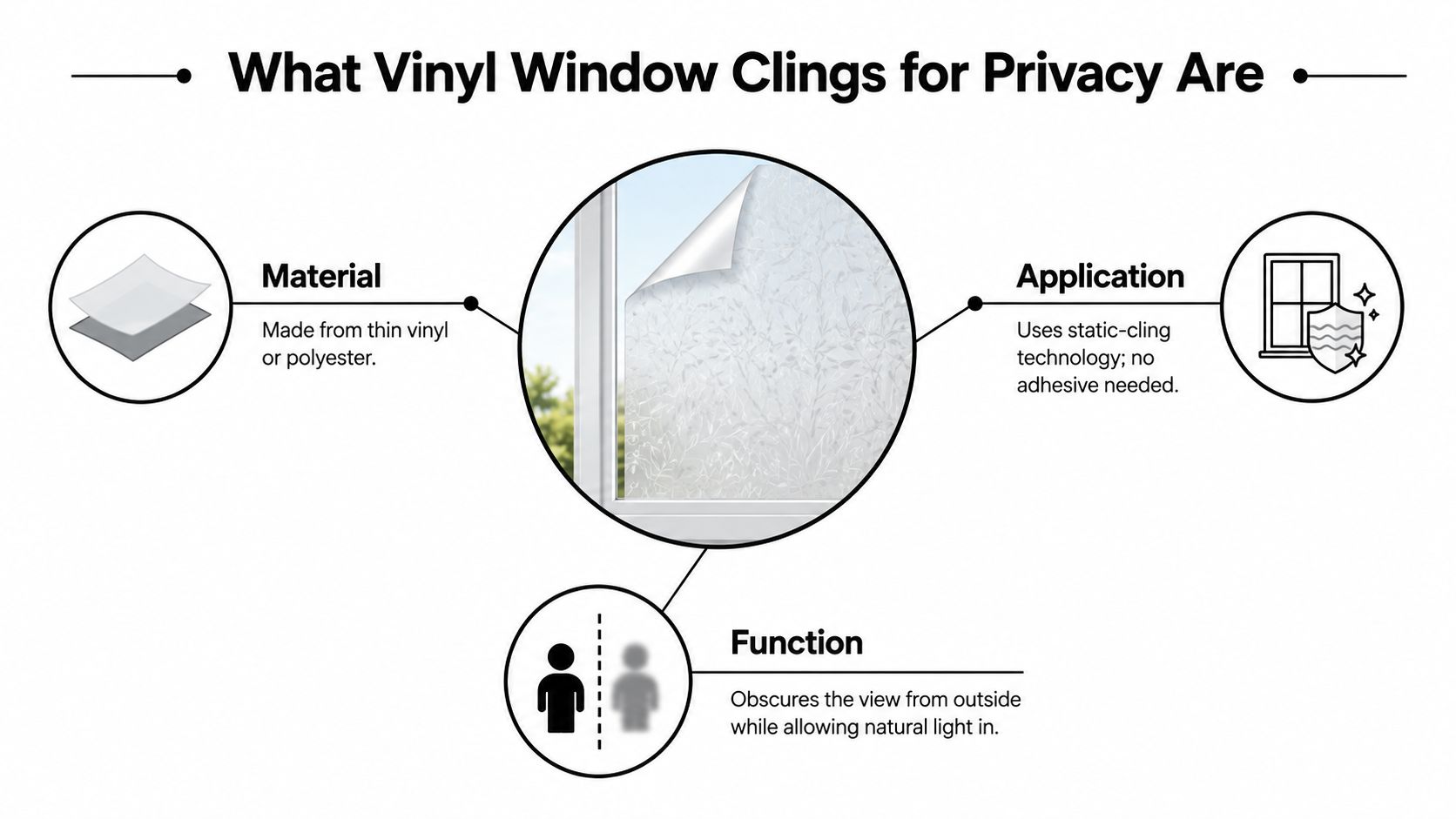
At the simplest level, vinyl window clings for privacy are thin sheets of vinyl or polyester that sit on glass and blur the view from outside while still letting light in. A good coffee filter analogy helps here. Water still passes through a coffee filter, but the grounds don't, and privacy film works in a similar way with light and visibility. It softens what comes through instead of shutting the window down completely.
The key idea is opacity, which is usually discussed through Visible Light Transmission, or VLT. Lower VLT means less light passes through and more privacy is created, while higher VLT means more brightness and less obscuring power. That's why the same product family can feel either airy or fairly opaque depending on the finish.
The two main construction types
One common version is static-cling film, which uses static or micro-suction instead of glue. Another is adhesive film, which bonds to the glass with a light adhesive layer. The first is usually chosen for removeability and easier repositioning, while the second is built for a longer stay.
A third thing shoppers notice is thickness. Some static PVC films are around 150 µm, while thicker removable cling products can be about 8 mil, which makes handling easier without turning the material into a permanent install. That extra body helps with application, but it doesn't make the product permanent. The same category is still shaped by indoor use, cleaning habits, and environmental stress.
You'll find these products in big box stores, online marketplaces, and specialty sellers. For a quick example of how broad the category has become, a printable window-cling product page such as this custom window decal listing shows how clings often sit between décor and privacy function. Once you know the material and attachment method, the shopping aisle becomes much easier to read.
Static Cling vs Adhesive Vinyl
The biggest mistake first-time buyers make is treating all privacy film like one product. It isn't one product. Static cling and adhesive vinyl solve the same privacy problem, but they do it with very different trade-offs.
| Criterion | Static Cling Vinyl | Adhesive Vinyl |
|---|---|---|
| How it attaches | Holds with static or micro-suction, no glue | Bonds to glass with adhesive |
| How long it lasts | Usually 1 to 3 years indoors, according to Window Film Depot's guide | Quality films can last 15 to 20 years, according to the same guide |
| Removal | Comes off more cleanly and is easier to reposition | Removes less easily and is meant to stay in place |
| Best use case | Renters, seasonal decor, temporary privacy needs | Long-term homeowners, offices, spaces that want a finished install |
Static cling is the friendlier option if you want freedom. You can test placement, shift it if you're off by a little, and remove it later without treating the glass like a permanent project. That makes it appealing for apartments, dorms, and anyone who expects their privacy needs to change.
Adhesive film is the serious long-haul choice. It's better suited to a bathroom or office that needs the same result year after year and can accept a more committed install. If the window won't change and you want a longer-life finish, adhesive usually makes sense.
Practical rule: if you rent or like to change your decor often, start with static cling. If you own the space and want a finish that stays put, adhesive is the better default.
One more shopping cue helps narrow the field. Printable or themed decal products, like this vinyl window decal format, show how flexible vinyl graphics can be when the goal is either decoration or a light privacy layer. If you want a surface that feels clean and removable, static cling is the entry point. If you want the install to disappear into the glass for years, adhesive belongs on your shortlist.
Frosted, Patterned, and One-Way Mirror Options
Once the attachment style is settled, the next question is what the glass should do for privacy in daylight and after dark. That choice matters because a window can feel private at noon and exposed by evening, even if the film itself has not changed. The main visual families are frosted, patterned, and one-way mirror films, and each one solves that day versus night trade-off in a different way.
Frosted film is the most direct option. It scatters light, so the room still feels bright, but it blurs shapes and details on the other side. Light frosted versions can stay fairly open, while heavier versions push much farther toward obscuring the view, which is why frosted film works well for bathrooms, sidelights, and offices where the goal is privacy without making the glass look decorative first and functional second.
How the visual families behave
Patterned films sit close to frosted film, but with more visual character. Stripes, textures, and motifs break up the view in the same general way, while also giving the window a finished look instead of a plain covered surface. That makes patterned film a good fit when you want privacy that still feels like part of the room design.
One-way mirror film works differently. It uses reflectivity so the outside sees a mirrored surface during the day, while people inside can still look out. That sounds useful until the light shifts. Once the room is brighter than the outside, or once it gets dark indoors, the effect weakens, which is why one-way mirror film usually solves daytime visibility better than nighttime privacy.
Simple rule: if the window needs privacy after dark, choose frosted or patterned film. If the goal is daytime glare control on a street-facing window, a mirrored option can fit.
Bathrooms and bedrooms usually need privacy at all hours, so frosted finishes are the safer default. Street-facing living rooms, entry sidelights, and similar windows can handle more style-driven options, especially if the main concern is keeping the view muted during the day. If you want the room to stay bright, stay closer to lighter frosted or patterned finishes instead of moving too far toward a reflective look.
A decorative vinyl example like this decorative vehicle vinyl option shows how much the surface finish changes the feel of a pane before privacy performance even enters the picture. Home window clings work the same way. The look you choose tells you a lot about how much light, blur, and nighttime coverage you can expect.
Installing and Removing Vinyl Window Clings Without Bubbles
Good installation starts before the film ever touches glass. Clean the window with an ammonia-free spray, dry it completely, and measure twice. Small dust specks and moisture are what turn a simple project into a frustrating one, because clings show every bubble and edge lift more clearly than hard window treatments do.
For static-cling film, a light water mist on the glass helps you position the sheet before it settles. Peel the backing, line up the corners, and use a squeegee from the center outward so trapped air can escape instead of creating pockets under the surface. If the film has transfer tape or a pre-spaced layout, take your time with the first alignment, because the initial placement is where most errors happen.
Removal should be part of the plan
Removal works best when you go slow and keep the angle low. Start at a corner, peel gradually, and avoid yanking the film straight off the glass. If an adhesive edge resists, warm water or a hairdryer can loosen the bond without scraping the surface.
That matters because people often install privacy film as if it's permanent, then discover they need to change the window for a new season or lease renewal. A low-stress removal process is part of why static-cling products stay popular. They're designed for the person who wants a clean finish without a long-term commitment.
A few mistakes keep showing up again and again:
- Skipping glass prep: dust, grease, and residue make bubbles more likely.
- Using harsh cleaners: strong chemicals can interfere with cling performance.
- Rushing alignment: once the film settles, moving it gets harder.
- Forcing removal: pulling too fast can leave edges messy or stress the material.
- Ignoring room conditions: heat and humidity can make the film behave differently.
If you're comparing vinyl graphics for another glass surface, a product page like this custom decal example shows why pre-spaced, transfer-taped layouts are so helpful for first-time buyers. The same logic applies to window clings, the easier the positioning, the cleaner the result.
How Vinyl Clings Compare to Curtains, Shades, and Frosted Film
A room's privacy needs change with the light. That is the main way to judge vinyl window clings for privacy against curtains, shades, and frosted film. Curtains soften a space, shades control light with moving parts, and frosted film creates a more settled finish. Clings sit between those options, which is why they fit so many windows that need privacy by day, then a different level of screening at night.
| Criteria | Vinyl Clings | Curtains | Shades | Frosted Film |
|---|---|---|---|---|
| Privacy level | Good, depending on opacity | Strong when closed | Adjustable | Strong and consistent |
| Daylight | High to moderate | Low when closed | Adjustable | Moderate to high |
| Install effort | Low to moderate | Moderate | Moderate | Moderate to high |
| Permanence | Low | Medium | Medium | High |
| Renter friendliness | Strong | Strong | Moderate | Limited |
Curtains give a room a softer, more lived-in look, but they also act like a heavier blanket over the glass. That helps when you want privacy at night, yet it can leave a room dimmer than you expected during the day. Shades work more like a dimmer switch, since you can raise or lower them, but they depend on hardware and can feel more mechanical in a small room. Frosted film looks cleaner and more finished, though it is much closer to a long-term decision than a cling.
That makes clings useful in a very specific middle ground. They can blur a view without changing how the room feels, and they keep daylight moving through the glass. That matters for renters, dorm rooms, glass-door cabinets, sidelights, and street-facing windows where you want to reduce visibility without turning the space dark.
The day versus night trade-off should guide the choice. A cling that looks private in sunlight may still let silhouettes show once the room is lit from inside, just like a light curtain can look closed from outside while still leaving details visible after dark. If you need the same privacy level both day and night, a frosted or more opaque finish is usually the safer path. If daytime screening matters more than full nighttime concealment, a lighter patterned cling can be enough.
If you want to compare window tint installation prices before deciding between a temporary and more permanent glass treatment, these window tint installation price benchmarks are a useful reference point. Clings do not behave the same way as tint, but the price comparison helps you separate a quick privacy fix from a longer-lasting finish.
Best-fit situations by room
Bathroom windows, bedrooms, and any space that needs night privacy should lean frosted.
Street-facing living rooms and front doors can use patterned or reflective options if daytime privacy is the main concern.
Temporary spaces usually benefit from static cling because the install is lighter and the removal is simpler.
A good rule is to match the product to the hours it needs to protect, not just the look you want. If the window needs to stay private after sunset, keep the focus on frosted or more opaque vinyl. If the goal is mostly to soften views during the day, a patterned cling can be enough. Decorative vinyl can also make sense for accent glass, and a product page like this Mopar vinyl window decal example shows how themed vinyl can serve a visual role while still being easy to remove later.
The category works best when you want light, privacy, and reversibility in the same product. Curtains, shades, and frosted film each handle part of that job, but clings cover the overlap in a way that keeps the choice practical for everyday rooms.
Choosing the Right Vinyl Cling for Your Window
Start with the room, not the product. A bathroom or bedroom window needs privacy after dark, so frosted static-cling is usually the cleanest answer. A street-facing living room that mainly needs daytime screening can use a patterned or lightly frosted option, while a vehicle window or decorative glass panel may lean more toward style and simpler removal.
Next, decide how permanent the fix should be. If you're renting, decorating seasonally, or testing how a window behaves in winter sunlight, static cling is the safer choice. If the window is staying the same for years and you want a more finished result, adhesive film can make sense.
Match the film to the light and the look
Day versus night privacy should be your next filter. If people can see in after sunset, don't rely on a mirrored solution alone. Use a frosted or patterned finish instead, because that solves the visibility problem both when the sun is up and when the room is lit from within.
Aesthetic preference comes last, but it still matters. Some people want a plain frosted sheet that disappears into the glass, while others want a patterned surface that reads like part of the décor. A reputable seller such as Custom Sticker Shop also carries themed and decorative vinyl options for automotive and home windows, and pre-spaced transfer-taped designs are easier for first-time buyers because they reduce alignment stress.
For a deeper comparison of window materials and where each one fits in a home, SuperiorPRO's window material guide is a useful companion. The simplest shortlist is this, frosted static cling for true privacy, patterned cling for softer visual screening, and adhesive film when permanence matters more than removability.
Care, Durability, and Common Questions
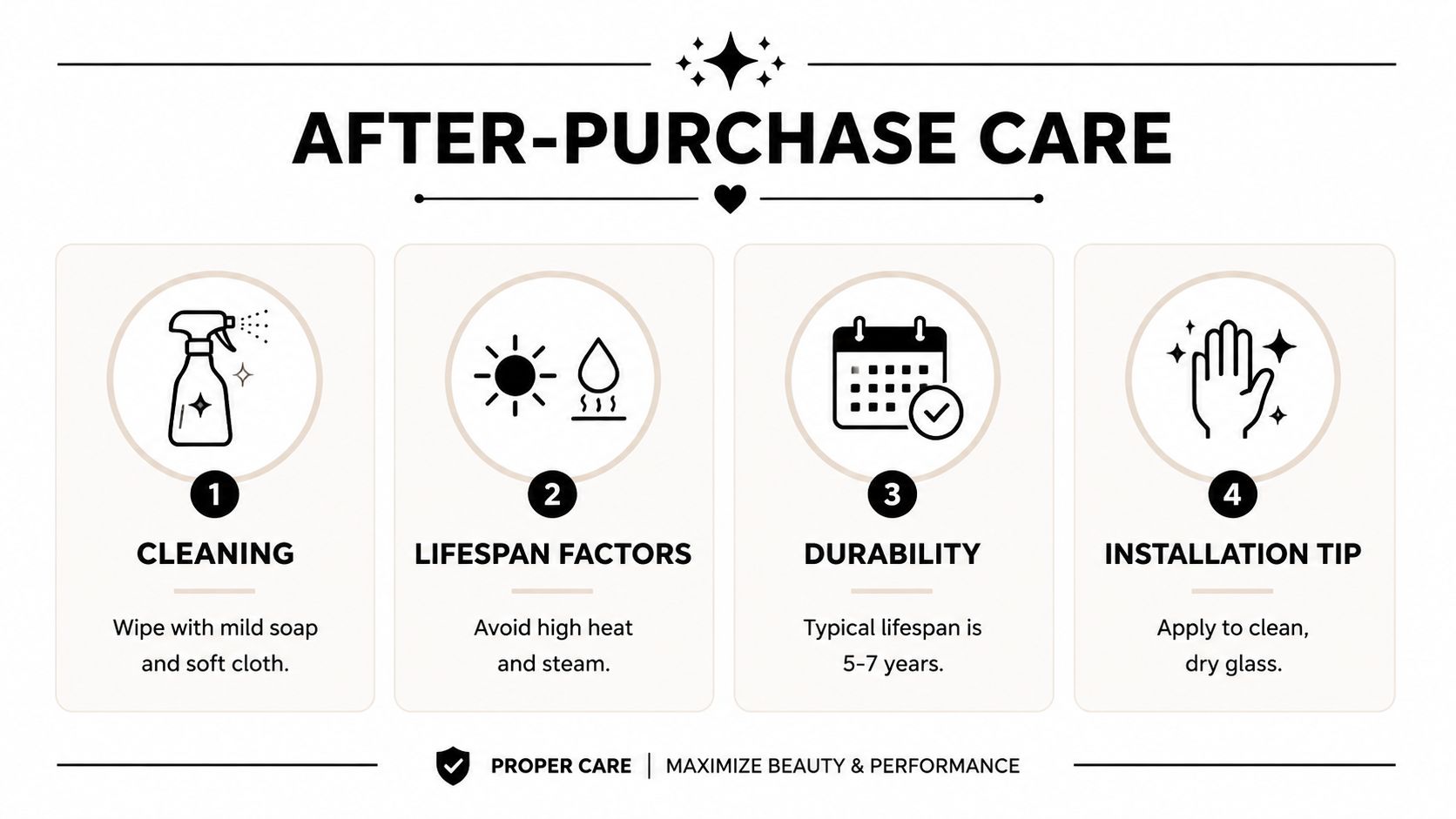
Care is simple if you treat the film like a surface finish, not a scrub target. Use mild soap and a soft cloth, and keep edges from getting snagged during cleaning. Heat, humidity, and harsh cleaners shorten the life of static-cling privacy films, which is why bathrooms and kitchens need a little more attention than a dry hallway window.
The lifespan question matters because expectations are often too high or too low. As noted earlier, quality static-cling films are generally built for roughly 2 to 3 years of indoor use, while the broader category also includes adhesive products made for much longer service life. If you need a temporary or seasonal solution, that shorter lifespan isn't a flaw, it's part of the design.
The biggest privacy mistake still comes back to day versus night. A film that looks perfect in daylight can behave very differently once the interior lights come on, especially if it depends on reflectivity. Frosted and patterned options remain the safer answer when you need privacy at all hours.
Common questions after purchase
- Will static cling leave residue? Usually it's chosen because it's non-adhesive and removes more cleanly than glued films.
- Does it block UV rays? Some plain static-cling vinyl products can offer 95% UV protection, according to Net Curtains Direct's product information.
- Are they renter-friendly? Generally yes, because the removable format is the main reason renters choose them, but lease rules and HOA policies still matter.
If you want a quick screenshot-ready checklist, use this before you buy: Decide if you need night privacy. Pick static cling for temporary use, adhesive for long-term use. Match opacity to how much daylight you want to keep. Clean the glass carefully before installation.
If you want help choosing a privacy-safe look for your windows or glass surfaces, visit Custom Sticker Shop to browse vinyl options that are pre-spaced and transfer-taped for easier installation. Their range makes it easier to match a window treatment to a room, a vehicle, or a seasonal style without overcommitting too soon.