
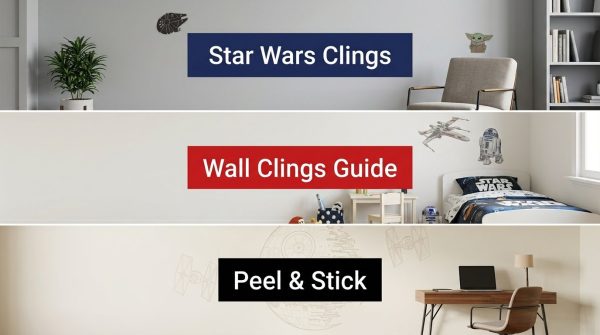
You want a Star Wars room, but you don't want to repaint the walls when a child changes interests, a lease ends, or your office needs to look less like a themed bedroom. A large Millennium Falcon mural can make a strong statement, while a small cluster of droids, starships, or galaxy shapes can add personality without taking over the room.
Star Wars wall clings offer that middle ground. They bring color and character to painted walls with a less permanent approach than paint or traditional wallpaper. Many products use peel-and-stick construction, and some are designed to reposition during installation or remove without solvents. Still, “removable” doesn't mean “suitable for every wall.” Surface condition, paint strength, humidity, artwork scale, and adhesive design all affect the result.
Low-commitment decorating works best when you treat the wall as part of the product choice, not just the background.
This guide breaks down how wall clings differ from decals and murals, why adhesive architecture matters, how to match designs to a fan's age and taste, and how to install, maintain, and remove them with care.
Introduction to Star Wars Wall Clings and Why They Work
A parent may want an X-wing above a child's bed, but not a permanent mural. A renter may want a subtle Rebel-inspired office wall without risking a security deposit. An adult collector may prefer a clean galaxy composition behind a desk instead of a room filled with obvious merchandise. In each case, the decorating problem is similar: create a visible Star Wars atmosphere while keeping the room adaptable.
Wall clings answer that problem through surface-applied graphics. Instead of rolling paint across the wall or committing to pasted wallpaper, you place printed pieces where you want them. Depending on the product, you may be able to lift and adjust the graphic while positioning it, then remove it later with less work than permanent wall treatment.
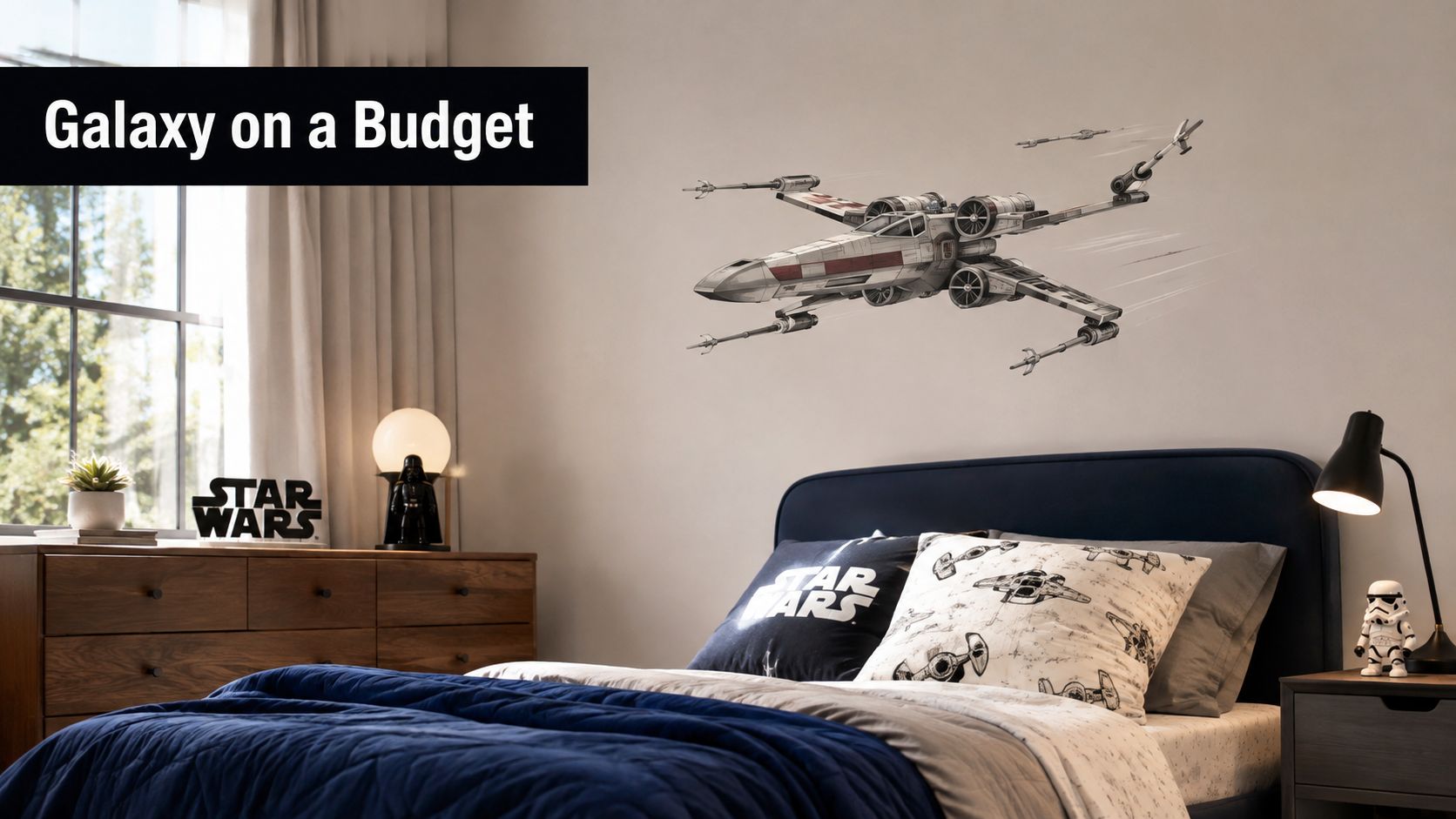
The category has been available through major retail channels for years. Current listings include peel-and-stick Star Wars wall decals and clings at retailers such as Walmart's Star Wars wall decal selection, along with products sold through Target, Home Depot, Staples, and specialty décor sites. That range makes the format accessible to shoppers who want a quick room refresh rather than a full renovation.
Why renters and families often choose them
A painted mural changes the room's visual identity and may require more preparation when you want to reverse it. Traditional wallpaper can create a larger removal project. Wall clings usually break the artwork into manageable pieces, so you can place a single character, a group of ships, or a complete scene without handling a full wall at once.
That modular format also suits changing interests. A nursery can begin with soft stars and a small spacecraft, then shift toward a more cinematic space design later. A gaming setup can use a bold feature graphic while leaving the surrounding walls neutral. An adult office can use restrained symbols or a star field that reads as décor first and fandom second.
What the format doesn't promise
A wall cling isn't automatically safe for every painted surface. “Peel-and-stick,” “repositionable,” and “removable” describe intended behavior, not a guarantee for fragile paint, heavy texture, or poorly prepared walls. The most reliable results come from matching the product to a clean, flat, well-cured interior surface and following the manufacturer's instructions.
How Star Wars Wall Clings Work and What Sets Them Apart
A wall cling is easier to understand if you compare it with familiar household adhesives. A sticky note can hold to a smooth surface and lift without behaving like packing tape. A permanent label grips more aggressively and may tear or leave residue when removed. Wall graphics sit somewhere within that broader adhesive world, and the specific adhesive system determines how forgiving the product feels during installation.
The artwork is only the visible layer. Underneath it, the product may include a printed film, an adhesive coating, and a liner that protects the adhesive before application. Some systems use low-tack acrylic technology intended to let the installer adjust placement. Others may rely on a cling effect or a different removable construction. Two graphics can show the same Darth Vader or Millennium Falcon image while behaving very differently on a wall.
Clings, decals, and murals
The terms overlap in retail listings, so shoppers should focus on construction and instructions rather than the name alone.
| Format | Typical role | What to check |
|---|---|---|
| Wall cling | Flexible, low-commitment room décor | Repositioning instructions and surface limits |
| Wall decal | Printed or cut graphic applied directly to a wall | Adhesive type, transfer method, and removal guidance |
| Peel-and-stick mural | Large-scale scene or wallpaper-style composition | Panel alignment, wall preparation, and long-term removal |
A single decal may act as a focal point above a desk. A multi-piece kit can create a visual story across a wall. One Walmart listing for a Star Wars Classic decal set contains 31 pieces, showing how the category is often packaged as a collection of characters, vehicles, stars, and supporting graphics rather than one isolated image. The pieces let you control spacing and adapt the arrangement to furniture.
Why repositionability matters
Repositionability is most useful before the graphic is fully settled. It gives you a chance to correct a crooked angle, adjust the distance between a starfighter and a planet, or move a character away from a light switch. It doesn't mean you should repeatedly peel and reapply every piece without limits. Each lift can affect handling, dust exposure, and edge performance.
A useful buying question is not simply, “Does it stick?” Ask instead, “How does it release, and what surface does the manufacturer approve?” That question leads directly to adhesive architecture, which is often more important than the printed image.
Types Materials and Adhesive Technology Explained
The most important technical choice in a wall cling is the relationship between the film and the adhesive. The film carries the artwork and gives the graphic its feel. The adhesive controls how it grips, how easily you can adjust it, and what may happen when you remove it.
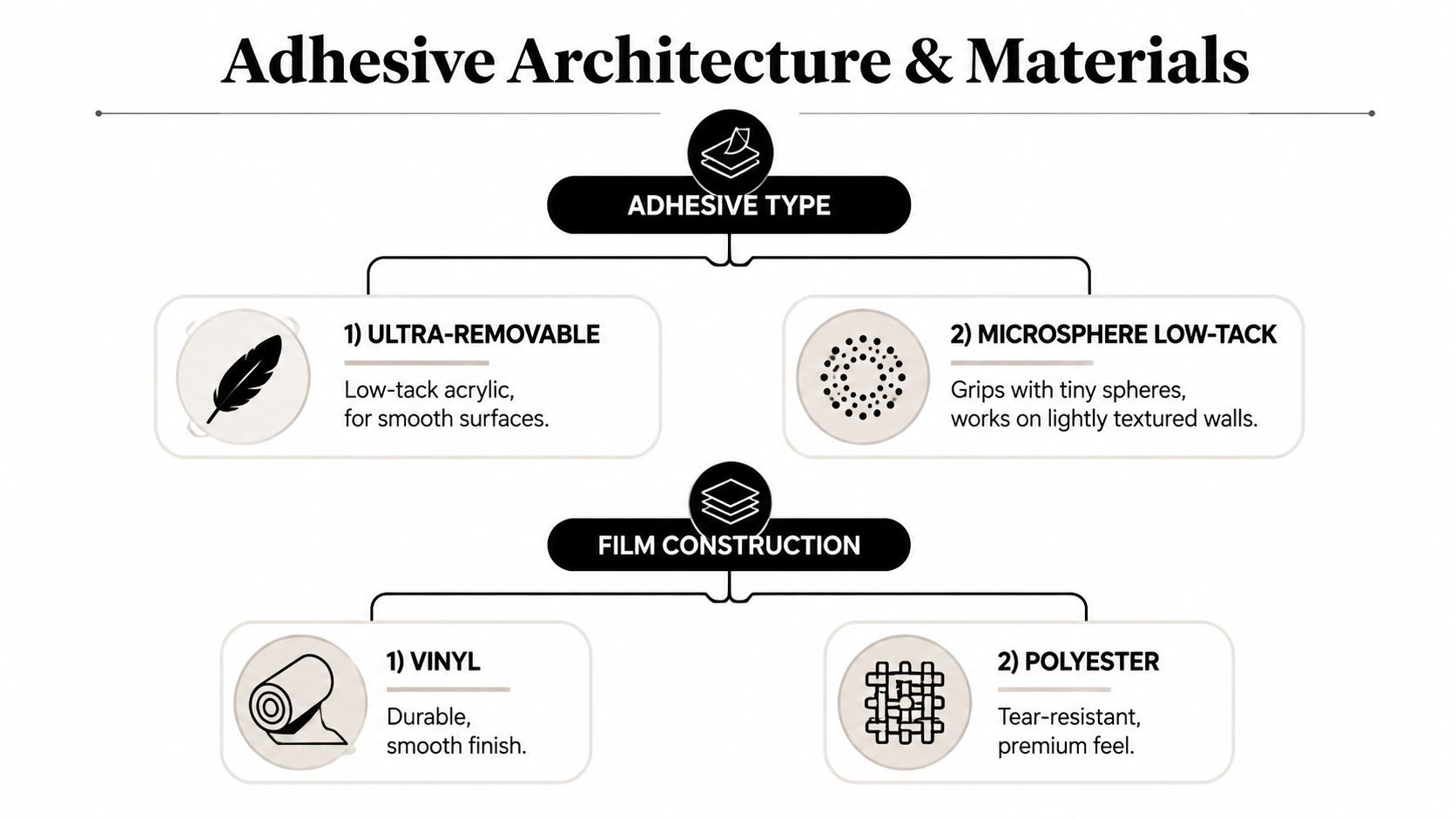
Interior wall graphics commonly use ultra-removable or microsphere low-tack acrylic systems. Technical information from Nekoosa's wall graphics product overview describes constructions engineered for repositioning on installation and release from suitable surfaces. Some formulations are designed to leave no residue and avoid solvent-based removal.
Ultra-removable systems
An ultra-removable low-tack acrylic adhesive is designed to make placement less stressful on smooth surfaces. Think of it as a controlled grip. It should hold the graphic in position while allowing an installer to lift an edge, correct alignment, and smooth the piece again.
This type of construction is a logical fit for flat painted walls, most wallpaper approved by the manufacturer, and wood paneling. It isn't a universal solution for rough plaster or weak paint. If the paint itself has a poor bond with the wall, even a gentle adhesive can pull paint when the film is removed.
Microsphere adhesives
Microsphere systems use tiny adhesive structures to create contact with the surface. Their purpose is to balance grip and release, particularly during application. Product descriptions may position them for smooth or lightly textured surfaces, but “lightly textured” doesn't mean every textured wall is suitable. Texture can reduce contact area, create air gaps, and place stress on corners.
Film construction
Vinyl is common because it offers a smooth printed face and practical handling. It can work well for crisp spacecraft silhouettes, colorful character art, and clean geometric graphics. Specialty polyester films can offer a more fabric-like or tear-resistant feel, which may appeal to buyers seeking a premium finish.
The right choice depends on the room and the design. A small R2-D2 graphic may be easy to handle in several film types. A broad mural has more opportunities for wrinkles, trapped air, and edge stress, so film flexibility and application instructions matter more.
Don't judge a wall product by looking only at the artwork. If you're comparing a decorative graphic with a vehicle-oriented product, reviewing vinyl decal construction and application examples can help you recognize differences in cut quality, transfer handling, and material feel.
Choosing Size Design and Fandom Stage for Your Space
The right Star Wars graphic should fit the wall, the room, and the fan. A design that delights a young child may feel too playful in a teenager's gaming room. A minimalist galaxy pattern that looks polished in an office may seem too quiet above a toddler's bed.
Start with the wall itself. Measure the open area between furniture, windows, doors, and outlets. Then mark the approximate width and height with painter's tape. This temporary outline gives you a better sense of scale than viewing a product photo on a phone.
Use the wall as a composition
A single statement graphic works well when the wall has one clear focal area. An X-wing above a bed, a Millennium Falcon over a desk, or a large helmet silhouette behind a media console can anchor the room. Multi-piece sets offer more flexibility because you can distribute the artwork around shelves or furniture.
Remember the 31-piece Star Wars Classic kit described in retail listings. A kit with that many pieces doesn't require you to place every element in a tight cluster. You might create a central ship group, add small stars toward the corners, and leave breathing room around the furniture.
Use this simple selection process:
- Choose the visual role. Decide whether the wall should be a focal point, a background, or a small accent.
- Match the contrast. Dark graphics stand out against pale walls, while bright art may need a deeper or neutral background.
- Protect visual space. Keep faces, ships, and symbols away from switches, vents, and crowded shelves.
- Plan for change. If the room may evolve soon, choose individual pieces or a subtle motif rather than a full-room scene.
Match the fan's stage
Recent Star Wars bedroom advice distinguishes younger children, who often enjoy character-led designs featuring Grogu and droids, from older children who may prefer galaxy, star-field, or space imagery with less juvenile branding. You can explore a more focused vehicle-led direction through a Millennium Falcon sticker design while still applying the same room-scale principles.
For a young child, expressive characters and friendly droids can make the wall feel playful. For a tween, combine one recognizable ship with stars or a restrained planetary pattern. Teens and adult collectors often respond better to silhouettes, technical-looking spacecraft arrangements, faction symbols, or cinematic color palettes.
A design can stay relevant longer when the Star Wars reference is clear but the surrounding style remains adaptable.
Color discipline helps. Pick a dominant wall color, one main graphic palette, and a small number of supporting accents in bedding, lighting, or shelving. A bold character wall doesn't need equally bold curtains, rugs, and storage bins.
Installation Removal and Surface Compatibility Made Simple
Surface compatibility matters more than maximum stickiness. Removable wall films are generally intended for flat, smooth, temperature-controlled interior surfaces, and guidance from Wall Hogs on removable peel-and-stick wall decals warns that clean removal isn't guaranteed. If the paint bond is weaker than the film bond, the graphic may lift paint or change the wall's gloss.
The safest starting point is well-cured matte or eggshell paint. Fresh paint, heavy texture, chalky finishes, wallpaper with loose seams, and fragile substrates deserve caution. Test a small, hidden area first, then wait long enough to observe the result before committing to a prominent wall.
Prepare before you peel
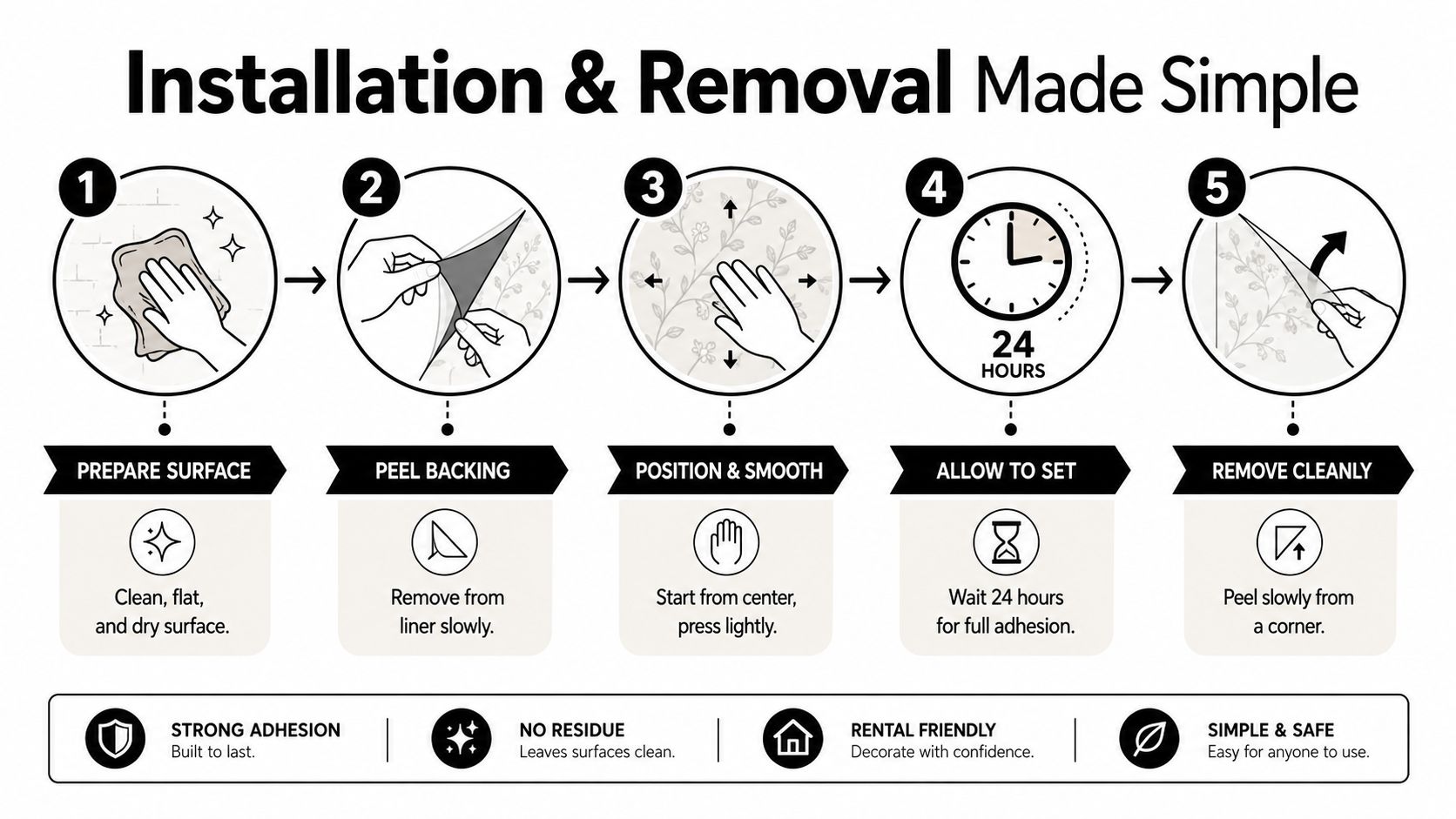
- Clean the surface. Remove dust, oils, and residue with a soft, suitable cloth. Let the wall dry fully.
- Check the finish. Look for flaking paint, cracks, damp areas, heavy texture, or recent repainting.
- Control the room. Work indoors at a comfortable, stable temperature. Avoid applying graphics to a cold, wet, or actively humid wall.
- Plan the layout. Use low-tack painter's tape to mark the top edge and centerline. Stand back before removing the liner.
- Handle the film carefully. Keep the adhesive side away from dust, hair, and fabric fibers.
Apply with light pressure
Peel the backing away slowly rather than exposing the entire adhesive area at once. Position the top portion, then smooth outward from the center with a clean hand or soft squeegee. Light pressure helps push out air without stretching the material or forcing the graphic into wall texture.
For a multi-piece kit, place the largest visual element first. Add supporting stars, droids, or small symbols afterward. This approach keeps the composition balanced and prevents minor pieces from dictating the layout.
The installation guide below summarizes the process visually.
You can also watch the following demonstration before applying a large graphic. Pay particular attention to how the installer supports the film and controls the peel angle.
Remove slowly and support the paint
Begin at a corner and pull the graphic back slowly, keeping the film close to the wall rather than yanking it outward. If the surface resists, stop and reassess. A sharp pull can transfer stress to the paint, especially after the graphic has remained in place for a long period.
The same careful thinking applies to other removable home coverings. A comparison of removable window styles can help you distinguish between products that rely on different attachment methods and care routines. Don't assume that a removable product on glass behaves exactly like a wall graphic on painted drywall.
Placement Ideas Maintenance and Long Term Care
A nursery can use a few small stars above a changing table, with a friendly droid placed where a child can see it during quiet routines. Because the arrangement is modular, parents can remove one character or replace a central graphic without redesigning the entire room.
A tween gaming setup benefits from stronger contrast and a more deliberate focal point. Place a starfighter or helmet silhouette behind the desk, then keep the surrounding wall relatively quiet so monitors, shelves, and lighting don't compete with the graphic. In an adult office, a restrained galaxy band or spacecraft silhouette can provide fandom recognition without making the background feel like a toy display.
Build a balanced arrangement
Try one of these placement patterns:
- Clustered vignette: Group a ship, a planet, and small stars around one central point.
- Height-based display: Keep large graphics near eye level and let smaller pieces rise toward shelves or ceiling space.
- Furniture frame: Place artwork above a bed, console, or desk, leaving a consistent margin around the furniture.
- Visual trail: Arrange ships or stars along a gentle diagonal to create movement across a wide wall.
Keep edges away from surfaces that receive frequent contact. A graphic beside a bed may catch on blankets, while one behind a chair may encounter repeated rubbing. Corners and narrow strips also deserve extra care because they can experience more lifting than a broad, flat wall area.
Care for the surface and graphic
Dust the face gently with a soft, dry cloth. Don't scrub, soak, or apply household cleaners unless the product instructions specifically allow them. In humid rooms, watch for condensation, damp paint, and areas near steam. A wall cling isn't a moisture barrier, and persistent humidity can affect both the wall finish and the adhesive bond.
If an edge begins to lift, don't press it down repeatedly without finding the cause. Check for dust, wall texture, moisture, or contact from furniture. If the product permits reapplication, lift only as much as needed, clean the area appropriately, and smooth it back from the center.
Think about the lifecycle
Parents often need décor that can evolve as a child grows. A full character scene may be exciting now but harder to adapt later. A ship, star field, or subtle symbol can remain useful through several room changes, especially when bedding and accessories change around it.
The practical questions are the ones many product descriptions leave unanswered: how the graphic behaves on textured paint, whether removal stays clean after extended use, and whether the room's humidity creates problems. The Future Market Insights wall décor forecast identifies sustained demand for low-commitment personalization, but your own wall conditions still determine whether a specific product is appropriate.
Smart Buying Custom Orders and Why Custom Sticker Shop Stands Out
Retail listings show a broad price range, from about $9.25 for a vinyl Star Wars sticker or decal on eBay to $175 for a Millennium Falcon peel-and-stick wallpaper mural on a specialty décor site, as shown in eBay's Star Wars wall décor listings. The difference reflects format, size, material, and licensing, not just artwork quality.
For an official character kit, check the license and the product's wall instructions. For a custom or inspired design, inspect the vinyl grade, cut precision, transfer tape, liner, and whether the seller explains wall installation. A workflow guide such as the MerchLoom logo sticker workflow can help you understand how artwork becomes a cut-ready sticker, even when you're evaluating a different design.
Custom Sticker Shop offers custom vinyl decals with pre-spaced, transfer-taped delivery, and its product range includes Star Wars-themed options. Its published business information states that it uses American-made Oracal vinyl rated for up to 7 years outdoors, with prices starting at $7.99, free U.S. shipping on orders over $25, and an unlimited Buy 2 Get 1 Free offer. Those details apply to its published decal offering, so confirm the specific material and intended surface before ordering for an interior wall. You can review the custom design decal options when a standard kit doesn't fit your layout.
If you want a Star Wars wall that matches a specific room, Custom Sticker Shop can provide pre-spaced vinyl decals and custom designs alongside ready-made themed options. Visit Custom Sticker Shop to choose a design, check the application details, and plan a graphic that fits your wall, your fandom style, and your willingness to change the room later.