
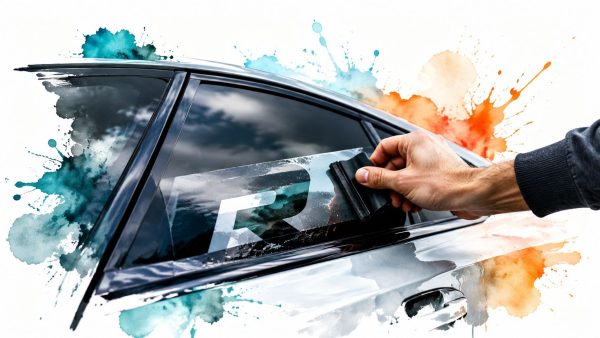
You're probably here because you want your car to feel like yours without getting into a full repaint, expensive graphics package, or anything permanent. A custom name decal is one of the simplest ways to do that. It can be subtle on a quarter window, bold across a windshield strip, or clean and understated on a tailgate.
The often-missed part is that design is only half the job. A good-looking name sticker can still fail fast if the material is wrong, the size is guessed, or the placement fights the shape of the vehicle. In a decal shop, that's what separates a sticker that still looks sharp down the road from one that starts curling at the corners after a few washes.
Giving Your Vehicle a Personal Identity
A name decal works because it adds identity without changing the vehicle itself. You're not drilling anything, repainting anything, or committing to hardware you may regret later. For most drivers, that's the sweet spot. It feels personal, but it's still practical.
That idea didn't appear out of nowhere. In the U.S., window labels have been part of the car-buying experience for a long time. The Monroney sticker, created by the Automobile Information Disclosure Act of 1958, made side-window labeling standard on new passenger cars and light-duty trucks sold in the United States. Once drivers got used to seeing important information displayed on vehicle glass, it wasn't a big leap for that same visual space to become a place for personal expression too.
Why name decals work so well
Some vehicle upgrades ask for a lot of commitment. Name stickers for car setups don't.
- They're easy to personalize. A first name, last name, callsign, pet name, kids' names, team name, or build name all work.
- They suit different vehicle types. Trucks, SUVs, Jeeps, daily drivers, track cars, and family vehicles all have places where text decals look intentional.
- They can be temporary without looking cheap. That matters if you trade vehicles often or like to refresh the look once in a while.
Practical rule: The best name sticker feels like it belongs on the vehicle, not like it was added as an afterthought.
The real goal
Car owners aren't just trying to “decorate” a car. They want a decal that fits the vehicle, matches how they use it, and still looks clean months later. That means thinking beyond font choice. Material, sizing, and placement make the difference.
If you get those three right, even a simple name decal looks finished and professional.
Choosing Sticker Materials That Actually Last
The biggest mistake I see is shopping by design alone. If the material is weak, the nicest artwork in the world won't save it. Outdoor durability comes from the vinyl and protective layers, not from the name itself.
For car use, paper stickers are the wrong tool. They're fine for packaging, short-term labeling, or indoor use, but a vehicle puts every weak point on display. Sun hits it all day. Water finds the edges. Road grime and wash mitts abrade the surface. If the print isn't protected, it shows fast.
The stronger approach is automotive vinyl. For printed decals, a premium vinyl paired with a clear laminate overcoat helps protect the face of the sticker from UV exposure, abrasion, and moisture, which is why the printed name stays cleaner and more legible outdoors over time, as shown in this automotive vinyl and laminate workflow demonstration.
What actually matters in the material
A lot of product pages throw around terms without explaining why they matter. Here's the short version.
- Vinyl base film holds up to weather better than paper stock.
- Adhesive quality affects whether the decal stays down at the edges.
- Laminate protects printed graphics from fading, scratches, and wash wear.
- Cut quality matters for text decals, especially on small script fonts where weak cuts can tear or weed poorly.
For simple name stickers, many shoppers prefer cut vinyl lettering rather than a printed rectangle. That gives you the clean “just the letters” look without extra background film. For more colorful or detailed designs, printed vinyl with laminate is usually the better fit.
Decal Material Comparison What to Look For
| Feature | Professional Oracal Vinyl | Generic/Paper Sticker |
|---|---|---|
| Outdoor use | Built for vehicle and exterior applications | Poor choice for long-term outdoor exposure |
| Water resistance | Handles washing and road spray better | Can soften, wrinkle, or fail when wet |
| UV exposure | Better suited for sun exposure, especially with laminate | More likely to fade or break down |
| Edge durability | Better bond when installed on a proper surface | More likely to lift at corners |
| Finish | Cleaner, more professional look | Often looks temporary |
| Best use | Cars, trucks, windows, body panels | Indoor labels, short-term uses |
Why transfer tape and pre-spaced text matter
This is one of those details people only appreciate after their first install. If your name sticker is made as pre-spaced lettering and held together with transfer tape, the spacing is already set correctly. You don't have to place each letter by hand, and you don't end up with crooked gaps or drifting alignment.
That's especially useful for names in cursive fonts, long surnames, or decals with layered text. The install gets easier, the result looks straighter, and you spend less time trying to “fix” something that should have been prepared correctly before it ever shipped.
Cheap decals usually don't fail in the middle first. They fail at the edges, in the print layer, or during installation.
Sizing and Placing Your Name Sticker
A name sticker can look perfectly sized on your screen and still feel wrong once it hits the vehicle. I see that all the time with first orders. The usual problem is not the font. It is scale, spacing, or choosing a spot that fights the shape of the car.
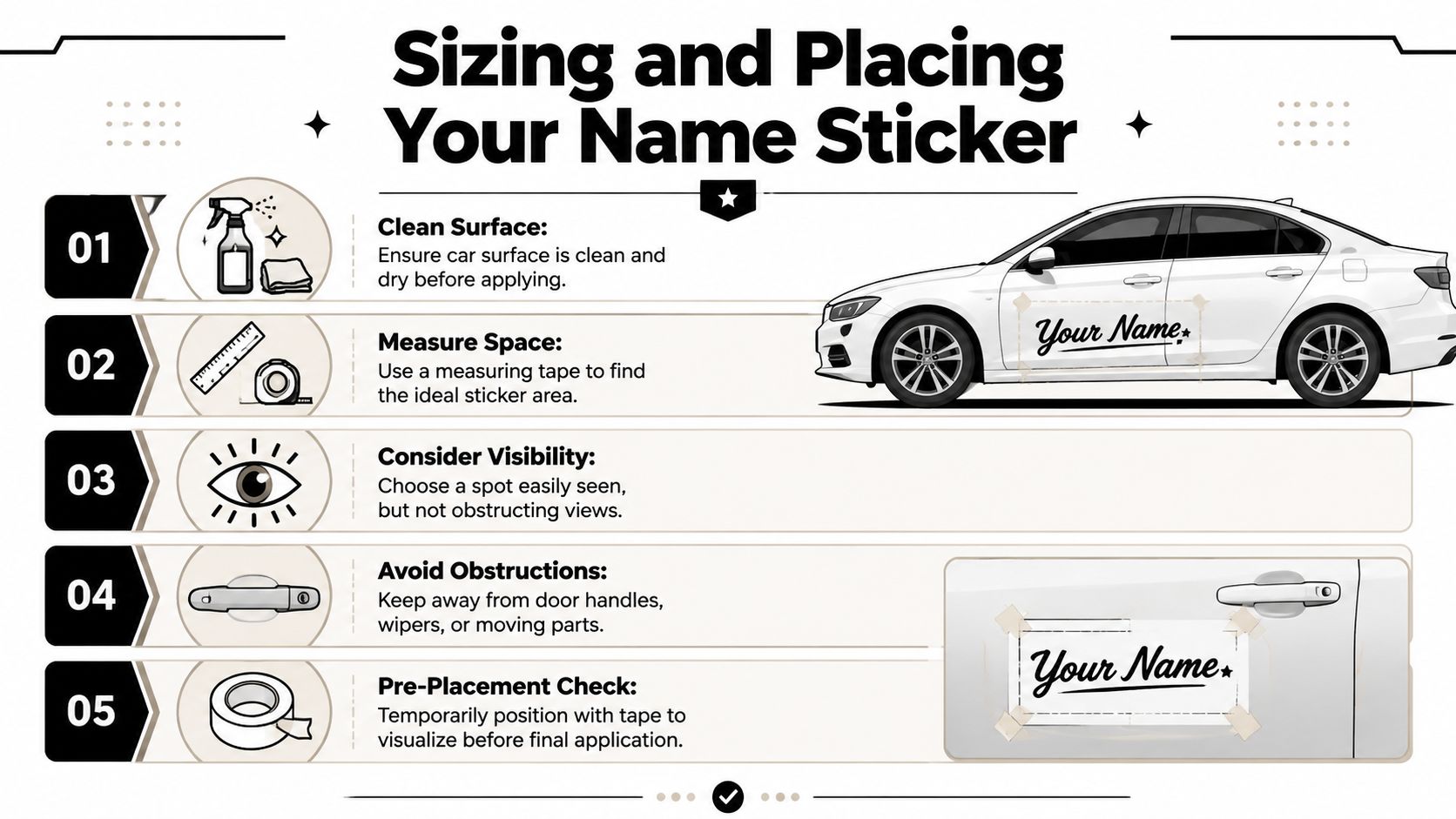
Good placement starts with the vehicle, not the artwork. Measure the exact area, check for trim, seams, hinges, wipers, and body lines, then size the name to that real space. A decal that is half an inch too tall can suddenly crowd a window edge or look crooked against a beltline.
How to choose the spot
Each location gives you a different mix of visibility, durability, and style.
- Rear side windows are one of the safest choices for family names, kids' names, pet names, and small club decals. The glass is flat enough for clean installs, and the design stays visible without taking over the whole vehicle.
- Tailgates and rear glass give longer names more room to breathe. They work well when you want the text readable from farther back, but you still need to respect wiper paths, defroster lines, and the edge margins.
- Windshield banners suit bold styling and shorter phrases with enough letter height to read at a glance. If you want a real-world reference for how text stretches across upper glass, this windshield banner decal example for a Chevy Malibu shows the proportions well.
- Doors and body panels can look excellent, especially on trucks and show builds, but they leave less room for error. Curvature, handles, panel gaps, and reflections can make a decal look off-center even when the measurements are technically correct.
If you want to compare scale before choosing a permanent location, browsing small automotive decals and related items like CA Tech USA merchandise can help you judge visibility and proportion without committing to a large graphic right away.
Placement trade-offs that matter
Glass is usually the easier surface to get right. It is smoother, easier to measure, and less affected by compound curves. That matters more with names in script fonts, where one low loop or long tail can land awkwardly near an edge.
Painted panels ask for more restraint. A name that looks clean on a flat mockup can stretch across a body crease, dip near a handle, or start lifting sooner if part of the lettering lands near a seam. On daily drivers, I usually recommend leaving more margin than people expect. Tight layouts look aggressive at first, but they age poorly when every edge sits near a problem area.
Moving parts deserve extra caution. Keep text away from door cuts, sliding windows, fuel doors, wiper sweeps, and trim ends that catch wash mitts or airflow.
Privacy matters too. A vehicle decal says more than style alone. This consumer safety article on sticker privacy makes a good point about decals that reveal family details, school ties, or patterns a stranger does not need to know.
Before you order, ask whether the decal shares the right amount of information for where and how you park.
A simple sizing habit
Use masking tape to mark the planned width and height directly on the vehicle. Then step back several feet and check it from straight on, from a slight angle, and with the doors or hatch opened and closed. That quick test catches most sizing mistakes before the decal ever leaves the backing.
A Quick Guide to Flawless Installation and Care
Good decals don't need a complicated install, but they do need a clean surface and a little patience. Most text decals go on smoothly when the area is prepped well and the transfer tape is peeled back slowly.
A driveway-friendly install routine
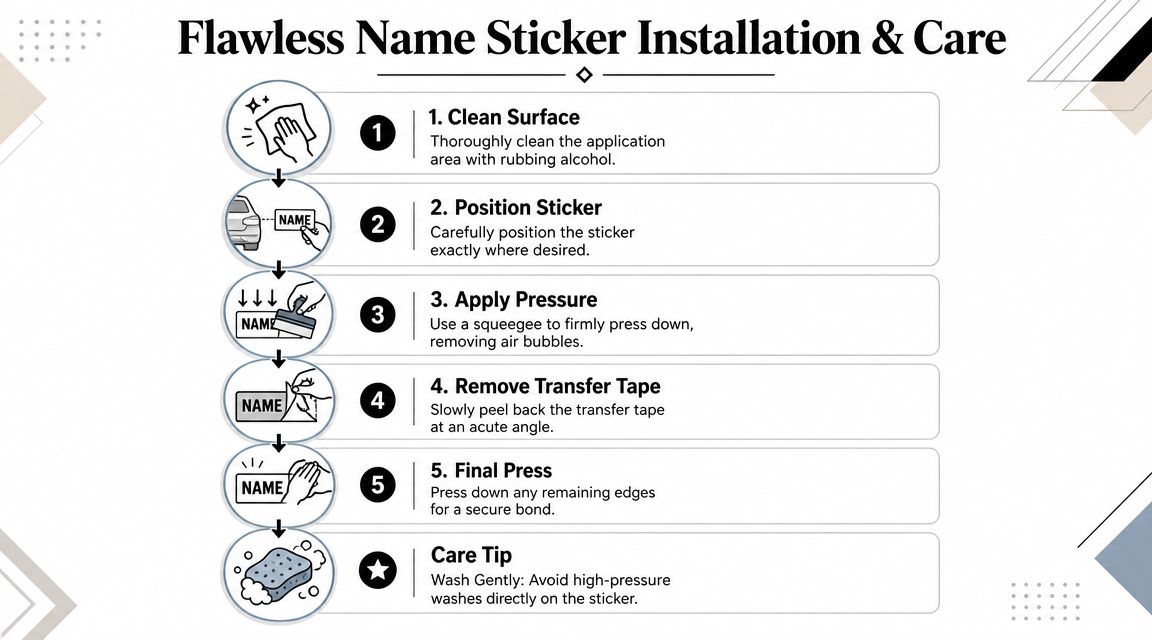
- Clean the panel first. Wash off dirt, then wipe the exact area with rubbing alcohol so wax, silicone, and road film don't weaken the adhesive.
- Test the position. Hold the decal in place with small pieces of masking tape and check it from a few feet away.
- Apply from one side across. Use a squeegee, or a clean card wrapped in a soft cloth, to press the decal down evenly.
- Peel transfer tape slowly. Pull it back at a low angle instead of lifting straight out.
- Press the edges again. A final pass helps seat small letter strokes and corners.
Here's a visual walkthrough of the process:
Care that helps the decal stay put
Most decal failures after installation come from rough washing habits, dirty prep, or rushing the tape removal. Day-to-day care is simple.
- Wash gently. Hand washing is easiest on decal edges.
- Be careful with pressure washers. Don't aim hard spray directly into the edge of the letters.
- Watch chemicals. Strong cleaners can attack the surface or work into the edges over time.
- Check corners occasionally. If a small edge starts to rise, press it early before dirt gets under it.
A decal doesn't need babying. It just needs clean installation and sensible washing.
Design Inspiration for Every Kind of Driver
A good name sticker should fit the way the vehicle is used. The right design for a school-run SUV usually looks wrong on a track car, and a memorial decal needs a different touch than a fun weekend graphic. Style matters, but so do the practical choices behind it. Letter shape, contrast, and how much room the panel gives you all decide whether the decal still looks good six months from now.
Family names and everyday drivers
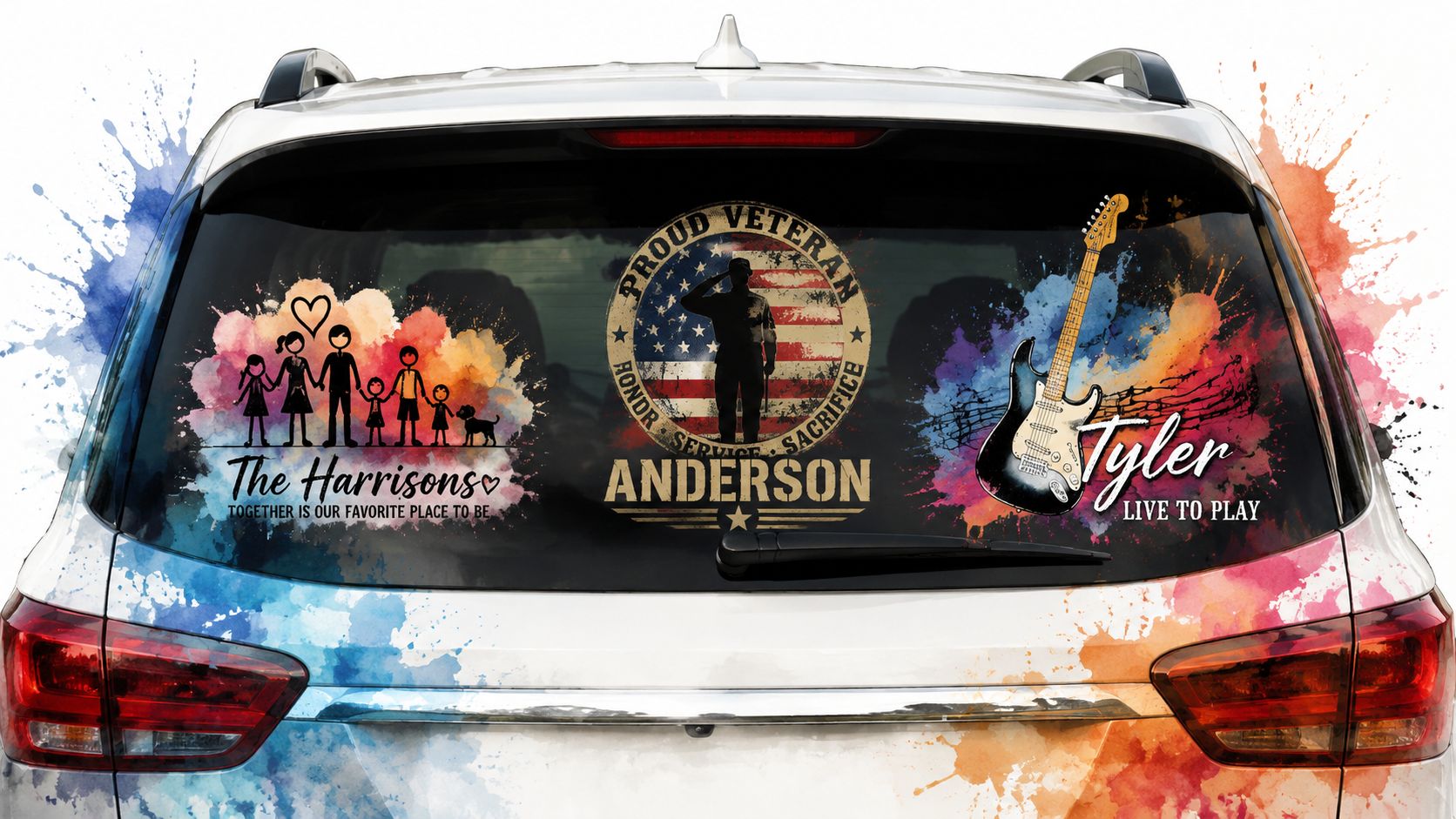
Daily drivers usually look best with simple layouts. A family surname across the rear glass, kids' names in a neat row, or a small pet name on a side window adds personality without fighting the lines of the vehicle. I usually steer people away from overly fancy scripts here, because minivans, SUVs, and commuter cars already have a lot going on visually.
Sports themes work well for this kind of vehicle if the graphic stays secondary to the name. A ball, bat, or jersey number can support the text without making the decal feel busy. A custom soccer ball name window decal is a good example of that balance. The icon gives context, but the name still does the work.
Military, veteran, and service-proud designs
These designs carry meaning, so restraint usually wins. Strong block lettering, a branch reference, and one clean symbol often read better than a layout packed with flags, dates, mottos, and badges. On glass, that kind of clutter tends to blur together from any real viewing distance.
Placement matters just as much here as the artwork. Rear glass is common because it gives you contrast and space, but some trucks look better with a smaller decal on a lower corner rather than a wide layout stretched across the whole window. The goal is respect and readability, not filling every inch.
Enthusiast builds and motorsport use
Performance cars and project cars give you more room to be bold, but they also expose weak design choices fast. Tight condensed fonts can look sharp in a mockup and turn into a squint test once they are cut in vinyl and viewed through tinted glass. Thick block letters usually hold up better, especially if the car spends time outdoors or gets washed often.
This is also where placement changes the feel of the decal. Quarter windows suit short driver names, crew names, and car numbers. Windshields can handle longer text, but only if the font is clean and the stroke width is thick enough to survive distance, glare, and motion. A design that looks aggressive up close still needs to read at a stoplight.
Memorial and tribute decals
Memorial decals need a steady hand. A name, a short phrase, and maybe one date line often feel more sincere than a heavily styled tribute piece. White lettering on rear glass is popular for good reason. It reads clearly and keeps the focus on the message.
The main mistake is oversizing it out of emotion. On a curved back window, large text can distort, split across defroster lines, or sit awkwardly near the edge seal. Measuring first avoids that problem, as noted earlier. For tribute work especially, clean scale and quiet design usually age better than dramatic effects.
Ordering Your Perfect US-Made Name Sticker
When you're ready to order, the smart move is to judge the decal the same way a shop does. Look at the material, ask how the lettering is prepared, and think about the exact surface where it's going. Those details matter more than an endless gallery of fonts.
A useful checklist looks like this:
- Material first. Choose automotive vinyl over paper-based products for exterior use.
- Ask about prep. Pre-spaced, transfer-taped text is easier to install cleanly.
- Match the decal to the surface. Glass, doors, hoods, and tailgates don't all behave the same way.
- Keep the design readable. The vehicle is already a busy visual object. Simple text usually wins.
If you want a text decal made specifically for vehicle use, Custom Sticker Shop's custom text windshield banner decals are one example of a product built around automotive text applications. The shop is a family-run, veteran-friendly maker based in Kansas, and its published product information emphasizes U.S.-made Oracal vinyl, transfer-taped text decals, and vehicle-focused customization options.
The right order is the one that fits your actual car, your climate, and the way you wash and use the vehicle. That's why the cheapest option on the page often isn't the smartest buy. If the decal is cut from weak material, sized by guesswork, or designed without regard for the panel it's going on, you'll see the compromise every time you walk up to the car.
If you're ready to create a decal that looks right on the vehicle and holds up outdoors, Custom Sticker Shop is a practical place to start. You can choose custom text, review vehicle-focused decal options, and order a name sticker built for real automotive use rather than generic indoor sticker stock.