
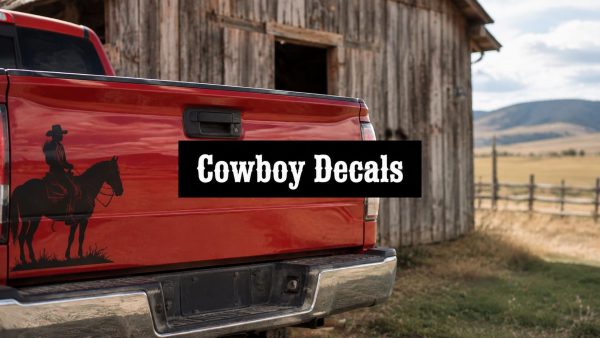
You're standing in the driveway, looking at a truck, SUV, or car that runs fine but still feels a little too plain. A cowboy decal fixes that fast. It adds personality, points to your Western roots or weekend habits, and gives the vehicle a look that feels chosen instead of generic.
That's not a new instinct. Automotive personalization has been part of American vehicle culture for generations, and the modern bumper sticker traces back to an invention in the 1940s, with a major leap in 1952 when bumper stickers were first used as advertising materials in a U.S. presidential election (history of bumper stickers by decade). Cowboy-themed graphics fit neatly into that tradition because they're expressive, easy to read, and built for the same kind of exterior use that made decals and stickers so popular in the first place.
For anyone also building a Western look beyond the vehicle, ranch decor ideas can help tie the garage, porch, and driveway together without making the style feel forced. If you're browsing a specific graphic, this cowboy at cross talking to the boss decal shows how a single scene can carry a lot of attitude without needing a full wrap.
Adding Western Spirit to Your Ride
Cowboy imagery works because it says something plain and direct. It suggests independence, open land, hard work, and a little grit, which is exactly why it looks at home on trucks, Jeeps, SUVs, and even compact cars that just need one strong accent. You don't need a huge graphic to get that effect, either. A well-placed decal can do more than a cluttered mix of smaller stickers.
Why the cowboy motif fits vehicles so well
The cowboy has stayed recognizable for a long time, and that matters in design. Wyoming's bucking-horse-and-rider emblem was approved for state license plates in 1935 and stamped on all plates in 1936, which gave cowboy branding a lasting automotive presence (cowboy sticker background and Wyoming plate history). That kind of visibility helps explain why the style still reads clearly on glass and body panels today.
A cowboy decal also works because it's flexible. It can feel rugged, playful, patriotic, or minimal depending on the artwork and finish. A silhouette at sunset leans classic. A rodeo scene feels more energetic. A line-art horse or hat feels cleaner and more modern.
Practical rule: if the vehicle already has strong character, choose a decal that echoes it instead of competing with it.
If you're trying to decide whether the look belongs on a work truck, family SUV, or weekend Jeep, start with the feeling you want the vehicle to give off. Then choose artwork that matches that tone rather than chasing the busiest design you can find. The right cowboy decal should look like it belongs there from day one.
Exploring Popular Cowboy Decal Styles
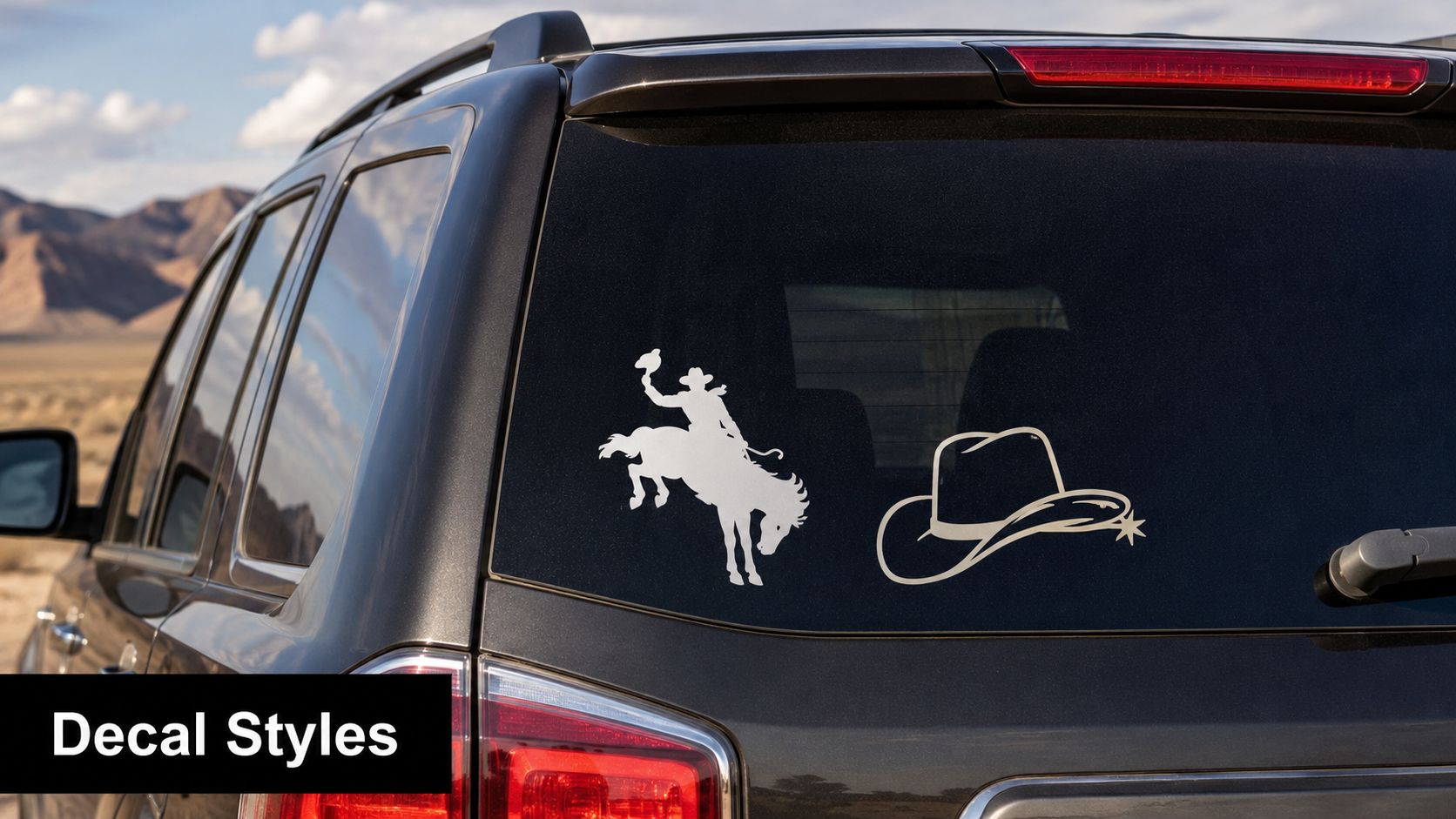
Cowboy decals don't all send the same message. Some feel like a classic ranch badge, some lean into rodeo action, and some are stripped down to just enough line work to catch the eye without shouting. The best choice depends on whether you want the vehicle to look bold, clever, patriotic, or understated.
Classic silhouettes and Western scenes
Silhouettes are the safest bet when you want the theme to read quickly from a distance. A rider, horse, longhorn, or hat against a sunset shape creates an immediate Western impression without too much detail. These designs tend to suit rear windows and larger flat panels because the shape stays legible even when the vehicle is moving.
Rodeo action and movement-heavy graphics
Bull riding, barrel racing, and galloping horses bring motion into the design. These work well if you want the decal to feel lively instead of purely decorative. They suit trucks and off-road vehicles especially well, because the energy of the artwork matches the vehicle's stance.
A smaller rodeo decal can look sharp on a side window or tailgate corner. A larger scene graphic needs more breathing room, otherwise the action looks cramped. That's where proportion starts to matter more than the image itself.
Patriotic and Americana combinations
Some cowboy decals mix Western imagery with flags, stars, or red, white, and blue elements. Those designs usually feel strongest on work vehicles, parade trucks, and family rigs that already carry a pride-first personality. They can be loud if overdone, so the cleaner versions often age better visually.
For a compact design reference, this round cowboy cowgirl sticker is a good example of how the Western theme can be tightened into a small, readable format. That kind of shape is useful when you want something visible without taking over the whole vehicle.
Minimalist line art
Minimalist cowboy decals are the right choice if you don't want the truck to feel themed. A single hat outline, horse profile, or boot line can feel modern and tasteful, especially on newer SUVs and darker vehicles. These designs work best when the surface is clean and the placement is deliberate.
How to Choose the Right Material and Size
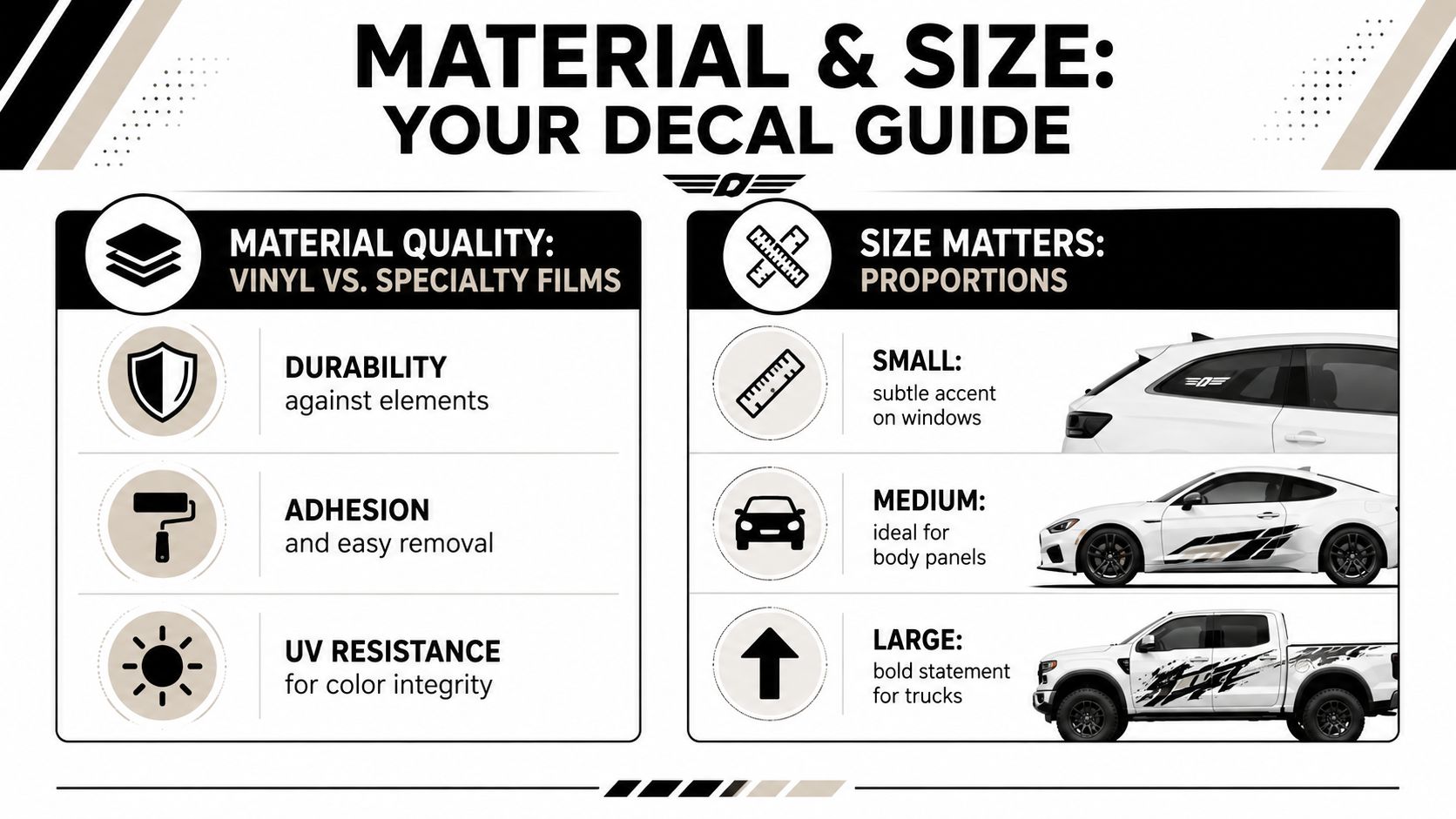
The decal design gets the attention, but the material decides whether it still looks good after months outdoors. For cowboy decals for cars, outdoor vinyl is the indispensable starting point, not paper-style sticker stock. A common product benchmark is Oracal 651, which is described in product listings as a high-quality vinyl rated for about 5 to 7 years outdoors and built with a permanent adhesive for smooth vehicle surfaces (Oracal 651 product listing).
Material quality matters more than most buyers think
Cast or calendered outdoor vinyl holds up because it's made for exterior exposure. That matters on a vehicle, where the decal faces sun, rain, road grime, and regular washing. Cheaper materials can look fine online and fall apart early on a rear window or painted panel.
The surface matters too. Smooth glass, painted metal, and clean body panels give the adhesive the best chance to bond well.
A product that uses die-cut or transfer-tape construction usually installs more cleanly than a basic printed sticker. That's because the cut vinyl sits in one planned shape instead of a loose rectangle with extra border around the art. It also makes the finished decal feel more intentional on the vehicle.
Picking the right size without guessing
Size should follow the surface, not the other way around. A small decal can look sharp on a rear side window, where it acts like an accent instead of a headline. A medium piece usually works better on a door panel or hatch. Larger graphics belong on trucks and SUVs with enough visual mass to support them.
A good buying habit is to measure the target area before you shop. Then compare the decal's width and height against the area you plan to use. If the design is marketed for windows, bumpers, and side panels all at once, choose based on where it will live, not just on how the art looks in isolation.
For shoppers who want to make their own layout decisions, this custom sticker option is useful as a reference point for turning a visual idea into a vehicle-safe size.
Quick fit check before you buy
- Small decals: Best for rear window corners, small body accents, and subtle personal touches.
- Medium decals: Work well on hatch glass, truck doors, and side panels.
- Large decals: Make sense on tailgates, wide rear windows, and big SUV glass.
Expert Tips for Decal Placement and Proportion
Placement is where a good decal becomes a great one. The same cowboy graphic can look premium on a rear hatch and awkward on the wrong part of a side window. The trick is to treat the vehicle like a shape you're balancing, not a blank space you need to fill.
Truck, SUV, and car placement that works
On trucks, the tailgate gives you a strong, centered canvas, while a rear window corner feels more subtle and personal. Tailgate placement suits bolder cowboy graphics because the panel is broad enough to support them. Rear-window placement is better when you want the theme to show up without dominating the whole vehicle.
On SUVs, the rear hatch and side windows usually give the cleanest results. Side glass works well if you want the decal visible from the curb without blocking the driver's view. Hatch placement gives you a bit more freedom with size, especially if the vehicle has dark glass and enough open area around the artwork.
On cars, keep the decal smaller and tighter to the lines of the glass or panel. A side window accent or a rear glass corner often looks better than trying to stretch a Western scene across a space that can't support it. The goal is for the decal to feel proportional, not pasted on.
Proportion rules that keep the look clean
Most listings don't help enough with sizing for real vehicles, which leaves buyers guessing about how a decal will read on a truck rear window versus a car side panel (sizing gap in cowboy western decal listings). That's why I always tell customers to start with the viewing angle first. If the decal is for the back of the vehicle, think about how it looks from a few car lengths away. If it's for a side window, think about how much of the glass still needs to stay open visually.
Keep visibility first. If a decal interferes with the driver's view, it's in the wrong place.
A clean decal should follow the vehicle's body lines instead of fighting them. On curved glass, smaller designs usually conform better and look more deliberate. On flat surfaces, you've got more freedom, but that doesn't mean bigger is always better.
Here's the simplest approach. Measure the space, tape out a mock size if needed, and choose the decal that leaves enough negative space around it. That extra breathing room is what keeps Western graphics looking sharp instead of crowded.
A Simple Guide to Installation and Care
The cleanest installation comes from the right prep, not from rushing the decal onto the glass. A die-cut decal with transfer tape is built for a peel-stick-peel workflow, and firm squeegee pressure helps the adhesive make full contact with the surface while pushing out trapped air (transfer-tape installation guidance). That's the difference between a graphic that looks hand-applied and one that looks finished.
What to do before the decal touches the vehicle
Start with a clean, fully dry surface. Dust, wax, and moisture interfere with adhesion, especially on glass and smooth paint. I'd also avoid applying a decal in a spot that's still warm from direct sun, because that can make positioning harder.
Peel the backing slowly, align the graphic once, and use a squeegee or firm card to press from the center outward. Then peel the transfer tape back at a shallow angle. If part of the design stays down and part lifts, stop and press that area again before moving on.
Care that preserves the edges
After installation, hand washing is the safer route. Strong pressure aimed directly at the edge can lift a decal over time, especially if the nozzle is too close. Mild soap and a soft cloth are usually enough to keep vinyl looking sharp.
Avoid scraping at the edges with hard plastic tools or catching the graphic with ice scrapers. That's especially important on window decals, where the edge is exposed to more frequent contact. A little care goes a long way here.
If the decal is installed on smooth paint or glass and cared for normally, it should stay looking neat for a long run. The point isn't babying the vehicle, it's keeping the edges from taking unnecessary abuse.
Why Choose Custom Sticker Shop for Your Decal
The right cowboy decal depends on three things, style, material, and fit. Custom Sticker Shop makes that decision easier by offering vehicle graphics on American-made Oracal vinyl and a catalog that's already set up for trucks, cars, and Jeeps. The company is veteran-friendly and family-run in the USA, which matters to buyers who want the product and the business behind it to line up with the values behind the decal.
That matters most when you're choosing something that has to live outdoors and still look right on the vehicle months later. The shop's decals are pre-spaced and transfer-taped for easier installation, which fits the kind of clean application cowboy graphics need on rear windows, hatches, and body panels. It's a practical setup for buyers who care about a tidy result as much as the artwork itself.
For anyone comparing options, the big win is staying with a seller that understands vehicle placement, outdoor durability, and the difference between a novelty sticker and a true automotive decal. If you want a Western look that's built for real road use, Custom Sticker Shop gives you a straightforward place to start.
If you're ready to add Western character to your truck, SUV, or car, take a look at Custom Sticker Shop and pick a decal that fits your vehicle's shape and your style. Their vinyl graphics are made for real-world installation, so you can choose a look that feels right and put it on with confidence.