

A car decals memorial is a deeply personal way to honor a loved one, turning your daily drive into a rolling tribute. These custom vinyl stickers offer a visible and lasting way to keep the memory of a family member, pet, or fallen hero alive as you travel.
Keeping Their Memory Alive on Your Journey
The urge to honor someone special is a powerful feeling. Choosing to create a tribute that travels with you is a unique way to process grief and celebrate a life well-lived. More than just a sticker, a memorial decal becomes a constant, quiet reminder of the love you shared.
This guide goes beyond the basics to give you real-world insights for creating a tribute that feels authentic and is built to last. We'll explore how this form of remembrance has become such a meaningful part of personalizing a vehicle.
A Growing Form of Remembrance
What was once a niche way to pay tribute has grown right alongside the entire vehicle customization industry. Memorial car decals have surged in popularity, reflecting a shared desire to tell stories of love and sacrifice.
In fact, the global car decal market is projected to expand from $3,345 million in 2025 to an incredible $5,581.9 million by 2033. This boom is especially strong among military families, with many shops now offering hundreds of designs to honor those who served.
The goal is to create something that feels right—a tasteful and durable memorial that turns your car into a personal space for remembrance. This can include things like:
- Names and significant dates (birthdays, anniversaries, or "sunrise" and "sunset" dates)
- Meaningful quotes or phrases that capture their spirit
- Symbols like angel wings, crosses, or military insignia
- Artistic renderings of beloved family pets
The act of designing a memorial is part of the healing process itself. It’s about choosing elements that capture a spirit, creating a small but significant space to hold a memory close, even on the go.
This desire to keep memories alive isn't just for human loved ones; many of us want to honor our cherished pets, too. You can find inspiration in thoughtful memorial gifts for pet loss that offer genuine comfort.
For a classic vehicle tribute, you can find great pre-designed options that are ready for personalization, like this popular In Loving Memory with Angel Wings decal.
Translating Memories Into a Powerful Design
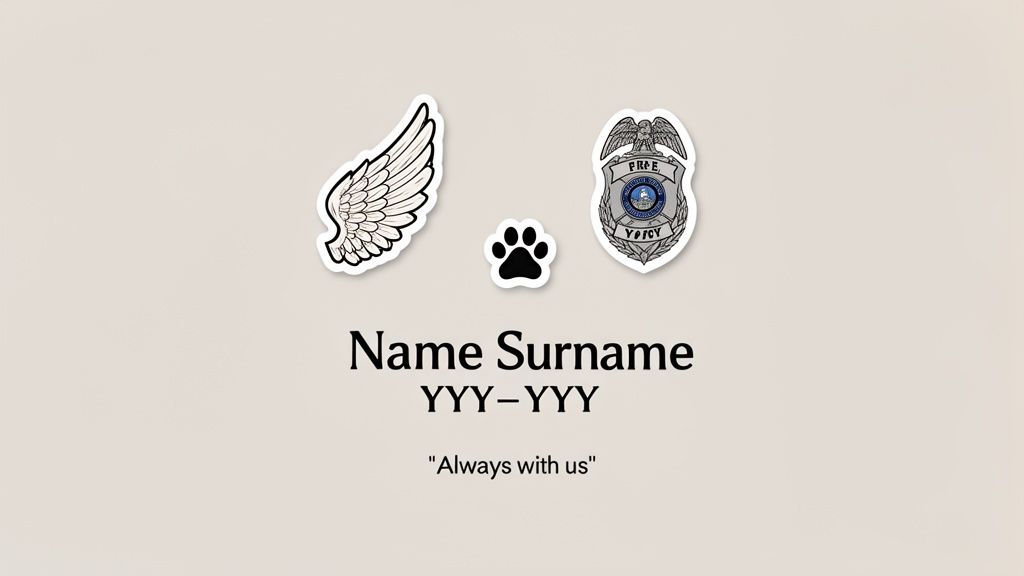
How do you capture a lifetime of memories in a single, respectful design? This is the heart of creating a memorial car decal. The process is incredibly personal, and the best designs are the ones that tell a story with love and authenticity.
A powerful tribute often balances text and imagery to create a complete picture. Let's walk through the core elements to help you decide what feels right for honoring your loved one.
Choosing Meaningful Text
Text is the most direct way to communicate your tribute. It grounds the design and gives essential context for anyone who sees it, so the key is choosing words that are both clear and heartfelt.
Think about what you want the decal to say at a glance. Common text elements include:
- Names and Nicknames: Using the name they actually went by—like "Bob" instead of Robert—makes the tribute feel much more intimate and real.
- Key Dates: "Sunrise" and "sunset" dates marking their birth and passing are a classic way to frame a life.
- A Meaningful Phrase: A short quote, song lyric, or personal motto that truly captured their spirit can add immense personality and meaning.
A simple "In Loving Memory of Dad" combined with dates is a timeless and powerful statement. This text becomes the emotional anchor for the entire design.
Incorporating Symbols and Imagery
Symbols add a rich layer of meaning that words alone often can't express. They offer a quick visual cue about the person you're honoring—their passions, profession, or beliefs.
A well-chosen symbol does more than decorate; it speaks a language of its own. It can represent a passion, a profession, or a belief, adding depth and personality to the memorial.
For instance, angel wings are a universally understood symbol of peace and watching over. A paw print immediately signifies the loss of a beloved pet, while a firefighter’s Maltese Cross or a police officer's badge honors a life of selfless service.
The market for vehicle personalization is huge, especially for honoring the nearly 18 million U.S. veterans. Custom shops cater to this with specialized military tributes, which is no surprise when surveys show 25% of Gold Star families use windshield memorials to honor their fallen heroes.
Comparing Common Memorial Decal Design Elements
To help you decide what combination best honors your loved one, this table breaks down the most common design elements.
| Element Type | Best For | Design Considerations | Example |
|---|---|---|---|
| Text | Providing clear, direct information and context. | Keep it concise. Use names, dates, or short, meaningful phrases. | "In Loving Memory," Name, 2001-2023 |
| Symbols | Adding a quick visual layer of meaning about their life or personality. | Choose a symbol that is widely understood or was deeply personal. | Angel wings, a cross, a fishing hook, a musical note. |
| Military Insignia | Honoring a veteran or active-duty service member's sacrifice. | Accuracy is critical. Ensure the branch, rank, and unit are correct. | U.S. Army emblem, rank insignia, "Served with Pride." |
| Photos | Creating the most personal and direct human connection. | The image must be high-contrast and clear to translate well to vinyl. | A portrait or a simplified, stylized version of a photo. |
Ultimately, the best designs often combine two or three of these elements to tell a more complete and moving story.
The Role of Photographs in Your Design
Including a photo is one of the most personal choices you can make. It puts a face to the name and dates, turning an abstract tribute into a direct, human connection.
Using a photo does require a bit of thought. You can have a photograph printed directly onto vinyl, but for die-cut decals, a simplified, high-contrast version of the image works best. Some people even get creative and transform a cherished photo into a painting first to give it a unique, artistic feel before it becomes a decal.
The most important thing is to select a clear, high-quality image that truly captures their essence—a warm smile, a proud portrait, or a simple moment of joy.
Finding the Perfect Size and Placement
Once you have a design, where you put it is the next big decision. The placement of your tribute is just as important as the design itself. A beautifully designed car decals memorial can get lost if it’s too small, or feel out of place if it's positioned awkwardly. The goal is to find that sweet spot between visibility, respect, and safety.
The decal's size should feel right for both your vehicle and the spot you choose. A tiny 3-inch decal might disappear on the huge rear window of an SUV, while a massive 12-inch design could overwhelm a small sedan. A good rule of thumb is to measure the area and pick a decal that fills about 25-40% of that space. This makes it noticeable without being distracting.
Where to Position Your Memorial Decal
Choosing the right location comes down to your car, local laws, and how visible you want the tribute to be. Each spot has its own benefits.
Rear Windshield: This is easily the most popular and effective location. It’s a large, flat canvas that’s highly visible to drivers behind you. Decals here are also a bit more protected from road grime.
Side Rear Windows: A great choice for smaller decals or for a tribute that feels more personal and less public. They also won't get in the way of a rear wiper.
Body Panels: Putting a decal on a painted surface like a rear quarter panel or tailgate creates a different look. Just remember, this requires extra care if you ever need to remove it, to avoid damaging the paint.
Pro Tip: Before you commit, use a small piece of painter's tape to temporarily position the decal. Step back about 10-15 feet and see how it looks. I recommend checking it from a few different angles to make sure you love the placement before it becomes permanent.
Real-World Placement Scenarios
The best spot really depends on what you drive. What works for a truck might not look right on a small car.
For a Sedan: The top center or a lower corner of the back windshield usually works best. A 5-7 inch decal is typically a perfect fit and won't block your view in the rearview mirror.
For an SUV or Minivan: That big rear window is prime real estate. You can go larger here—maybe an 8-10 inch design—placed right in the middle. If you have a rear wiper, make sure to place the decal out of its path to prevent it from getting damaged.
For a Truck: The sliding rear window or the main rear glass are common choices. The tailgate is another fantastic option, offering a large, flat surface that makes the memorial highly visible, especially on bigger trucks.
Color Contrast and Legality
Visibility is everything. The most meaningful design will vanish if it doesn't contrast with the surface it’s on.
When it comes to tinted windows, white is the undisputed best choice for readability. Silver, yellow, and other light, bright colors also work really well. If you’re placing it on the car’s body, choose a color that pops against the paint—like a white decal on a black car or a black decal on a silver car. For more flexibility with color and size, you can explore options like a custom text windshield banner.
Finally, always put safety and the law first. Never place a decal where it could block the driver's line of sight. This includes the front windshield and the front side windows. Most state laws have strict rules against non-transparent materials in these areas. A tribute is meant to honor a memory, not create a safety hazard.
How to Achieve a Flawless Installation
Placing a memorial decal on your car is a meaningful act, and you want it to look perfect. It can feel a little nerve-wracking, but don't worry. With a bit of patience and the right technique, you can get a professional, bubble-free finish that truly honors your loved one. The key isn't speed; it's being precise.
First things first, you need a perfectly clean surface. Whether you're applying the decal to glass or a painted panel, it has to be free of any dust, wax, or oils. A simple mix of rubbing alcohol and water, or even just soap and water, on a microfiber cloth will do the trick. A clean base is what helps the adhesive bond for the long haul.
Perfecting Your Placement and Application
Before you even think about peeling off the backing, you need to lock in the exact placement. This is where the "hinge method" comes in—it’s a game-changer.
Position the decal right where you want it, then run a strip of painter's tape across the middle to hold it firmly against the car. This tape acts like a hinge, keeping everything perfectly aligned as you work.
With the hinge in place, lift one half of the decal and carefully peel the backing paper away from the vinyl, cutting the paper off close to the tape. Now, grab a squeegee or a credit card wrapped in a soft cloth. Starting from the center hinge, press the decal onto the surface using firm, overlapping strokes. Always work your way outward to push any air away from the middle.
Once the first half is down, you can remove the painter's tape. Now just repeat the process: lift the other side of the decal, peel off the last bit of backing paper, and squeegee it down from the center out.
The most common mistake people make is rushing the final step. After the whole decal is applied, run your squeegee over it one last time to make sure it's secure. Then, begin peeling the clear transfer tape off. Pull it back on itself at a sharp, 180-degree angle, keeping it flat against the surface. If a piece of the vinyl starts to lift, just lay the tape back down, press that spot firmly, and then continue peeling.
Finishing Touches for a Lasting Tribute
The desire for these kinds of personal tributes is a huge part of the vehicle customization world. In fact, custom designs now make up over 50% of the car body decals market, an industry valued at $2.5 billion in 2025. The demand for precise, durable memorials like these is often met by die-cut stickers, a market segment projected to hit $301.3 million in 2026. This is why using a high-quality decal made from something like Oracal vinyl is so important for a tribute that lasts. You can discover more insights about these market trends and how they shape customization options.
This diagram breaks down the simple but crucial steps for getting your placement just right.
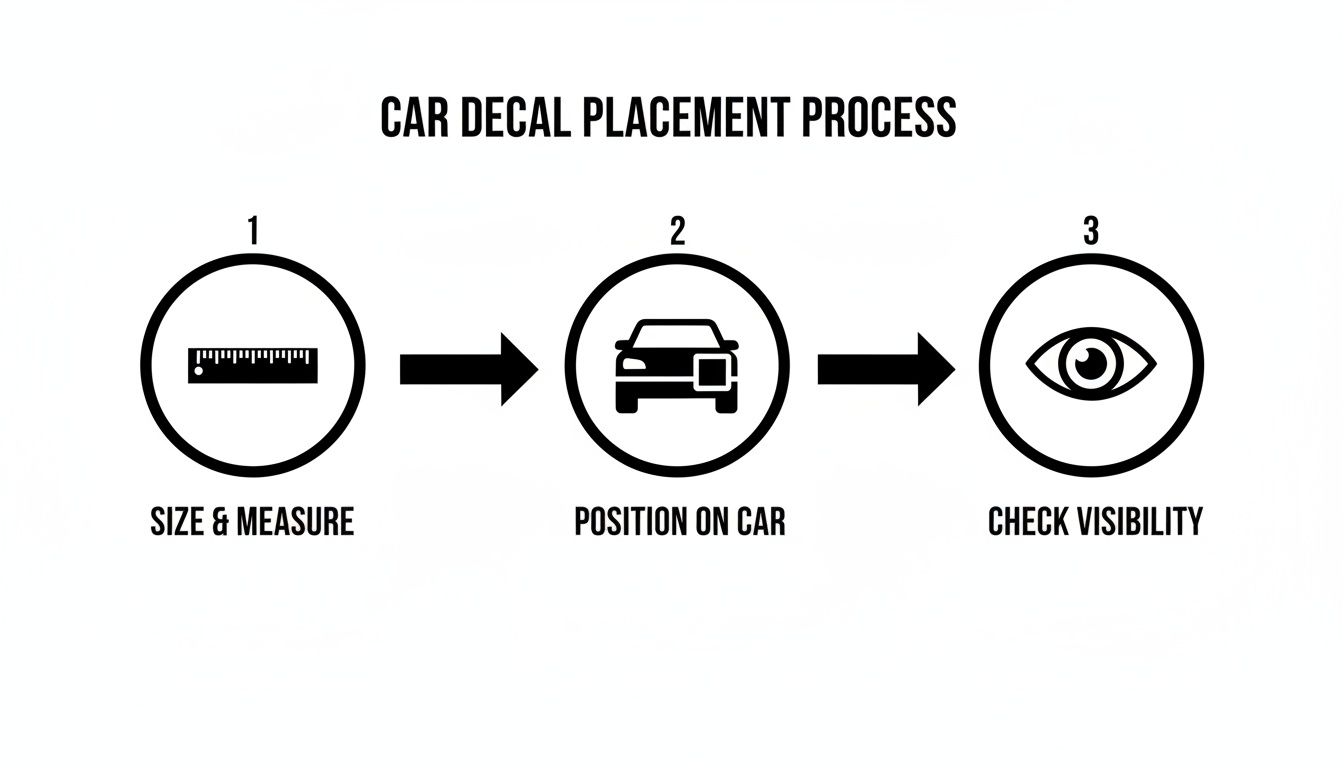
As you can see, a great application starts with measuring the space and ends with double-checking that your view isn't obstructed.
Don't panic if you see a few small air bubbles after you're done. They’re usually an easy fix.
- For tiny bubbles: Leave them alone. After a few hot, sunny days, the vinyl will naturally settle and these often disappear on their own.
- For larger bubbles: Take a very fine pin or the tip of a craft knife and make a tiny hole in the middle of the bubble. Then, just use your finger to gently push the trapped air out through the puncture.
One last tip—pay attention to the weather. The ideal temperature for applying vinyl is between 50°F and 90°F (10°C and 32°C). If it’s too cold, the adhesive won't stick properly, and if it's too hot, the vinyl can get overly sticky and hard to handle. A little planning goes a long way.
Ensuring Your Tribute Withstands the Elements
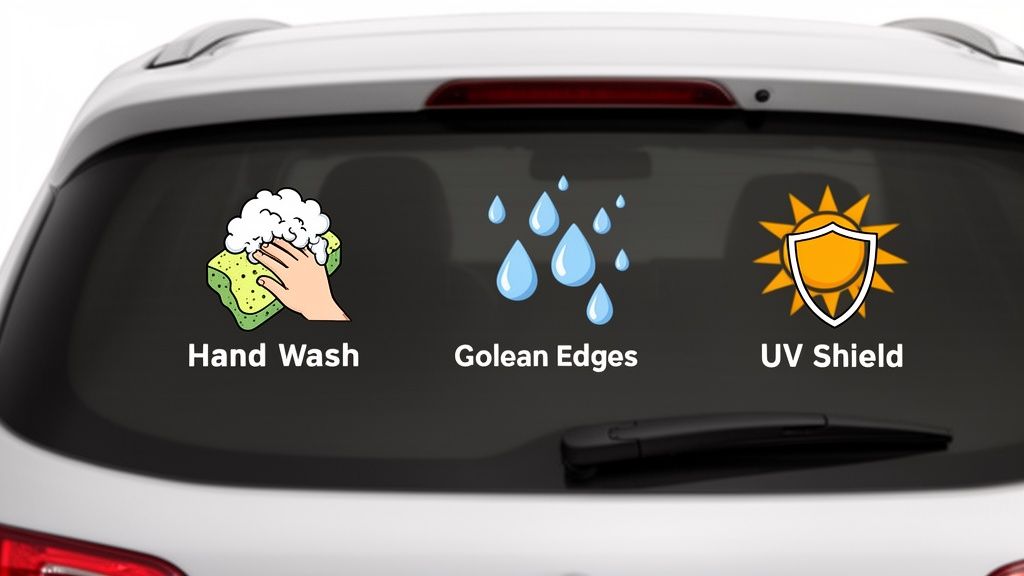
A memorial is meant to endure, and your car decals memorial tribute is no different. Once it’s perfectly applied, the goal is to protect it from the sun, weather, and daily wear and tear. This all starts with the material itself. We use professional-grade Oracal vinyl rated for up to 7 years of outdoor durability for this very reason.
This isn’t just any sticker. It’s a material engineered to resist fading from harsh UV rays and hold up against rain, snow, and extreme temperatures. Investing in a premium decal ensures your tribute remains crisp, clear, and dignified for years to come.
Washing and Daily Care
Proper care is simple, but it makes all the difference. When it's time to wash your vehicle, always choose hand washing over an automatic car wash. Those big, spinning brushes are notorious for snagging and lifting the edges of a decal.
High-pressure washers are another thing to watch out for. That intense spray can easily work its way under the vinyl and cause it to peel right off. If you must use one, keep the nozzle a good distance away and never aim it directly at the decal’s edges.
A mild car-wash soap and a soft microfiber cloth are all you need. Just be sure to avoid any abrasive cleaners or rough sponges that could scratch or dull the vinyl’s surface.
Removing a Memorial Decal with Respect
There might come a day when you need to remove the decal, maybe you're selling the car or the decal has simply aged. This is a moment that can be handled with care, protecting both your vehicle and the sentiment behind the tribute.
The safest method involves just a bit of gentle heat and patience.
- Warm the Decal: Use a hairdryer on a low setting to gently warm the vinyl. This softens the adhesive underneath, making it much easier to peel.
- Peel Slowly: Once it’s warm, lift a corner with your fingernail or a plastic card (never use metal) and peel the decal back on itself at a low, flat angle. Rushing this step can risk damaging your car’s clear coat.
- Clean the Residue: You might have some adhesive left over. A paint-safe residue remover and a soft cloth will take care of it without a problem.
A memorial decal is more than just vinyl; it’s a symbol. Before removing it, consider taking a clear photo. This simple act preserves the tribute, allowing you to keep the memory even after the decal is gone.
For those who want a tribute that combines high visibility with lasting quality, you can explore many designs like this large In Memory Decal with Spreading Angel Wings that are made to withstand the elements. By following these simple care steps, your tribute will continue to honor your loved one’s memory beautifully on every journey.
Of course. Here is the rewritten section, carefully crafted to match the human-like tone, style, and formatting of the provided examples.
Answering Your Questions About Memorial Car Decals
Choosing a memorial decal is a deeply personal process, and it's completely normal to have questions along the way. You want to create a tribute that feels just right. We've gathered some of the most common questions we hear to help guide you with clear, practical answers.
Let's walk through the details, from picking the perfect color to understanding the unwritten rules of displaying a memorial tribute.
What Is the Best Color for a Memorial Decal on a Car Window?
For decals on tinted car windows, white is the hands-down winner. Its sharp contrast against the dark glass makes your tribute easy to read, even from a distance. It's clean, classic, and ensures the name and dates are perfectly clear.
Silver, yellow, and other bright, light colors also work beautifully. The key is contrast. Just steer clear of black, dark gray, or navy blue for window placement—they’ll disappear into the tint.
If you're placing the decal on your car's body, the same idea applies. Pick a color that pops against your vehicle’s paint.
Can I Put a Memorial Decal on a Leased Car?
Yes, in most cases, you can absolutely put a memorial decal on a leased car. The secret is using a high-quality, removable vinyl, like the Oracal 651 we use for our decals. It's specifically made to come off cleanly without damaging factory paint or glass.
While modern decals are designed to be safe for factory finishes, it’s always a good idea to take a quick look at your lease agreement. Just check for any specific rules about vehicle modifications or decals.
When your lease is up, a little heat from a hairdryer and a plastic scraper will lift the decal right off, leaving no trace behind. It’s a perfect way to carry their memory with you without making a permanent change.
Are There Any Rules or Etiquette for Memorial Decals?
While there aren't many strict laws—other than never blocking the driver's vision—a few points of etiquette help ensure the tribute is always respectful and dignified.
- Get the Details Right: Before you order, double-check and then triple-check every detail. Correct spelling for names and accurate dates are the most important part of the tribute.
- Place it with Purpose: Choose a spot on your vehicle that feels right. The goal is to honor their memory, so the placement should feel thoughtful and appropriate.
- Respect for Military Insignia: If you're creating a military memorial, using official insignia correctly is crucial. Make sure you have the right emblems for the branch, rank, and unit to properly honor their service.
At the end of the day, a car decals memorial is for you and your family. It should be a source of comfort and a design that makes you proud.
How Much Do Custom Memorial Car Decals Cost?
Creating a custom memorial decal is one of the most affordable ways to create a beautiful tribute. Simple, text-based designs can start as low as $7.99.
The final price really just depends on a few things:
- The overall size of your decal.
- How complex the design is (for example, a detailed photo versus simple text and dates).
- The number of colors you include.
- Whether you add a custom photograph to the design.
Many shops also offer great deals, like "Buy 2, Get 1 Free" or free shipping over a certain amount. This is especially helpful if other family members want to share in the tribute on their own vehicles.
At Custom Sticker Shop, we are honored to help you create a lasting tribute. Our American-made decals are crafted with care from premium Oracal vinyl to ensure your memorial looks perfect for years. Design your custom memorial decal with us today.