
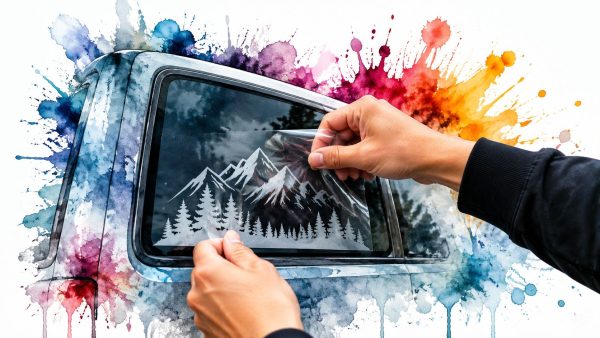
You're staring at the rear window or side glass, trying to add a graphic without making the vehicle look like it came out of a bargain bin. Clear vinyl is the material people reach for when they want the design to show and the sticker itself to stay out of the way.
In our shop, that usually means a customer wants a cleaner look than a white-background decal can give them. It also means they need to know that not every “clear” sticker is the same. Some are true automotive-grade vinyl films. Some are cheap clear labels with weak adhesive, cloudy film, or short outdoor life. They may look fine on day one and disappoint fast once they see sun, rain, and road grime.
That difference matters more than the marketing.
A good clear vinyl car sticker should stay transparent, lay flat, and hold its edges instead of yellowing, shrinking, or lifting early. If you're comparing options, look past the word clear and check the material, the adhesive, and whether the seller names the vinyl they use, such as Oracal. That tells you a lot about what you're buying.
The Secret to a Perfect Floating Graphic on Your Car
You see it most on a back window at a stoplight. The artwork looks clean and intentional, almost like it was printed onto the glass, and then you realize it is a decal. That floating look is what good clear vinyl does when the material, artwork, and placement all line up.
A strong clear vinyl decal lets the graphic carry the attention while the film stays quiet. On glass, that can look sharp and factory-minded. On paint, it can look refined or disappointing fast, depending on color, gloss, and how much edge visibility you are willing to accept. That trade-off is part of buying clear vinyl wisely.
Why drivers choose clear vinyl
Clear vinyl usually makes sense for three practical reasons:
- It keeps the background visible instead of boxing the artwork inside a white shape
- It suits logos, memorial decals, and simple graphics that need a cleaner, less label-like look
- It can last outdoors well if the film and adhesive are automotive grade, not cheap clear stock sold as if it were the same thing
In our shop, customers usually choose clear vinyl because they want the design to feel built into the vehicle, not stuck on as an afterthought. That works best on smooth glass, light-colored paint, and artwork with enough contrast to stay readable once the vehicle itself becomes part of the design.
What creates that floating effect
The floating look comes from one simple fact. The vehicle surface becomes the background.
That sounds obvious, but it changes everything. A white decal brings its own background with it. A clear vinyl decal depends on the glass tint, paint color, metallic flake, reflections, and even what sits behind the window. A black logo on a tinted rear window can look crisp. The same logo on a busy, see-through side glass panel may lose impact.
This is also where people confuse clear vinyl with other "clear" products. Clear labels, static clings, and low-cost transparent sticker paper may look similar in a product photo, but they do not behave the same way on a vehicle. Better clear vinyl stays clearer, lays flatter, and holds its edge longer under sun, weather, and washes.
Where buyers get it wrong
The common mistake is assuming every clear decal will produce the same finish.
Cheap films often give themselves away in three places. They show a cloudy cast in daylight, a thick edge when light hits from the side, or early lifting around corners and fine detail. Even a decent film can fail visually if the design uses pale colors, thin lines, or low contrast on dark glass.
Material alone does not save a poor design choice. Print method matters. Ink density matters. Placement matters. If the seller cannot tell you what vinyl they use, what the decal is meant for, or whether it is intended for long-term outdoor use, that is usually a warning sign.
A true clear vinyl sticker blends into the surface. A cheap one keeps reminding you it is there.
What Exactly Are Clear Vinyl Car Stickers
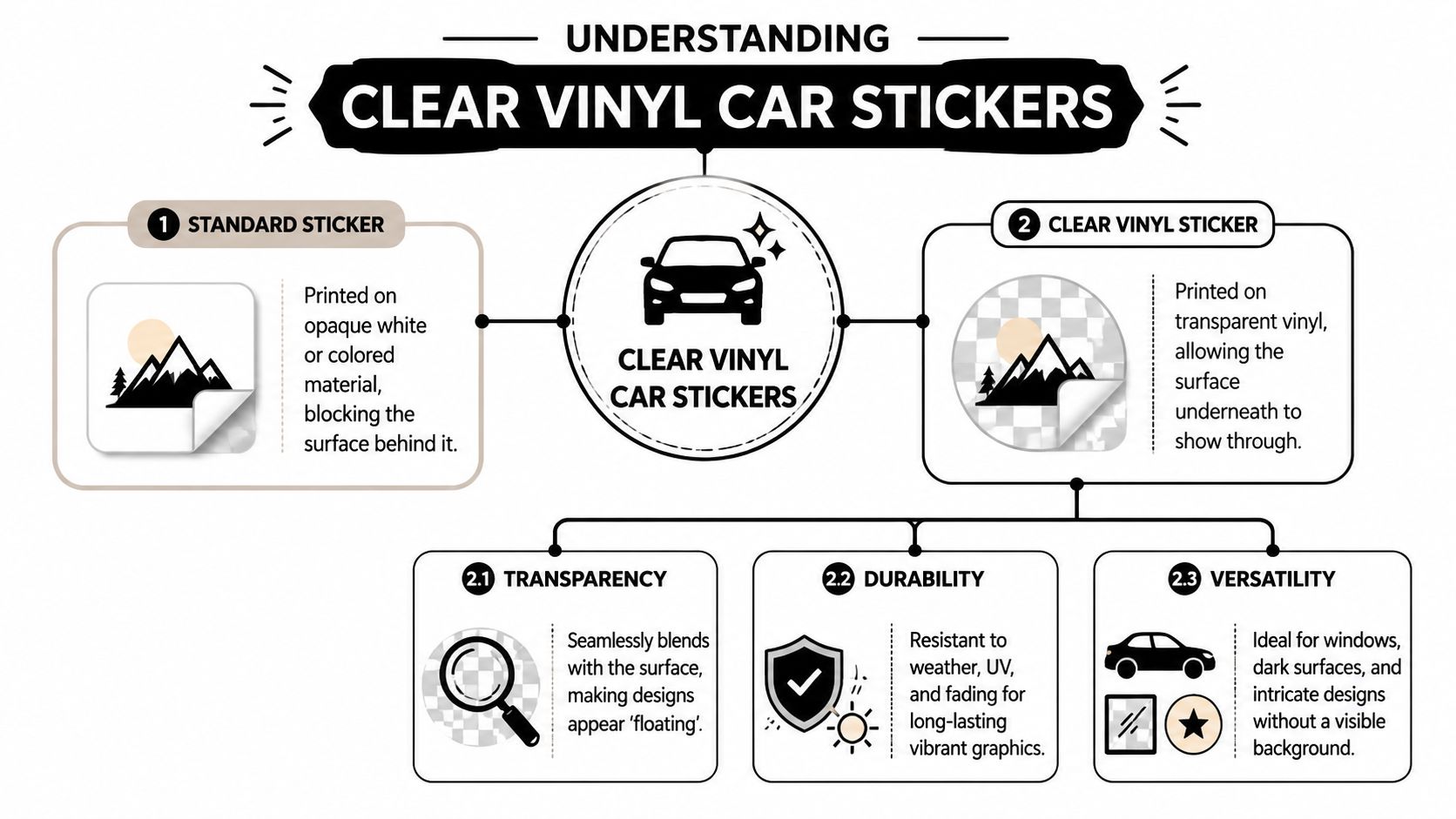
A clear vinyl car sticker is made from transparent PVC film instead of opaque white or colored stock. The graphic is printed or cut onto a see-through base, so the surface underneath remains visible. That's what gives the design its clean, floating appearance on windows and certain paint colors.
Modern automotive clear decals are typically made from 3.0 to 4.0 mil transparent PVC film, with common specs listed at 3.4 mil or 4 mil, according to Decals.com's guide to sticker materials. That thickness matters. It's thin enough to conform to smooth glass and body panels, but it still has enough body to cut, handle, and apply without turning into a wrinkled mess.
The layers that make the decal work
A quality clear decal usually has four parts:
The clear vinyl film
This is the transparent face material. It's the part that carries the printed or cut design.The adhesive layer
This is what bonds the decal to the vehicle. On automotive graphics, the adhesive matters as much as the film because long-term hold depends on surface prep and bond strength.The backing paper
The waxy liner protects the adhesive until installation. You peel this away right before applying the decal.The transfer tape
If the design has multiple elements, spacing, or cut lettering, transfer tape keeps everything aligned during installation.
What clear vinyl is not
A lot of buyers confuse true clear vinyl with other products that only sound similar.
| Material Type | What It Really Means | What You'll Notice on the Car |
|---|---|---|
| True clear vinyl | Transparent film under the graphic | Surface shows through around the design |
| Opaque sticker with shape cut | White or solid material trimmed to shape | Sticker edge is visible because the base isn't transparent |
| “Clear background” listing | Sometimes just marketing language | May still have noticeable border, haze, or white underprint |
The difference becomes obvious in sunlight. A real clear vinyl sticker blends into the surface. A cheaper substitute often leaves a visible patch around the artwork.
Good clear vinyl should disappear visually. If the material itself keeps drawing your eye, the decal isn't doing its job.
Why thickness matters in the real world
Thinner film usually conforms better and leaves a lower edge profile. That's especially useful on mild curves and smooth glass. But thinner material also punishes sloppy prep. Dust, wax, fingerprints, and uneven squeegee pressure show up faster because the film doesn't hide mistakes.
That's why experienced installers care less about buzzwords and more about the actual spec sheet. If the film falls into that 3.0 to 4.0 mil range and it's made for vehicle use, you're usually in a much safer lane than with off-brand “clear sticker paper.”
Clear vs Opaque Vinyl Decals Which Is Right for You
Clear vinyl isn't automatically better. It's better for certain jobs.
If you want subtle and integrated, clear vinyl usually wins. If you want maximum contrast from a distance, opaque vinyl often does the job better. If you want only the letters or graphic shape and no visible surrounding material, die-cut is often the cleanest choice.
Sticker Type Comparison
| Feature | Clear Vinyl Sticker | Opaque Vinyl Sticker | Die-Cut Sticker (Clear Background) |
|---|---|---|---|
| Overall look | Floating, low-profile, blended | Bold, obvious, high-contrast | Clean shape-focused look |
| Best surface | Glass, smooth light-colored panels | Almost any paint color or glass | Glass and panels where simple shapes stand out |
| Background visibility | Surface underneath shows through | Background is blocked | No printed background area, only cut shape |
| Color pop on dark surfaces | Can look muted | Strong visibility | Strong if material color contrasts well |
| Visible edge | Low visibility if material is good | Edge is usually noticeable | Minimal outside the cut shape |
| Best for intricate printed artwork | Very good on the right surface | Very good | Better for simpler cut designs than detailed prints |
| Typical downside | Can disappear on tint or dark paint | Looks more like a traditional sticker | Fine details can be harder to weed and apply |
When clear vinyl makes sense
Clear vinyl car stickers work best when the vehicle surface can help the design instead of fight it. Rear windows, quarter glass, and light paint are the sweet spots. You get the visual benefit of transparency without sacrificing readability.
They're also a smart choice when you want detail that a basic die-cut decal can't deliver. Layered artwork, fine shading, and printed scenic designs often look better on clear vinyl than on a simple cut graphic.
When opaque or die-cut is the better call
Opaque vinyl is the safer pick when readability matters more than subtlety. If your truck has dark paint, dark tint, or a lot of visual texture behind the decal, clear vinyl can get lost. Opaque material gives you contrast every time.
Die-cut decals are ideal when the design itself is simple and strong. Names, silhouettes, badge-style graphics, and windshield text often look best as cut vinyl because there's no surrounding field at all.
If you have to squint to imagine how the graphic will show up against your glass or paint, clear vinyl may not be the right choice for that design.
A simple buying test
Ask these three questions before choosing material:
- What color is the surface behind the decal? Light and clean backgrounds favor clear vinyl.
- Is the design bold enough? Thin lines and low-contrast prints struggle on windows.
- Do you want the sticker noticed, or the artwork noticed? That answer usually settles the material decision fast.
Best Uses and Design Tips for Clear Decals
Clear decals earn their keep on glass. That's where they look the most natural and where the “floating” effect pays off. A rear window tribute, a side-glass trail graphic, or a subtle logo can look painted on when the design is built correctly.
They also work well on light-colored body panels, especially when the artwork has a darker print and a clean outline. On white, silver, and lighter gray vehicles, clear vinyl can blend beautifully. On darker paint, it takes more care because transparency can reduce visual punch.
Where clear vinyl performs best
The strongest uses usually share one trait. The surface behind the decal is smooth and predictable.
- Rear windows for tribute graphics, off-road themes, and club logos
- Quarter glass for smaller scenic or badge-style designs
- Light body panels where the transparent film won't create a visible block
- Windshields in select placements when local laws and placement limits are respected
A lot of Jeep graphics are a good example because they often use bold terrain shapes, wildlife scenes, and strong cut lines. A mountain-and-tree side graphic like this Jeep body side mountains and trees set works because the artwork reads clearly even when the vehicle surface stays visible around it.
Inside or outside glass
This is one of the most common questions, and it matters more than most shoppers expect. Clear decals can go on either side of the glass. The right answer depends on the vehicle and how the window is used.
According to Sign Servant's overview of clear, opaque, and perforated car decals, inside placement protects the decal from weather and wipers, but tint can reduce visibility. Outside placement improves visibility, but the decal takes more abuse.
Here's the practical version:
- Inside glass is better when longevity matters most and the window is clear enough to show the design well.
- Outside glass is better when tint, glare, or window angle makes the graphic too hard to see from outside.
- Rear windows with active wipers need extra thought, because outside placement means repeated mechanical contact.
On tinted glass, the prettiest clear decal can become the least visible one. Always judge the design against the actual window, not against the mockup alone.
Design choices that work
The best clear designs are usually not delicate. They're readable.
Use stronger shapes, thicker lines, and enough contrast to survive changing light. Scenic outlines, military insignia, trail themes, bold script, and badge-style layouts tend to perform better than whisper-thin fonts or faint shading. If a design only looks good on a bright computer screen, it may disappoint on a real vehicle.
Flawless Installation and Long-Term Care
A premium decal can still fail if the install is rushed. Clear vinyl shows mistakes fast. Dust trapped under the film, crooked placement, uneven pressure, and early washing all show up sooner than expected.
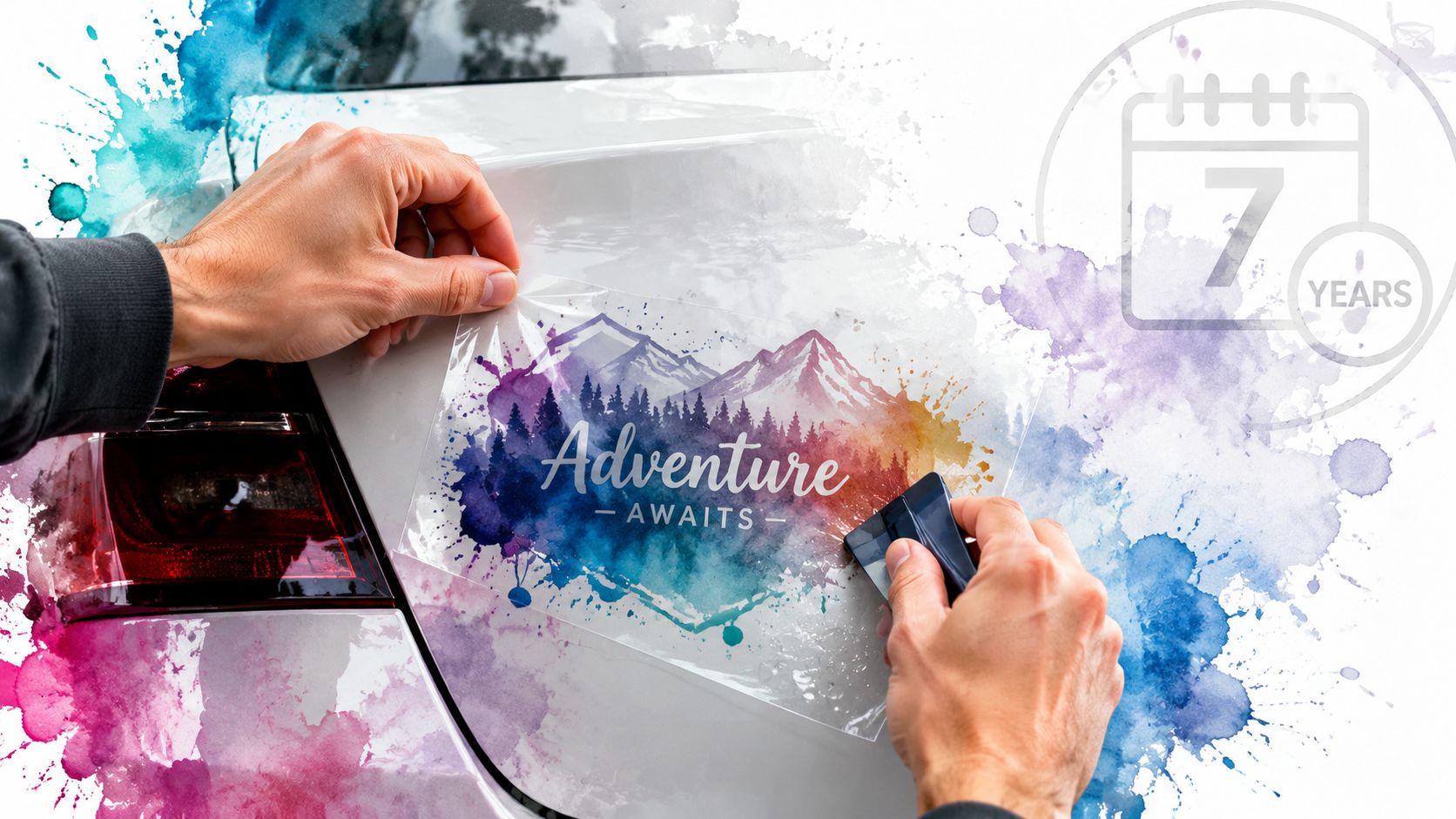
Prep the surface like it matters
It does.
Wash the area first, then remove anything that can interfere with the adhesive bond. Road film, wax, silicone residue, glass cleaner residue, and even fingerprints can cause lifting later. Smooth automotive glass and fully cured paint are the safest surfaces for clear vinyl.
If you're also trying to keep the rest of the vehicle looking sharp, it's worth learning how professionals protect your car's finish with PPF. Paint protection film and decals solve different problems, but both depend on clean prep and careful installation.
Use the hinge method
For most window and body decals, the hinge method gives the cleanest control.
Position the decal first
Hold it in place with painter's tape and step back. Check level, spacing, and sight lines from a few angles.Create a hinge
Run a strip of tape across the top or center so the decal can flip back without losing alignment.Peel the backing paper
Pull it away slowly while making sure the decal stays attached to the transfer tape.Lay the decal down gradually
Don't drop the whole thing at once. Start from the hinge side and work across.Squeegee with firm, even strokes
Push air outward from the center. Overlap your passes instead of chasing bubbles randomly.Remove transfer tape carefully
Peel it back low and slow. If part of the graphic lifts, stop and squeegee that area again.
What causes bubbles and edge lift
Most failures come from a short list of mistakes:
- Dirty surfaces that prevent full adhesive contact
- Too much pressure in one spot and not enough in another
- Applying in poor conditions such as extreme cold, heat, or direct harsh sunlight
- Washing too soon before the adhesive has time to settle and bond
A windshield banner is a good example of a decal that rewards careful alignment and pressure control because any small wrinkle is obvious across a wide span. A product like this vinyl windshield banner decal for Ford F-150 shows why transfer-taped, pre-spaced graphics are easier to install cleanly than loose cut pieces.
Give the adhesive time to cure
This step gets skipped all the time.
Experts recommend letting a new vinyl decal cure for about a week before the first wash, which helps the adhesive fully bond and reduces the chance of edge lift or bubbles from high-pressure water or harsh detergents, as explained in this vinyl decal application video on YouTube.
Here's a quick visual on proper placement and technique:
A fresh decal isn't fragile, but it isn't fully settled either. Treat the first week like a bonding period, not a durability test.
Long-term care that actually works
Hand washing is gentler than blasting the decal with a pressure wand at close range. If you use a pressure washer, keep the spray from attacking the decal edge directly. That edge is the first place water tries to get underneath.
For routine care:
- Use mild soap instead of aggressive cleaners
- Wash with the edge, not against it when possible
- Dry gently instead of scrubbing the corners
- Watch older vinyl during removal because brittle film can come off in smaller pieces
If a clear decal was installed well and maintained with some common sense, it usually stays attractive much longer than people expect.
How to Order High-Quality Clear Vinyl Car Stickers
Most problems blamed on “clear vinyl” are really problems with cheap material, weak prep, or bad production. If you want a decal that looks sharp on day one and still looks right later, shop by build quality, not just by artwork.
What to look for before you buy
Start with the material itself. Professional-grade films such as Oracal have a reputation for predictable handling, clean finish, and outdoor durability. You also want the seller to be specific about what they use. If the listing dodges the vinyl brand and avoids material details, that's usually not a good sign.
A solid buyer's checklist looks like this:
- Known vinyl brand such as Oracal, not mystery stock
- Outdoor life rating clearly stated, with professional-grade clear vinyl commonly rated for up to 7 years in the previously cited market data
- Transfer tape included for graphics that need alignment
- Pre-spaced layout for lettering or multi-part designs
- Automotive use stated clearly instead of generic craft use
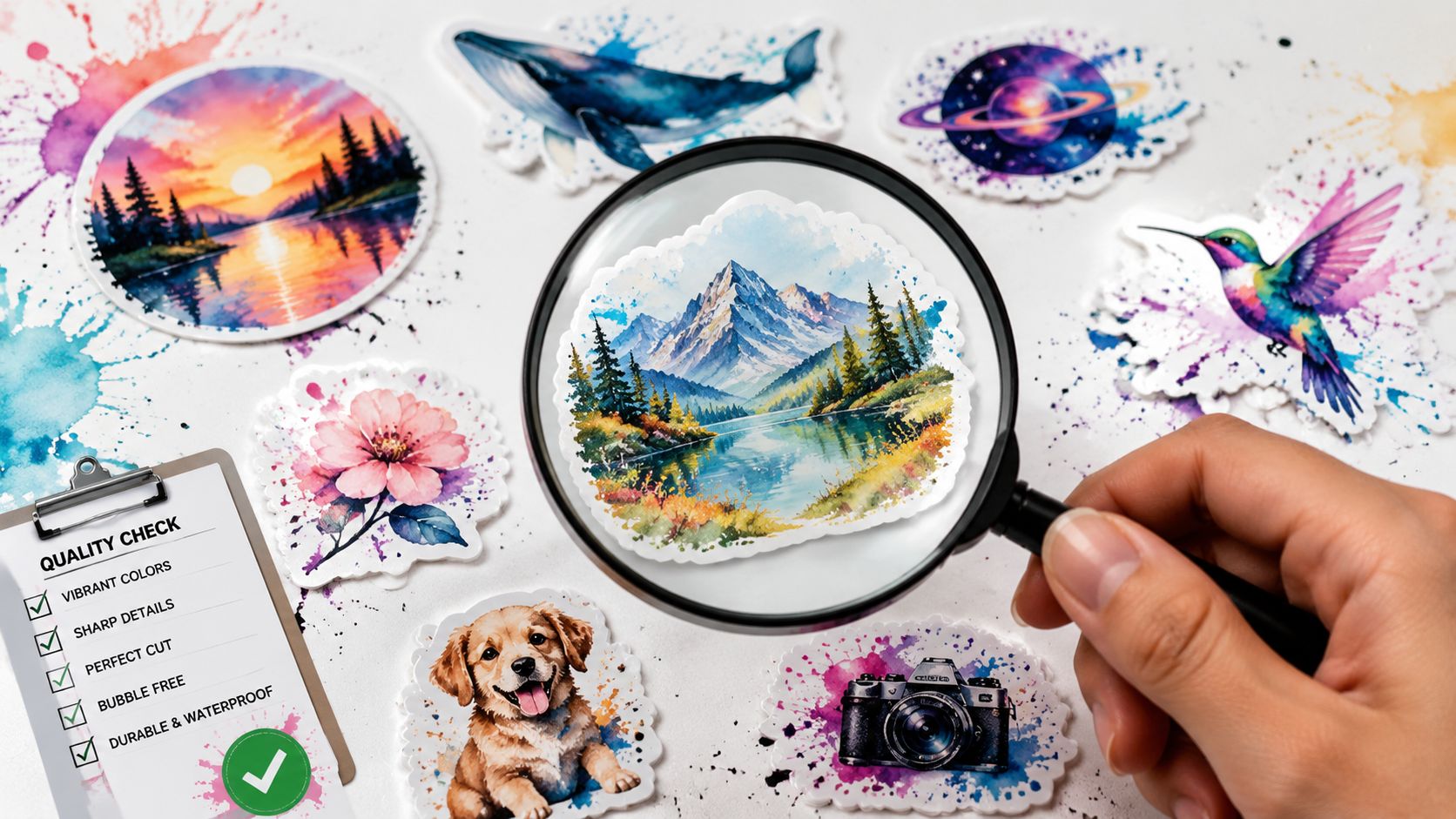
Red flags that usually lead to disappointment
Cheap clear decals often share the same warning signs:
- No material thickness listed
- No mention of transfer tape
- Product photos only on backing paper, not on real vehicle glass
- Overly delicate artwork shown without any note about visibility on tint or dark paint
- “Universal” claims that ignore the difference between inside-glass and outside-glass use
A custom order should also make the production method clear. If you're creating your own design, a shop that offers a dedicated make your own custom sticker option is usually a better bet than sending artwork into a generic upload form with no guidance.
What quality feels like in your hands
You can usually tell the difference before the decal ever reaches the car. Better clear vinyl has cleaner edges, steadier release from the backing, and transfer tape that holds the design together without fighting you. Cheap alternatives feel flimsy in the wrong way. They stretch too easily, wrinkle too fast, or cloud the graphic before it's even installed.
Buy clear vinyl the same way you'd buy paint, tires, or film. The cheapest option can still cost more once you factor in removal, reordering, and wasted install time.
If the goal is a floating graphic that looks intentional, the quality standard has to be higher than “good enough.”
If you want clear vinyl car stickers made with professional-grade Oracal vinyl from a veteran-friendly, family-run shop in Topeka, Kansas, take a look at Custom Sticker Shop. They offer American-made decals, custom options, pre-spaced transfer-taped graphics, and a wide range of vehicle designs built for drivers who want their decals to look sharp and last.