
You wash the car, dry the panel, apply a fresh decal, and it looks perfect for about a week. Then the sun gets to it. The edge starts to lift on the hood, the adhesive softens near the engine bay, or the sticker turns brittle after a few hot days and a couple of car washes.
That failure usually isn't about the artwork. It's about using a regular sticker where a heat resistant sticker belongs.
For vehicle owners, this matters more than it used to. The heatproof sticker market is projected to grow from USD 140 million in 2024 to USD 250 million by 2034, with a CAGR of 6.00%, driven by automotive and electronics uses where standard adhesives fail, according to Reports and Data's heatproof sticker market outlook. That's a sign of how common high-heat labeling has become, not just in factories, but in garages, driveways, campsites, and outdoor setups.
If you spend time around trucks, SUVs, Jeeps, motorcycles, or trailers, you've probably already seen the problem. Dark paint gets hot fast. Metal parts hold heat. Under-hood areas stay warm long after the engine is off. Even exterior accessories can bake in direct sun, especially when the vehicle sits all day. The same attention people give to tire choice, trim protection, or upgrading your RV's lighting should also apply to any decal expected to stay clean and attached in those conditions.
When Regular Stickers Can't Take the Heat
A regular decorative sticker usually fails in one of three ways. The face film shrinks, the edge curls, or the adhesive gives up first. On a car, the adhesive is often the weak point.
That matters because owners often blame "bad vinyl" when the underlying problem is heat load on the glue. A sticker can still look fine at room temperature and fail once a panel heats up day after day. Hood surfaces, rear glass, toolboxes, and cowl areas all create that kind of stress.
What failure looks like on a vehicle
You don't need a lab to spot a mismatch between material and application. The common signs are easy to read:
- Edge lift near corners means the adhesive softened and lost grip as the panel heated and cooled.
- Small bubbles that weren't there on install day often point to outgassing, trapped contamination, or film movement after heat exposure.
- Cracking on sun-baked surfaces usually shows the film wasn't built for repeated outdoor heat cycles.
- A sticker that feels gummy when removed tells you the adhesive chemistry wasn't suited to the location.
Practical rule: If a sticker sits near engine heat, on metal that sees direct sun, or on a surface exposed to cleaners and road film, don't shop by appearance first. Shop by operating conditions.
Why heat resistant stickers solve a different problem
Heat resistant stickers aren't just "nicer stickers." They're chosen for survival. The goal isn't gloss or color alone. The goal is whether the label or decal stays attached, readable, and stable when a regular product wouldn't.
For car owners, that changes how you think about placement. A windshield banner and an engine cover decal don't live in the same environment. Neither does a bedside graphic on a white truck versus a black hood decal parked in summer sun. Matching the sticker to the job is what prevents early peeling and wasted money.
Understanding Heat Resistant Sticker Materials
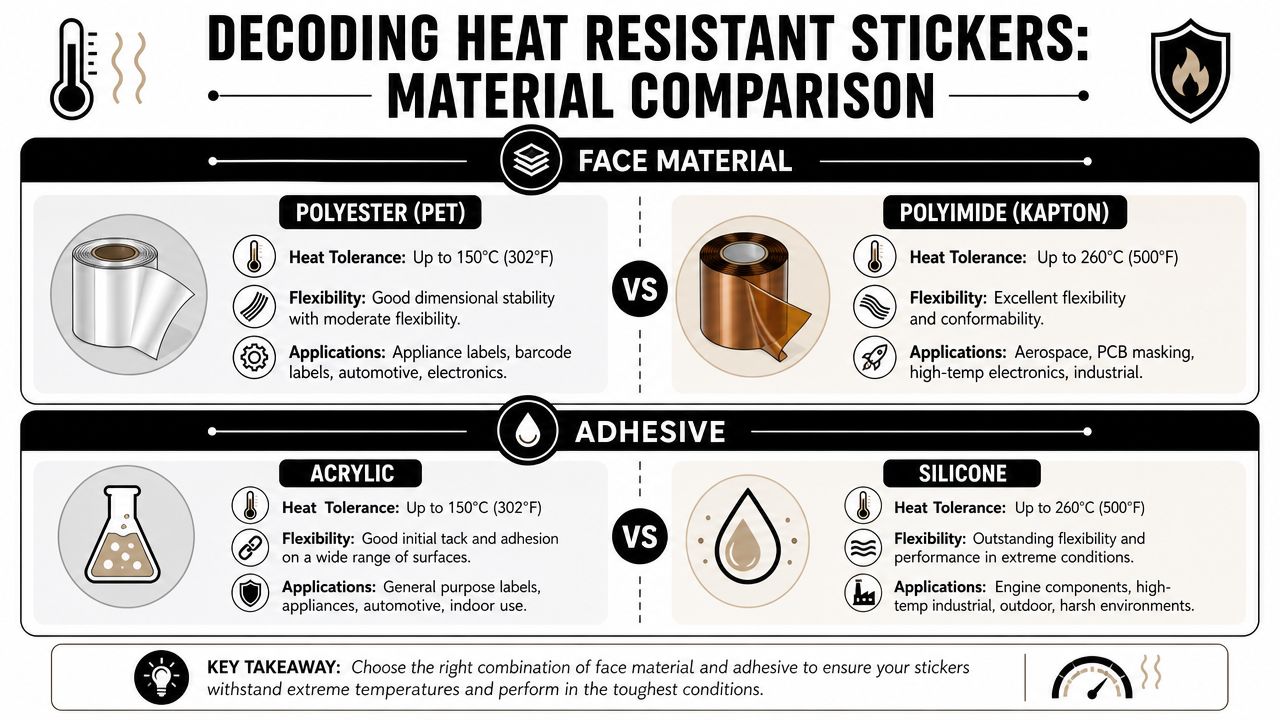
Two parts decide whether a sticker survives heat. The face material handles the physical stress. The adhesive keeps it bonded when the surface gets hot, cools down, and gets hit with grime or wash chemicals.
A good way to think about it is cookware. A pan that's fine for warming sauce might not belong under a broiler. Sticker materials work the same way. Some are fine for mild heat. Some are built for short extreme spikes. Some are made for serious industrial use where ordinary films fail.
Face material matters first
A materials guide from CILS notes that vinyl labels typically top out around 110°C, polypropylene around 120°C, and polyester around 155°C. The same guide states that temperature-modified polyester can withstand short peaks of about 300°C for 60 seconds, and polyimide can reach about 388°C for 15 minutes, as explained in CILS' guide to heat resistant labels and temperature performance.
That range is huge, and it explains why product pages can be confusing. "Heat resistant" isn't one material class. It's a category that includes very different films.
| Material | Typical Max Temperature (Continuous) | Best For |
|---|---|---|
| Vinyl | Around 110°C | Mild exterior heat, decorative use away from hot components |
| Polypropylene | Around 120°C | Light-duty labeling where heat is present but not severe |
| Polyester | Around 155°C | More demanding automotive and industrial surfaces |
| Temperature-modified polyester | Short peaks to about 300°C | Brief high-heat processes and parts with short thermal spikes |
| Polyimide | Extreme high heat, up to about 388°C for limited duration | Serious industrial and electronics environments |
The adhesive is where many installs fail
People focus on the film because it's visible. The adhesive does the hard work. In automotive use, that's where bad choices show up first.
A face film can be rated for heat and still fail if the adhesive softens, especially on dirty metal, clear-coated parts, or surfaces that weren't fully cured after paint. That's why two decals made from similar-looking material can behave very differently once they're installed.
If a sticker fails in a hot location, assume the adhesive and the surface prep deserve as much scrutiny as the printed film.
What this means for car owners
Most vehicle owners don't need polyimide. That's a specialty material for punishing heat. But many drivers do need more than ordinary vinyl, especially for engine-bay labels, accessories near warm components, or outdoor gear that lives in the sun.
The smart move is to stop treating all sticker films as interchangeable. They aren't. One product is built for body panels and glass. Another is built to stay legible after serious heat exposure. That's the difference that decides whether the decal still looks right months later.
Common Automotive and Outdoor Use Cases
The easiest way to understand heat resistant stickers is to look at where regular ones fail.
Under-hood trim and engine-bay labels
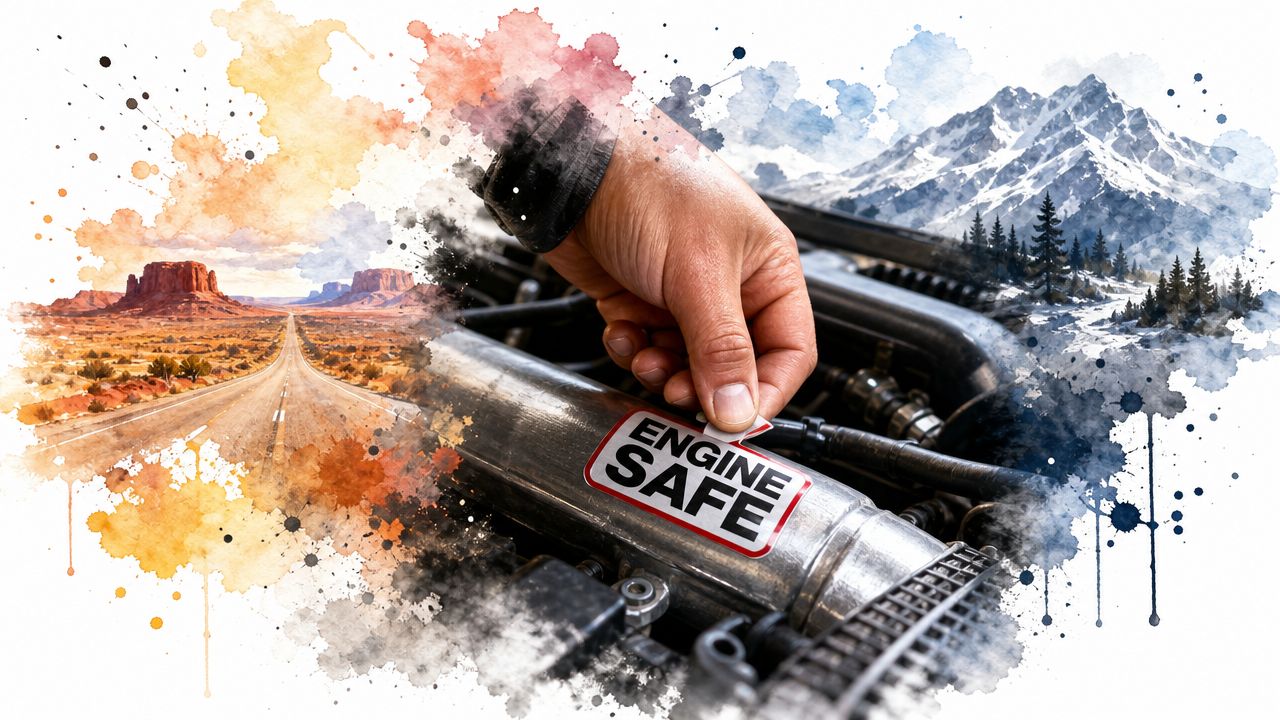
Engine covers, airbox lids, fuse box covers, and support panels all see lingering heat. Not always extreme heat, but enough repeated exposure to punish a cheap decal. The problem here is usually constant warmth plus contamination. Oil film, dust, and cleaner residue all make the adhesive work harder.
A decal can survive the temperature and still peel because the bond was weakened by grime or solvent residue. That's why under-hood placements need a more practical approach than exterior window graphics.
Sun-baked exterior parts
Dark hoods, roof panels, rear glass, bed caps, metal toolboxes, and motorcycle side covers can get hotter than people expect. This isn't exhaust-level heat. It's long-duration surface heating from direct sun.
That's where buyers often choose a decal based on color and shape, then wonder why it starts shrinking or lifting at the edges. The sticker wasn't necessarily defective. It just wasn't made for a panel that acts like a hot plate all afternoon.
Outdoor gear and specialty vehicles
Heat isn't only a car problem. Camp trailers, toy haulers, UTVs, side-by-sides, and RV accessory panels all deal with sun, heat cycling, and wash exposure. If you're restoring fiberglass panels or dealing with surface refinishing, shops that handle full-service RV body and paint see the same issue: decals need to match the surface condition and the environment, not just the look.
For owners who want exterior graphics that are more about style than high-heat industrial labeling, something like this American flag waving full-color outdoor decal sticker fits the kind of use most body panels and glass applications call for.
Brake calipers, exhaust shields, and engine covers may all be "hot," but they don't produce the same kind of heat. Placement matters as much as the decal itself.
How to Choose the Right High-Temp Sticker
Most buyers make one mistake first. They look for the highest advertised temperature and stop there.
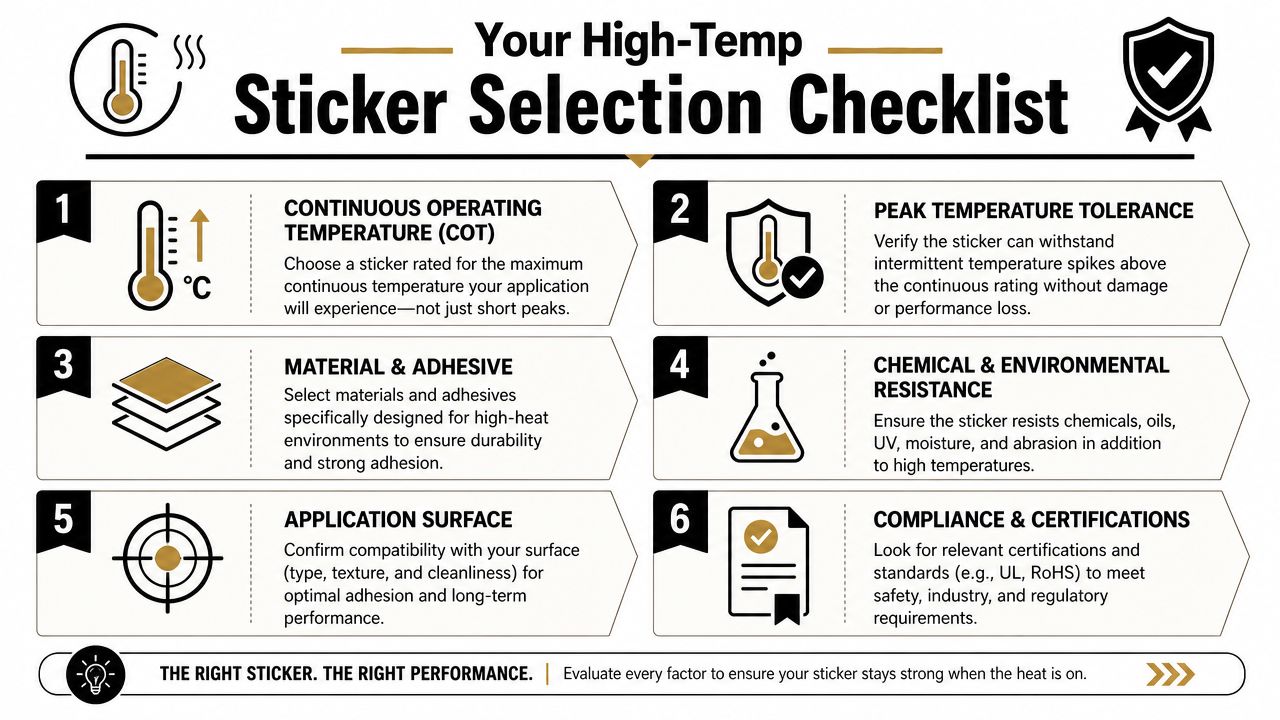
That shortcut causes a lot of failures because a headline number doesn't tell you how the sticker handles heat. Some ratings refer to brief exposure. Others refer to continuous working temperature. Those are not the same thing. As Fast Decals points out in its guidance on high-temperature decal ratings and constant working temperature, a sticker that works on a clear-coated finish may still fail under the hood because prolonged heat drives adhesive failure differently than short peaks do.
Start with the heat pattern
Ask what kind of heat the sticker will see.
- Constant heat is a critical test for under-hood areas, enclosed compartments, and surfaces near running equipment.
- Intermittent heat fits parts that only get hot occasionally, then cool down fully.
- Radiant sun heat affects hoods, roofs, glass, and boxes exposed to direct light for hours.
- Conductive heat matters when the sticker sits directly on metal that retains and spreads temperature.
A decal rated for a short high spike can still fail in a lower but steady under-hood environment. That's why the phrase "maximum temperature" can be misleading if the listing doesn't explain the test condition.
Check the whole environment, not just temperature
Heat rarely works alone on a vehicle. A good sticker for automotive use usually needs to survive a full mix of abuse:
Surface type
Painted metal, textured plastic, powder coat, glass, and bare metal all bond differently.Chemical exposure
Under-hood locations can see oil mist, cleaners, and road film.Weathering
Exterior decals face sun, water, repeated washing, and temperature swings.Placement geometry
Curves, edges, recesses, and bolt heads all increase lifting risk.Serviceability
If the part will be cleaned often or removed for maintenance, the decal needs a stronger margin for error.
Questions worth asking before you buy
Use this checklist before picking a product:
- Will it sit near the engine, or just on an exterior panel?
- Does the rating describe continuous use or brief exposure?
- Is the surface smooth, fully cured, and free of oil?
- Will the decal also need to resist washing, road grime, or chemicals?
- Is the location cosmetic, or does the label need to remain readable?
If you want a custom graphic for standard vehicle use rather than industrial labeling, a product page like make your own custom car sticker makes sense for the visual side. But the placement still decides whether that kind of decal is appropriate. A body panel or window is one thing. A hot engine component is another.
Selection test: Don't ask, "What's the hottest number on the page?" Ask, "What does this sticker have to survive every day?"
Installation and Care for Maximum Durability
A well-made sticker can still fail fast if the install is sloppy. In hot applications, installation is where you either protect the adhesive or sabotage it.
The most common problem isn't the ink. Jessup notes that a dedicated heat-resistant printable vinyl can remain dimensionally stable up to 176°F (80°C), but failure often comes from adhesive softening caused by surface contaminants or incomplete curing, as described in its article on heat-resistant printable vinyl applications and performance data.
Start with the basic process below.
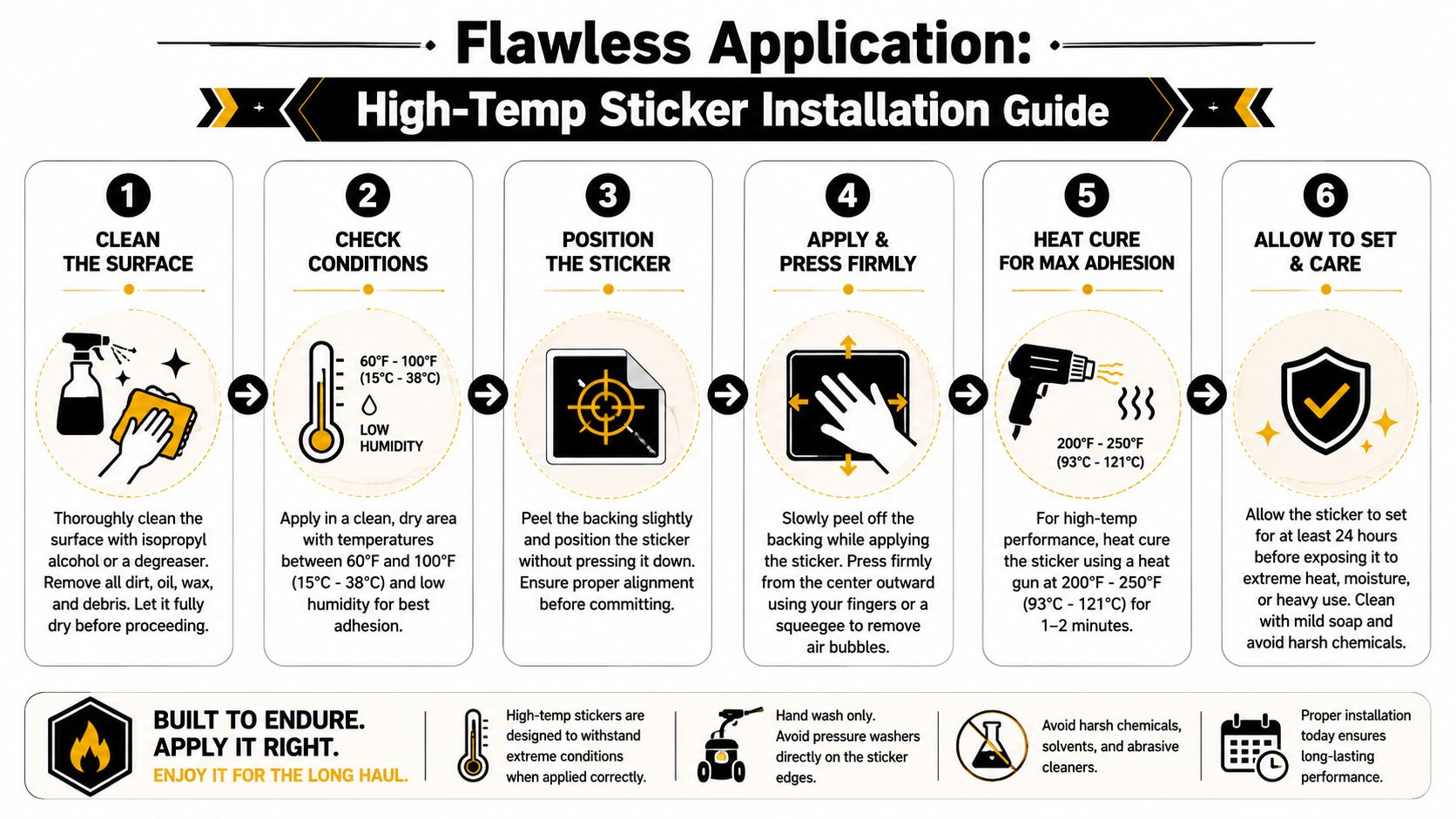
Prep the surface the right way
For most automotive installs, surface prep decides the outcome.
- Wash first to remove dust, road film, wax residue, and loose grime.
- Degrease second if the area is near the engine bay or touched by oily hands.
- Dry completely before the decal touches the panel.
- Avoid fresh paint until it's fully cured according to the paint system's guidance.
If the panel still feels slick, chalky, or oily, it isn't ready. Adhesive doesn't forgive shortcuts.
Apply with pressure and patience
Lay the sticker onto a cool, clean, dry surface. Use a squeegee or firm application tool to press the adhesive down evenly, especially at edges and corners. On transfer-taped decals, work methodically instead of rushing the peel.
After install, give the adhesive time to settle before exposing it to heavy washing, intense sunlight, or engine heat. People often ruin a good install by sticking the decal on and driving straight into the harshest conditions.
This short walkthrough helps if you want to see transfer-style application in motion:
Care habits that help decals last
Heat durability also depends on what happens after install.
- Skip harsh scrubbing at the edges during washing.
- Use appropriate cleaners instead of aggressive solvents unless the product is specifically rated for them.
- Inspect corners periodically on hoods, bays, and boxes that see heavy sun.
- Re-clean surrounding buildup so grime doesn't work under the edge over time.
For outdoor gear owners, the same principle applies broadly. A product that's built for one kind of abuse isn't automatically ready for every other one. That's why practical guides like Magic Eagle hunting gear advice are useful reading. They show the same real-world lesson: water resistance, weather resistance, and field durability aren't interchangeable claims.
Trust Custom Sticker Shop for Decals That Last
Most vehicle owners aren't shopping for electronics-grade polyimide labels. They're trying to find a decal that looks sharp, installs cleanly, and holds up on glass, painted panels, bodywork, and everyday outdoor use.
That's where material balance matters. For automotive graphics, heat resistance by itself isn't enough. Suppliers that focus on high-temp and chemical-resistant labeling make this point clearly: a sticker used around vehicles also needs to deal with chemicals, weather, oils, road salts, and washing, not just heat, as noted by Label-Aid's page on custom heat and chemical resistant labels.
What works for most drivers
For exterior and moderate-heat vehicle applications, a premium outdoor vinyl is usually the right fit. It won't replace specialized industrial materials for extreme heat zones, but it does cover the use cases most owners have:
- Windows and windshields
- Body panels and bedsides
- Toolboxes and accessory panels
- Tailgates and rear glass
- General outdoor decals that need to handle sun, water, and grime
That matters because many decal disappointments happen when someone buys too little material for the job or far too much. A sticker for an engine process label is overkill for rear glass. A bargain decorative sticker is underbuilt for a sun-baked hood.
Matching style with real durability
If you want a practical example of an exterior automotive decal style, a design like this Chevy Chevrolet weathered flag decal sticker fits the kind of application where outdoor durability and clean installation matter more than industrial temperature extremes.
The smart choice is matching the product to the environment. That's the whole game with heat resistant stickers and automotive decals. Not the biggest claim. The right claim for the right surface.
Frequently Asked Questions About Heat Resistant Stickers
Can I put a sticker directly on my exhaust pipe
Usually, no. Exhaust components create a level of heat that exceeds what most consumer decal materials are meant to handle. Even if the face film survives briefly, the adhesive often won't. Heat shields and nearby components are a different question, but the pipe itself is rarely a safe bet.
Can I clear-coat over a heat resistant sticker
Sometimes, but compatibility matters. The film, adhesive, ink system, and clear coat all need to work together. If you're dealing with painted parts, test first on a sample panel. A clear coat can trap edges, react with materials, or change the look of the decal.
Will a sticker that handles heat also handle car washes and chemicals
Not automatically. Heat resistance and chemical resistance are related in some products, but they aren't the same promise. If the sticker will see degreasers, road salt, wash soap, or oil mist, check for that separately before buying.
How do I remove a high-temp sticker safely
Use controlled heat and patience. Warm the decal, lift an edge with a plastic razor or plastic trim tool, and peel gradually. Then remove residue with a product that's safe for the surface. Ripping a cold sticker off metal or paint usually leaves more adhesive behind.
Are heat resistant stickers worth it for exterior use only
If the vehicle sits outside, yes, they often are. Exterior panels can build more heat than people expect, especially on dark colors and metal surfaces. Even when the location isn't "high heat" in an industrial sense, a better film and adhesive can prevent curling, shrinking, and early replacement.
If you want decals built for real vehicle use, Custom Sticker Shop is a strong place to start. They make American-made vinyl decals for cars, trucks, Jeeps, and outdoor use, with a large catalog of designs and custom options that install cleanly and hold up where ordinary stickers often don't.