
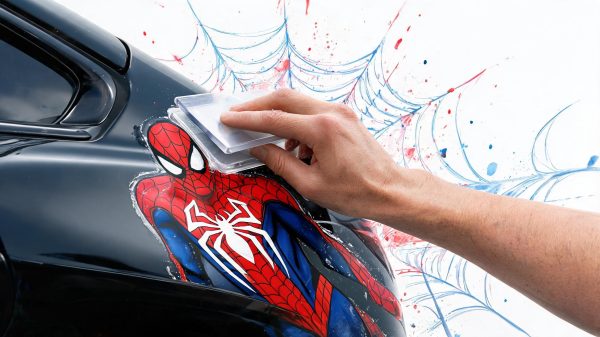
You're probably looking at a blank spot right now. A rear window that needs something more than a factory tint line. A laptop lid that feels too plain. A kid's room wall that needs a hero, but not a mural commitment. Spider man decals fit that moment because they're simple to buy, easy to personalize, and visible every single day.
But the decal you enjoy after a month isn't always the one you enjoy after a year. That comes down to the ownership lifecycle: material, adhesive, placement, installation method, cleaning, and removal. Most buyers focus on the art first, then find out later that the vinyl or adhesive was the deciding factor.
More Than a Sticker It's a Statement
Spider-Man works as decal art for one reason above all others. People instantly recognize it. The character first appeared in Marvel's Amazing Fantasy #15 in August 1962, and his solo title had become one of Marvel's flagship properties by March 1963, which helps explain why the imagery still reads clearly across generations and surfaces today, from vehicles to walls to laptops, as noted by the University of Oregon's Spider-Man history feature.
That history matters when you're choosing a decal. You're not buying an obscure graphic that only a few fans understand. You're choosing a symbol that people connect with immediately. The spider emblem, the mask eyes, the web pattern, the red-and-blue silhouette, even a more stylized tribal interpretation all carry meaning without needing explanation.
For a buyer, that changes how the decal feels in use. A Spider-Man graphic can be playful on a child's wall, sharp on a truck back glass, subtle on a side window, or aggressive in black on a toolbox. The same character language flexes across very different spaces because the visual identity is already well familiar.
Spider-Man art doesn't need a long introduction. The shape language does the work the moment someone sees it.
That's also why simple designs often outperform busy ones. A clean spider emblem usually ages better than a crowded action scene. It reads faster at distance, it installs more cleanly, and it stays relevant longer if your tastes shift. If you like a more stylized direction, a Spider tribal decal style shows how far you can push the theme without losing the core identity.
Why fans keep coming back to this theme
- It feels personal: Spider-Man has always been the relatable hero. The decal says fan, not just collector.
- It works on many surfaces: The same icon can fit a truck window, dorm wall, laptop, cooler, or garage cabinet.
- It gives you options: You can go classic, stealthy, comic-inspired, or minimalist without losing recognizability.
A good Spider-Man decal isn't just decoration. It's a small, durable piece of identity that travels with you.
Choosing Your Web The Best Decal Materials and Types
A Spider-Man decal starts aging the day it goes on the surface. Material choice decides whether it still looks sharp after summer heat, car washes, and sun exposure, or whether the edges start curling a few months in.
For vehicles, the first question is not color or pose. It is film type. Commercial listings for Spider-Man graphics commonly specify adhesive-backed vinyl for smooth surfaces, and outdoor-focused products call out weather-rated film because sun, moisture, and temperature swings are what usually shorten a decal's life, as described in this Spider-Man decal material reference.
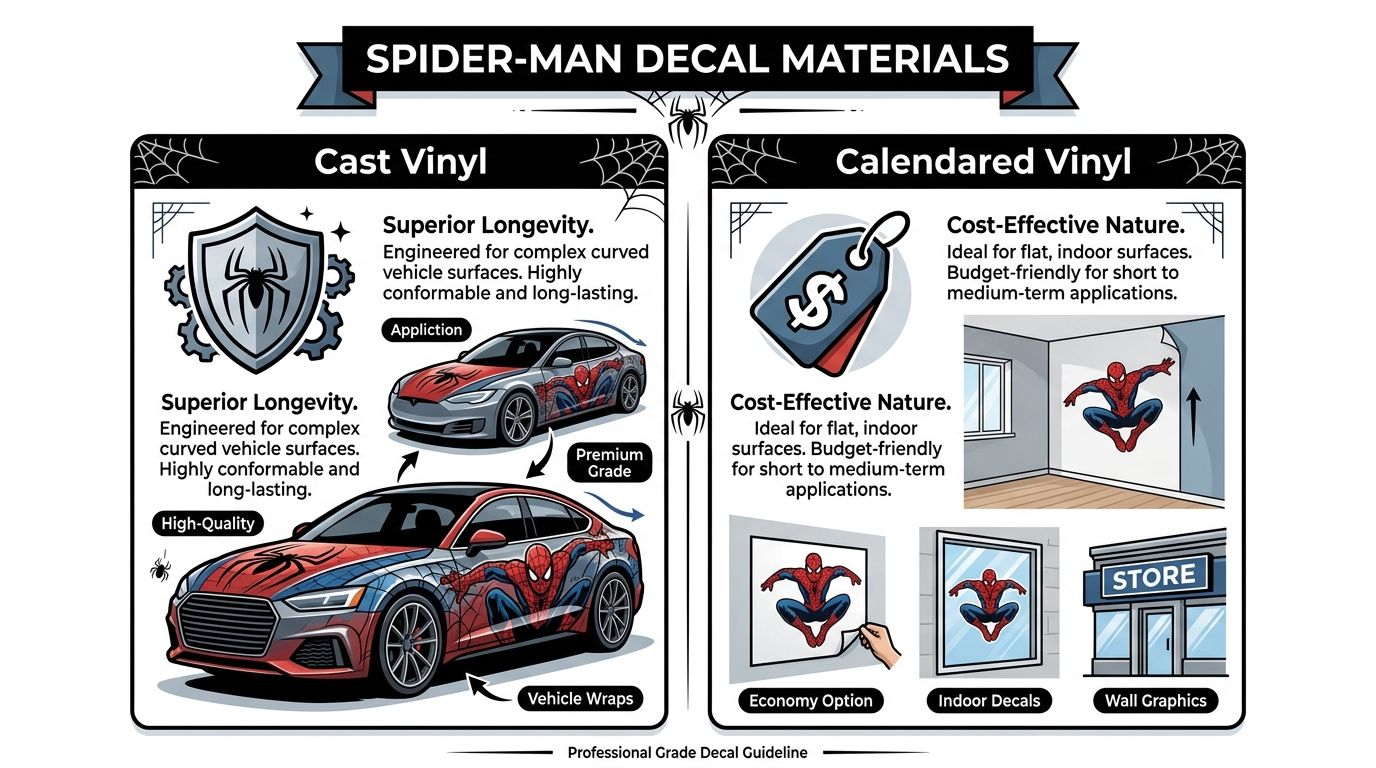
If you are buying spider man decals for a car, truck, toolbox, or glass panel, match the material to the job first. The design comes second.
Cast vinyl and calendared vinyl
Both materials have a place in a good shop. The mistake is using the cheaper film on a surface that asks too much from it.
| Vinyl type | Where it fits | What it does well | Where it struggles |
|---|---|---|---|
| Cast vinyl | Curves, contours, long-term outdoor use | Stays stable, conforms better, holds up longer on shaped surfaces | Costs more |
| Calendared vinyl | Flat panels, windows, shorter-term or budget-focused jobs | Lower cost and works well on simple, smooth surfaces | Shrinks more over time and fights compound curves |
Cast vinyl is the safer pick for anything with shape in it. Hood edges, slightly crowned body panels, helmet boxes, and contoured glass all put stress on the adhesive and the face film. Calendared vinyl can still perform well on rear windows, laptop lids, garage cabinets, and other flatter spots, but it has less tolerance for tension. That trade-off matters more over time than it does on day one.
Cut decals, printed decals, and layered builds
Single-color cut decals are still the most reliable format for this category. They install cleaner, shed less visual clutter, and usually last better because there is no printed ink layer to fade and no extra overlap lines to catch dirt.
Printed decals make sense if you want comic shading, full-character art, or color transitions that cut vinyl cannot reproduce. The trade-off is lifespan and finish quality. A printed piece depends heavily on the printer, ink set, laminate, and color management. Cheap printed decals often look good in the listing photo and average on the vehicle.
Layered decals sit in the middle. They can look excellent when they are produced carefully and installed with good registration. They also create more failure points. Every added layer means more edge exposure, more chances for trapped air, and more chances for slight misalignment that a customer notices every time they walk up to the car.
Shop rule: simpler artwork usually survives longer and installs better than highly detailed art cut into multiple layers.
That is one reason clean emblems and silhouette-style Spider-Man graphics keep selling. They give you the theme without asking the material to do more than it should.
Matching the decal type to the surface
Surface matters as much as material.
For glass, cut vinyl is usually the cleanest option. It gives crisp edges, strong contrast, and easy maintenance. For painted metal with mild curves, cast vinyl earns the extra cost. For indoor walls or short-term decor, a removable or lower-cost film can be perfectly reasonable if long outdoor life is not the goal.
Buyers who are unsure about detail level can learn a lot by comparing categories outside comic art. A clean directional design like this compass rose vinyl decal sticker shows why bold linework often reads better from a distance than a busy graphic packed with small elements.
What to ask before you buy
- For vehicles: Ask whether the vinyl is rated for outdoor use and how long it is expected to last.
- For curved panels: Ask whether the film is cast or calendared.
- For full-color art: Ask if the decal is printed and laminated.
- For multicolor cut work: Ask how many layers are involved.
- For indoor use: Ask whether the adhesive is removable or intended for permanent application.
A good Spider-Man decal should survive ownership, not just look good in the product photo. The right material, the right build method, and clean production make the difference between a graphic that lasts and one that becomes a replacement job.
Perfecting Placement and Sizing Your Decal
A Spider-Man decal usually fails before installation. The wrong size on the wrong panel makes even good artwork look cheap, crowded, or misplaced. Good placement fixes that. It lets the design read clearly, fits the shape of the surface, and still looks right after the novelty wears off.
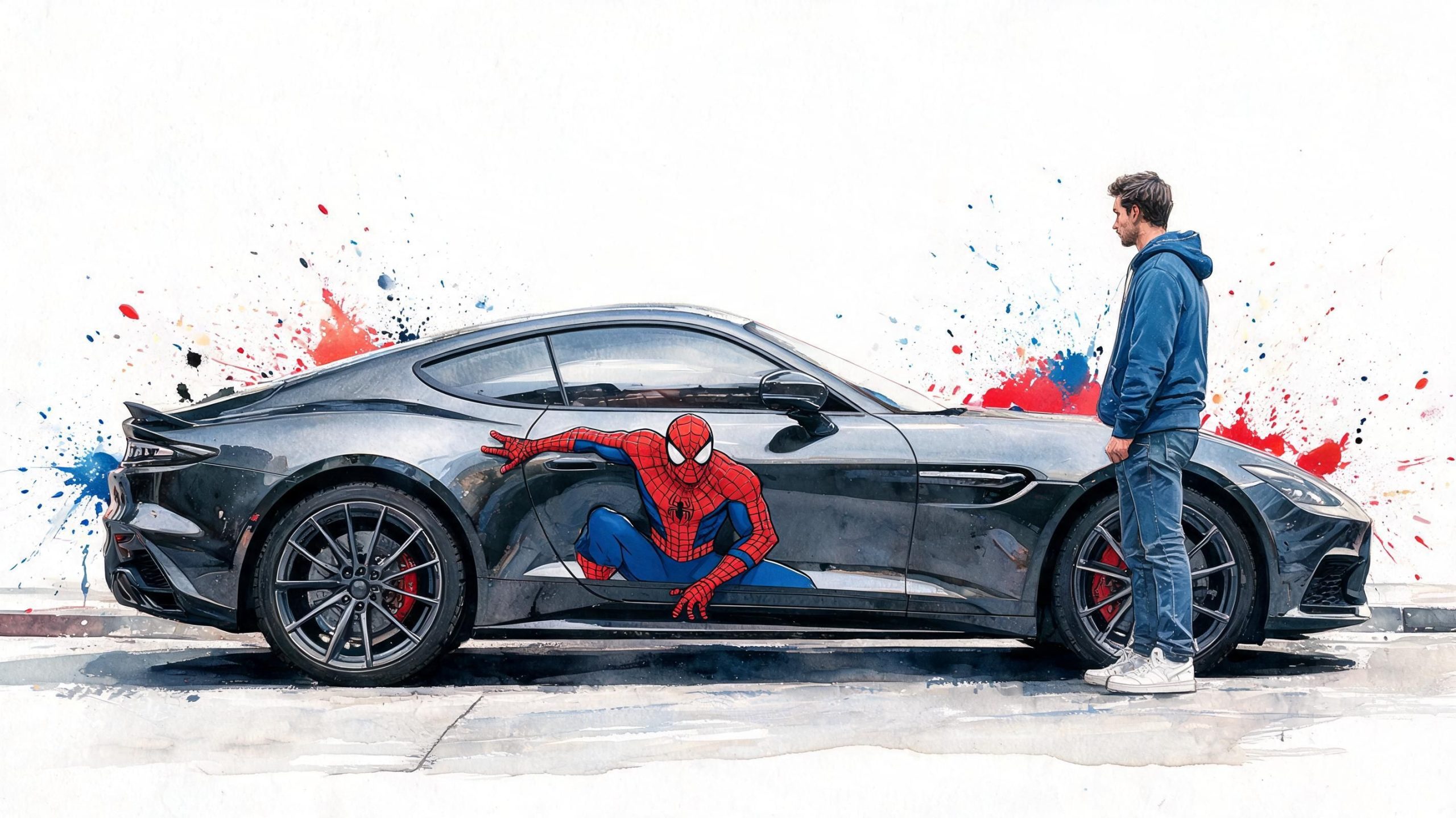
The practical rule is simple. Match the amount of detail to the viewing distance and the shape of the panel. A classic spider emblem, mask silhouette, or bold comic pose can stay sharp on smaller areas. Busy artwork with webs, shading, and multiple character elements needs more room, or it turns into visual noise from ten feet away.
I tell customers to size for the panel, not for the product mockup. Mockups are usually shot straight-on, on clean surfaces, with no trim, hinges, badges, or body lines getting in the way. Real ownership is different. Wiper paths, window seals, door handles, fuel doors, and curves all steal usable space.
Vehicle placement that usually works
For trucks, rear windows are often the easiest win. The surface is flat, visibility is strong, and the graphic stays away from heavy body lines. A centered spider or a corner-crawl design usually reads better than a full action scene spread across the whole glass.
For Jeeps and off-road builds, upper windshield corners and rear side glass tend to suit the vehicle shape. Climbing poses and small character silhouettes work well there because the placement feels intentional instead of pasted on.
Cars need more restraint. On most coupes and sedans, a medium decal on rear quarter glass or a lower windshield corner looks cleaner than a large piece across a door. Door graphics can work, but only if the art is built for that panel and sized around handles, creases, and mirror lines.
If the graphic is wider than the quiet space around it, scale it down.
Sizing by surface
Use these as buying guidelines, not hard rules:
- Small surfaces: Laptops, helmets, coolers, and toolboxes usually need bold shapes with limited fine detail.
- Medium surfaces: Rear side windows, quarter glass, and cabinet doors can handle more motion and character posture.
- Large surfaces: Back glass, hood areas, wall panels, and larger storage boxes can support fuller scenes without looking cramped.
One sizing mistake shows up all the time. Buyers pick a decal based on character popularity, then force that design onto a surface that is too small for it. A simple black-suit spider logo often outperforms a complex action pose on everyday items because it stays readable, weeds cleaner in production, and ages better visually.
Indoor and everyday objects
Spider man decals also need the same sizing discipline indoors. A wall decal should clear furniture, light switches, and outlet plates. A laptop lid should leave space around the hinge and factory logo. A garage cabinet or toolbox should keep enough blank area around the design so it still looks deliberate once the surface picks up normal wear.
Matte finishes often look better in workspaces and home offices because they hide fingerprints and glare. Gloss can pop nicely on glass or smooth painted panels, but it also shows surface flaws faster.
A paper template is still the best low-cost test. Tape the rough size in place, walk back to normal viewing distance, and check it from a few angles. If the panel looks balanced with the template on it, the finished decal usually will too.
How to Install Your Spider Man Decal Flawlessly
You get one clean first contact with the surface. Miss that moment with dust under the vinyl, wax on the paint, or a rushed placement, and even a well-made Spider Man decal can look amateur in minutes.
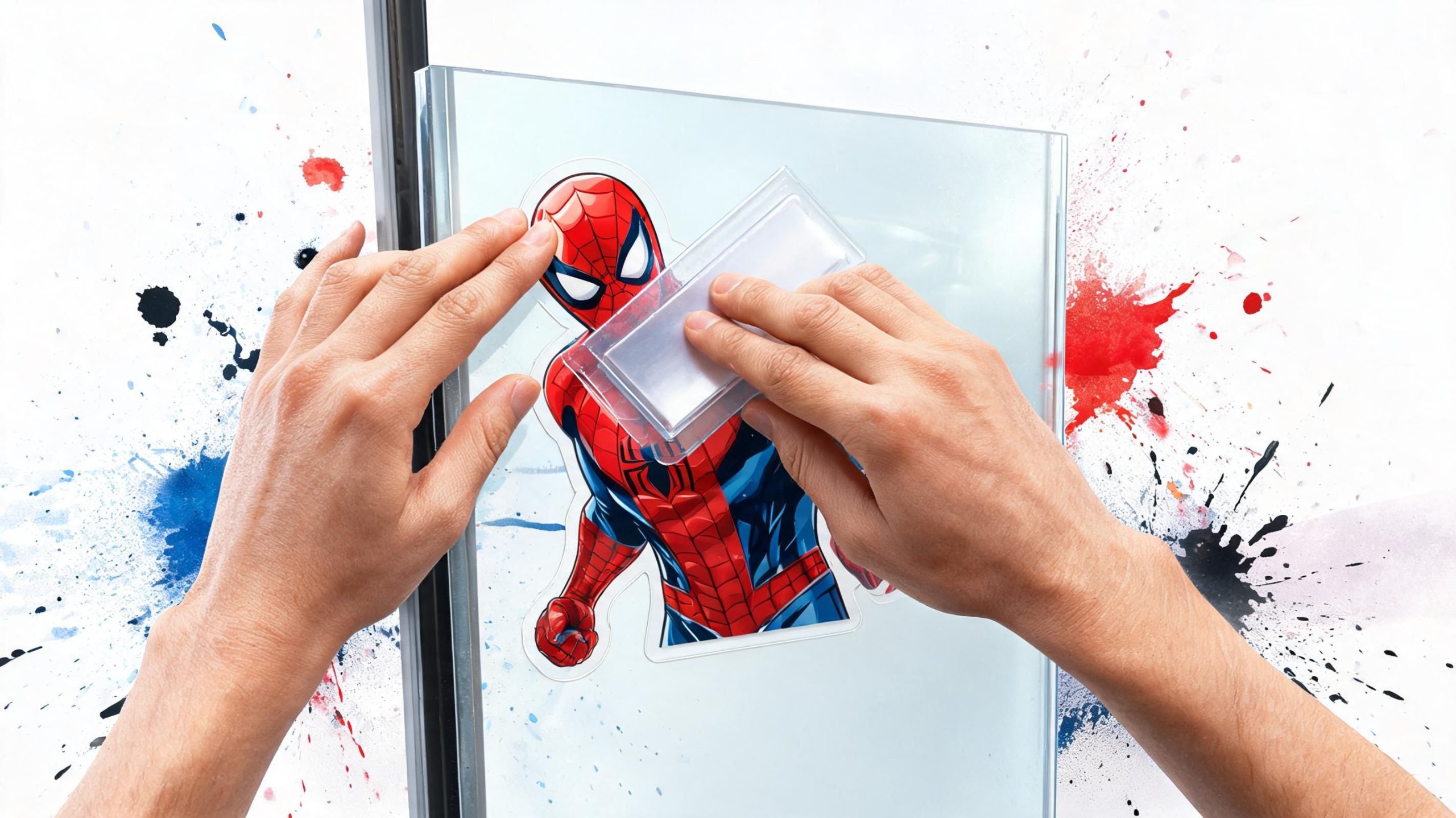
For glass, painted metal, and smooth plastic, pre-spaced decals with transfer tape are usually the easiest to install well. They keep separate cut pieces in register while you position the graphic, which matters a lot on spider logos, web details, and character silhouettes with narrow points.
Surface prep that actually matters
Clean the panel for the adhesive, not just for appearance. A surface can look spotless and still have silicone, wax, interior dressing overspray, or skin oil that weakens bond strength.
Use a clean microfiber towel and a residue-free cleaner that matches the substrate. On vehicles, pay extra attention to traffic film and old protection products. If the paint is oxidized, scratched, or rough to the touch, the decal may still stick, but the finish under it will show through and the edges may not stay as tidy over time. If the panel needs correction first, address that before install. On neglected paint, car paint restoration can make the surface smoother, cleaner, and more predictable for vinyl adhesion.
Temperature matters too. A hot hood or rear glass in direct sun makes adhesive grab too fast. A cold panel does the opposite and can leave you fighting poor tack. Room-temperature material on a cool, dry surface is usually the easiest combination to work with.
The hinge method
This method gives you control, especially on medium and large decals.
- Test-fit the decal: Hold it in place with masking tape and check level, spacing, and sightlines.
- Set a tape hinge: Run painter's tape across the top edge or down one side.
- Peel the backing carefully: Fold the decal away from the surface on the hinge and remove the liner without touching the adhesive more than necessary.
- Squeegee from the center outward: Use firm, overlapping strokes to push air toward the edges.
- Remove the transfer tape slowly: Pull it back low and sharp against itself.
Good installs come from control, not force.
If the decal is small, a dry install is usually cleaner. If it is large and the vinyl manufacturer allows it, some installers use light application fluid on glass only. I do not recommend experimenting with wet installs on unknown vinyl or painted panels unless the product is made for it. Too much fluid slows bonding and can create edge lift later.
Layered designs need more patience
Multi-color Spider Man decals ask more from both the maker and the buyer. Every extra layer introduces another chance for stretch, misalignment, or trapped air. That is why simple one-color logos often install cleaner than character art with separate eyes, shadows, and webbing.
If you are installing a layered design, keep these points in mind:
- Start with the base layer: The largest shape gives the rest of the design a stable reference.
- Avoid pulling the vinyl tight: Thin films distort fast, especially around narrow web lines and mask edges.
- Check registration before final pressure: Light initial passes let you correct small shifts before the adhesive fully sets.
- Expect slower tape removal: Layered work needs more patience so corners do not lift with the carrier sheet.
For a visual walkthrough of decal handling and application, this install clip is worth watching before you start:
A few small bubbles are not always a failed install. Tiny pockets sometimes relax on their own, especially on smooth glass in stable temperatures. What deserves immediate attention is any bubble or wrinkle near an edge, because edge failure is how a decal starts aging early.
Long-Term Care and Safe Removal
A decal that looks good on day one still needs the right care to look good later. The maintenance routine isn't complicated, but it does matter. Edge abuse, harsh chemicals, and careless scraping shorten the life of the graphic long before the art itself stops looking good.
The big buyer concern is removal. That concern is justified. Some wall decal brands clearly state that their products are removable, repositionable, reusable, and won't damage surfaces, but that kind of guidance is inconsistent across automotive, laptop, and general marketplace listings, which is why surface compatibility and adhesive type matter before purchase, as discussed on the WallPops Spider-Man wall decal page.
Keeping the decal clean
Wash gently, especially around exposed edges. A soft wash mitt or microfiber towel is safer than anything abrasive. If you're cleaning a vehicle, wipe with the edge direction rather than catching the edge head-on.
Avoid aggressive scraping tools and harsh solvent-heavy cleaners unless you know the vinyl and adhesive can handle them. Glass is more forgiving than paint. Textured plastics are less forgiving than both.
What helps and what hurts
- Helpful: Mild wash methods, clean microfiber towels, and regular light cleaning before grime hardens.
- Risky: Picking at corners, stiff brushes on edges, and letting residue bake on in direct sun.
- Worth checking: Whether the decal sits on paint, glass, drywall, powder-coated metal, or plastic. Each surface behaves differently during both use and removal.
Removal should be part of the buying decision, not an afterthought.
Removing a decal without creating a bigger problem
Use gentle heat first. A hairdryer works well because it softens the adhesive without concentrating too much heat in one tiny area. Warm the decal, lift a corner carefully, and peel back slowly at a low angle.
If adhesive residue remains, use a remover suited to the surface and test it in a hidden spot first. On automotive paint, patience is cheaper than repair. If old adhesive, sun ghosting, or scratches reveal defects after removal, professional car paint restoration can help correct what the decal didn't cause but happened to expose.
For walls and dorm spaces, go even slower. Drywall paint can be less predictable than automotive clearcoat, especially if the wall was painted recently or with low-bond coatings.
Ordering Your Custom Spider Man Decal
A good order starts before checkout. The buyer who gets a Spider Man decal that looks right on day one and still peels cleanly later is usually the one who gave the shop the right details up front.
Start with the actual job the decal needs to do. A rear window graphic, a laptop decal, and a wall piece for a kid's room may share the same character theme, but they do not share the same material, adhesive, or production method. If a shop is guessing about your surface, size, or expected lifespan, you are the one who ends up dealing with shrinkage, lifting edges, or removal damage.
For custom work, send three things clearly: the finished size, the exact surface, and the design style you want. That last part matters more than buyers expect. A clean spider icon, mask outline, or nameplate-style design usually cuts and installs better than artwork packed with tiny web lines, layered colors, and comic-panel detail. Complex art can be produced, but it raises the chances of alignment issues and makes installation less forgiving.
Before you place the order, ask for these details in writing:
- Surface match: Glass, painted metal, drywall, powder-coated gear, and plastic all call for different vinyl and adhesive choices.
- Material type: Ask whether the decal is calendared or cast vinyl, especially for vehicles or curved surfaces.
- Transfer tape: Cut decals install more accurately when they arrive pre-spaced and properly taped.
- Final dimensions: A design that looks balanced on a mockup can feel too small or too crowded once it reaches the actual panel or window.
- Removal expectations: Temporary wall use and long-term outdoor use are different jobs.
Layered Spider-Man designs deserve extra caution. They take more production time, tighter registration, and more patience to install. In my shop experience, buyers are usually happier with a simplified version that reads cleanly from a few feet away instead of a complicated design that only looks good in the proof.
Custom text can help if it stays secondary to the graphic. A short name, gamer tag, locker label, or vehicle callout tends to work well. Long phrases usually force the artwork to shrink or crowd the layout. Color choice matters too. Red, black, white, and silver remain the most reliable picks across tinted glass, painted panels, and darker indoor surfaces.
Licensing also deserves a plain answer before money changes hands. If you want comic-inspired art, ask what the seller can legally cut and how they handle customer-supplied files. Clear boundaries early prevent redraw fees, delays, and canceled orders.
If you already know your size and layout, a custom Spider Man car decal ordering page gives you a direct way to submit the job. Clean artwork, realistic detail, and an honest description of the surface will do more for the final result than adding one more design element ever will.
The shop itself affects the whole ownership cycle. Accurate cutting, good vinyl, consistent transfer taping, and responsive communication decide whether the decal arrives ready to install or turns into a rework. American-made production also matters for buyers who want dependable material quality and cleaner manufacturing consistency, especially on vehicle and outdoor orders.
If you are ordering more than one decal, ask whether the files will be saved for future reorders. That small detail helps when a laptop gets replaced, a vehicle changes, or a wall decal needs to be redone later.