
You’re probably in one of two spots right now. You want to put something on your truck, Jeep, or car that means something, but you don’t want to make a permanent mistake. Maybe it’s a military tribute on the back glass, a windshield banner for your build, a family decal for the SUV, or a hood graphic that gives the vehicle some character without turning it into a forever project.
That hesitation is smart.
Vehicle paint, automotive glass, and textured trim don’t behave like an interior wall or a laptop lid. A decal that looks good on day one still has to survive sun, road grime, weather, washing, and the simple fact that your taste can change. The right answer for most drivers isn’t the strongest adhesive available. It’s the adhesive that holds when you need it to, then comes off clean when it’s time to update the look.
Why Removable Vinyl Is Your Best Choice for Car Customization
A lot of vehicle owners want the same thing. They want the truck to look like theirs, not like every other one in the parking lot, but they also don’t want to hurt resale value or fight with glue later.
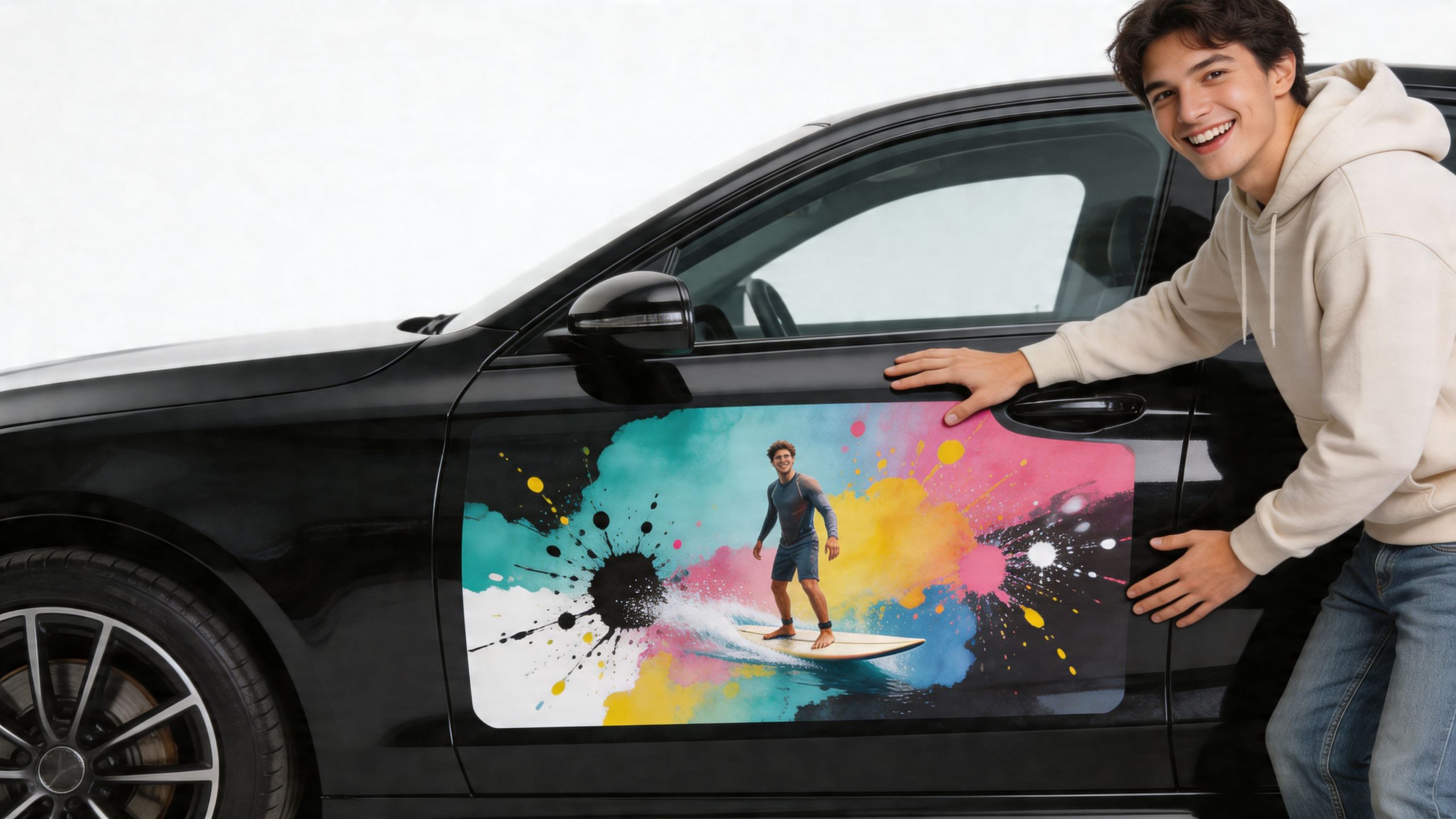
That matters more than people think. A patriotic rear window decal might feel right now. A unit tribute might need to change later. A Jeep owner might run one look during hunting season and another for summer trail rides. A tuner owner might love a windshield banner this year and want a cleaner setup next year. Removable vinyl stickers fit that reality better than permanent graphics for a lot of personal projects.
Style without a lifetime commitment
The best part of removable vinyl is simple. You get the custom look without treating your vehicle like a one-way decision.
For daily drivers, that means you can:
- Add personality: Put your interests, service pride, hobby, or family theme on the vehicle.
- Change designs later: Swap graphics when your build changes or your tastes do.
- Stay practical: Avoid turning a clean truck or car into a removal headache down the road.
- Protect flexibility: Keep options open if you sell, trade, or hand the vehicle down.
A lot of generic advice online talks about decals like they all live on bedroom walls. They don’t. Automotive use is harder. Windshield banners see heat. Back windows take direct sun. Body panels deal with wash mitts, dust, and road grit. On a vehicle, a decal has to do two jobs at once. It has to stay put, and it has to leave when asked.
Practical rule: If you already know you may want the graphic off later, start with removable vinyl. Don’t “play it safe” by buying stronger adhesive than the job actually needs.
A better fit for real vehicle ownership
Removable doesn’t mean flimsy. It means balanced. It’s built for owners who want control.
That’s why removable vinyl makes sense for military tributes, family names, pet decals, support graphics, event decals, seasonal looks, and personal branding on glass or painted panels. You can run a clean, sharp graphic now and still have a plan for later. That’s the difference between smart customization and regret customization.
Understanding the Anatomy of a Removable Vinyl Sticker
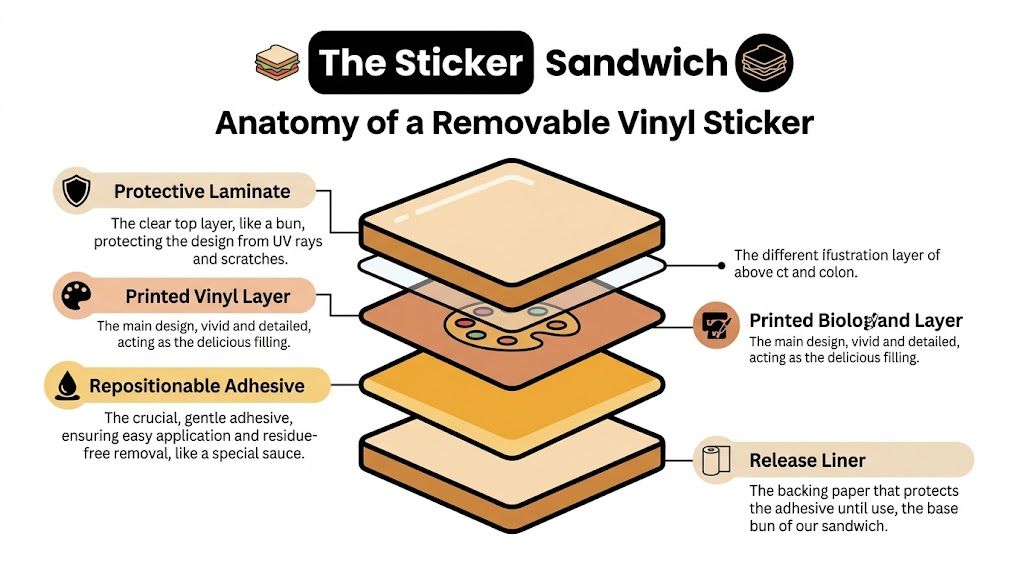
A good decal looks simple from the outside. It isn’t. It's structured like a sandwich, with each layer doing one specific job.
The top protects. The middle carries the design. The adhesive does the holding. The backing keeps everything stable until you install it.
The sticker sandwich
The easiest way to understand removable vinyl stickers is to break them into layers.
| Layer | What it does | Why it matters on a vehicle |
|---|---|---|
| Protective laminate | Shields the printed surface | Helps the design handle sun, light scratches, and routine wear |
| Printed vinyl layer | Carries the color, shape, and detail | This is the part you actually see on the glass, hood, or body panel |
| Removable adhesive | Bonds the vinyl to the surface | Holds through normal use but is designed for cleaner removal than permanent adhesive |
| Release liner | Protects the adhesive before install | Keeps the decal stable, clean, and easy to handle during cutting and application |
The sandwich analogy works because every layer depends on the others. Cheap out on one, and the whole thing gets worse. A nice print on bad adhesive still fails. Good adhesive on unstable film still wrinkles. Strong vinyl without a good liner can become annoying to weed, tape, and install.
The adhesive is the real difference
When people say “removable,” they usually focus on the end of the story. Peeling it off.
The more important part is how it behaves during its life on the vehicle. Premium removable products use acrylic adhesive systems designed for smooth surfaces such as glass and metal, with strong initial tack, UV resistance, and clean removability even after outdoor exposure and temperature swings from -20°F to 140°F, as described in 3M’s technical data for removable durable label material.
That’s the sweet spot. You want enough grab that wind and weather don’t bully the decal. You don’t want so much aggression that the adhesive acts like it’s trying to become part of the car.
A removable adhesive should behave like a firm handshake, not a welded joint.
Why the liner matters more than people realize
Most drivers never think about the backing paper. Shops do, because the liner affects everything from cutting accuracy to installation feel.
The modern removable vinyl sticker industry really took shape in 1956, when pressure-sensitive vinyl film entered the market, and two years later manufacturers added an easy-to-peel silicone release liner that simplified handling and application for end users, as noted in this history of vinyl from Signs of the Times. That liner remains the standard because it protects the adhesive until the moment you’re ready to apply the graphic.
Without a reliable liner, decals can stretch, shift, or fight you during install. On pre-spaced lettering or detailed transfer-taped designs, that becomes a major problem fast.
Film choice affects handling
Not all vinyl film behaves the same on a vehicle. For larger graphics, semi-rigid removable films can be especially useful because they resist wrinkling more than softer material during handling. That makes a difference on bigger hood pieces, side graphics, and large back-window layouts where one bad fold can ruin the whole install.
Here’s the practical takeaway:
- Small simple decals: usually install easily on smooth glass or flat painted areas
- Large one-piece graphics: need more dimensional stability so they don’t collapse onto themselves
- Curved panels: punish cheap or overly floppy material
- Detailed cut designs: depend on a stable liner and clean transfer process
When a removable decal works well, it’s because the whole build is balanced. Film, adhesive, liner, and transfer method all pull in the same direction.
Removable vs Permanent Vinyl Choosing the Right Adhesive
People make expensive mistakes. They assume “permanent” means better.
Sometimes it does. If a business logo is going on a work truck and nobody plans to remove it, permanent vinyl may be the right call. But for personal graphics, tribute decals, banners, and design ideas that might change later, removable vinyl is often the smarter choice.
What changes between the two
The difference isn’t just marketing language. It’s how the adhesive is engineered and how that choice affects your vehicle over time.
Permanent adhesive is built to bond harder and stay harder. Removable adhesive is built to hold with less risk at removal. On a car or truck, that trade-off matters on glass, paint, powder-coated parts, and even some trim pieces.
Here’s the fast comparison.
Removable vs. Permanent Vinyl at a Glance
| Feature | Removable Vinyl (e.g., Oracal 631) | Permanent Vinyl (e.g., Oracal 651) |
|---|---|---|
| Adhesive strength | Lower tack, designed for secure hold with easier removal | Higher tack, designed for stronger long-term bond |
| Best use case | Personal graphics, temporary branding, tributes, banners, seasonal looks | Long-term logos, utility markings, graphics you don’t plan to remove |
| Removal effort | Usually easier, especially on smooth glass and properly cured paint | Usually harder and more likely to need heat and cleanup |
| Risk at removal | Lower when installed on suitable surfaces and removed correctly | Higher chance of residue, stubborn edge lift, or surface stress |
| Flexibility for changing designs | Better choice | Poor choice |
| Vehicle owner peace of mind | Better for people who may sell, update, or swap graphics | Better only if permanence is the actual goal |
When removable wins
Removable vinyl is the right answer when the design is personal, temporary, or likely to change. That covers a lot of automotive use.
Good examples:
- Rear window support decals
- Military tribute graphics
- Windshield banners
- Family and pet decals
- Seasonal event graphics
- Jeep and off-road decals that rotate over time
The main benefit isn’t just easier removal. It’s lower stress while you own the vehicle. You don’t have to wonder whether today’s choice becomes tomorrow’s problem.
When permanent still has a place
Permanent vinyl isn’t wrong. It’s just wrong for a lot of people who buy it.
Use permanent adhesive when the graphic needs a long-term home and removal isn’t part of the plan. A contractor logo, service vehicle lettering, or utility marking can justify a stronger bond. The mistake is using that same adhesive for personal graphics because it sounds more durable.
Durability isn’t the same thing as suitability.
If you’d be annoyed to spend an afternoon removing it later, you probably shouldn’t install it with permanent adhesive today.
The real-world trade-off
The strongest adhesive on the shelf is not automatically the best product for a vehicle owner. For most personal-use projects, what matters is balanced performance:
- It lays down clean.
- It holds through weather and normal washing.
- It doesn’t punish you later for changing your mind.
That’s why premium removable acrylic systems matter. As noted earlier, specialized removable adhesives can still offer UV resistance, strong initial tack, and outdoor durability on smooth surfaces while being designed for cleaner removal later. That balance is what separates a proper vehicle decal from a novelty sticker.
A quick decision filter
Use this if you’re stuck:
- Choose removable if the graphic is for self-expression, support, family, clubs, events, or looks you may refresh.
- Choose permanent if the marking is business-critical and meant to stay in place for the long haul.
- Choose removable if resale value matters to you.
- Choose removable if the vehicle is newer and you’re cautious about paint.
- Choose permanent only when you fully accept a tougher removal process later.
That last point is the one many skip. They shop for installation day and ignore removal day. Experienced decal buyers think about both.
Perfect Applications for Removable Vehicle Decals
The easiest way to understand removable vinyl stickers is to look at where they shine on real vehicles.
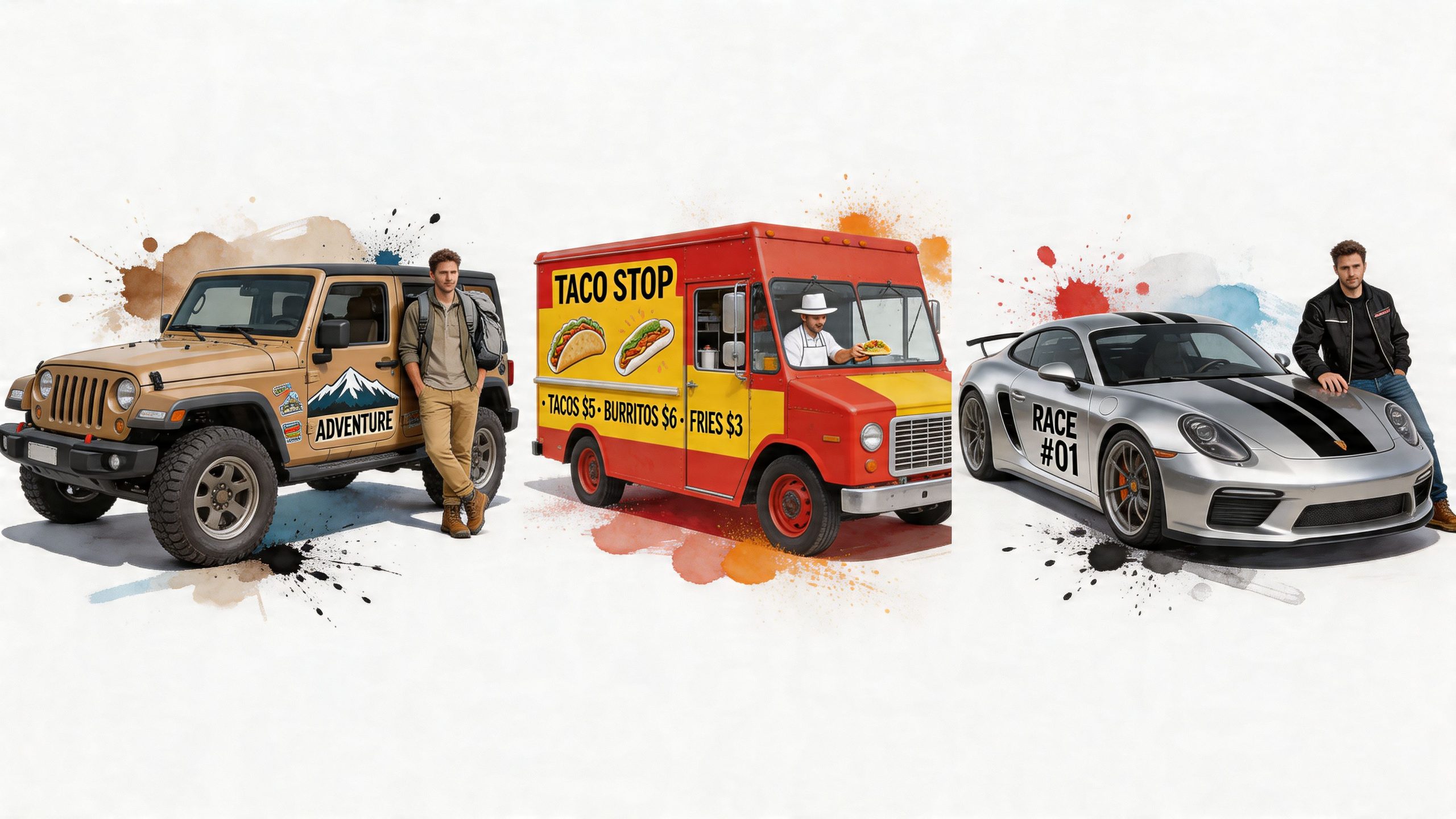
A rear window tribute decal, a hood graphic for a Jeep, a windshield banner on a project car, a family name design on an SUV, or a food truck panel graphic all ask for slightly different things. Some need subtlety. Some need size. Some need the option to come off clean later when life changes.
Military tributes and support decals
These are some of the most meaningful graphics people put on vehicles. A back-glass tribute, branch support decal, memorial design, or unit reference often carries personal weight. It also may need to change over time.
That’s where removable vinyl earns its keep. It lets someone honor service proudly without treating the glass or paint like a permanent memorial wall. If the design changes, the mission changes, or the vehicle changes hands, removal stays manageable.
Jeep, truck, and off-road graphics
Jeep and truck owners tend to run bigger graphics and bolder placements. Hood decals, side markings, windshield banners, and trail-themed pieces ask more from the material during install.
For large graphics on vehicles, semi-rigid removable films can be a strong fit because their 6.0 mil thickness and dimensional stability reduce wrinkling and air pockets on curved body panels, according to GF 223 product details. In plain terms, they’re easier to control when you’re handling a bigger piece of vinyl with two hands and a squeegee.
That matters on rigs that get used. Mud, wash cycles, sun, and trail dust expose weak installs fast.
JDM, tuner, and windshield banner setups
A lot of car enthusiasts want something cleaner and more temporary than a full commitment graphic package. A windshield banner, side glass logo, or subtle phrase decal gives the car personality without locking the owner into one era of the build.
A good example is a fit-specific Ford windshield banner decal style setup. It gives strong visual impact, but it still leaves room to change direction later if the build evolves.
That’s the core appeal. Project cars rarely stay the same.
Some decals are about identity. Others are about the season your build is in right now. Removable vinyl works for both.
Family, pet, and everyday personal touches
Not every vehicle graphic needs to be aggressive or oversized. Some of the best uses are the simple ones that make an SUV or pickup feel personal.
Common examples include:
- Family name decals
- Stick-figure graphics
- Dog breed or paw designs
- Hunting and fishing themes
- Small support decals on back glass
- Custom text for clubs or local events
These are exactly the kinds of graphics that people like to update as kids grow up, pets change, interests shift, or the vehicle gets replaced.
A short walk-through helps if you want to see decal placement in action before deciding on your layout:
Work vehicles and light commercial use
Removable vinyl also has a place on commercial-use vehicles, especially for temporary campaigns, seasonal services, or short-run branding. If you manage or maintain commercial trucks, that flexibility can be useful when graphics need to change without turning removal into a repair issue later.
The key is matching the graphic to the purpose. Long-term fleet identification may call for stronger choices. Temporary promotions, support graphics, seasonal service decals, and event branding often benefit from removable material instead.
Professional Installation and Damage-Free Removal Techniques
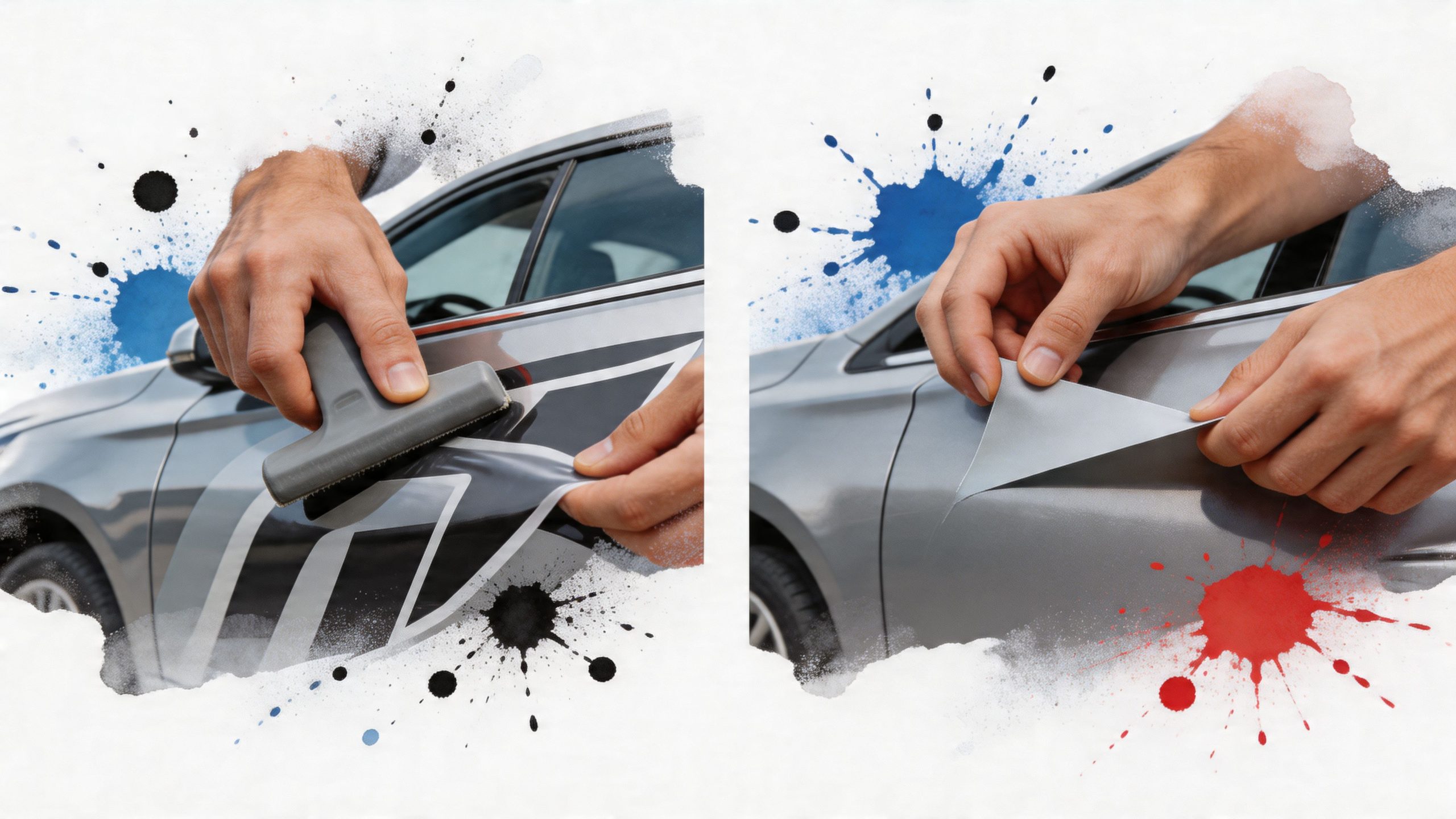
A great decal can still look bad if it’s installed in a rush. Most problems people blame on vinyl stem from surface prep, crooked placement, trapped air, or trying to peel an old decal cold.
Vehicle installs reward patience. They punish shortcuts.
Clean installation starts before the backing comes off
Before the decal even touches the vehicle, do three things:
- Wash the area well. Remove dust, wax, road film, and bug residue.
- Dry it completely. Water hiding in trim gaps loves to show up at the worst time.
- Check the surface. Smooth glass and clean painted panels are your easiest installs. Textured plastics are not.
A removable decal likes a clean, stable surface. Dirt under adhesive doesn’t just look bad. It creates weak spots.
The wet method for larger decals
For many vehicle decals, especially transfer-taped or pre-spaced designs, the wet method gives you more control. A light application fluid or soapy water helps the decal slide slightly so you can line it up before final squeegee pressure locks it down.
Premium removable constructions can allow repositioning for a short window after application, which is one reason they install more forgivingly than aggressive permanent products. On larger graphics, that extra control can be the difference between a professional look and a crooked redo.
Try this process:
- Tape your top edge first: Use painter’s tape to hold the decal in position and step back to check alignment.
- Peel the liner carefully: Keep the vinyl supported so it doesn’t fold onto itself.
- Mist the surface lightly: Don’t soak it. You want slip, not a swimming pool.
- Lay the decal from one side: Keep tension even.
- Squeegee from the center out: Push fluid and air outward in overlapping strokes.
- Leave the transfer tape on briefly if needed: Let the adhesive begin to set before you peel the tape away.
What causes bubbles and wrinkles
Most bubbles come from one of four things:
| Problem | What usually caused it | What fixes it |
|---|---|---|
| Large trapped bubble | Decal laid too fast | Lift gently and re-squeegee if possible |
| Tiny silvering spots | Surface contamination or moisture | Allow time to settle, then reassess |
| Wrinkles near curves | Too much material pushed into a shape it doesn’t want | Reposition and work slower |
| Edges lifting | Dirty surface or poor pressure at edges | Clean better next time, press edges firmly |
The decal isn’t trying to trick you. It usually shows you exactly what went wrong.
Shop-floor advice: The bigger the graphic, the less you should rush. Fast hands ruin more decals than bad material does.
Safe removal after long vehicle exposure
Automotive decals separate from wall decals. Time, UV, and heat change how adhesive behaves. According to this removal overview from Prints Mart, vehicle application becomes more challenging after 2-3 years of exposure, and safe removal often requires heat and proper technique to avoid residue or paint damage.
That lines up with what experienced installers see in practice. A decal that came off easily in its first season may fight back after years in the sun.
Use this approach:
A clean removal sequence
Start with gentle heat
Use a hairdryer or low heat gun setting. You’re warming the adhesive, not trying to cook the panel. Keep the tool moving.
Lift a corner with your fingernail or a safe plastic edge
Don’t stab at the paint with metal tools. If the corner won’t start, apply a little more heat.
Peel slowly at a low angle
Pulling straight out is harder on the adhesive bond and more likely to snap the vinyl. A lower angle gives better control.
Work in small sections
Heat a little, peel a little. On older glass decals, this rhythm matters.
Handle residue last
If a light adhesive film remains, use a paint-safe cleaner or adhesive remover that you’ve tested on an inconspicuous area first.
What not to do
A short no-go list saves a lot of trouble:
- Don’t yank a cold decal off fast
- Don’t scrape paint with a razor
- Don’t overheat one spot
- Don’t assume glass and paint respond the same way
- Don’t ignore cracked or brittle vinyl, warm it first
Older tribute decals and support graphics often fail at removal because people treat them like they just went on last week. They didn’t. Sun and time have already changed the job.
How to Care for Your Decals and Extend Their Life
Good care starts with understanding what hurts a decal most. It usually isn’t ordinary driving. It’s neglect, harsh washing, and repeated abuse at the edges.
If you want removable vinyl stickers to keep looking sharp, treat them like part of the vehicle finish, not like a disposable label.
Washing habits that help
Hand washing is the safest routine. Use a mild car-wash soap, a clean mitt, and straight, gentle passes over the decal.
If you use a pressure washer, be careful with distance and angle. High pressure aimed directly at a decal edge can start a lift that only gets worse with each wash. Once an edge is compromised, dirt and water start doing the rest of the work.
A simple maintenance routine works best:
- Wash off road film early: Don’t let grime bake onto the graphic.
- Use a soft mitt: Rough brushes are hard on decal edges and printed surfaces.
- Dry with a clean microfiber towel: Less rubbing means less wear.
- Check corners and tips: Small edge lift is easier to manage when caught early.
Sun, storage, and real-life exposure
A garage-kept vehicle and a vehicle parked outside every day won’t age the same way. Constant sun, heat, and weather wear on vinyl faster than protected storage does.
That doesn’t mean removable graphics are fragile. It means environment matters. A back-glass decal on a commuter parked outdoors full-time will live a harder life than one on a weekend truck that stays covered. Set your expectations accordingly.
Parked in shade when you can, washed with some care, and left alone at the edges, a decal usually stays attractive a lot longer than one that gets blasted and scrubbed every week.
Small habits that prevent early failure
You don’t need special rituals. You need consistency.
- Skip aggressive polishing over decal edges
- Don’t pick at corners
- Remove bird droppings and sap promptly
- Avoid harsh solvents unless you’re intentionally removing the graphic
If you like softer, personal window graphics such as a heart paw window dog vinyl decal, the same care rules apply. Gentle washing and edge awareness matter more than fancy products.
A decal lasts longest when the owner doesn’t fight it.
Your Custom Sticker Shop Buying Guide and FAQs
Buying removable vinyl stickers for a vehicle gets easier when you ignore hype and focus on a few practical checks. Material quality matters. Adhesive choice matters. How the decal is cut and taped matters. Whether the seller understands automotive use matters.
This industry has deep roots. The self-adhesive label was invented in 1935 by R. Stanton Avery, who later built the company that became Avery Dennison, and that garage-to-global-company story shows how personal labeling and self-expression grew into a billion-dollar market, as described in this history of sticker invention. Vehicle decals are part of that same tradition. People want to mark what they drive with something personal.
A smart buyer’s checklist
Before you order, look for these basics:
- Automotive-suitable material: The decal should be intended for glass, painted metal, or other hard vehicle surfaces.
- Removable adhesive when flexibility matters: Especially for tributes, family graphics, banners, and personal-use decals.
- Pre-spaced and transfer-taped designs for lettering: That makes installation much cleaner on vehicles.
- Clear product photos: You should know whether you’re buying a simple cut decal, layered design, or a larger panel graphic.
- A shop that allows custom work: Personalized names, unit references, and one-off graphics matter in this category.
Questions worth asking before checkout
A careful buyer also asks practical questions, not just design questions.
| Question | Answer |
|---|---|
| Will it work on paint and glass? | Usually yes, if the surface is smooth, clean, and in good condition. |
| Can I remove it later? | That’s the point of removable vinyl, but older vehicle installs still need patient removal technique. |
| Is bigger always better? | No. Oversized graphics look great only when the panel shape and placement support them. |
| Should I use removable for every project? | No. Long-term business markings may still call for permanent adhesive. |
| Do transfer-taped decals install easier? | Yes, especially for text, multi-part layouts, and windshield banners. |
Frequently Asked Questions
| Question | Answer |
|---|---|
| Can I make my own design? | Yes. A custom order is the right move when you want a name, slogan, memorial, unit reference, or one-off graphic. You can start with a make your own custom sticker option. |
| Are removable vinyl stickers good for daily drivers? | Yes, as long as the material is automotive-suitable and you care for it properly. |
| What surface is easiest for clean removal? | Smooth automotive glass is usually the most forgiving. Clean, factory paint in good condition also performs well. |
| Will removable vinyl survive weather? | Quality removable vinyl is made for outdoor use, but exposure, washing habits, and surface choice all affect the result. |
| What if I want to change the decal later? | That’s one of the biggest reasons to choose removable vinyl in the first place. |
The smartest purchase usually isn’t the loudest one. It’s the decal that fits your vehicle, matches how long you want it on there, and won’t create extra work when it’s time for a change.
If you want American-made quality from a veteran-friendly, family-run shop that knows vehicle decals inside and out, take a look at Custom Sticker Shop. They’ve been producing durable automotive graphics since 2001, use professional-grade Oracal vinyl rated for up to 7 years outdoors, and offer more than 1,200 designs for cars, trucks, Jeeps, families, and military supporters. Orders are pre-spaced and transfer-taped for easier installation, prices start at $7.99, free US shipping applies on orders over $25, and the unlimited Buy 2 Get 1 Free deal makes it easy to build a full set without overspending.