
You're probably here because you looked at the front or rear of your car and thought one of three things. The badge is faded and needs replacing. The chrome clashes with the rest of the build. Or the emblem still looks fine, but the car doesn't quite feel like yours yet.
That's where luxury car badges get interesting. They are frequently perceived as tiny logos glued to sheet metal. Enthusiasts know better. A badge can carry brand history, signal taste, affect how clean a build looks, and change the whole personality of a car with one small tweak.
More Than a Logo What Are Luxury Car Badges
A luxury badge does two jobs at once. It identifies the car, and it broadcasts meaning before anyone sees the interior, the engine bay, or the options list. A three-pointed star, a roundel, or a crest tells people what kind of engineering story they expect.
That's the traditional view. The newer view is less rigid.
In a recent survey of 1,000 U.S. consumers, 60% said they're interested in buying a luxury vehicle, but 61% said they're likely to buy a luxury brand with an unfamiliar name, according to MotorTrend's look at understated luxury. That's a useful reality check. The badge still matters, but it doesn't control the whole decision the way many people assume.
Why people still notice badges first
Badges work fast. You don't need to know trim levels or wheel codes to recognize a premium marque in traffic. That instant recognition is why badges still grab attention at stoplights, valet stands, gas stations, and car meets.
But buyers have changed. Some want the obvious signal. Others want the opposite.
Many upscale shoppers now prefer “understated luxury” vehicles that deliver premium features without an obvious badge.
That explains why some owners black out emblems, remove model designations, or keep only the main brand mark. They're not rejecting luxury. They're changing how loudly it speaks.
Where readers usually get confused
A lot of people mix up brand identity with badge importance. They're related, but they're not the same thing.
- Brand identity means the deeper reputation behind the car. Think engineering heritage, design language, dealer experience, and long-term image.
- Badge importance means how much the visible emblem influences the buyer or owner in the moment.
- Personal style enters when the owner decides the stock emblem doesn't fit the finished look of the car.
That last point matters more than ever. On a modern build, the badge isn't always the final factory statement. Sometimes it's just the starting point.
The Story and Status Behind the Badge
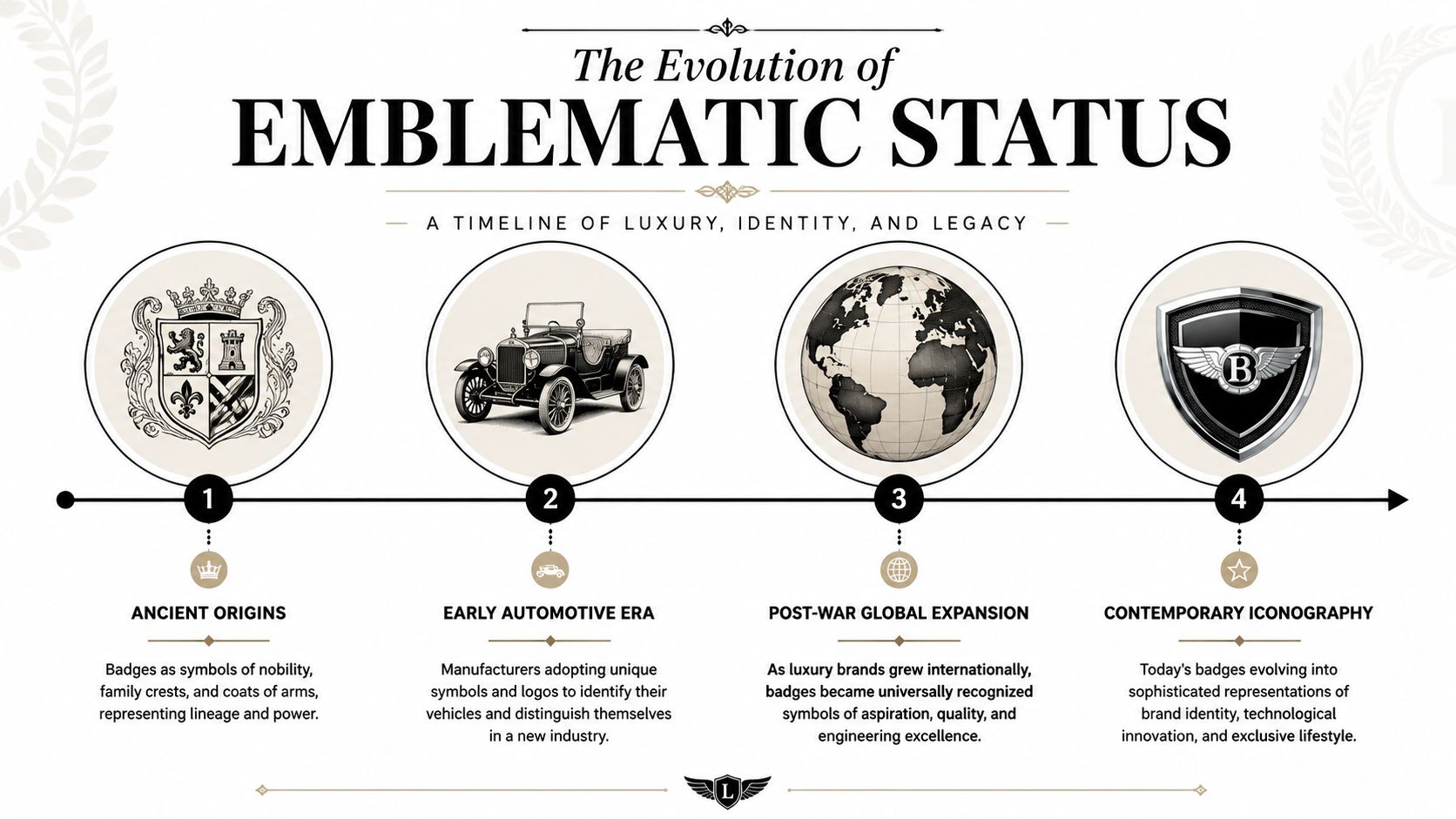
Luxury badges became powerful because they were built to be seen quickly and remembered easily. That happened in the early years of mass motoring, when manufacturers needed symbols that could work on a grille, hubcap, steering wheel, dealership sign, and print ad without losing their shape or meaning.
BMW's roundel dates to 1917, Mercedes-Benz's three-pointed star emerged after the 1925 merger of Daimler and Benz, and Audi's four rings reflect the 1932 merger that formed Auto Union, as outlined in Top Gear's history of car badges. Those dates matter because they show these weren't late marketing add-ons. They were part of the industry's early identity system.
Why old badge designs still work
Simple badge design ages well. That sounds obvious, but it's the whole game. If a badge has too much detail, it disappears at speed. If it's too delicate, it won't survive different applications. If it changes too often, people stop associating it with one clear promise.
That's why the best luxury car badges tend to have:
- Clear geometry that reads at a distance
- Strong contrast so the emblem stands out on bodywork and grilles
- Repeatability across key fobs, wheels, screens, packaging, and advertising
- Heritage value because people attach history to stable symbols
A small car can carry the same visual language as a flagship sedan if the badge does its job.
Status isn't only about price
Badge status comes from recognition, but also from continuity. When an emblem survives decades of redesign trends, it starts to signal permanence. Owners read that as confidence.
You can even see that logic on compact luxury-adjacent models. If you want a grounded example of how brand identity shapes perception on a smaller premium hatchback, AutoProv's Audi A1 insight is a useful read. It shows how the badge doesn't work alone. It works with proportions, trim, and the entire presentation of the car.
Practical rule: The older and more consistent a badge is, the more likely owners are to treat it like part of the car's personality, not just a label.
Anatomy of an Emblem Badge Types and Materials
Once you stop looking at a badge as artwork and start looking at it as a part, you notice how much engineering is packed into something so small. Luxury car badges sit outside in sunlight, rain, road grime, winter salt, wash chemicals, and heat cycles. Cheap ones fail fast. Good ones don't.
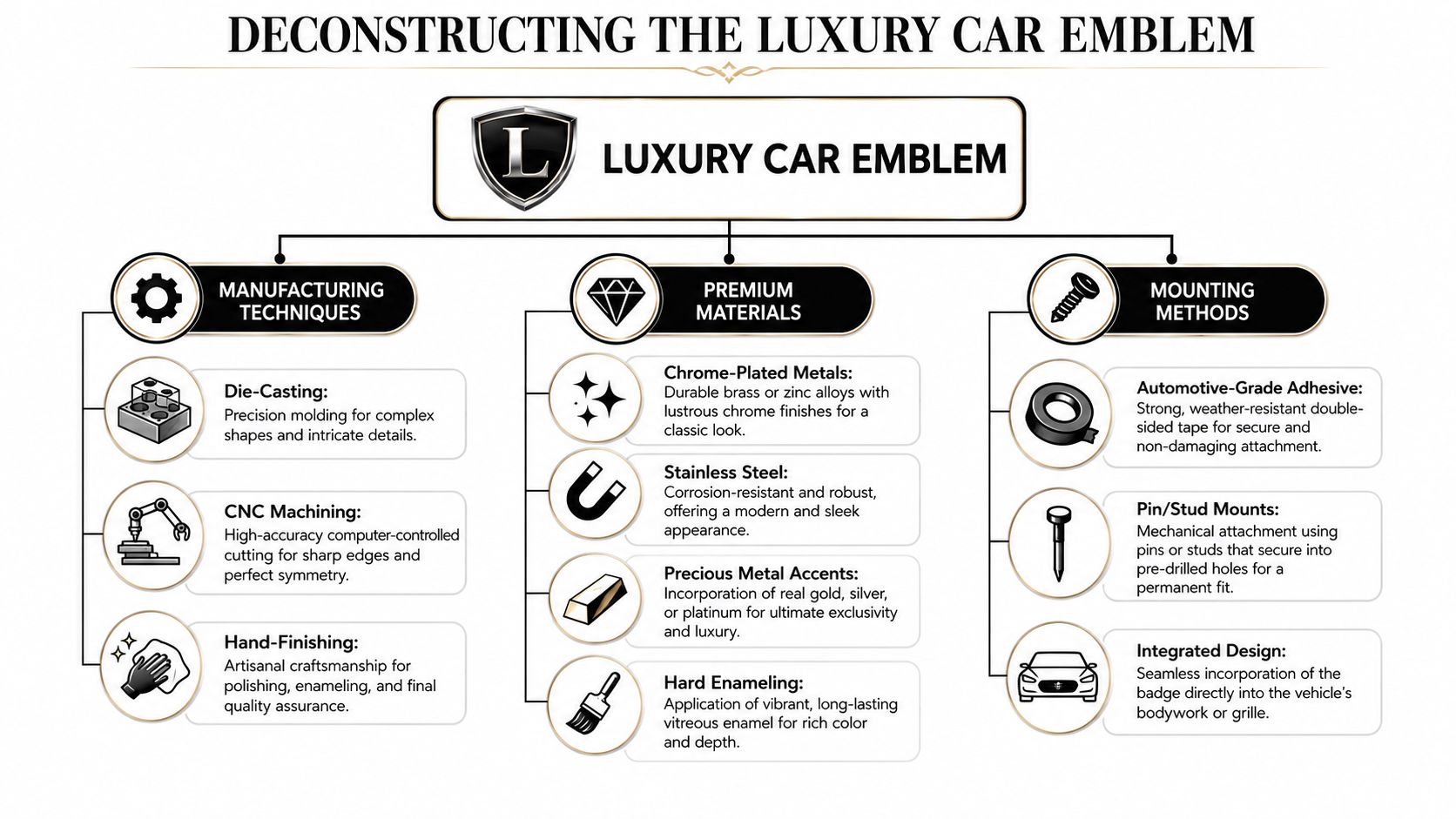
Premium badges are engineered as high-durability exterior identity components, often using chrome-plated die-cast metal, enamel, or illuminated assemblies designed to handle UV exposure, road salt, thermal cycling, and repeated washing, according to CarsGuide's explanation of luxury car logo construction.
The main badge types you'll run into
Factory metal emblems are the classic standard. These usually have weight, crisp edges, and better finish depth than bargain replacements. They're common on grilles, trunk lids, steering wheels, and wheel centers.
Enamel-style badges add color and depth. When done well, they keep their gloss and avoid the chalky look that shows up on low-grade parts after sun exposure.
Illuminated badges show up more often on newer vehicles. They're less about old-school jewelry and more about modern branding. They can look clean on the right platform, but they're more complex and less forgiving if moisture gets in.
Vinyl overlays are different. They don't replace the emblem underneath. They change the visible finish over it. For blackout, color-match, or temporary style changes, that's often the least invasive route. If you're looking at overlay-style options for specific emblem shapes, a product page like this Lincoln emblem sticker listing gives you a clear idea of how decal-based badge styling is sold and sized.
Materials matter more than most buyers think
The biggest difference between a badge that lasts and one that disappoints is usually the material stack, not the logo shape.
Here's what to pay attention to:
- Base material: Die-cast metal and solid-feeling substrates usually resist warping better than thin plastic copies.
- Surface finish: Chrome, satin, gloss black, brushed effects, and enamel all age differently.
- Adhesive quality: A strong automotive adhesive keeps the badge flat through heat and moisture.
- Edge definition: Soft, rounded, poorly cut edges often signal lower-quality reproduction parts.
Mounting style changes the job
Not every badge installs the same way. That trips people up.
| Mounting type | What it means | What to watch for |
|---|---|---|
| Adhesive-backed | Sticks directly to paint, trim, or grille surfaces | Surface prep and alignment matter most |
| Pin or stud mount | Uses factory holes or receivers | Wrong fitment can create gaps or stress |
| Overlay decal | Sits on top of an existing emblem face | Needs precise sizing and careful edge placement |
If a badge looks simple, that's usually because the manufacturer solved the hard problems already. Finish durability, fit, and attachment are doing more work than the logo itself.
OEM vs Aftermarket Deciding on Your Badge Source
When you replace or change a badge, the first real decision isn't color. It's source. Do you buy OEM, meaning factory-original style and fitment, or do you go aftermarket, where choice expands but consistency can shrink?
Neither path is automatically right. The right answer depends on what you value most: exact factory appearance, broader styling options, or the ability to experiment without spending OEM money.
OEM badges suit factory-correct builds
OEM badges make the most sense when you're restoring a car, fixing collision damage, or keeping resale conversations simple. The shape, finish, and fitment are usually what the vehicle was designed around.
That matters on luxury vehicles because tiny differences show up fast. A badge that sits a hair too high, uses the wrong chrome tone, or has softer edges can make an otherwise clean car look slightly off.
Aftermarket badges open the door to personalization
Aftermarket makes sense when you want a blackout look, a custom color, a unique finish, or a temporary visual shift. This is also where non-factory decal sets and overlays become useful. For example, if you want to compare how replacement graphics are typically sold outside the OEM channel, this Jeep Gladiator aftermarket decal set shows the kind of fit-specific styling product enthusiasts often choose when factory appearance isn't the goal.
The downside is simple. Quality varies. One aftermarket badge can look sharp and hold up well. Another can fade, peel, pit, or fit poorly.
OEM vs Aftermarket Badge Comparison
| Feature | OEM Badges | Aftermarket Badges |
|---|---|---|
| Feature | Built to match the vehicle's original specification | Built to offer replacement, style variation, or customization |
| Fitment | Usually the safest choice for exact placement and contour | Can range from precise to approximate |
| Finish match | Best for preserving factory chrome, satin, or color tone | Wider finish choices, but match quality varies |
| Authenticity | Preserves stock appearance | Better for custom looks than originality |
| Customization | Limited to factory-approved styles | Strongest option for blackouts, color changes, and unique designs |
| Risk level | Lower if you want predictable results | Higher if seller quality and materials are unclear |
A good rule is to match the part source to the goal. If you want factory-correct, buy accordingly. If you want visual expression, aftermarket is where the creativity lives.
How to Customize Your Luxury Car Badges
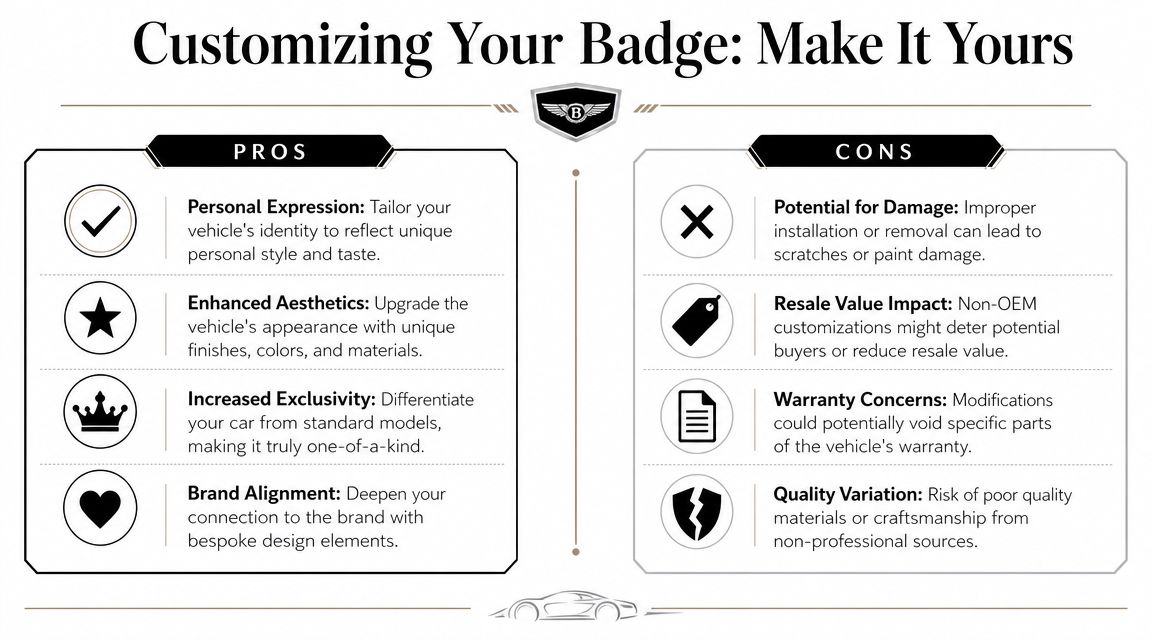
Badge customization used to sit on the edges of car culture. Now it's mainstream enough that owners across luxury, tuner, off-road, and EV scenes all do some version of it. That shift makes sense when you look at the broader market. The global custom car accessories market was valued at about USD 11.4 billion in 2024 and is projected to reach about USD 17.5 billion by 2031, according to Kelley Blue Book's luxury badge overview.
That doesn't mean every custom badge looks good. It means personalization has become normal, and luxury car badges are one of the easiest places to do it without changing the whole vehicle.
The cleanest customization styles
Some badge mods shout. Others whisper. On luxury cars, the quiet ones usually age better.
- Blackout finishes work when the car already has gloss black trim, tinted glass, dark wheels, or a stealth theme.
- Body-color badge treatments reduce contrast and make the lines of the car stand out more than the emblem.
- De-badging removes model clutter and leaves a cleaner rear end.
- Satin or brushed looks can soften bright chrome without making the car look unfinished.
The best custom badge style usually matches the rest of the build. A blackout badge on a stock silver sedan with bright chrome window trim can look random. The same badge on a car with matching trim treatment looks intentional.
Overlays vs replacement badges
Many owners make the smartest move by not replacing the emblem right away. They try an overlay first.
An overlay lets you change appearance without removing the original badge body. That's useful if you're unsure about resale, worried about damaging paint, or just testing a new look. Replacement badges make more sense when the original is cracked, pitted, or missing.
If you want a custom phrase, a niche finish, or a one-off shape rather than a factory brand mark, a made-to-order decal option like this custom sticker creator shows how people extend the same design mindset beyond the emblem itself.
What usually looks tasteful on a luxury car
Taste is subjective, but a few patterns hold up well.
Keep the finish count low. If the car already mixes gloss black, brushed aluminum, chrome, and carbon-look trim, adding another badge finish can clutter the build.
Respect the car's design era. A vintage-inspired sedan often suits metal and enamel better than flashy novelty treatments. A modern EV or sporty coupe can carry simplified, darkened branding more naturally.
Think in zones. Front grille, rear trunk, wheel centers, and steering wheel badge don't all need the same treatment. Sometimes changing just one area looks sharper than changing everything.
A badge mod works best when someone notices the car looks cleaner or more cohesive before they notice exactly what you changed.
Step-by-Step Badge Installation and Care
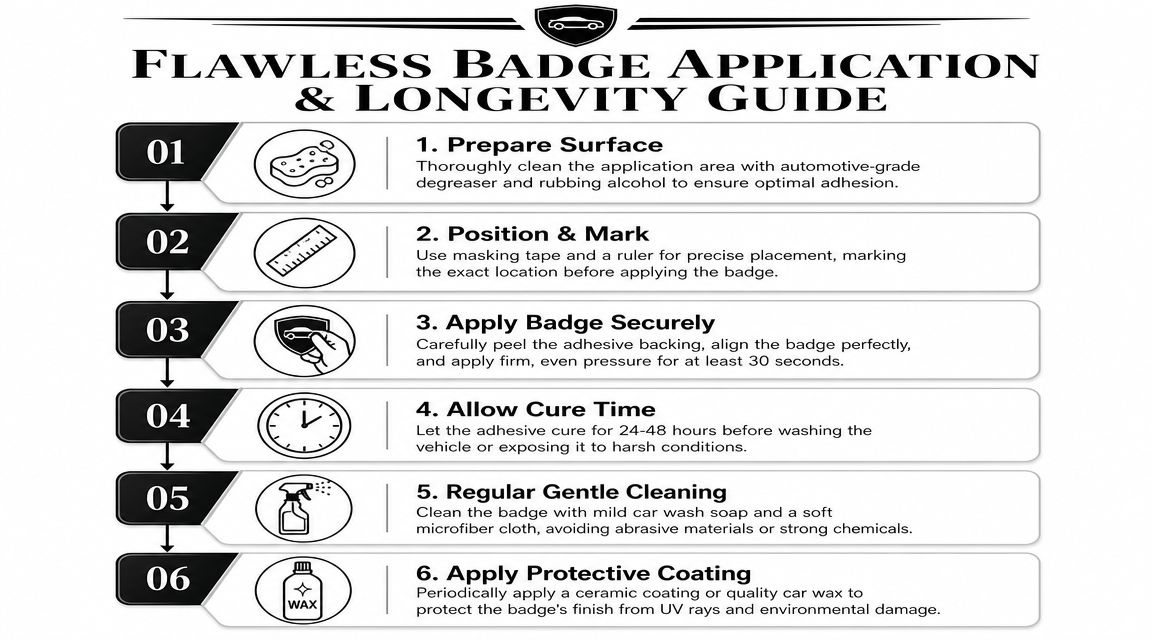
A clean badge install comes down to patience. Most bad results aren't caused by the badge itself. They come from rushed prep, crooked placement, or touching the adhesive before the part is lined up.
Start with the visual guide below, then take your time on the actual panel.
Removing an old badge safely
If the badge is adhesive-mounted, gentle heat is your friend. Warm the emblem enough to soften the adhesive, then work behind it with fishing line or a similar non-metal cutting line. Don't pry against the paint with a screwdriver or hard trim tool unless you enjoy correcting scratches.
After removal, clean away leftover adhesive slowly. Adhesive remover, microfiber towels, and patience beat force every time.
Installing a new emblem or overlay
Use this order:
- Wash the area first. Dirt trapped under an emblem can ruin alignment and adhesion.
- Degrease the surface. Any wax, quick detailer, or polishing oil can weaken the bond.
- Test-fit before peeling. Hold the badge in place and mark alignment with painter's tape.
- Apply with steady pressure. Start centered if possible, then press outward evenly.
- Let it cure. Don't wash the area right away.
The embedded video below is helpful if you want to see a badge application process in motion.
Care tips that prevent premature wear
Once the badge is on, maintenance is simple.
- Use mild wash soap: Harsh cleaners can dull finishes and attack edges over time.
- Choose soft towels: Microfiber is safer than stiff brushes on glossy or coated surfaces.
- Avoid aggressive picking: If you see a corner lifting on a decal overlay, don't keep pressing it with dirty fingers.
- Protect the area: Wax or coating around the badge can help water and grime release more easily.
Shop habit: If you've just installed an adhesive badge, give it some quiet time before exposing it to heavy rain, pressure washing, or a tunnel wash.
Legal Rules and Resale Value Insights
You finish a clean badge swap, step back, and love the new look. Then a practical question hits. Will this cause trouble later if you sell the car, file a warranty claim, or get a close inspection from a picky buyer?
Luxury badge changes usually stay on the safe side if they are honest, well-made, and reversible. Key pressure points are identity and condition. A badge is small, but it works like a nameplate on a fine suit. If it suggests the wrong car, or if the install leaves damage behind, people notice fast.
A factory-backed version of subtlety already exists. Badge deletion has long been offered in luxury circles for buyers who want a quieter look, as noted in this luxury feature overview discussing badge deletion. That matters for modern customization because it shows how personal expression and prestige are no longer opposites. In many cases, a restrained exterior can look more intentional than a car covered in labels.
What to keep in mind before you modify
- Misrepresentation matters: Removing a trim badge is usually harmless. Adding an emblem that falsely presents the car as a higher model, performance variant, or different brand can create legal and ethical problems during a sale.
- Warranty questions are usually narrow: Dealers and manufacturers usually focus on the part of the vehicle that was changed. If a modification damages paint, trim, wiring, sensors, or mounting surfaces, that area may become the point of dispute.
- Resale depends on quality: A sharp de-badge, blackout emblem, or tasteful custom finish can appeal to enthusiast buyers. A crooked install, peeling overlay, or cheap-looking badge often signals poor workmanship elsewhere on the car.
- Reversibility helps: If a modification can be undone cleanly, you keep more options open for trade-in, private sale, or a return to stock appearance.
If a modification changes how the vehicle is represented, disclose it clearly. That includes swapped model badges, non-OEM emblems, or cosmetic changes that could confuse a buyer scanning photos online. Clear photos and a short note in the listing can prevent the sort of awkward conversation that kills trust in five minutes.
Keeping the original badges is a smart shop habit. Put them in a labeled bag, store any templates or clips, and save part numbers if you have them. That small bit of organization gives the next owner a choice and protects your ability to return the car to factory form if the market rewards originality.
If you want to personalize badges or add complementary graphics without jumping straight to permanent hardware changes, Custom Sticker Shop offers made-to-order vehicle decals and emblem-style vinyl options that fit the same customization mindset covered above.