
You’re probably looking at your truck right now and thinking one of two things. Either it already has the King Ranch look and you want to sharpen it up with cleaner graphics, or you’ve got a plain tailgate, back glass, or fender that needs a little Western character without turning the whole build into a costume.
That’s the sweet spot for king ranch decals. Done right, they don’t scream. They signal. A good one looks like it belongs on the truck, wears well through weather and washes, and respects the heritage behind the mark instead of treating it like just another clip-art logo.
A lot of buyers get stuck in the same places. They aren’t sure what the Running W means. They can’t tell whether one vinyl is meaningfully better than another. They wonder if a decal should go on the rear window, the bed side, or the tailgate. And plenty of people ask the legal question too, especially if they want something inspired by the style but not a direct copy.
The Enduring Appeal of King Ranch Style
You see a brown or tan truck with saddle-toned trim, a clean stance, and a subtle ranch mark on the glass, and you know exactly what it’s trying to say. Not flashy. Not overbuilt. Just confident, Western, and rooted in work.
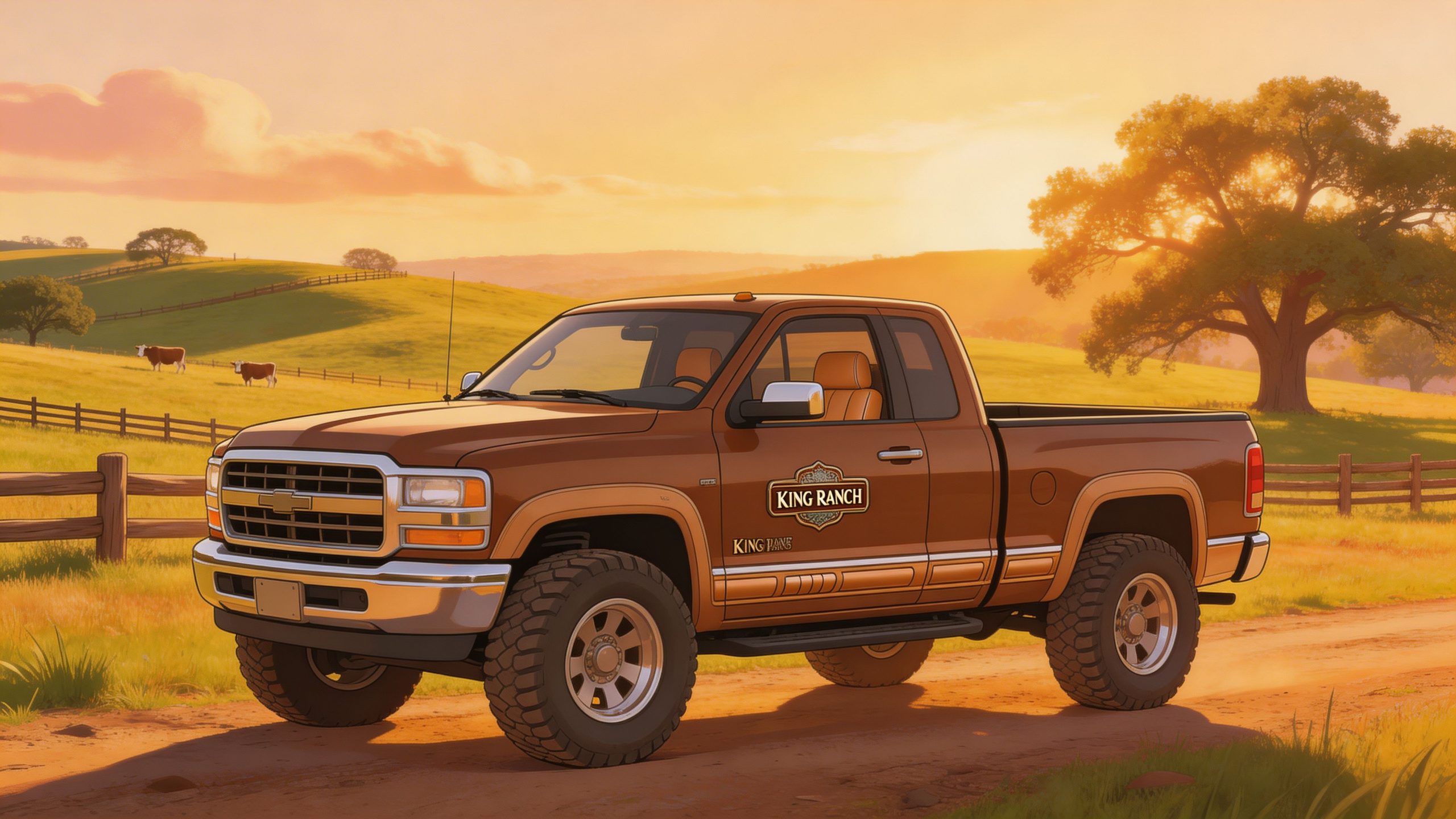
That’s why this style has lasted. It connects truck owners to ranch culture, open land, leather, cattle brands, and the older Texas visual language that still looks right on a modern pickup. A decal carries a lot of that identity in a small footprint.
Why the look works on trucks
King Ranch style works best when the graphic feels like part of the truck’s trim package, not an afterthought. The strongest installs usually share a few traits:
- Simple shape: The Running W or a ranch-inspired mark reads fast from a distance.
- Limited color use: Black, tan, white, bronze, and muted earth tones usually age better than loud contrast colors.
- Intentional placement: Centered rear glass, lower windshield corners, and tailgates tend to look factory-aware instead of random.
- Room to breathe: A small to medium decal with clean spacing often looks better than filling every available panel.
A lot of truck owners also like to blend this look with other Western graphics. If you like the ranch heritage side of the style, a cowboy up truck decal can work in the same visual family without copying a specific badge package.
Why buyers connect with it
People don’t choose king ranch decals just because they like a logo. They choose them because the look stands for something.
A good ranch-style decal should feel earned, like a boot that’s broken in, not a trend that showed up last week.
That’s also why cheap, glossy, oversized decals usually miss the mark. The King Ranch aesthetic is strongest when the graphic is restrained and the material looks serious. If the vinyl shrinks, lifts, or fades early, the whole idea falls apart fast.
What Is the King Ranch Running W Brand
The Running W isn’t just a truck graphic. It started as a real ranch brand with deep roots in Texas history.
Where it came from
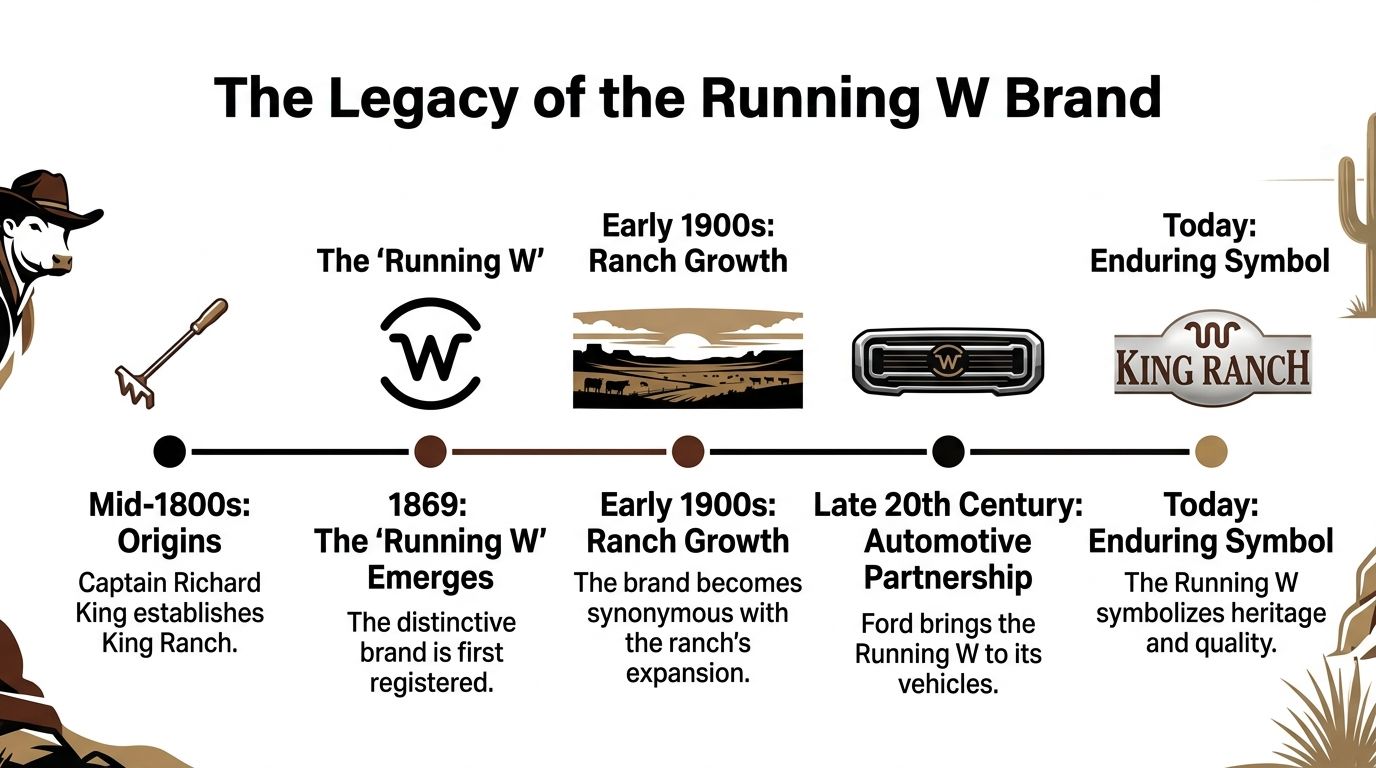
The historical starting point matters. According to the Texas State Historical Association’s entry on King Ranch history, the Running W brand was first registered on February 9, 1869, and it remains in use over 150 years later. That kind of continuity is rare.
The ranch itself was founded in 1853. It began with a 15,500-acre land grant and grew to over 1 million acres by 1925, which is a big part of why the brand carries so much weight in American ranching culture.
Why branding mattered on a working ranch
A ranch brand wasn’t decorative. It identified livestock across huge ranges where ownership had to be visible and unmistakable. On a practical level, the mark was a tool. On a cultural level, it became a signature.
That’s one reason the Running W still translates so well into decals. The original symbol was designed to be recognized quickly, from a distance, and under rough conditions. Those are the same traits that make a vehicle graphic effective.
What the symbol represents now
Today, the Running W carries several layers of meaning at once:
| Element | Why it matters |
|---|---|
| Heritage | It ties back to one of the most recognized ranch identities in the American West. |
| Craft | The mark feels handmade, branded, and grounded in working tradition. |
| Restraint | It’s simpler and more timeless than many modern automotive graphics. |
| Status | On a truck, it suggests a certain level of taste, not just brand loyalty. |
The mark also fits the visual language of trucks especially well. Strong lines, open space, and a branded shape look natural on rear windows, doors, and tailgates.
Why this history matters when buying a decal
If you understand the Running W as a heritage brand, you make better style choices. You’re less likely to choose a decal that’s oversized, shiny in the wrong way, or paired with fonts and effects that clash with the original feel.
Practical rule: If the design looks too busy to work as an actual cattle brand, it usually won’t look right as a king ranch decal either.
That historical perspective also helps with customization. Some buyers want the exact mark. Others want a ranch-inspired look that honors the same spirit through custom text, cattle brand styling, or Western motifs. Both approaches can work, but the strongest result usually comes from respecting the visual discipline that made the original mark iconic in the first place.
How to Select the Best Vinyl for Your Truck
Most problems people blame on “bad decals” are really material problems. The design may be fine. The vinyl wasn’t.
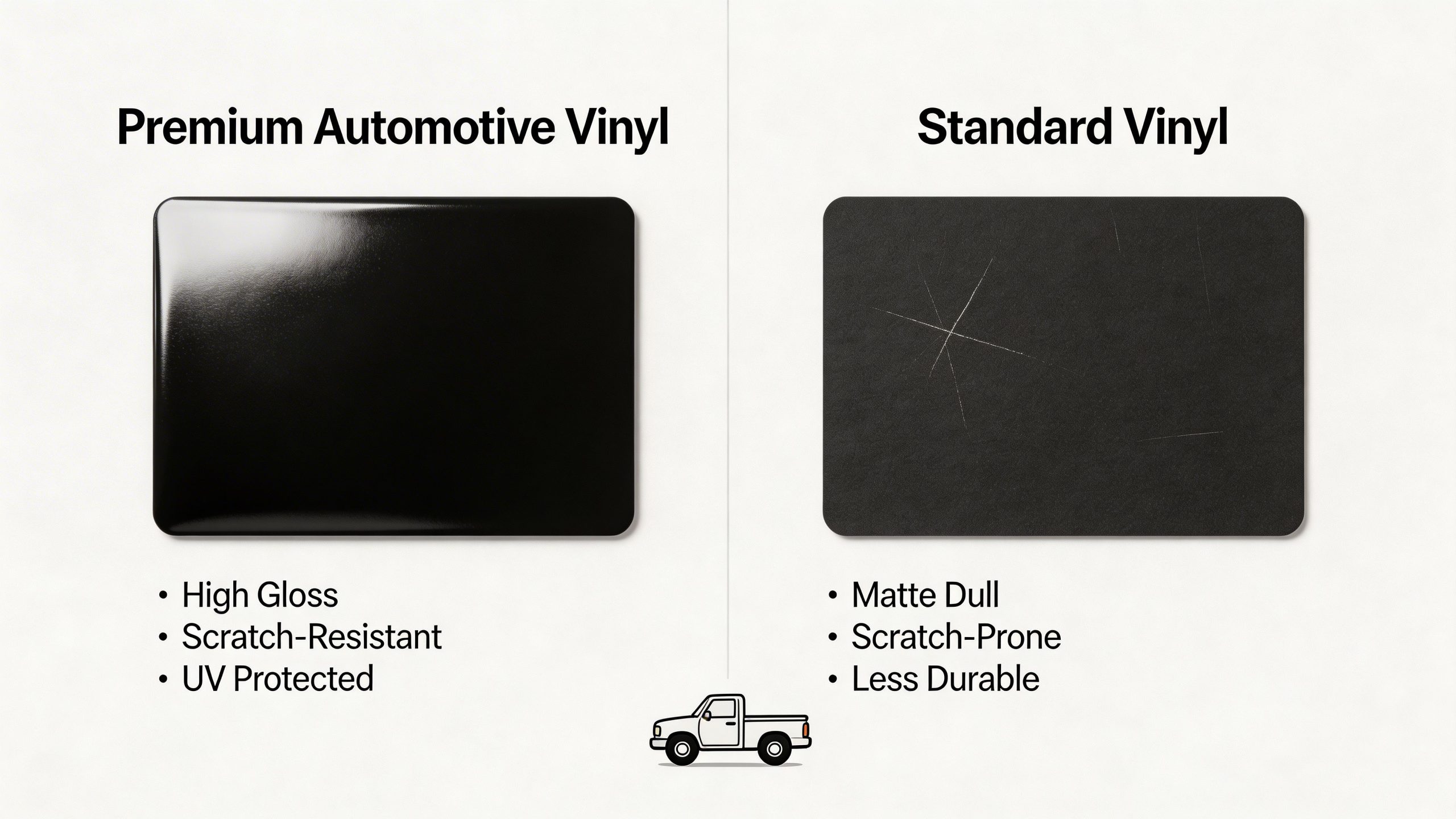
If your truck lives outside, sees summer sun, gets washed often, or spends time on dirt roads, vinyl quality matters more than the cut pattern. Buyers ask about longevity all the time, especially in harsh heat. One useful benchmark is that premium Oracal vinyl is rated for up to 7 years of outdoor durability. That’s the kind of rating that puts you in the right category for vehicle use.
Cheap vinyl versus premium vinyl
The easiest way to think about it is this. Cheap vinyl is for short-term labeling. Premium automotive vinyl is for living on a vehicle.
Here’s the practical difference:
- Lower-grade material often feels thicker and stiffer. It can fight curves, show edge stress sooner, and age harder in sun.
- Premium automotive vinyl lays flatter, conforms better, and usually keeps a cleaner edge over time.
- Low-end adhesive can let go at corners after weather and washing.
- Better adhesive systems tend to hold their bond more consistently when the panel was prepped correctly.
A truck is not a scrapbook surface. It flexes, heats up, cools down, gets wet, gets dusty, and gets blasted with road grime. That’s why bargain material can look okay on day one and tired not long after.
What matters on a truck
People often focus on color first. Material should come first.
Look at these buying factors before you choose any king ranch decals:
- Outdoor rating: If the seller can’t tell you whether the vinyl is intended for extended outdoor use, keep moving.
- Finish: Matte, satin, and gloss each change the final look. Ranch-style graphics often benefit from a finish that doesn’t look toy-like.
- Transfer tape quality: A well-cut decal still becomes a headache if the tape doesn’t release cleanly.
- Panel shape: Flat rear glass is forgiving. Curved body lines and textured plastics are not.
- Installation location: Hood edges, front-facing surfaces, and lower body panels take more abuse than rear glass.
For truck owners who want a bold upper-glass look, a Ford F-150 windshield banner decal option makes sense only if the vinyl is built for exposure and the cut is properly spaced.
Size and proportion matter as much as material
Even high-end vinyl looks wrong when the decal size fights the truck.
A few field-tested guidelines help:
| Truck area | What tends to work |
|---|---|
| Rear window center | Medium designs with strong spacing and clear legibility |
| Rear window corner | Smaller marks or initials that don’t crowd factory tint lines |
| Tailgate | Wider layouts with simple shapes and clean horizontal balance |
| Bed side | Best for restrained graphics that follow the body line instead of crossing it awkwardly |
| Windshield strip or corner | Best kept subtle unless the whole build is styled around it |
A Super Duty can handle a larger decal than a midsize pickup, but bigger isn’t automatically better. You want visual balance, not maximum coverage.
After you’ve looked at the material basics, this quick video helps with seeing how automotive vinyl behaves during handling and setup:
What usually doesn’t work
A few mistakes show up again and again:
- Going too large: This turns a heritage-style mark into a billboard.
- Using indoor-grade material: It may look fine in the package and fail outside.
- Applying to rough texture: Most standard decals won’t hold well on heavily textured trim.
- Choosing by price alone: The cheapest listing often becomes the most expensive if you’re scraping it off and replacing it early.
If your truck sits outside year-round, buy vinyl for weather first and style second. The right style on the wrong material won’t stay right for long.
Popular King Ranch Decal Styles and Placements
Style choice gets easier when you stop thinking in terms of “What decal should I buy?” and start thinking in terms of “What story should this truck tell?”
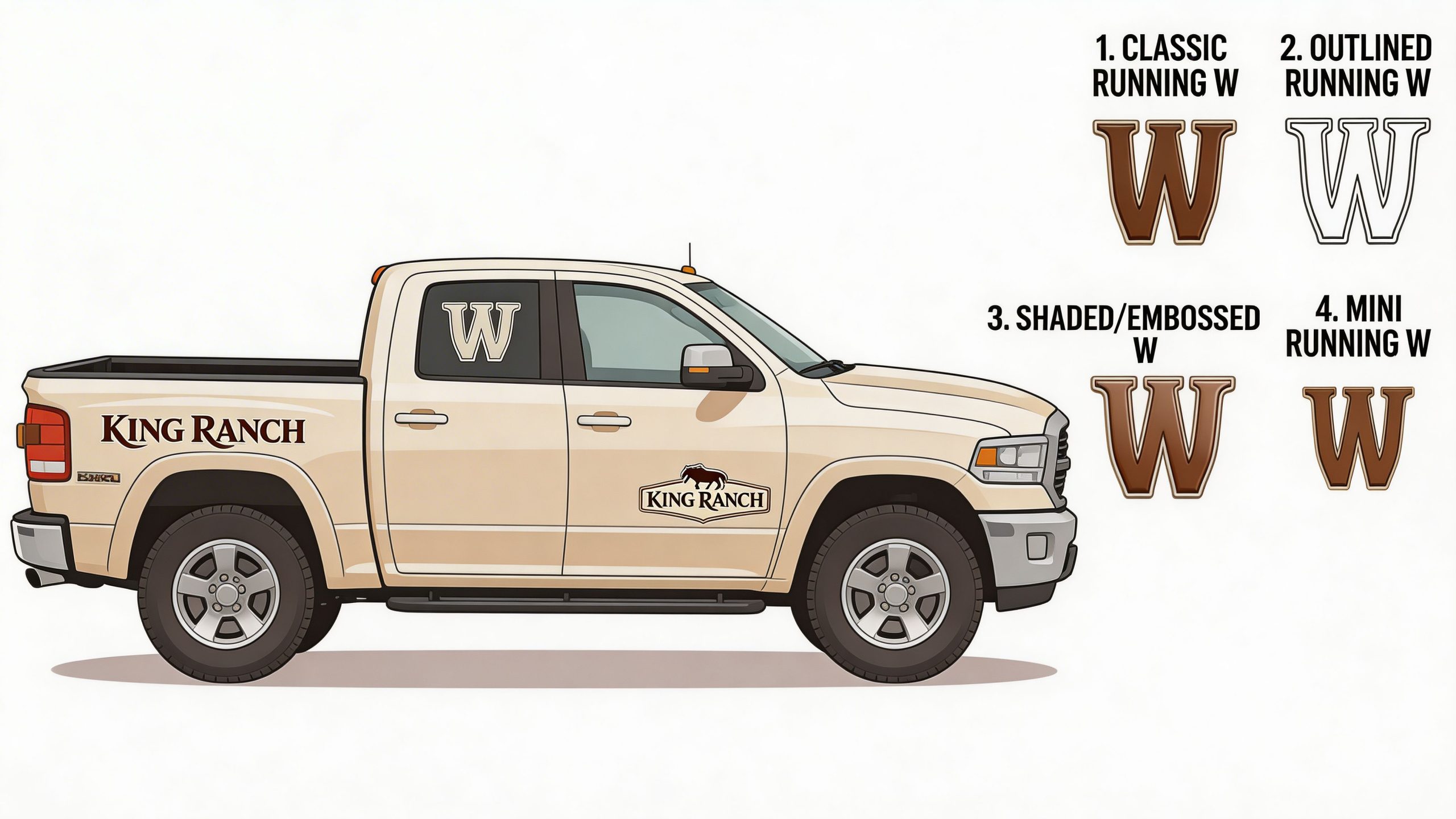
A ranch-inspired truck can look understated, traditional, or more custom depending on the graphic and where you place it. The same Running W family of shapes can feel completely different on a back window than it does on a tailgate.
The clean rear-window look
This is the safest choice for most trucks. A centered rear-glass decal gives you visibility without interfering with the body lines.
It works well on dark tint because the graphic reads clearly and stays separate from factory badging. If the truck already has rich trim colors, this placement keeps the whole build from getting crowded.
Lower-corner and windshield placements
These are for subtle builds. A lower rear-glass corner or windshield corner works best when you want the ranch cue to be discovered rather than announced.
This style is popular with owners who already have upgraded wheels, a leveled stance, or a leather-heavy interior package. The truck already says enough. The decal just finishes the sentence.
Tailgate and bedside graphics
These placements make a stronger statement. They can look excellent on a work-truck body style or a truck with a monochrome paint scheme, but they need discipline.
Use a wider, simpler layout on the tailgate. On the bedside, keep the design aligned with the panel shape. If the decal cuts across a crease or fights the wheel arch, it starts looking aftermarket in the wrong way.
A few visual directions that work
Different trucks call for different decal personalities. Here are common directions buyers gravitate toward:
- Classic Running W: Best for owners who want the most recognizable heritage look.
- Wordmark plus symbol: Good on tailgates and rear glass when spacing is generous.
- Minimal ranch mark: Works on windshield corners, vent windows, or a lower bedside.
- Western companion graphic: A horse, rider, rope, or cattle silhouette can complement the style when used sparingly.
If you like a broader ranch and Western theme, a cowboy horse rider truck decal can pair well with the same visual language.
The best placement is the one that looks intentional from twenty feet away, not just interesting when you’re standing next to the truck.
Matching style to truck type
A few real-world examples make placement easier to picture:
| Truck type | Style that usually fits |
|---|---|
| Luxury pickup with saddle-toned interior | Rear-window Running W or a small corner mark |
| Off-road build with bigger tires | Tailgate graphic or medium rear-glass layout |
| Daily-driven half-ton | Small rear-window or windshield corner decal |
| Older ranch truck | Simple bedside or tailgate branding-style graphic |
The mistake I see most often is mixing too many ideas. A truck with a ranch-style decal usually looks better with one strong graphic than with multiple competing marks scattered around the body.
Personalizing Your Ranch-Inspired Truck Graphics
There’s a smart way to get the King Ranch feel without making your truck look like a copy of someone else’s trim package. Personalization is usually that way.
A direct logo reproduction gives you one kind of result. A custom ranch-inspired graphic gives you a truck that feels more personal, often looks more original, and can help you avoid some of the trademark headaches that come with commercial replicas.
What customization does better
The strongest custom work usually pulls from the ranch aesthetic instead of tracing it line for line.
That can mean:
- Custom ranch names
- Family names in brand-style lettering
- Initials built like a livestock mark
- Memorial dates or service tributes
- Western silhouettes paired with your own text
This approach gives the truck a heritage feel without pretending it rolled out of a factory package it never had.
Better color choices than the obvious ones
A lot of buyers default to black or white, and those are fine. But ranch-inspired graphics often look better when they’re chosen against the actual paint and trim, not just selected from habit.
Consider the full truck:
- On dark paint, matte tan or soft metallic tones can feel more integrated than bright white.
- On light paint, black often gives the cleanest read.
- On bronze, brown, or beige builds, a subtle contrast usually beats a hard one.
- On older trucks, slightly muted colors often look more natural than sharp modern gloss.
You don’t need a loud contrast for the decal to stand out. You need enough contrast for the shape to read.
Why custom is often the safer route
Trademark questions usually come up when people want an exact branded emblem, especially for resale or public listing. A custom ranch-themed design avoids a lot of that friction because you’re creating something inspired by the tradition rather than duplicating a protected mark for commercial use.
That doesn’t make every custom design automatically safe, but it does move you toward originality and away from straight imitation.
A ranch-style truck graphic is at its best when it reflects the owner. Not just the badge package they admire.
Good personalization ideas
Some custom directions stay tasteful more easily than others:
| Personalization idea | Why it works |
|---|---|
| Family ranch name | Feels authentic and rooted |
| Initial brand mark | Minimal, clean, and timeless |
| Memorial years | Adds meaning without clutter |
| State outline with ranch lettering | Regional without being overdone |
| Subtle cattle or horse motif | Supports the theme without replacing it |
The weak custom jobs usually fail because they add too much. Too many fonts, too many layers, too much outline, too much shadow. Ranch graphics should look like they belong to a truck owner who values restraint.
Applying and Caring for Your New Vinyl Decals
A premium decal can still look amateur if it’s installed crooked, trapped with bubbles, or applied to dirty paint. Good installation isn’t complicated, but it does reward patience.
Surface prep first
Wash the area well and dry it completely. Then wipe it down so there’s no leftover wax, dust, road film, or oily residue.
Glass is usually the easiest surface. Painted panels work well too if they’re smooth and clean. Avoid applying standard decals over rough texture, fresh contamination, or damaged clear coat.
Use the hinge method
The hinge method gives you control before the adhesive commits.
- Hold the decal in place and check spacing from body lines, glass edges, or trim.
- Use masking tape across the top or center to create a hinge.
- Lift one side, peel the backing, and cut or fold the liner away.
- Lay the decal down gradually with a squeegee, working from the center outward.
- Remove transfer tape slowly and at a low angle.
If you rush the alignment, you usually pay for it in the first ten seconds.
How to avoid bubbles and lift
Most bubbles happen because the installer pressed too fast or trapped air with uneven pressure.
Keep these habits in mind:
- Use overlapping squeegee strokes: Don’t jump around.
- Work from the middle outward: Push air to the edges.
- Keep the panel temperature reasonable: Extremely hot or cold surfaces make the job harder.
- Peel transfer tape slowly: Fast removal can lift finer parts of the design.
Small bubbles are less serious than trapped dirt. Air can sometimes settle or be worked out. Dirt stays.
Caring for the decal after install
Once the decal is set, your job is mostly simple maintenance. Wash the truck normally, but don’t attack the decal edges with aggressive pressure at close range.
A few habits help preserve the finish:
- Hand wash gently: This is always the safest route.
- Be cautious with pressure washers: Keep the spray away from edges and don’t hold it close.
- Skip harsh scraping: Ice scrapers and stiff brushes can damage edges.
- Watch automated wash equipment: Heavy contact can be harder on older decals.
If the vinyl you chose is in the premium automotive category discussed earlier, proper care gives it the best chance to reach its rated outdoor life. Most decal failures I’ve seen start at the edges because of poor prep, rough washing, or a rushed install.
King Ranch Decals Pricing and Legal Guidelines
Price matters, but value matters more. With decals, the difference isn’t just what you pay up front. It’s whether the cut is clean, the vinyl is worth installing, and the design choice won’t create avoidable problems later.
From a buyer’s standpoint, practical pricing starts with transparency. At Custom Sticker Shop, prices start at $7.99, free U.S. shipping applies to orders $25+, and there’s an unlimited Buy 2 Get 1 Free offer. Those details matter because most truck owners don’t buy one decal forever. They test placements, add matching graphics, or order an extra set for another glass panel.
What a fair decal price should include
A low price only means something if the product arrives ready to install and made from proper material. The things worth paying for are straightforward:
- Clean cut lines
- Good transfer tape
- Outdoor-rated automotive vinyl
- Accurate spacing and readable design
- Support if you need sizing or placement guidance
A cheap decal that arrives hard to apply or starts failing early isn’t a deal.
The trademark side buyers should understand
Many listings get vague regarding this distinction. They show king ranch decals or king ranch style graphics, but they don’t explain the difference between personal use and commercial risk.
According to the discussion summarized on Bad Bass Designs, enthusiast communities regularly ask whether these decals are legal, and there has been a 20% increase in automotive decal takedown notices on e-commerce platforms. That doesn’t mean a truck owner putting a decal on a personal vehicle is in the same category as a seller reproducing branded graphics for profit. It does mean the trademark issue is real.
Practical legal ground rules
You don’t need to be a lawyer to make better choices:
| Situation | Risk level |
|---|---|
| Personal use on your own vehicle | Generally lower concern |
| Selling exact branded replicas commercially | Higher concern |
| Using custom ranch-inspired designs | Often a more cautious path |
| Listing products with branded names and logos for resale | More likely to attract attention |
If you want the heritage feel without unnecessary risk, custom ranch-style graphics are often the cleaner route. You still get the Western identity. You just make it yours.
Frequently Asked Questions About King Ranch Decals
A few questions come up almost every time, especially from buyers ordering vehicle graphics for the first time.
FAQ Quick Answers
| Question | Answer |
|---|---|
| Are king ranch decals licensed? | Some are official, many are style-inspired, and some may not be licensed at all. If licensing matters to you, ask directly before you buy. |
| Will a vinyl decal damage factory paint? | On sound factory paint, a quality decal usually removes cleanly when handled properly. Problems are more likely on weak, peeling, or repainted surfaces. |
| What surface is easiest for first-time installation? | Rear glass is usually easier than curved body panels or textured trim. |
| How long can a good outdoor decal last? | Premium Oracal automotive vinyl is rated for up to 7 years outdoors, as noted earlier in this guide. Actual life depends on exposure, prep, and care. |
| Can I wash my truck after installation? | Yes, but wash gently and avoid blasting the edges at close range with high pressure. |
| What if I want the ranch look without copying a protected logo? | Choose a custom ranch-inspired design with your own name, initials, or Western theme elements. |
| How long does shipping usually take from Custom Sticker Shop? | Orders typically arrive in 5 to 8 days from order to door. |
If you’re stuck between two sizes, choose based on the panel, not the product photo. Measure the actual glass or body area and leave breathing room around the decal. That single step prevents most sizing regret.
If you’re unsure about legality, stay away from commercial resale of exact branded replicas and lean toward custom work. That’s the cleaner path for both style and peace of mind.
If you want ranch-inspired truck graphics that are built with premium material, cut clean, and easy to install, take a look at Custom Sticker Shop. They’re a family-run American shop in Topeka, Kansas, making durable decals with professional-grade Oracal vinyl, solid customization options, and practical pricing for truck owners who want the look to last.