
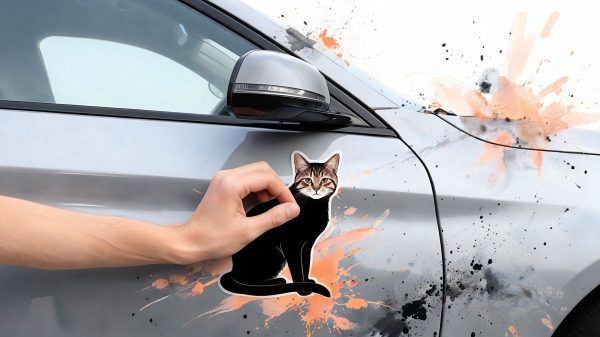
You wash the car, step back, and your eye goes straight to that empty patch of rear glass or the bare corner of a tailgate. For a cat owner, that spot usually does not stay blank for long. A car decal cat design adds personality fast, but the part that matters is choosing one that still looks sharp after summer heat, winter washing, and years of sun.
That is the difference between a decal you enjoy for a decade and one that starts curling after a few months. In our shop, we see the same pattern over and over. Buyers focus on the artwork first, then learn that material, size, placement, and install method decide whether the finished look feels clean and intentional or cheap and temporary.
A good cat decal should fit the vehicle, read clearly from a normal distance, and hold up without constant babying. A simple cat swirl decorative decal for cars and trucks can look great on the right window, but even a strong design can fail early if it is made from low-grade vinyl or applied to cold, dirty glass.
The full lifespan starts before the backing paper comes off. Design choice affects visibility. Vinyl quality affects fade resistance and edge hold. Placement affects both appearance and wear. Installation affects whether you get crisp adhesion or trapped bubbles that show up the first sunny day. Care matters too, especially if you want the decal to stay clean for years and still come off safely when it is time for a change.
More Than a Sticker It's Feline Personality
You wash the car, step back, and notice one clean spot that still feels anonymous. For a cat owner, that blank corner of glass or painted metal is usually where personality goes.
The best cat decals do more than decorate. They say something specific about the owner and still look right on the vehicle years later. In our shop, we see three common reasons people buy them: they want a clean little nod to their cat, they want something playful that gets noticed in traffic, or they want a memorial piece that carries real weight every time they drive.
That personal side matters, but so does the full lifespan of the decal. A design can feel perfect on screen and still be wrong for a vehicle if the lines are too fine, the contrast is weak against dark tint, or the size gets lost from ten feet away. Good decal work starts with taste, then gets checked against real-world use.
A decal should look like it belongs there.
That is why a simple shape often outperforms a busy graphic on a car. A clean cat swirl decorative decal for cars and trucks reads fast, survives visual clutter better, and usually ages more gracefully than artwork packed with tiny details. The trade-off is personality style. Minimal designs feel sharper and stay readable longer, while detailed art can feel more custom but asks more from the material, the placement, and the installer.
Cat people usually carry that identity into other small things they own too. If you like coordinated accessories beyond the car, you can discover unique enamel cat pins that match the same understated or playful style.
Vehicle decals reward practical choices. The right one reflects your cat, your taste, and your car without turning into a peeling afterthought six months later.
Choosing Your Purrfect Style From Silhouette to Lifelike
Style is where most buyers either get it right immediately or second-guess themselves for a week. The simplest way to choose is to match the artwork to the vehicle’s lines and to your own taste off the road. If your home decor, keychain, phone case, and coffee mug all lean clean and minimal, a cartoon cat on the tailgate may not feel right for long.

Four styles that work on vehicles
Some cat decals read best at a glance. Others reward a closer look. Here’s how the main styles usually behave on real vehicles.
| Cat Decal Style Comparison | Aesthetic Vibe | Best For Vehicles | Customization Potential |
|---|---|---|---|
| Silhouette | Clean, sharp, understated | Sedans, coupes, blacked-out trucks | Easy to resize and recolor |
| Playful cartoon or kawaii | Funny, casual, expressive | Daily drivers, hatchbacks, Jeeps | High, especially with text or poses |
| Realistic portrait | Emotional, detailed, custom-feeling | Larger windows and flatter panels | Best for custom one-off work |
| Family-style cat figure | Personal, friendly, homey | SUVs, vans, family vehicles | Strong for names and multi-pet layouts |
What each look says
Silhouettes are the safest choice if you want the vehicle to stay clean-looking. A sitting cat, stretched cat, or arched-back outline works especially well on rear side glass because the shape stays readable from a distance. These also age well visually. You’re less likely to get tired of them.
Cartoon and kawaii styles lean fun. They fit drivers who want the decal to start conversations. Big eyes, peeking paws, fishing cats, sleepy cats, or JDM-inspired expressions all work if the rest of the vehicle already has some personality. If your car is stock and quiet-looking, this kind of graphic becomes the focal point fast.
Realistic portraits need more care. Fine fur detail can look great on a larger surface, but it’s harder to keep readable on small windows. These are better when you want a tribute piece or a custom design based on a specific pet.
Family-style cat decals are popular because they’re personal without being overly serious. They suit SUVs and family haulers well, especially when you’re combining people, pets, and names in one layout.
Practical rule: The more detail a design has, the more space it needs to look intentional.
If you like collecting themed accessories beyond the car itself, it can help to compare decal style with other cat-themed art forms. For example, people who enjoy bold outlines and small expressive designs often also discover unique enamel cat pins helpful for narrowing down what kind of cat artwork they naturally gravitate toward.
One strong option for drivers who want a playful look with simple lines is a peeking cat decal. Designs like that work because the joke reads immediately, even at a stoplight.
The Science of a Durable Decal Why Oracal Vinyl Lasts
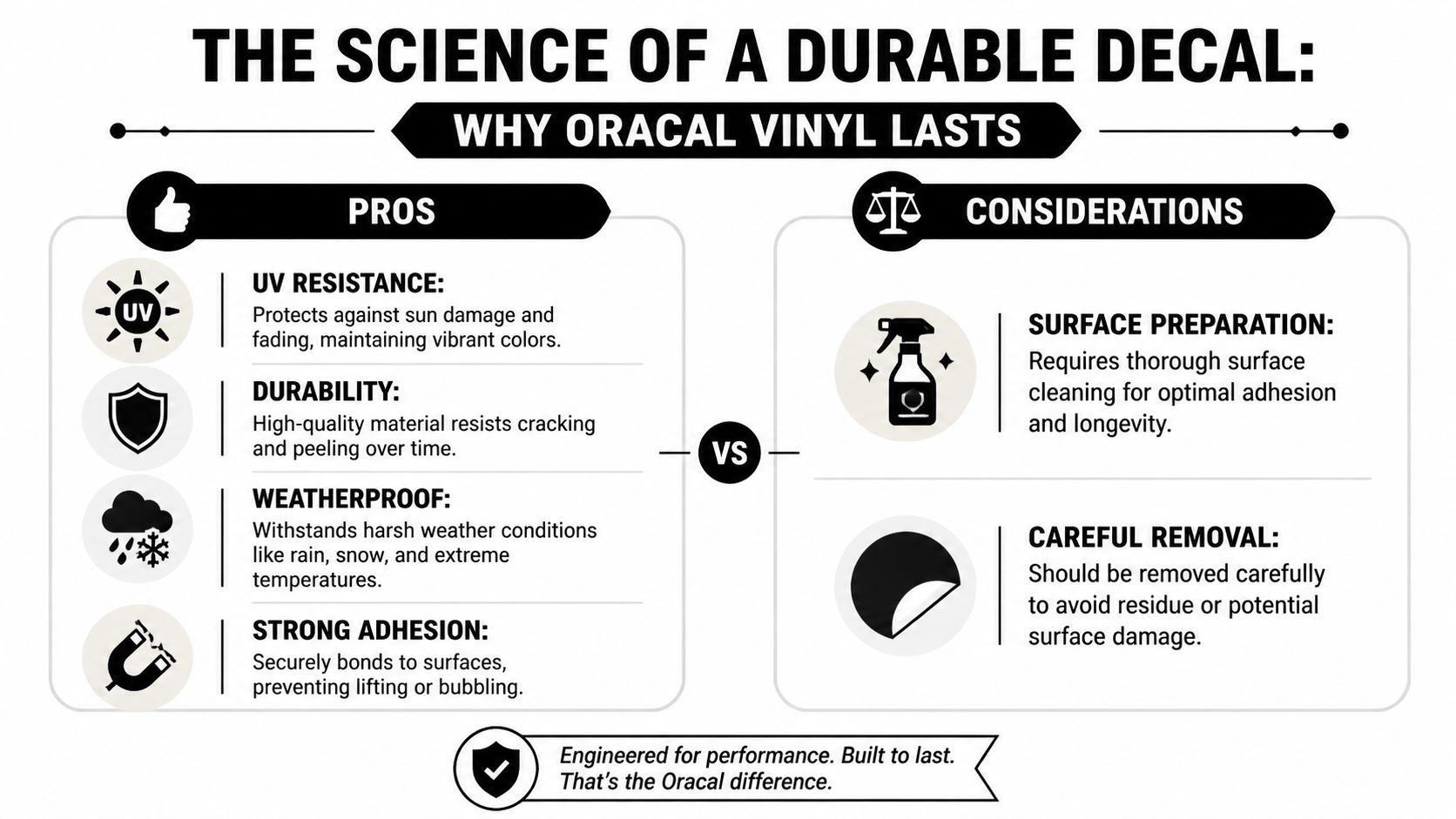
A decal doesn’t fail because the cat design was wrong. It fails because the material wasn’t built for sunlight, heat, cold, washing, and highway wind. That’s the part most shoppers don’t see when they compare two listings that look almost identical on a screen.
Cheap vinyl usually looks acceptable on day one. The trouble starts later. Edges dry out. The film gets brittle. Corners lift first, especially on windows and body lines that catch airflow.
What the material specs actually mean
For automotive decals, Oracal 651 is one of the vinyls people mention for a reason. According to TenStickers’ material overview, premium Oracal 651 has a polymer thickness of 2 to 3 mils, is rated to handle -50°C to +90°C without cracking, and is built to resist the plasticizer migration that makes cheaper vinyl brittle. The same source notes a 7-year outdoor durability benchmark.
Those numbers matter because they map directly to what you see on the car.
- Temperature range means the film can handle winter cold and hot parked-car conditions without turning stiff or splitting.
- 2 to 3 mil thickness helps the vinyl stay stable while still conforming well to smooth vehicle surfaces.
- Resistance to plasticizer migration is one of the big separators between decent vinyl and bargain vinyl that starts aging too early.
- 7-year outdoor durability gives you a realistic long-term target instead of a short-lived cosmetic fix.
Where cheap vinyl loses
Low-grade material often fails in ordinary conditions. A back window that gets full afternoon sun, a truck parked outside year-round, or a Jeep that sees dust, washing, and temperature swings will expose weak film pretty quickly.
What usually goes wrong:
- Edge lift shows up first on sharp points and thin tails in the artwork.
- Color fatigue makes black turn chalky and bright colors go dull.
- Brittleness makes old decals crack when you try to remove them.
- Shrinkage can pull the design inward and leave an outline of adhesive or exposed paint around it.
By contrast, a better film tends to age more evenly. It may not look brand new forever, but it won’t usually give up in pieces.
Real-world value for the buyer
If you’re choosing a car decal cat design that you want to keep on the vehicle for years, durability changes the whole buying decision. It affects where you place it, how complex the shape can be, and whether removal later will be simple or frustrating.
I’d rather see a customer buy one clean decal in a material with a real outdoor rating than three novelty graphics made from unknown vinyl. Over time, the first option almost always looks better and costs less aggravation.
A practical clue is the seller’s material language. If the listing clearly says what film is being used and how it’s rated, that’s useful. If it only says “weatherproof” and nothing else, you’re guessing.
Sizing and Placing Your Decal for Maximum Impact
Placement decides whether the decal looks integrated or random. The same cat graphic can look sharp on a quarter window and awkward on the middle of a tailgate. Before you peel any backing paper, hold the design up with painter’s tape and step back farther than you think you need to.
Ten feet away tells the truth. So does viewing it from a slight angle.
Best placement by vehicle type
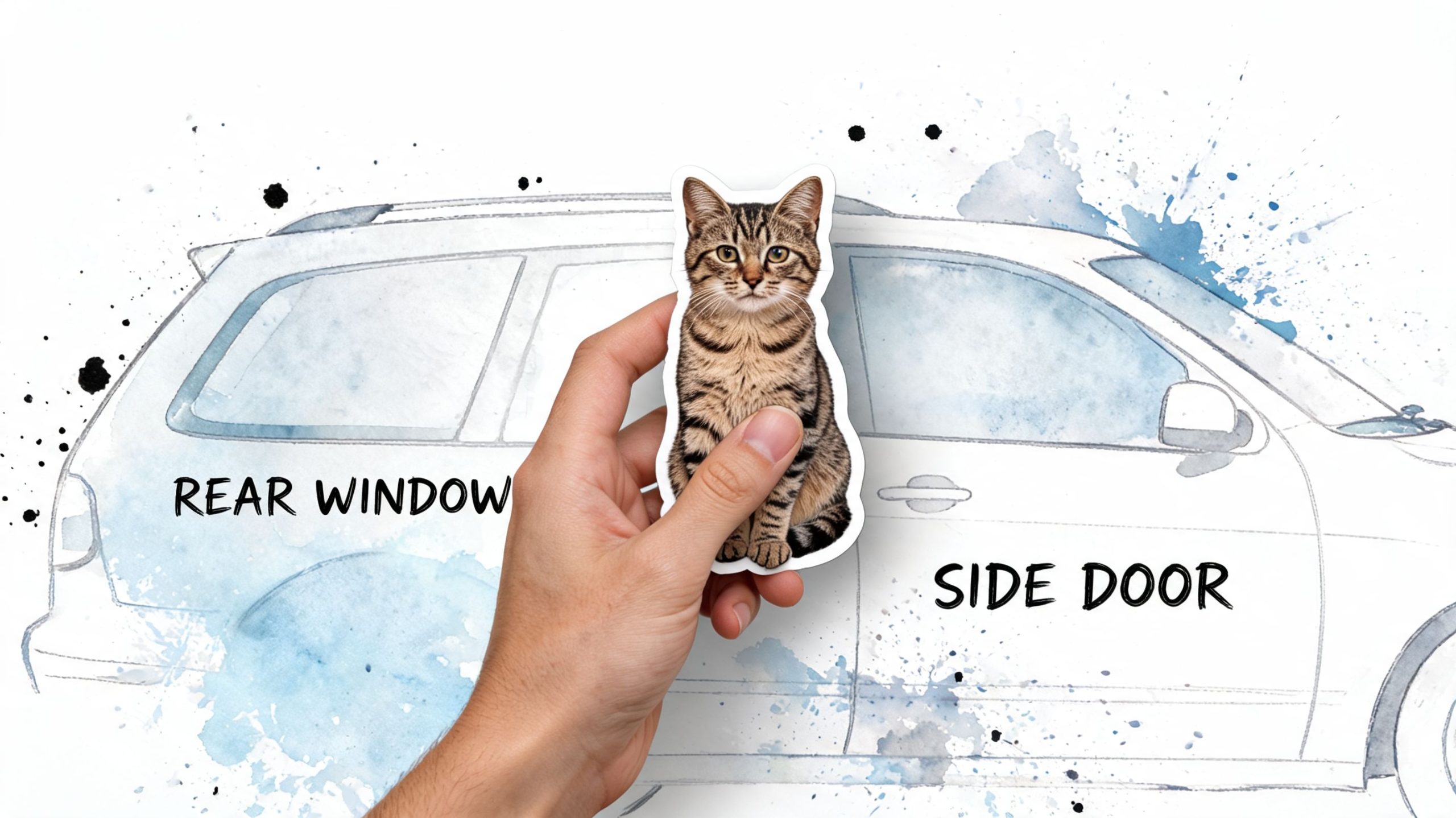
Sedans and coupes usually look best with smaller decals on rear side glass, lower corners of the back window, or a clean section of the trunk. These vehicles don’t have a lot of extra visual space, so oversized art can crowd the shape.
SUVs and vans give you more room. Peeking cat designs, family-style cat graphics, and name-based layouts work well on the rear glass because the vertical area helps the image read clearly.
Trucks can carry a bit more visual weight. Rear window corners, bed sides, and tool-box panels all work if the design is bold enough. On a truck, tiny detail often gets lost.
Jeeps and off-road rigs usually have lots of flat or semi-flat areas, but they also collect dust and see more washing. Strong, simple shapes tend to hold up visually in that environment.
Why surface choice matters
Placement isn’t just about looks. It’s also about adhesion and wind exposure. According to AmericanTrucks’ die-cut decal specs, die-cut decals use a permanent solvent-based acrylic adhesive with final adhesion over 20 N/25mm, creating a 95%+ bond on common automotive surfaces like glass and powder-coated steel. That bond strength matters at highway speeds because airflow puts steady stress on edges and narrow parts of the design.
Glass is often the easiest surface for a first-time installer because it’s smooth, easy to clean, and forgiving. Powder-coated surfaces can also work well if they’re in good condition. Rough plastic trim is much less friendly.
If the decal has lots of thin whiskers, tails, or script, give it the smoothest surface you can.
A quick sizing method that works
Use this simple process before ordering or installing:
- Tape off the area with painter’s tape so you can see the actual usable width and height.
- Cut a paper mockup to the decal’s size. Plain printer paper works.
- View it from normal distance. That means from behind the vehicle and from one lane over.
- Check body lines and wiper sweep so the design doesn’t fight existing shapes.
- Leave margin around the art. Tight placement near window seals often looks cramped.
If you want lettering with the cat design, a custom text window decal sticker can help you mock up names, phrases, or memorial text alongside the main graphic.
Achieving a Flawless Bubble-Free Installation
You can buy a well-made cat decal, choose the right size, and pick the perfect spot, then ruin the whole effect in five rushed minutes on a dusty panel. Installation decides whether the decal looks painted on for years or starts lifting at the ears and tail after the first season.
Prep the surface first
Clean wins over force every time.
Wash the area if it has road film or dust, dry it fully, then wipe the exact install zone with isopropyl alcohol and a lint-free cloth. That last wipe removes wax, fingerprints, silicone residue, and the light grime you often cannot see until it shows up as a bubble or weak spot under the vinyl.
Temperature matters more than many first-time installers expect. Cool, shaded conditions give you a little working time. Hot glass or sun-baked paint makes the adhesive grab fast, which raises the chance of crooked placement and trapped air. Wind is just as bad for a different reason. It blows lint under the film and makes transfer tape harder to control.
The hinge method keeps things straight
For die-cut cat decals, I recommend the hinge method because it gives you control before the adhesive commits.
- Tape the decal in place first and check it from a few steps back.
- Run one strip of painter's tape across the top or through the center to make a hinge.
- Lift the decal on the hinge and peel the backing paper away slowly.
- Lay the vinyl down gradually instead of dropping it all at once.
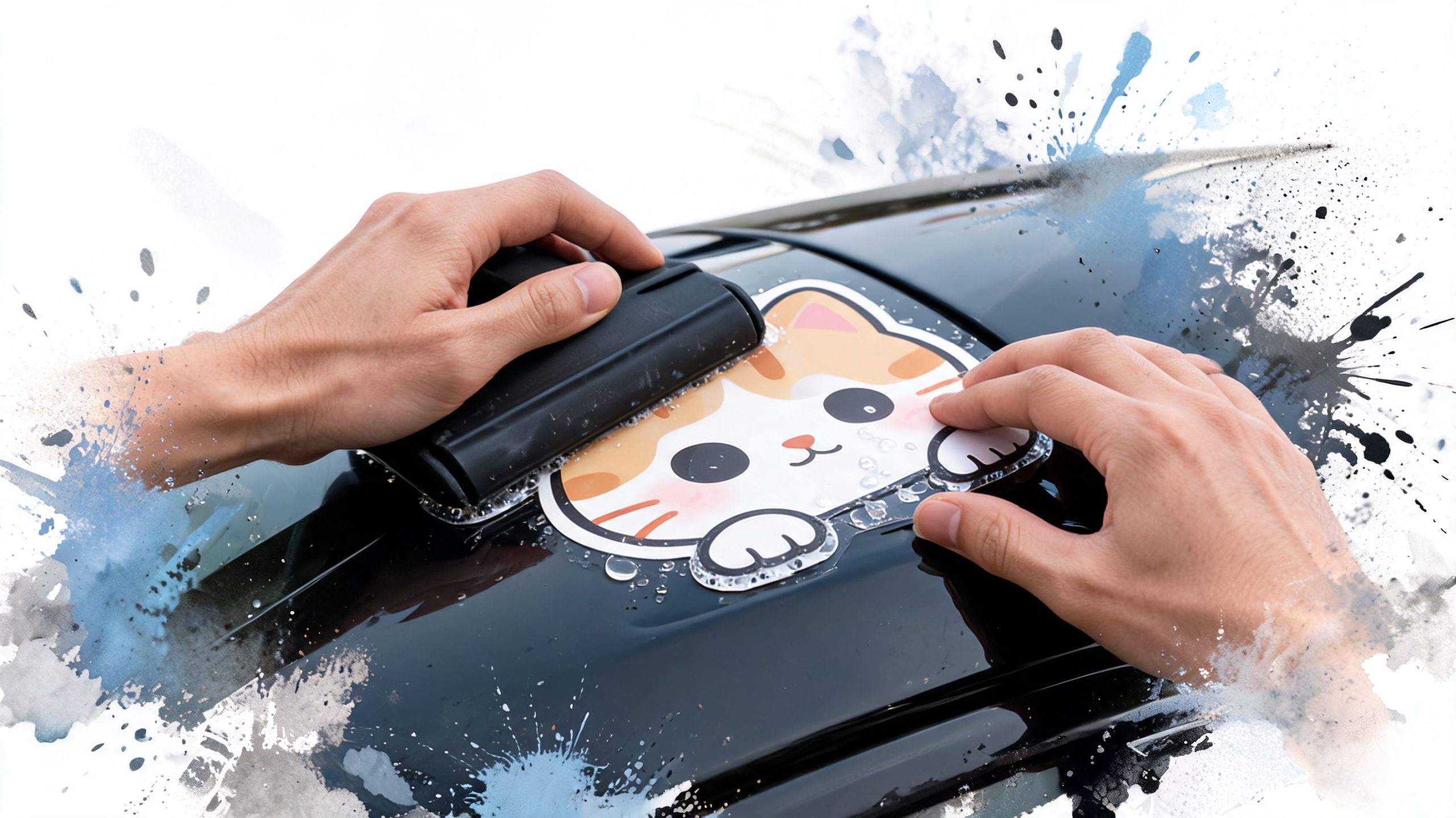
- Squeegee from the center outward with firm, overlapping strokes.
Transfer tape helps a lot on cat designs with separate pieces, thin whiskers, or narrow tail sections because it keeps the spacing intact during application. That matters over the full life of the decal. Good spacing at install means fewer stressed edges, cleaner lines, and less chance of a small point catching during washing later on.
Don't stab at bubbles with a blade during installation. A small air pocket often presses out with another pass of the squeegee or settles as the adhesive bonds.
What to watch during application
Thin details need patience. Ears, whiskers, and tiny interior cutouts are the first places to wrinkle if the transfer tape gets pulled straight up. Peel it back low and slow, close to the surface. If a piece lifts, press it back down, burnish it again, and keep going.
A felt-edge squeegee is gentler on the transfer tape, but a standard plastic squeegee works fine if the edge is clean and smooth. The trade-off is simple. A firmer tool gives stronger pressure, while a softer edge is more forgiving on delicate films and glossy finishes. For a small cat decal on glass, either one can work well if the surface is clean and your strokes are even.
The same install habits apply whether the graphic is personal or promotional. If you want to see how vinyl graphics can also turn your car into a marketing tool, that guide gives a useful comparison. Straight alignment, steady pressure, and clean prep matter in both cases.
For a quick visual walkthrough, this installation video covers the basic motion and pacing that help prevent bubbles and crooked placement:
Aftercare right after installation
Fresh vinyl needs a little quiet time. Leave it alone, avoid washing the area right away, and do not pick at the corners to see if it stuck. I have seen more decals fail from curious fingernails than from weather.
If you notice one tiny bubble after installation, give it some time unless you can clearly see trapped debris. New vinyl often settles down nicely once the adhesive has had time to bond.
Caring For and Safely Removing Your Decal
Once the decal is on, care is simple. Wash the vehicle normally, but don’t aim high-pressure spray directly at the edges from close range. A side hit at reasonable distance is usually fine. A direct blast into a pointed corner is how people start lifting a perfectly good decal.
Hand washing is gentlest, especially around detailed shapes. If you use an automatic wash, the main thing is making sure the decal was installed properly and has had time to bond before it sees water and brushes.
How to keep it looking clean
A few habits make a difference over time:
- Use mild soap instead of harsh solvents or aggressive degreasers.
- Wipe with soft microfiber so you don’t grind grit across the vinyl.
- Dry around edges gently rather than scrubbing at them.
- Remove bird droppings and road grime promptly so they don’t sit on the surface.
Safe removal years later
Removal is often a greater concern than installation. Fair enough. The good news is that vinyl decals are removable if you take your time.
Warm the decal with a hair dryer on a low to medium setting. You want the adhesive softened, not cooked. Lift a corner with your fingernail or a plastic card, then peel slowly at a low angle. Going slow matters more than strength.
If adhesive residue remains, use an automotive-safe adhesive remover and a soft cloth. Finish with soap and water. On older vehicles or repainted panels, always be gentler and test first.
Pull low and slow. That gives the adhesive a better chance to release without leaving a mess behind.
Frequently Asked Questions About Cat Car Decals
Are cat decals legal on car windows
A customer buys a small sleeping-cat decal for the rear glass, then asks the question that matters more than color or style. Is it legal where they drive?
That depends on placement and local law. Windshields and front side windows usually get the closest scrutiny because they affect visibility. One seller summary of the issue points to examples such as California limits on certain window obstructions and broader visibility standards in Europe in NTB Vinyls’ cat decal overview. The safe rule is simple. Keep the decal out of the driver’s sightlines and check your state or local vehicle code before applying anything to glass.
What style lasts longest over time
Simple shapes usually win the long game.
A clean silhouette, profile, or peeking-cat design stays readable for years because there are fewer fine points to collect grime, catch at the edges, or disappear from a distance. Detailed artwork can still hold up well, but it asks more from the layout, the install surface, and the person applying it. If the goal is a cat decal that still looks sharp deep into the life of the vehicle, bold shapes give you more margin for error.
Will a cat decal damage my paint
On sound factory paint, quality vinyl usually comes off without creating trouble by itself.
Problems show up when the paint is already failing. Repaired panels, budget resprays, oxidation, chips, and clear coat breakdown all raise the risk during removal. Age matters too. A decal that lasts for many years can leave the surrounding paint looking slightly different because the exposed paint faded while the covered area did not. That is not decal damage. It is uneven weathering.
Can I combine a cat design with other interests
Yes, and the best mixed-theme decals are edited hard.
Cat graphics pair well with memorial text, rescue messaging, camping themes, paw prints, breed references, and even military tribute layouts if the design stays easy to read at a glance. The mistake is trying to say everything at once. On a car, clean spacing and a clear focal point matter more than squeezing in every idea.
Do decals affect how other drivers see you
They can.
A AAA article discussing a 2008 Colorado State University study says drivers with bumper stickers or decals showed 20% to 30% more observed aggressive actions than drivers of bare vehicles, and the message on the sticker did not seem to matter. That does not mean a cat decal makes someone drive aggressively. It does suggest that personalization changes how a vehicle is perceived on the road, which is useful context if you want your decal to feel playful, subtle, or attention-grabbing.
How do I know if a seller is using decent material
Read the listing like a shop spec sheet.
Good signs include the vinyl brand, a stated outdoor lifespan, clear note that the decal is die-cut rather than printed on a rectangle, and mention of transfer tape if the design has separate pieces. Weak listings hide behind words like “premium” or “weatherproof” without telling you what the film is. If a seller cannot tell you the material, expected durability, and whether the decal is suited for automotive use, keep shopping.
If you’re ready to put a cat design on your car or truck, Custom Sticker Shop offers automotive vinyl decals in a wide range of styles, including pet and family-themed options. It’s a practical place to compare shapes, sizes, and transfer-taped layouts before you choose the car decal cat design that fits your vehicle.