
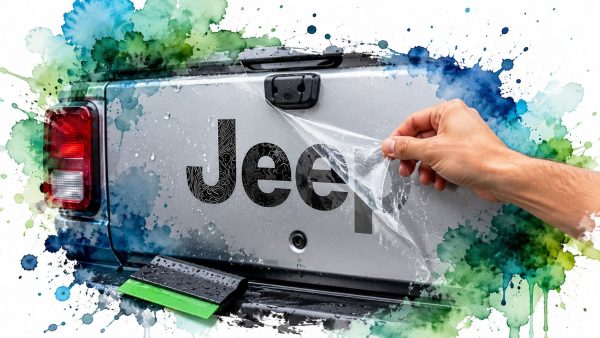
You bought the vehicle because you liked how it looked and how it felt. Then a week later you start thinking about all the ways it could feel more like yours. Maybe it's a new Jeep that needs a hood graphic. Maybe it's a truck that could use a windshield banner. Maybe you want a military tribute on the rear glass, but you're not ready to commit to anything that feels permanent.
That hesitation is smart.
A lot of drivers want the clean, finished look of real vinyl graphics, but they don't want to gamble with paint, resale, or the possibility that their style changes next season. That's where removable car decals make sense. They sit in a practical middle ground. They look far more intentional than cheap throwaway stickers, but they still give you an exit plan.
In the shop, that's usually the main conversation. Not “Can I decorate my vehicle?” but “Can I enjoy it now without regretting it later?” For Jeep owners, veterans, family-oriented drivers, and truck owners who like to rotate themes, support a cause, or mark a season, removable vinyl is often the sweet spot.
Personalize Your Ride Without Permanent Regret
A common customer story goes like this. Someone buys a clean vehicle, keeps it spotless for a few weeks, then starts eyeing the blank spaces. The rear window feels empty. The hood looks unfinished. The side glass could use a little character. But the moment they think about a graphic, the next thought is usually paint damage, residue, or “What if I'm over this in six months?”
That concern is valid. A vehicle isn't a notebook or a toolbox. It's one of the bigger purchases an individual makes, and even people who love customization often want a path back to stock.
That's why removable decals have become such a practical choice. They let you personalize without treating every design choice like a lifetime decision. A Jeep owner can try trail-themed graphics. A veteran can add a branch tribute or memorial decal. A family can put names or stick figures on the glass. If tastes shift, the vehicle changes with them.
Why this middle ground works
The appeal isn't just style. It's control.
- You keep flexibility for seasonal graphics, event decals, or short-run business branding.
- You avoid a full wrap commitment when all you really want is one clean accent.
- You can test placement and scale before deciding whether you want a bigger custom look later.
Most drivers don't regret adding personality to a vehicle. They regret choosing the wrong level of commitment.
That's the primary benefit of removable vinyl. It gives you room to enjoy the vehicle now, while keeping future options open. If you've been stuck between doing nothing and doing something permanent, this is usually the practical answer.
Understanding Removable Vinyl Decals
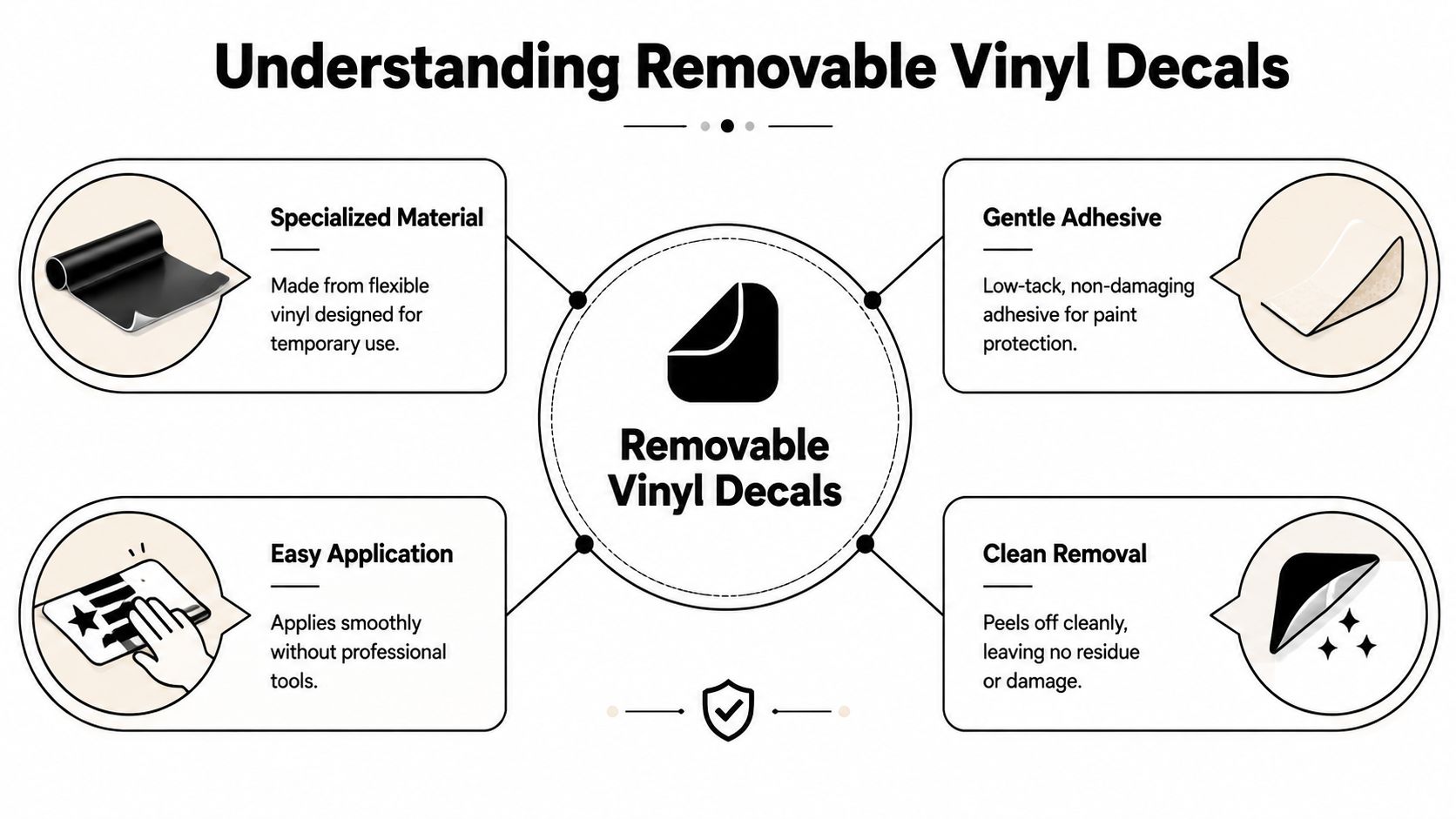
A removable decal isn't just a regular sticker with a nicer name. The modern category is built around pressure-sensitive vinyl, which is designed so the decal can be applied, repositioned with water-and-soap methods during installation, and later peeled off from glass or paint surfaces, as described by Signs.com in its vehicle decal installation guidance.
It functions as a high-performance Post-it Note for your vehicle, though constructed from automotive-style vinyl instead of paper. It sticks when you want it to stick, but the whole system is built around controlled adhesion rather than a one-way bond.
What makes them different from cheap stickers
The material matters more than the artwork.
A low-grade sticker usually relies on basic adhesive and a face film that wasn't really intended for vehicle life. It may look fine on day one, then start lifting, shrinking, or leaving behind a mess later. Removable vinyl decals are built with a more deliberate balance. You want enough grip for real driving conditions, but not so much that removal becomes a fight.
In practice, shops often use professional sign vinyl such as Oracal vinyl for this type of work because it cuts cleanly, lays down well, and gives a more finished look than bargain material. The exact film choice depends on where the decal is going and how long you expect it to stay there.
Why wet application helps
Wet application is one of the reasons removable vinyl feels approachable even for first-time installers. Vendors commonly instruct users to wet both the adhesive side and the target surface so the decal can slide slightly into place before you squeegee out the water and air.
That matters for a few reasons:
- Alignment gets easier because you're not forced into a one-shot dry install.
- Bubbles are easier to control when the film can settle gradually.
- Lettering stays straighter on long windshield banners or rear-window graphics.
Practical rule: If a decal needs to land straight on the first try and you're working alone, the wet method gives you more forgiveness.
The simple version is this. Removable car decals work because the vinyl, adhesive, and install method are all designed together. Good material isn't just about how it looks on the vehicle. It's about how it behaves when you apply it and how it comes off when you're done with it.
Removable vs Permanent Decals Which Is Right for You
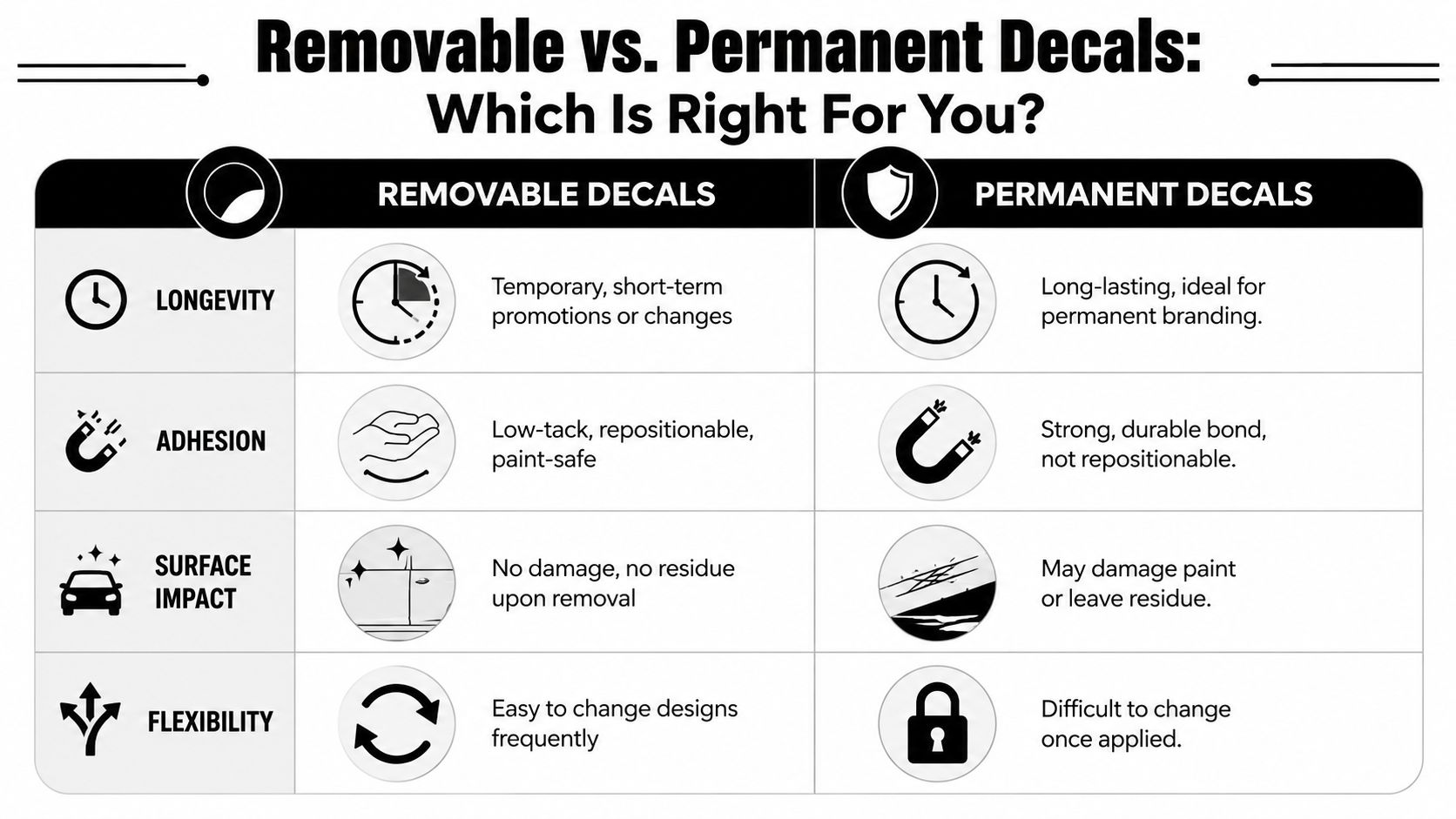
If you're deciding between removable and permanent vinyl, don't treat it like one is good and the other is bad. They solve different problems. The right choice depends on how long you want the graphic to live on the vehicle, how attached you are to the design, and how much cleanup you're willing to accept later.
| Use case | Removable decals | Permanent decals |
|---|---|---|
| Lease vehicle | Better fit when you want a cleaner return path | Usually more commitment than most lease drivers want |
| Seasonal graphics | Strong choice | Often unnecessary |
| Business promotion that may change | Useful when branding rotates | Better for long-term fixed branding |
| Forever truck or dedicated build | Can work if you still want flexibility | Often makes sense when the design is final |
| First-time decal buyer | Lower-risk option | Better for people sure about long-term placement |
The durability surprise
A lot of people hear “removable” and assume “short-lived.” That isn't always true. Durable vinyl systems used in this category are often rated for up to 7 years outdoors, and industry guidance also notes that after roughly 1 year on a car, the adhesive tends to become progressively stronger and less removable, according to WebSticker's removable and ultra-removable vinyl guidance.
That tells you two important things.
First, removable doesn't automatically mean fragile. Second, “easy to remove later” is most realistic when you choose the right material and remove it within the kind of timeframe it was meant for.
A practical way to decide
If the decal is for a fixed identity, permanent may still be the right call. If the decal is for expression, tribute, recreation, a club, or a phase of ownership, removable is usually the smarter fit.
A few examples make that easier:
Lease or resale mindset
You want personalization, but you also want the option to return to a cleaner stock appearance. Removable usually wins.Jeep owner trying a new look
Maybe you want a hood accent, trail badge style graphic, or windshield text, but you're still figuring out your long-term build direction. Removable gives you breathing room.Veteran or memorial decal
These often belong on rear windows or side glass where clean removal matters if the vehicle changes hands later.
If you're shopping specific rear-glass designs, a Chevy Bowtie rear window vinyl decal is a good example of the type of graphic where placement, visibility, and future removal all matter.
Permanent vinyl is for decisions you've already made. Removable vinyl is for decisions you want to enjoy without locking yourself in.
How to Install Your Removable Decal Like a Pro
Good vinyl can still look bad if the install is rushed. The upside is that removable decals are forgiving when you use the wet method and a little patience. You don't need a full sign shop setup to get a clean result.
Prep the surface first
Start with a properly cleaned surface. Glass is the easiest. Painted panels can also work well if they're smooth, clean, and free of waxy residue.
Use this quick prep checklist:
- Wash the area so dirt isn't trapped under the film.
- Dry it completely before you start spraying your application fluid.
- Check the temperature by feel. If the panel is hot from direct sun, wait. Vinyl behaves better on a calm, cool surface.
- Do a placement test with the backing still on. Step back and confirm height, centering, and sight lines.
For pre-spaced decals on transfer tape, this test-fit stage saves a lot of frustration. It's especially helpful on windshield banners and long rear-window graphics.
Use the wet method
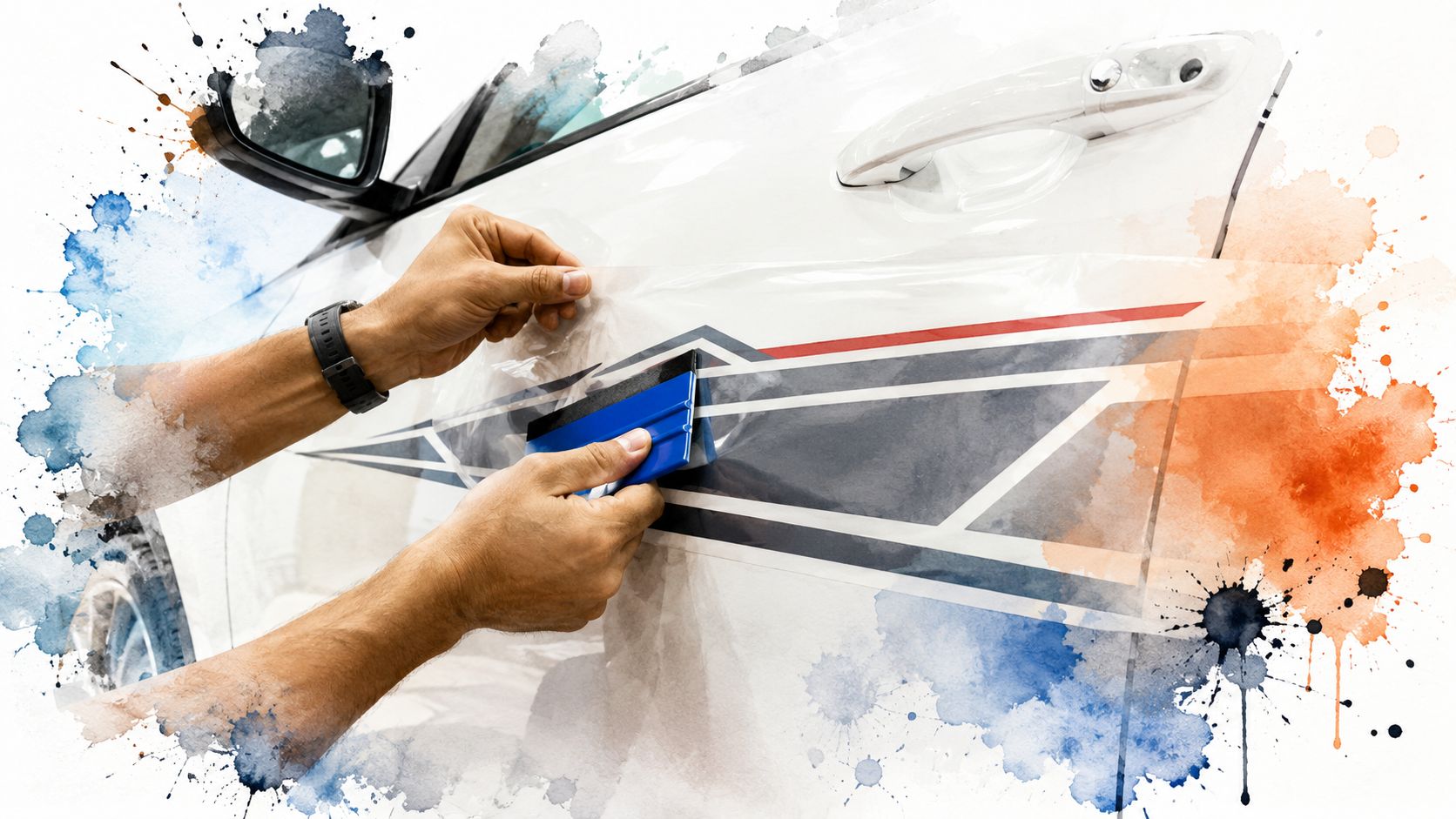
The wet method is simple. Lightly wet the target area and lightly wet the adhesive side as directed for the product you're applying. That temporary slip lets you position the decal before it locks in.
Then:
- Set the decal in place
- Square it visually from one edge, not just by eye in the center
- Squeegee from the middle outward
- Push water and air toward the edges with steady pressure
Don't jab at bubbles with your fingernail. Smooth pressure works better.
If you want to see the motion and pacing, this install video is useful:
Peel the transfer tape the right way
Most mistakes happen here.
Wait until the decal has had time to settle, then peel the transfer tape back low and slow. Don't yank upward. Pull it back over itself. That keeps stress off fine lettering and small design points.
If part of the decal lifts with the tape, stop. Press it back down, squeegee again, and give it a little more time before the next peel.
A lot of drivers get good results with products that come pre-spaced and transfer-taped. For example, this vinyl windshield banner decal for Dodge SRT shows the kind of layout that benefits from careful hinge placement and a controlled tape peel.
What works and what usually doesn't
What works
- Clean glass
- Measured placement
- Wet install for repositioning
- Firm squeegee passes
- Slow tape removal
What usually doesn't
- Applying over dust or road film
- Working in direct sun on hot glass
- Rushing the final peel
- Constantly lifting and re-laying the vinyl by hand
The cleanest installs usually come from patience, not special talent.
Safe and Easy Decal Removal and Care
Removal should feel like maintenance, not a rescue mission. If the decal was chosen well and installed on a suitable surface, taking it off is usually straightforward.
How to remove it cleanly
Start at a corner or edge and peel low and slow. Pull the vinyl back over itself instead of straight away from the vehicle. That gives the adhesive less reason to snap or smear.
If the decal resists, gentle heat helps. A household hairdryer is usually enough. Warm the film lightly, then keep peeling with steady tension. On glass, a plastic scraper can help lift an edge, but keep the tool flat and controlled.
Use this sequence:
- Warm lightly so the adhesive softens instead of cracking.
- Lift an edge carefully with a fingernail or plastic edge.
- Peel back at a shallow angle instead of pulling outward.
- Wipe the area after removal with a surface-safe cleaner if any light film remains.
Care that helps the decal age better
Good care starts with realistic washing habits. Hand washing is the easiest on any vinyl graphic. If you use a pressure washer, keep aggressive spray away from decal edges. Edge lift usually starts when water pressure keeps attacking the same seam.
A few habits make a difference:
- Wash with mild soap instead of harsh chemicals.
- Avoid picking at corners even if you notice a tiny edge starting to lift.
- Dry the area gently after washing instead of scrubbing across the edge line.
- Watch old decals closely if they've been on the vehicle a long time, because older adhesive usually takes more patience during removal.
Heat should help the vinyl relax. It shouldn't make the panel hot enough to worry you.
Can you save and reuse it
Usually, no. Once a decal has been removed, the adhesive side has already done its job. Even if the graphic comes off in one piece, it may stretch, pick up contamination, or lose the clean bond it had the first time.
That's why removable should be understood as cleanly peelable, not as endlessly reusable.
Choosing Your Perfect Removable Decal
The fun part is choosing the graphic, but the smart part is matching the design to the vehicle. The decal has to fit the body line, the glass area, and the color of the vehicle. A good design on the wrong surface can look awkward fast.
Start with contrast and placement
Black on silver usually reads clearly. White on tinted rear glass often pops. Matte-looking graphics on already busy paint can disappear if the contrast is weak.
Think about placement in practical terms:
- Rear windows are great for tributes, family graphics, and club designs.
- Windshields work for banners when you keep visibility and local rules in mind.
- Body panels and hoods make sense for bolder style statements, especially for Jeep owners and off-road builds.
Match the theme to how you use the vehicle
A commuter car usually benefits from a cleaner, simpler graphic. A trail Jeep can handle something more aggressive. Veterans and military families often prefer decals that read clearly from a distance and carry personal meaning without clutter.
That's also where category matters. Jeep graphics, military tributes, family decals, hunting themes, memorial designs, and custom text all create different visual moods. If you want your own wording or layout, a make-your-own custom car decal is often the easiest route.
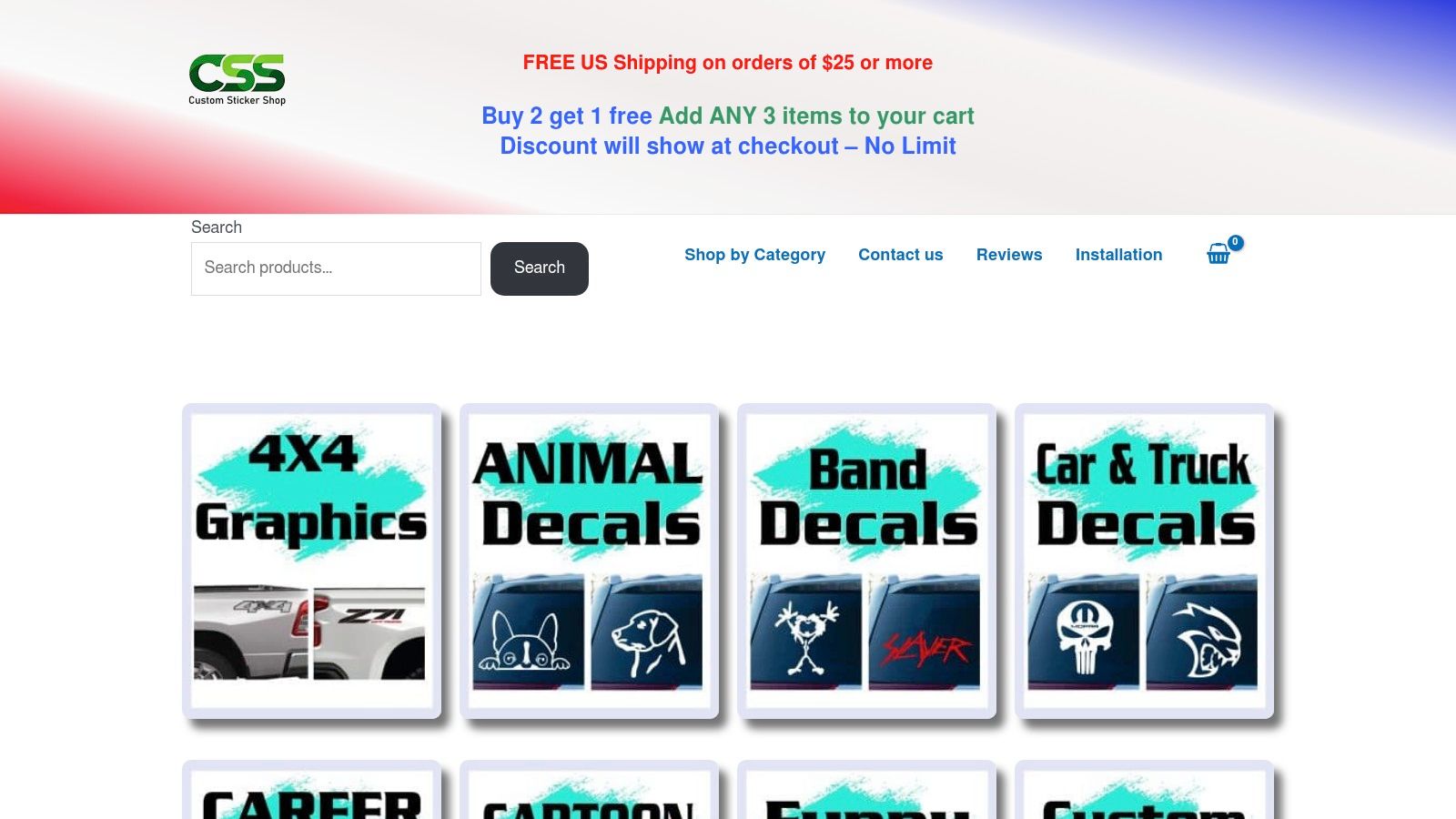
For buyers comparing vendors, Custom Sticker Shop is one example of a shop that works with Oracal vinyl and offers pre-spaced, transfer-taped automotive decal options for trucks, cars, and Jeeps.
The right decal doesn't just fit the panel. It fits the personality of the vehicle owner.
If you're choosing more than one design, keep the vehicle coherent. One windshield banner, one rear-glass piece, and one subtle side accent usually looks deliberate. Too many unrelated graphics can make even good vinyl look random.
Common Questions About Removable Car Decals
The most useful questions usually aren't about color or font. They're about surfaces. Buyers increasingly ask whether removable decals work on tinted windows, matte finishes, wrapped panels, or paint protection film, and whether they can be reused. Most general guidance focuses on smooth glass or paint, while the actual answer often changes by install location, as noted in StickerShield's discussion of removable sticker surfaces.
Can I apply them to tinted windows
Usually, interior glass and exterior glass are different conversations. A smooth glass surface is generally decal-friendly. Tinted windows add a layer of caution because not all tint setups behave the same way, especially if the film itself is the actual surface receiving the decal.
If the decal is going onto aftermarket tint film, test carefully first. Removal risk may be different than removal from plain glass.
What about matte paint or wrapped panels
One-size-fits-all advice often breaks down. Matte finishes and wrapped surfaces don't always respond like standard glossy paint. Adhesion can be less predictable, and removal can carry more surface-specific risk.
For specialty finishes, the safe approach is simple:
- Test a small sample first
- Confirm whether the top layer is paint, wrap, or protective film
- Avoid assuming that “safe on paint” means safe on every finish
Are removable decals reusable
Usually they aren't. Clean removal and reusability are not the same thing. A decal may peel off without major mess, but that doesn't mean it will go back on neatly or hold the same way a second time.
Where do they work best
The safest bet is still a smooth, clean surface, especially glass and well-finished painted areas. That's why rear windows, side glass, and other flat sections remain the most reliable spots for removable car decals.
If you're unsure about your specific vehicle, especially newer models with protective films, privacy glass, wraps, or specialty coatings, it's worth asking before you install. Surface type changes the answer more than most buyers expect.
If you're ready to add personality without locking yourself into a permanent choice, Custom Sticker Shop offers vehicle decal options for trucks, cars, and Jeeps, including military tributes, family designs, and custom text. Pick the surface carefully, choose the right size, and removable vinyl can give you the clean look you want with a lot less second-guessing later.