
The Rising Cost of Shipping: How USPS Rate Increases and Packaging Expenses Are Impacting Consumers
For small businesses, e-commerce retailers, and independent sellers, the cost of shipping products has become a growing challenge. Over the past several years, the United States Postal Service (USPS) has implemented multiple postage and shipping rate increases while the cost of packaging materials has also climbed due to inflation, supply chain disruptions, labor shortages, and higher manufacturing costs.
The combination of higher postage rates and more expensive shipping supplies is creating a financial squeeze that many businesses can no longer ignore.
USPS Shipping Rates Continue to Rise
The USPS has implemented a series of rate increases as part of its long-term “Delivering for America” plan aimed at improving financial sustainability and modernizing operations.
In January 2025, USPS increased shipping service prices by approximately:
- 3.2% for Priority Mail
- 3.2% for Priority Mail Express
- 3.9% for USPS Ground Advantage
- 9.2% for Parcel Select
Just six months later, another round of increases took effect in July 2025, including:
- 6.3% increase for Priority Mail
- 7.1% increase for USPS Ground Advantage
- 7.6% increase for Parcel Select
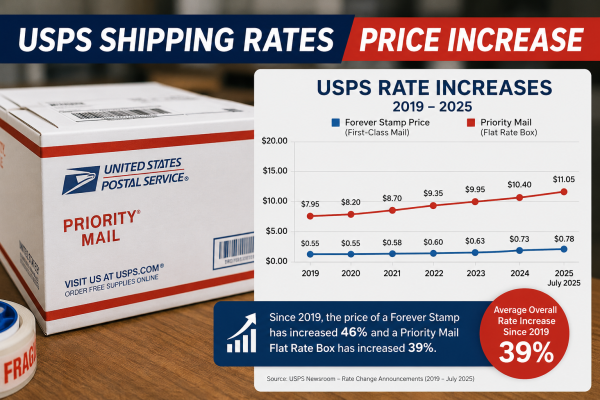
Mailing services also saw significant increases, with First-Class Mail prices rising approximately 7.4%. The cost of a Forever Stamp increased from 73 cents to 78 cents, representing a nearly 7% increase in a single adjustment.
The broader trend is even more concerning. Since 2019, USPS stamp prices have increased by approximately 46%, reflecting the agency’s ongoing effort to offset rising operational costs and declining mail volumes.
Why USPS Keeps Raising Prices
USPS officials cite several factors driving the increases:
- Rising transportation and fuel costs
- Labor and employee benefit expenses
- Infrastructure modernization investments
- Declining First-Class Mail volume
- Long-term financial losses
According to USPS reports, First-Class Mail volume has declined dramatically over the past two decades as consumers and businesses transition to digital communication. The Postal Service has accumulated more than $100 billion in losses since 2007 and continues to seek additional revenue through pricing adjustments.
Packaging Costs Are Increasing Too
Unfortunately for businesses, shipping rates are only half the problem.
Packaging materials have also become significantly more expensive in recent years. Corrugated cardboard manufacturers have faced higher costs for paper fiber, energy, transportation, and labor. Industry reports indicate that corrugated box prices have increased by approximately 10% in some markets due to rising raw material and production costs.
Common shipping supplies affected by rising costs include:
- Corrugated shipping boxes
- Bubble wrap
- Packing paper
- Foam inserts
- Poly mailers
- Shipping labels
- Stretch wrap
- Packaging tape
For businesses shipping hundreds or thousands of orders each month, even small increases in packaging costs can significantly impact profitability.
The Impact on Small Businesses
Small businesses are often the hardest hit by these increases.
Unlike major retailers such as Amazon and large national brands, smaller companies typically lack the shipping volume needed to negotiate substantial carrier discounts. They also purchase packaging materials in smaller quantities, resulting in higher per-unit costs.
Many business owners report facing difficult decisions, including:
- Raising product prices
- Charging higher shipping fees
- Eliminating free shipping promotions
- Reducing packaging quality
- Searching for lower-cost packaging suppliers
- Consolidating shipments whenever possible
Online seller communities have expressed growing concern over recent USPS increases. Some sellers reported seeing notable increases on Priority Mail shipments and have begun shifting more packages to Ground Advantage whenever possible to control costs.
Consumers Are Feeling the Effects
Consumers are increasingly noticing higher shipping charges when shopping online.
Many retailers that once offered free shipping now require minimum purchase thresholds or have increased product prices to absorb transportation and packaging expenses. The era of inexpensive nationwide shipping is becoming increasingly difficult for businesses to sustain.
As shipping costs rise, customers may experience:
- Higher checkout shipping fees
- Increased minimum order requirements
- Fewer free shipping offers
- Longer delivery timelines as retailers seek lower-cost shipping options
Looking Ahead
Industry experts expect shipping and packaging costs to remain a significant concern throughout 2026 and beyond. USPS continues to pursue pricing adjustments as part of its long-term financial recovery strategy, while packaging manufacturers continue to face inflationary pressures related to materials, labor, transportation, and energy costs.
For businesses, the key to managing these challenges will be finding efficiencies in packaging, optimizing shipping methods, negotiating supplier relationships, and carefully monitoring operational expenses.
One thing is clear: the cost of shipping a package today is substantially higher than it was just a few years ago. As USPS rates continue to climb and packaging materials become more expensive, businesses and consumers alike are adapting to a new reality where shipping is no longer a minor expense—but a major factor in the cost of doing business.