
You've probably seen them—those faded, peeling, and cracked stickers on the back of cars, looking like a sad, forgotten memory. That’s what happens when a standard sticker meets the real world. A true waterproof decal is a completely different animal, engineered from the ground up to survive whatever you throw at it.
What Exactly Are Waterproof Decals?
Think about the difference between a cheap poncho and a high-performance rain jacket. One will keep you dry in a light drizzle for about five minutes before tearing. The other is built with specific materials and layers to withstand a downpour on a mountaintop.
That's the difference between a basic paper sticker and a genuine waterproof decal. The paper sticker is that poncho—a temporary fix that’s going to disintegrate in the sun, fail at the first car wash, and peel away after a few good rainstorms.
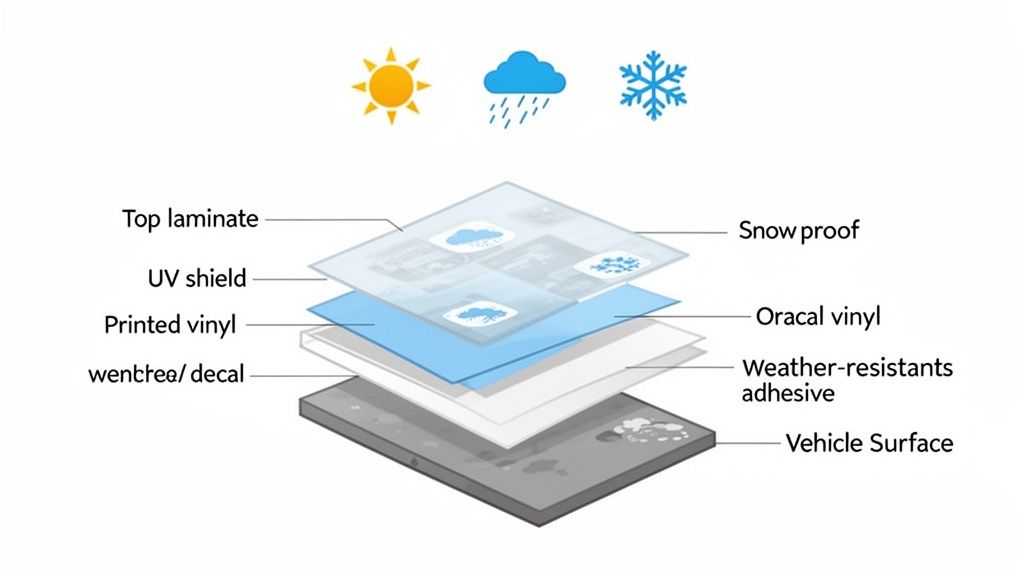
A real waterproof decal, however, is a layered system designed for the long haul. It’s not just one piece of material; it's a combination of components working together to keep your vehicle looking sharp for years.
The Anatomy of a Durable Decal
So, what gives these decals their incredible resilience? It all comes down to two key ingredients that separate the champions from the cheap imitations.
Premium Vinyl Material: The foundation is always the vinyl itself. Unlike paper, vinyl is a type of plastic, so it's naturally water-resistant and flexible. This is critical for letting it conform perfectly to the curves of a truck, boat, or Jeep window without bubbling or lifting.
Protective Lamination: This is the invisible armor for your decal. After the design is printed on the vinyl, a clear laminate film is applied over the top. This layer acts as a shield, protecting the ink from getting blasted by UV rays, scratched by road grit, or smeared by moisture.
This one-two punch is what allows a decal to look brand new, whether it’s on a daily-driver minivan, an off-road beast, or a boat hitting the water every weekend. And people are noticing the difference. The global market for vinyl stickers—the core of waterproof decals—hit $4.5 billion in 2024 and is projected to reach $7.1 billion by 2033, because more and more people demand graphics that last. You can learn more about the growth of the vinyl sticker market here.
To make it even clearer, here’s a quick breakdown of what sets a true decal apart from a standard sticker.
Waterproof Decal vs. Standard Sticker
| Feature | Waterproof Decal | Standard Paper Sticker |
|---|---|---|
| Base Material | Premium Vinyl (Plastic) | Paper or Low-Grade Vinyl |
| Protective Layer | UV-Resistant Lamination | None |
| Weather Resistance | Excellent (Rain, Sun, Snow) | Poor (Fades, Peels, Disintegrates) |
| Lifespan | 5-7+ Years Outdoors | Weeks to Months |
| Best For | Vehicles, Boats, Outdoor Gear | Laptops, Notebooks, Indoor Use |
| Car Wash Safe? | Yes | No |
In the end, you get what you pay for. While a paper sticker might be cheap upfront, you’ll be replacing it over and over again. A quality waterproof decal is a small investment that pays off in durability.
A waterproof decal isn’t just a sticker that can get wet. It’s an engineered graphic designed to live outdoors, enduring everything from blazing sun and torrential rain to automatic car washes and road grime, all without peeling, fading, or falling apart. It's a small investment in your vehicle's personality that pays off in longevity.
The Science Behind a Decal That Lasts
A truly waterproof decal isn't magic—it’s the result of smart engineering and choosing the right high-performance materials. Think of it like a three-layer suit of armor for your design. Each piece has a specific job in defending against the elements, and it’s this system that separates a professional-grade graphic from a cheap sticker that peels off at the first sign of rain.
The foundation of any decal worth its salt is the material it’s printed on. While there are a lot of options out there, professional shops stick with premium cast vinyl. We use Oracal vinyl, which is the gold standard in the industry, because of its incredible stability and resilience. Unlike cheaper calendared vinyl that shrinks, curls, and cracks over time, cast vinyl is made to live outdoors.
This difference in how the vinyl is made is a huge deal for vehicle owners, especially for Jeeps, trucks, and military-themed graphics that are going to see some tough conditions.
Understanding Outdoor Durability Ratings
You'll often see decals advertised with an "outdoor durability rating," like "rated for 7 years outdoors." This isn't just some marketing gimmick; it's a technical spec that tells you how long the material can stand up to constant exposure before it starts to break down.
But what does a 7-year rating actually mean in the real world? It means the vinyl is built to resist:
- UV Radiation: It’s not going to get brittle and crack after a year in the Texas sun.
- Moisture Saturation: It won’t start peeling or delaminating during a rainy Pacific Northwest winter.
- Temperature Extremes: It can handle everything from freezing snow to scorching summer heat without failing.
For a military family moving from post to post or an off-road enthusiast who takes their rig into harsh environments, this rating is a direct measure of quality and reliability.
The Protective Shield of Lamination
The second layer of defense is the lamination. If the vinyl is the decal's body, the laminate is its impenetrable shield. After we print a design, we apply a thin, clear film over the top. This simple-sounding step is what keeps your decal’s colors looking sharp and its surface protected.
A waterproof decal is a system. The vinyl provides the structure, the adhesive provides the bond, and the lamination provides the protection. Without all three working together, the decal will fail.
This protective layer is what makes a decal truly "water proof" by guarding against the biggest threats to its looks and longevity. Lamination blocks almost all UV rays that make colors fade, protects the ink from getting scratched up in a car wash, and stops chemicals like gasoline or cleaning agents from smudging your design. It turns a simple printed piece of vinyl into a rugged graphic that’s ready for the road.
The Unseen Hero: The Adhesive
Finally, we get to the third critical piece of the puzzle: the adhesive. A decal is completely worthless if it won't stick. High-quality waterproof decals use a permanent, weather-resistant acrylic adhesive made specifically for cars, trucks, and boats. This is not the same weak glue you find on a mailing label.
This powerful adhesive creates a rock-solid bond with non-porous surfaces like glass, metal, and factory paint. It's formulated to hold on tight through rain, sleet, and high-speed driving. But just as important, it’s also designed to be removed cleanly without damaging your vehicle's paint—a huge deal for anyone who cares about their ride.
Whether you're showing off your style with a classic design like a NY Yankees skull decal or creating a custom piece, this is the science that makes sure it lasts.
How to Choose the Right Waterproof Decal
Picking out the perfect waterproof decal is a lot like choosing the right accessory for your truck or Jeep—it has to match your style, serve a purpose, and be tough enough to handle whatever you throw at it. With so many choices out there, from military graphics to family stick figures, getting it right means your decal will look sharp for years to come.
The first thing to nail down is where you plan to stick it. The location is everything and will dictate what kind of decal will actually last.
Windshields and Windows: This is prime real estate. Decals here have to survive constant abuse from windshield wipers, defrost cycles, and direct sun. You’ll want a die-cut vinyl decal that has no background, giving you a clean, painted-on look that doesn’t block your view.
Body Panels: Sticking a decal on a painted door, fender, or tailgate means it’s going to face road grime, high-pressure car washes, and the occasional scuff. A tough, laminated decal is a must here to keep the design from getting scratched or faded.
Off-Road and Marine Use: For Jeeps crawling over rocks or boats braving the waves, durability isn't just a feature—it's a requirement. Only decals made from premium, outdoor-rated vinyl are going to survive constant dunkings in mud, saltwater, and brutal weather.
Match the Design to Your Mission
Once you’ve got the spot picked out, it's time to find a design that says something about you. Whether you’re displaying a heartfelt military tribute, showing off your love for JDM culture, or adding a fun family graphic to the minivan, the design should feel like a part of your identity.
This is more than just a sticker; it’s a statement. In the same way you might think about personalizing your rig with external accessories, a waterproof decal is a key piece of your vehicle's personality.
Don't Overlook Installation and Quality
A fantastic decal is worthless if the application goes wrong. The best products come pre-spaced with transfer tape already applied. This simple feature holds all the letters and graphic elements in perfect alignment, letting you apply the entire design in one go. It’s the secret to getting that bubble-free, professional look without paying a shop to do it. You can even find services that let you make your own custom car sticker with these same pro-level features.
A decal’s real value is measured by how long it lasts. The best choice is always a decal made from high-quality materials designed specifically for the conditions it will face.
The market for durable vehicle graphics is exploding, with projections showing it could double from $500 million in 2025 to over $1 billion by 2033. For vehicle owners like us, that means more access to top-tier materials. Think brands like Oracal, whose vinyl often comes with a 7-year outdoor rating. That’s a huge deal, especially when you consider that an estimated 70% of owners say weathering is the #1 reason their decals fail. By focusing on the right placement, a design you love, and quality materials, you can make sure your decal stands the test of time.
Installing Your Decal Like a Pro
Applying a decal isn't just about slapping a sticker on your ride. It’s a simple process, but doing it right is the difference between a flawless, paint-like finish and a wrinkled, bubbly mess. Take a few extra minutes to get the prep and positioning right, and you'll nail it on the first try.
The most critical step happens before the decal even touches your vehicle: surface preparation. You need a perfectly clean, dry surface for that adhesive to grab on and never let go. Start by washing the area with soap and water, then wipe it down one last time with rubbing alcohol on a lint-free cloth. This gets rid of any stubborn wax, grease, or road grime that could ruin the bond.
The Foolproof Hinge Method
Once your surface is spotless and dry, it's time to position the decal. This is where the pros use the hinge method—a simple trick that guarantees perfect alignment every single time.
Position It: Place your decal on the surface without peeling off the backing paper. Use a few pieces of masking tape to hold it in place while you step back and make sure it's perfectly level and exactly where you want it.
Create the Hinge: Run a long strip of masking tape across the center of the decal, sticking it firmly to the vehicle on both sides. This tape acts as a hinge, locking your alignment in place.
Apply One Side: Lift one half of the decal and peel the backing paper away, tearing it off right at the tape hinge. Using a squeegee or a credit card, press the decal onto the surface, working from the center hinge outwards with smooth, firm strokes.
Finish the Job: Now, remove the center hinge tape. Lift the other half of the decal, peel off the rest of the backing paper, and squeegee it down from the center out.
This infographic breaks down the entire process, from planning your placement to the final application.
Following this flow—choosing the right spot, finalizing the design, and using a clean application process—is the secret to a professional-grade result.
Final Steps for a Perfect Finish
After squeegeeing the entire decal down, give it one more firm pass to make sure the adhesive has a solid grip. Now, slowly peel the top transfer tape off, pulling it back at a sharp angle against itself. If any part of the vinyl starts to lift, just lay the tape back down and press that spot again before continuing.
Temperature makes a huge difference in a successful application. Vinyl adhesive works best in moderate weather, ideally between 50°F and 90°F (10°C and 32°C). Trying to apply a decal in extreme heat or cold can cause the adhesive to fail, so aim to work in a garage or on a mild day.
Finally, just let the decal cure. Give it about 24-48 hours before you wash your vehicle. This gives the adhesive time to fully bond and set. Follow these steps, and your waterproof decals, like a custom Chevy Corvette windshield banner, will look incredible and last for years to come.
Caring for Your Waterproof Decal
Once you get your decal installed just right, keeping it looking great is surprisingly simple. These aren't fragile decorations. High-quality waterproof decals are made to take a beating from the real world, so you don't have to baby them. They’re designed to live on your vehicle, through rain, sun, and dirt.
It's no surprise that the demand for durable decals is exploding. The global market for waterproof labels is expected to more than double, growing from $12.3 billion in 2025 to $28.7 billion by 2033. This boom is all about people wanting products that can actually stand up to the elements. Materials like the premium Oracal vinyl we use are proof, offering up to 7 years of outdoor life through countless car washes and weather changes. You can explore the full research on waterproof labels here if you want to see the data.
Cleaning and Washing Tips
Your decal can absolutely handle regular washes, but a few smart habits will protect its edges and keep the colors sharp for years. While a gentle hand-wash is always the gold standard, our modern decals are built to withstand automatic car washes without a problem.
Here are a few key things to remember:
- Avoid Direct High Pressure: When you're using a pressure washer, keep the nozzle a good 12-18 inches away from the decal itself. The main thing is to never aim that powerful spray directly at the edges—that’s how you can cause lifting.
- Use Gentle Cleaners: Stick with mild soaps, like the kind you'd use on your car’s paint. Harsh chemicals or abrasive polishes can slowly eat away at the protective laminate and dull the finish.
- Pat Dry, Don't Rub: After a wash, just gently pat the area dry with a soft microfiber towel. Rubbing it hard isn't necessary and can stress the edges over time.
Think of your decal's edge as its only weak point. By avoiding direct, high-pressure spray on the edges, you protect the entire graphic for years to come.
Safe Decal Removal
When it's time for a new look or you're ready to remove the decal, you can do it without a trace and without damaging your vehicle's paint.
The trick is to use a little bit of heat. Gently warm the decal with a hairdryer to soften the adhesive underneath. Once it's warm, you can start at a corner and slowly peel it back.
If any sticky residue is left behind, it’s easy to clean up. A little rubbing alcohol on a soft cloth or a dedicated adhesive remover will take it right off, leaving your paint looking pristine.
FAQ About Waterproof Vehicle Decals
When you're looking for decals for your vehicle, you have questions. You want to know you're getting something that not only looks sharp but can handle the real world. We get it. Here are some straightforward answers to the questions we hear most often from car owners, military families, and Jeep enthusiasts just like you.
How Long Do Waterproof Decals Really Last?
This is the number one question we get, and for good reason. Nobody wants a decal that starts peeling and fading after a single season. While cheap, mass-produced stickers might give you a year if you’re lucky, a professional-grade decal is in a completely different league.
Our decals are made from high-performance Oracal vinyl, and you can realistically expect them to last 7+ years outdoors.
Of course, a few things can affect that lifespan:
- Placement: A decal on a vertical surface like a rear window or tailgate will always outlast one on a flat hood baking in the Arizona sun. Vertical spots shed water and dirt better, which helps a lot.
- Climate: Constant, intense sun is the biggest enemy of any outdoor graphic. Extreme cold can also make vinyl more brittle over time. That 7-year rating means it’s built to take a beating, but a decal in a milder climate might look great for even longer.
- Care: How you treat your vehicle matters. Our decals are tough, but you can help them last by avoiding blasting the edges with a high-pressure washer or using harsh chemical cleaners directly on them.
Can Waterproof Decals Go Through a Car Wash?
Yes, absolutely. A properly installed, high-quality waterproof decal is made to handle automatic car washes. The combination of premium vinyl, a strong adhesive, and a protective laminate layer creates a sealed graphic that stands up to soaps, brushes, and dryers.
That said, a little patience goes a long way.
Pro Tip: Always wait at least 48-72 hours after installing a new decal before running your vehicle through a car wash. This "curing" time lets the adhesive create its strongest possible bond, ensuring the edges stay down.
When you do hit the car wash, just remember these simple rules:
- DO stick to touchless or soft-cloth automatic washes.
- DON'T aim a high-pressure spray wand directly at the decal's edges. That’s the quickest way to force water underneath and start a peel.
- DO make sure the decal was applied to a super clean, smooth surface to get the best bond from the start.
Will a Decal Damage My Car's Paint?
This is a totally valid concern for anyone who cares about their vehicle’s finish. The short answer is no—a high-quality decal will not damage your factory paint. The key phrase there is "high-quality."
Professional decals use a specific solvent-based acrylic adhesive designed for automotive use. It’s engineered to be tough enough for any weather but also removable without taking your paint with it. When it's time for a change, a little heat from a hairdryer is all you need to soften the adhesive and peel the decal off cleanly.
It’s the cheap, no-name stickers with mystery adhesives that cause the horror stories you hear about. By choosing a decal made from trusted materials like Oracal vinyl, you're getting a product proven to be safe for your vehicle.
Are All Vinyl Decals Waterproof?
This is a huge point of confusion. While vinyl itself is a water-resistant plastic, not every vinyl sticker is truly waterproof or ready for the outdoors. A true waterproof decal is a complete system: the vinyl, the ink, and the protective top layer.
Here’s what separates a real-deal outdoor decal from a basic sticker:
| Component | Waterproof Outdoor Decal | Standard Indoor Vinyl Sticker |
|---|---|---|
| Vinyl Type | Premium Cast Vinyl (like Oracal) | Cheaper Calendared Vinyl or Paper |
| Ink | Eco-Solvent, UV-Resistant Inks | Standard Water-Based Inks |
| Protection | Protective Laminate Layer | Usually No Protective Layer |
| Adhesive | Permanent, Weather-Resistant | Removable or Weaker Adhesive |
Put simply, a sticker meant for a laptop will bleed, fade, and peel apart the first time it sees a rainstorm or a car wash. For your ride, you need something specifically engineered to survive outside.
Ready to find a decal that’s built to last? At Custom Sticker Shop, we use only the highest-quality Oracal vinyl and protective lamination to ensure your graphics look great for years. Browse our collection and find the perfect waterproof decal for your ride at https://customstickershop.us.