

United States Navy decals are so much more than just stickers. They are powerful symbols of service, family pride, and unwavering support. When you place one on your vehicle, you're turning it into a statement of honor and carrying on a long tradition of naval markings. For anyone with a connection to the U.S. Navy, a high-quality decal is a tribute that lasts.
A Guide to Displaying Your Navy Pride
That decal on your vehicle is a public declaration, a small but powerful way to share a story. It might represent your own years of service, honor a family member who served, or simply show your deep respect for the men and women of the United States Navy. This guide is built for anyone looking to display that connection with pride and genuine understanding.
We believe choosing a decal should be a meaningful process. It’s not just about grabbing a cool design; it’s about selecting a symbol that truly connects with your personal story. From the iconic anchor to specific squadron insignia, every single design carries a rich history with it.
What You'll Learn in This Guide
This isn't just a product catalog. Our goal is to give you all the knowledge you need to make a choice you feel great about. We'll walk you through everything, from the symbolic meanings behind classic naval designs to the practical side of installation and care.
Here’s a look at what we'll cover:
- Decoding the Symbols: We'll dive into the legacy and meaning behind the most powerful emblems in naval history.
- Choosing the Right Materials: Learn the difference between a standard sticker and durable, outdoor-rated vinyl that will last for years.
- Official vs. Custom Designs: Understand how to honorably represent the Navy while adding personal touches like a name or service dates.
- Placement and Sizing: Get practical, real-world tips for positioning your decal for maximum impact and a professional look.
- Installation and Care: We'll help you master the application process for a flawless, bubble-free finish and teach you how to maintain your decal.
A well-chosen Navy decal does more than decorate a vehicle—it preserves a legacy. It connects the past with the present, turning a simple piece of vinyl into a testament to courage, commitment, and sacrifice.
By the end of this guide, you’ll have a complete picture of how to select, apply, and care for your United States Navy decals. You'll be ready to display your tribute in a way that is both visually striking and deeply meaningful. Whether you're a veteran, an active-duty sailor, or a proud family member, we're here to help you tell your story.
To get started, you might want to check out an example like this classic Navy Eagle full-color decal.
Decoding the Symbols Behind Navy Insignia
Every United States Navy decal tells a story, carrying a legacy forged in history and tradition. These aren't just graphics; they're visual shorthand for courage, specific missions, and the collective identity of sailors and squadrons. When you choose a decal, you're picking a piece of that rich heritage to display on your own.
Understanding what these powerful emblems mean adds a whole new layer of significance to your choice. It turns a simple sticker into a personal tribute, connecting you directly to the history of the world's most formidable naval force. Let's get into the stories behind some of the most iconic symbols you'll see.
The Anchor and Eagle: A Timeless Symbol
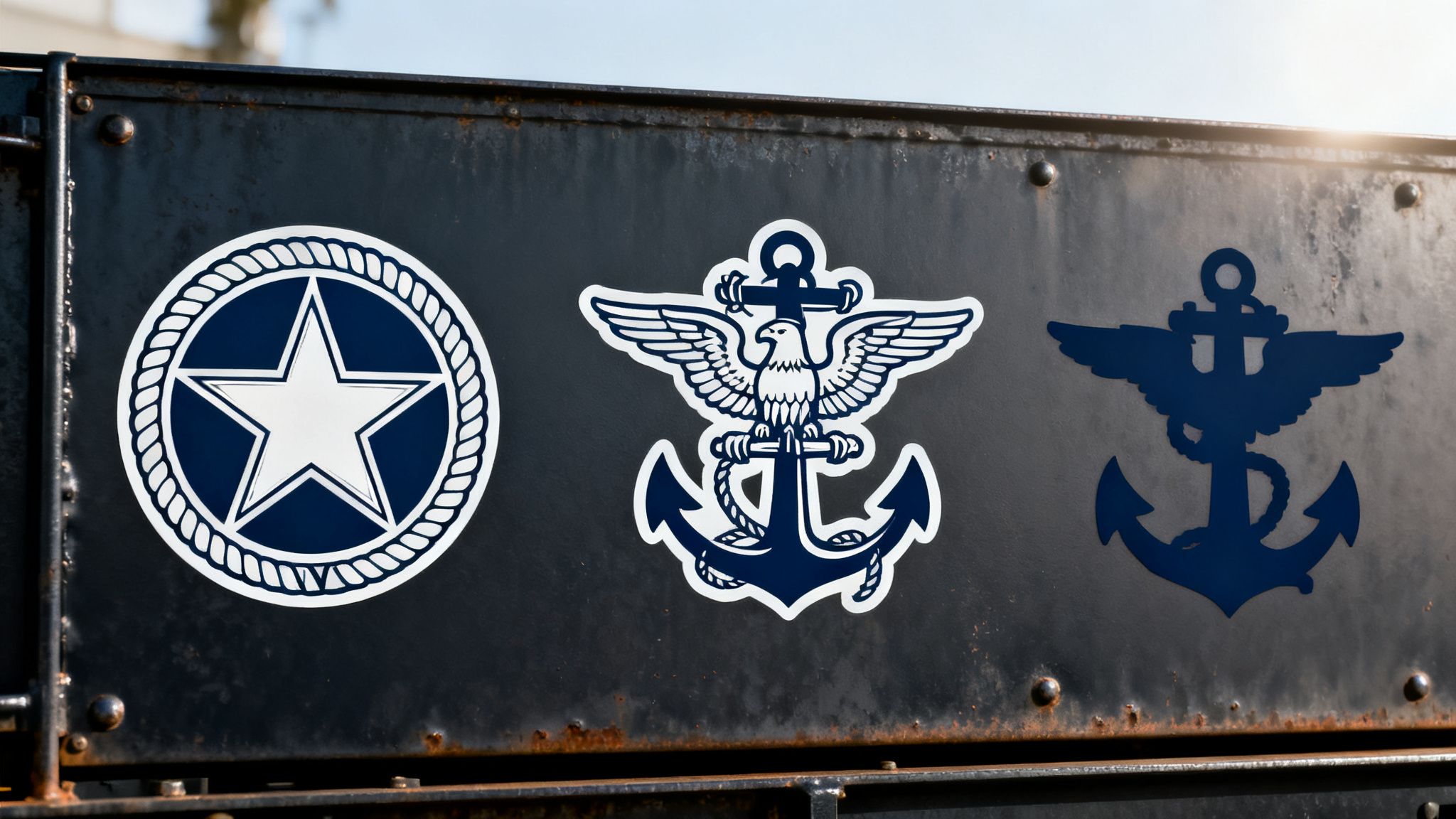
The classic U.S. Navy emblem, with its eagle, anchor, and the frigate Constitution ("Old Ironsides"), is one of the most recognized symbols of American sea power. The eagle stands for the nation itself—a classic symbol of freedom and strength. It clutches an anchor, the quintessential Navy icon that signifies stability, hope, and every sailor's connection to the sea.
This combination speaks directly to the Navy's core mission: protecting the nation's interests from the sea. It's a design that is both classic and powerful, making it a go-to choice for veterans and families who want to represent the entire institution with honor.
The Evolution of the National Star Insignia
One of the most dynamic symbols out there is the national star insignia found on naval aircraft. This design has changed a lot over the decades, often adapting to the tactical needs of air combat. Its journey is a fascinating look at military history in real-time.
At first, simple star designs marked American planes. But during World War II, the insignia evolved to include bars on the side, creating the "star and bar" roundel still used today. The design was briefly changed in 1943 to include a red border for better visibility, but that was quickly reversed over concerns it could be mistaken for the Japanese Hinomaru (the "red sun").
Each version of the star insignia tells the story of its era. A decal with a simple star in a blue circle is a nod to early naval aviation, while the modern star and bar represents U.S. Navy air power from WWII all the way to the present day.
Choosing a decal with a specific, historical version of the star is a fantastic way to honor a particular period of naval aviation history—maybe even one a family member served in.
Squadron Logos and Rating Badges
Beyond the big, national symbols, the U.S. Navy is full of highly specific and personal insignia. Every squadron has its own unique logo, often featuring aggressive or symbolic imagery that reflects its mission and esprit de corps. Just think of the "Jolly Rogers" (VF-84/VF-103) with its iconic skull and crossbones—a design meant to intimidate adversaries and build unit pride.
Likewise, rating badges are deeply personal. These sleeve insignia show a sailor's specific job or "rate," from a Boatswain's Mate with crossed anchors to an Aviation Ordnanceman with a flaming bomb. A decal of a specific rating badge is a direct tribute to a sailor's craft and their unique contribution to the Navy's mission.
These designs let you get incredibly personal with your tribute:
- Squadron Logos: Honor a specific air wing or unit.
- Ship Silhouettes: Represent service on a particular vessel, from aircraft carriers to submarines.
- Rating Badges: Celebrate the specific skills and career of an individual sailor.
- POW/MIA Symbols: Pay respect to those who made the ultimate sacrifice or whose fates are unknown. Explore our collection of military POW/MIA vinyl decals to find a design that honors their memory.
Victory Markings: A Tradition of Triumph
Another powerful tradition that inspires many decals is the use of victory markings, or "kill marks." This practice really took off during World War II as a way for pilots and ships to visually tally their combat successes right on their hardware. Pilots would paint enemy flags on their fuselages for each aircraft downed, while ships displayed silhouettes for each enemy vessel sunk. It was a huge morale booster and a clear record of accomplishment. You can dive deeper into the illustrated history of Navy victory markings to see exactly how these symbols were used.
Today, this historical practice lives on in designs available to veterans and supporters. A decal featuring kill marks is a direct nod to this warrior tradition, celebrating the victories and prowess of the U.S. Navy in combat. By understanding this rich history, you can pick a decal that does more than just look good—it shares a piece of a legacy.
Choosing the Right Decal Material and Style
Not every United States Navy decal is made the same. Think of it like buying tires for your truck—you wouldn't put cheap street tires on a rig you plan to take off-road. The same logic applies here. A decal on your vehicle has to endure everything from scorching sun and freezing rain to road salt and car washes. Picking the right material is the first and most important step to making sure your tribute lasts.
To put it another way, a paper sticker is like a pair of dress shoes—it looks fine for a moment, but it’s ruined the second it rains. A premium vinyl decal, on the other hand, is like a pair of rugged work boots, built from the ground up to handle years of abuse. This distinction makes all the difference.
The material doesn't just determine how long your decal will last; it also defines how it looks. Let's break down the common options so you can make a choice that fits your vehicle and honors your service properly.
Premium Vinyl: The Gold Standard for Durability
When it comes to vehicle graphics, premium cast vinyl is the undisputed champion. There’s a reason pros in the sign and vehicle wrap industry swear by brands like Oracal. This isn't your average sticker material; it's engineered specifically for automotive use, meaning it's built to resist UV fading, cracking, and peeling.
A quality cast vinyl decal is rated to last seven years or more on an outdoor surface. That kind of durability means your tribute stays sharp and vibrant through countless seasons. It's also designed to conform perfectly to the slight curves of a car window or truck body, giving it a seamless, professional look.
Die-Cut Decals vs. Printed Stickers
Beyond the material, the style of the decal plays a huge part in how it looks on your ride. You'll mainly see two types: die-cut decals and printed stickers, and they create very different effects.
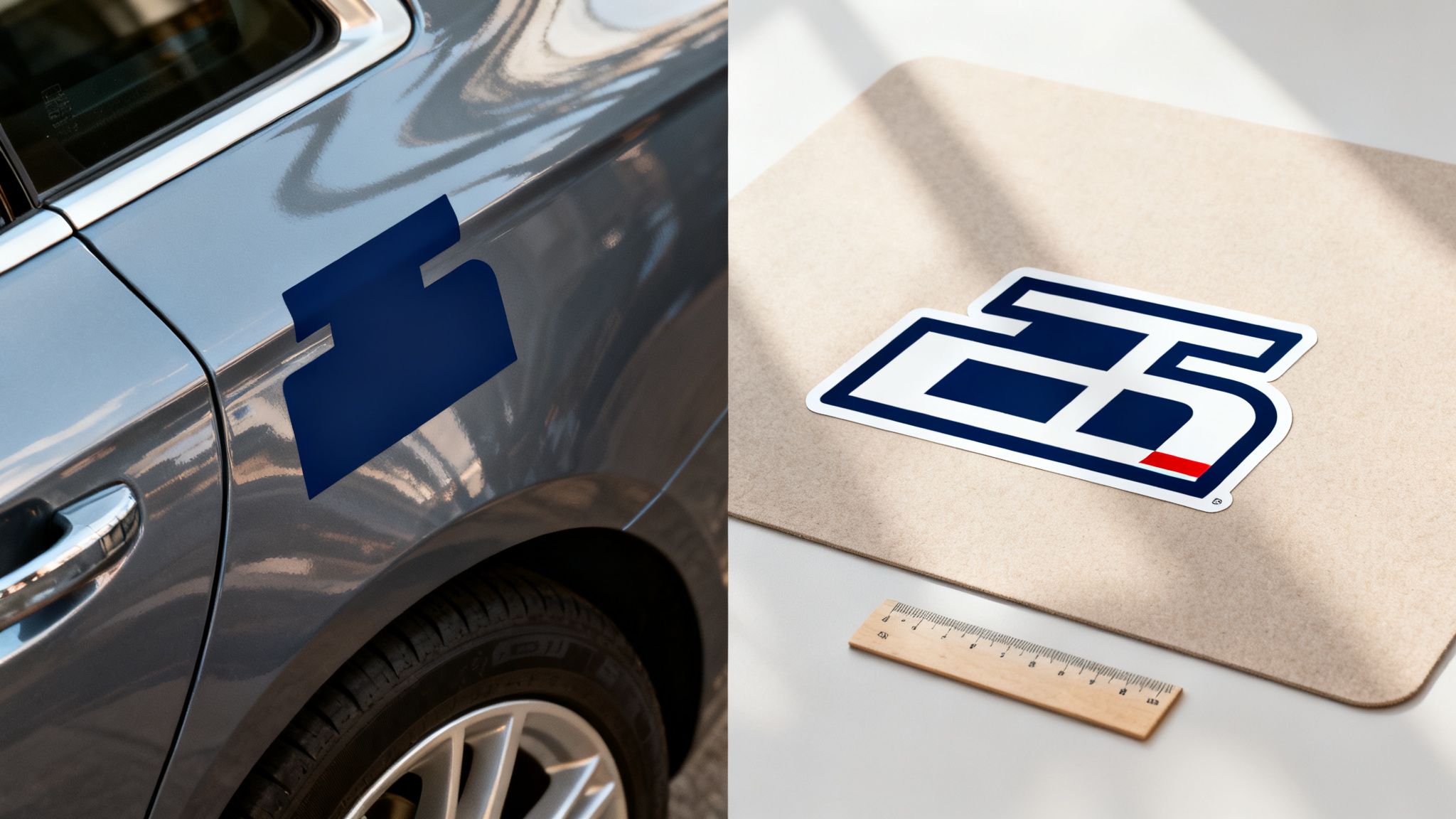
A die-cut decal is precision-cut from a solid sheet of colored vinyl. There is no background at all. Once you apply it, only the individual letters or design elements stick to the surface. This creates a clean, "painted-on" look that integrates beautifully with your vehicle's paint or glass. It's the go-to choice for a sharp, professional appearance.
A printed sticker, on the other hand, has an image printed onto a sheet of white or clear vinyl, which is then cut out, usually in a simple shape like a circle or rectangle. While they allow for full-color, complex images, they always have a background, which can look less integrated and more like a traditional bumper sticker.
Key Takeaway: For a clean, high-end look that appears like it belongs on the vehicle, a die-cut decal made from premium cast vinyl is the superior choice. It delivers both exceptional durability and a seamless, professional aesthetic.
Deciding between them often comes down to personal taste, but for most vehicle applications, the crisp, clean lines of a die-cut decal are tough to beat.
Exploring Popular Navy Decal Styles
Once you’ve settled on the right material and type, you can dive into the fun part—choosing a design that tells your story. Whether you want to show broad support for the entire service or represent a very specific part of your career, there's a design that will resonate.
Here are a few popular styles to consider:
- Historical Aircraft Markings: Designs like the classic star and bar roundel are perfect for aviation buffs or anyone honoring a family member who served in a naval air squadron.
- Ship Silhouettes: This is a powerful and direct way to represent service on a specific vessel, whether it's an aircraft carrier, a destroyer, or a submarine.
- Modern Rating Badges: Displaying a Boatswain's Mate anchor or a Corpsman's caduceus is a personal and proud statement of a sailor's specific job and expertise.
- Classic Navy Emblems: You can never go wrong with the iconic eagle and anchor. These timeless designs represent the entire U.S. Navy, making them a great choice for showing general support or family pride.
Vinyl Decal Material Comparison
To help you visualize the differences, here’s a quick breakdown of the most common materials you'll find. This should make it clear why choosing the right one is so critical for a vehicle decal that's meant to last.
| Feature | Premium Cast Vinyl (e.g., Oracal) | Calendared Vinyl (Standard) | Printed Bumper Sticker |
|---|---|---|---|
| Outdoor Lifespan | 7+ years | 2-3 years | 1-2 years, often less |
| Best For | Vehicle windows, body panels, boats, any outdoor application | Short-term signs, indoor crafts, temporary graphics | Laptops, toolboxes, temporary promotions |
| Appearance | "Painted-on" look, conforms to curves, no background (if die-cut) | Thicker, less flexible, may shrink over time, prone to cracking | Has a background, image can fade or scratch off easily |
| UV Resistance | Excellent; colors stay vibrant without fading | Poor to fair; will fade and degrade in direct sun | Poor; colors will fade quickly, especially reds and yellows |
| Removal | Clean removal with heat, no residue | Can leave heavy residue, may become brittle | Often peels in small pieces, leaves stubborn paper and adhesive |
As you can see, for a tribute meant to honor years of service, investing in a premium cast vinyl decal is the only choice that makes sense. It ensures your pride is displayed clearly and professionally for years to come.
Navigating Official and Custom Designs
When you're picking out a Navy decal, you'll run into two main paths: sticking with official symbols or creating a custom design that tells a more personal story. There’s no right or wrong answer—it all comes down to what you want to communicate.
The U.S. Navy, just like every other branch, has official emblems and insignia protected by trademark. These are the symbols you see on uniforms, ships, and official documents. On the other hand, the world of tribute decals is wide open, with countless designs inspired by that rich heritage. The key is finding one that honors the service respectfully, whether it's a perfect replica or a unique piece built from personal memories.
The Respectful Use of Official Symbols
Official Navy insignia, from the main emblem to specific rating badges, carry a lot of weight. Using them on a decal is a direct way to connect with the Navy's formal identity. Think of it like wearing a uniform—it’s a clear and direct statement of affiliation or support.
When you choose a decal with official symbols, the goal should always be respect. Make sure the design is accurate and used in a way that upholds the dignity of the service. This is especially true for symbols that represent specific achievements or communities within the Navy.
The goal of a tribute decal is to honor, not to impersonate. A well-chosen design communicates pride and respect for the service, its history, and its sailors without claiming an official endorsement or status.
Historical markings are a fantastic example. The evolution of U.S. Navy aircraft insignia is a story in itself, with stars, bars, and strategic changes from WWI roots to today's low-visibility versions. It started with a star on tails during the 1916 Pancho Villa expedition, while Navy seaplanes had blue anchors on their rudders. By WWII, the Navy had gone through several roundels before settling on the single-wing version by February 1, 1943. You can learn more about the specific changes to U.S. military aircraft national insignia to really appreciate the history behind these designs.
The Power of Personalization
While official designs are powerful, custom United States Navy decals are where you can tell a deeply personal story. Personalization is what turns a general tribute into a specific, heartfelt one. It’s the difference between a generic "Go Navy" sticker and one that tells the world exactly who you’re honoring.
This is your chance to add the details that make the decal uniquely yours. Adding a name, service dates, a specific rate, or a ship's hull number transforms the design into a one-of-a-kind memorial or tribute. This approach beautifully balances reverence for official symbols with the creative freedom to craft a statement that reflects a personal journey of service and sacrifice.
Common personalization options include:
- Sailor's Name and Rank: Directly honors an individual's service.
- Years of Service: Commemorates the duration of their commitment (e.g., "1998-2018").
- Ship Name or Hull Number: A tribute to the vessel they called home.
- Operation or Tour Name: A nod to a specific deployment, like "Operation Desert Storm."
This level of customization makes the decal more than just a symbol of the Navy; it becomes a symbol of your Navy story. It’s a powerful approach that resonates with veterans, families, and supporters.
If you're curious about designs for other branches, you can check out our selection of U.S. Air Force vinyl window decal stickers as well. Ultimately, whether you go with an official insignia or a personalized design, the most important thing is the pride and respect it represents.
Perfecting Your Decal Placement and Sizing
Where you put your United States Navy decal is just as important as the design itself. The right placement doesn't just stick it on your truck—it integrates it, making it look like it belongs. Think of it like hanging a picture frame in your house. You wouldn't just throw it on any old wall. You'd step back, consider the space, and find the spot where it looks just right. The same goes for your truck, car, or Jeep.
This is a hands-on guide, not a lecture. We'll give you some clear, practical tips to get your decal positioned for the best look and visibility, helping you avoid those common mistakes that make a great decal look out of place.
Finding the Prime Real Estate on Your Vehicle
You can stick a decal anywhere, technically. But some spots are popular for a good reason—they offer a clean canvas and maximum visibility. It's all about finding that sweet spot where your decal gets noticed without screaming for attention or making your vehicle look cluttered.
Here are the go-to spots that just plain work:
- Rear Window: This is the classic choice. It's a big, flat surface that’s right in the line of sight for every driver behind you. A decal here is easy to see and stays protected from most of the grime and debris kicked up on the road.
- Rear Quarter Panel Window: For a slightly more understated look, those small triangular windows on the rear sides of an SUV or car are perfect. They frame the decal naturally, giving it a clean, almost factory-installed appearance.
- Truck Tailgate: Your tailgate is a massive canvas, making it the ideal spot for bigger, more detailed designs. It's a bold statement that’s impossible to miss.
- Bumper: While it’s a traditional location, bumpers take a beating from dirt, dings, and road salt. A high-quality vinyl decal can certainly handle it, but you'll get a cleaner look and longer life by placing it on glass or a higher body panel.
The Art of Proportional Sizing
Once you’ve picked your spot, the next step is getting the size right. This is where a lot of people go wrong. A decal that’s too big for the space looks amateur and overwhelming. On the other hand, one that’s too small gets lost and fails to make an impact. The goal is balance—you want the decal to complement your ride, not overpower it.
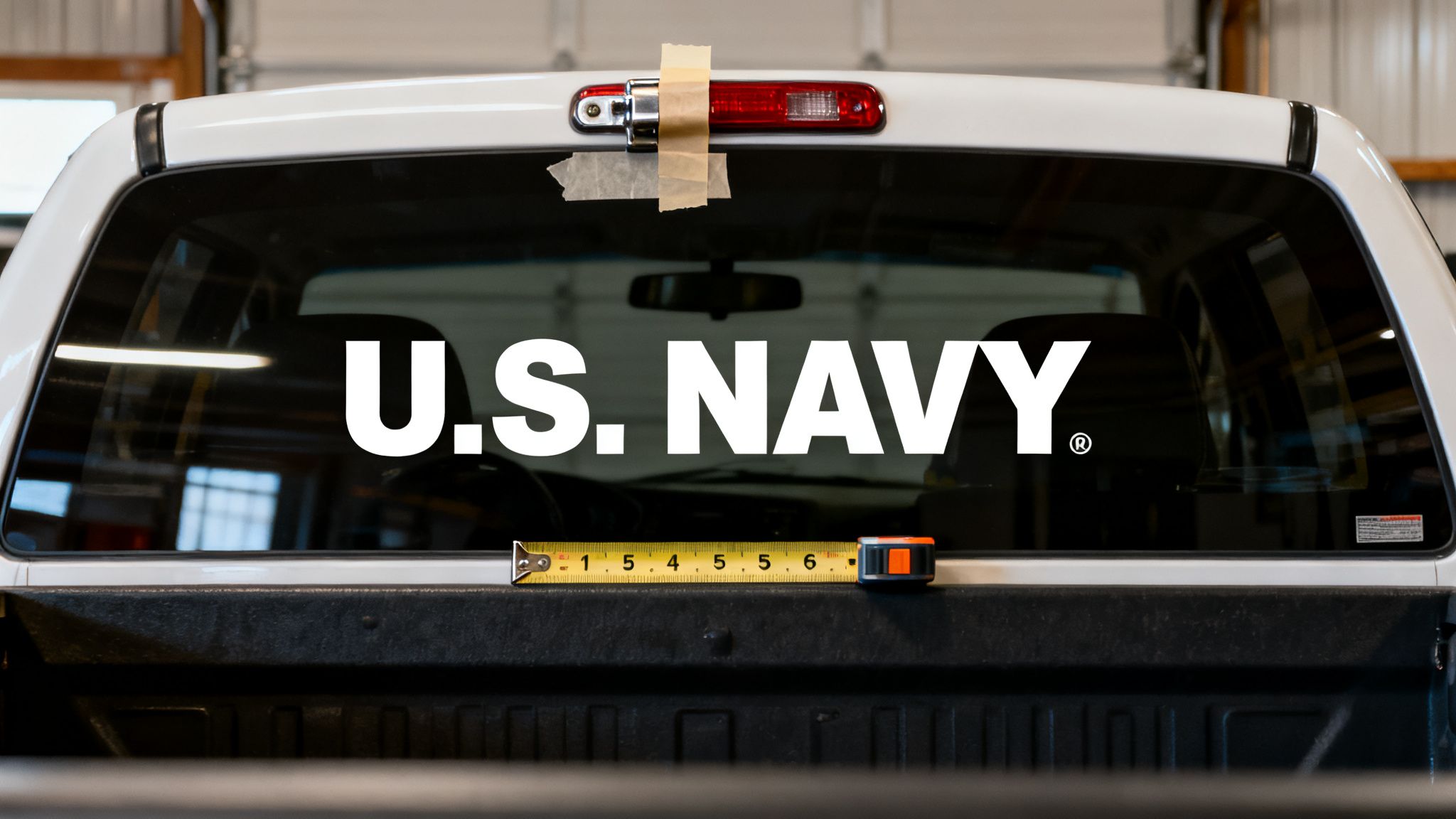
Pro Tip: Before you click "buy," grab a tape measure. Mark out the exact dimensions of the decal you’re considering on your vehicle with a dry-erase marker or small pieces of tape. Then, step back 10 feet. This simple trick lets you see exactly how it will look and saves you from the disappointment of a bad fit.
This quick visual check is the single best thing you can do to ensure you'll love the final result.
A Simple Guide to Measuring and Choosing Your Size
Getting the sizing right isn't rocket science. It just takes a minute of prep work to guarantee a perfect fit every time.
- Identify Your Target Area: Pinpoint the exact spot you want to place the decal, like the bottom-left corner of your rear window.
- Measure the Available Space: Use a tape measure to find the maximum height and width of that area. Make sure you account for things like window trim, the path of a wiper blade, or any curves in the glass.
- Choose a Proportional Size: Pick a decal that fits comfortably inside those measurements, leaving a buffer of at least an inch or two around it. That "negative space" is what makes it look clean and professional.
For instance, if you have a 12-inch by 12-inch square of open space on your window, a decal that's around 6 to 8 inches wide is going to look balanced and intentional. Anything bigger might start to feel crowded. By following these simple steps, your United States Navy decals will look like they were always meant to be there, creating a tribute that’s both powerful and tasteful.
How to Install and Care for Your Navy Decal
Getting a flawless installation is the final, crucial step to making sure your tribute looks sharp and lasts for years. Applying a vinyl decal is pretty straightforward, but taking your time to do it right prevents frustrating mistakes like bubbles and crooked placement.
Think of it like prepping a surface for painting—the prep work is just as important as the final coat. This simple guide will walk you through every stage, from preparing the surface to the final application, so you get a perfect finish. We'll also cover long-term care to keep your decal looking brand new. A clean surface and a little patience are all you need for a professional-looking result.
The Step-by-Step Installation Process
Achieving a bubble-free, perfect application really just comes down to a few key steps. Rushing the process, especially the surface prep, is the number one reason for a bad outcome. Follow these instructions carefully, and your United States Navy decal will stick perfectly and look great.
- Prepare the Surface: This is the most critical part, hands down. You need to clean the glass or body panel thoroughly with rubbing alcohol and a clean, lint-free cloth. This gets rid of any wax, oil, or grime that could stop the adhesive from getting a good grip. Skip this, and your decal will likely start peeling sooner rather than later.
- Position with the Hinge Method: Place the decal on the surface without removing the backing. Use a strip of masking tape to create a horizontal "hinge" across the center of the decal. This is a great trick that holds it perfectly in place while you work.
- Apply Firm Pressure: Lift one half of the decal, peel away the paper backing up to the tape hinge, and then carefully cut that backing paper off. Using a squeegee or even a credit card, apply firm, overlapping strokes starting from the center hinge and moving outwards to lay the vinyl down smoothly.
- Complete the Application: Now, remove the masking tape hinge. Lift the other half of the decal and pull off the remaining paper backing. Continue squeegeeing from the center outwards to apply the rest of the vinyl, pushing any air bubbles out to the edges.
- Remove the Transfer Tape: Once the entire decal is applied, go over it one last time with the squeegee to ensure it’s fully bonded. Then, slowly peel the clear transfer tape off at a sharp, 45-degree angle. If you see any part of the decal lifting up with the tape, just press the tape back down, give that spot another firm squeegee, and then try peeling again.
Long-Term Care and Maintenance
Once your Navy decal is on, taking care of it is easy. High-quality vinyl is incredibly tough and built to withstand everything from harsh sun to automatic car washes. The kind of precision needed for a good application mirrors the detailed specs used in historical naval markings. The Navy's famous attention to detail, from specific tail colors on aircraft carriers established by March 15, 1937, to the exact size of serial numbers, ensured every mark was perfect. You can discover more about the history of Navy aircraft markings and their precise standards.
To keep your decal in top shape, just follow these simple guidelines:
- Washing: You can wash your vehicle just like you normally would, even taking it through an automatic car wash. Just try to avoid aiming high-pressure washers directly at the edges of the decal.
- Scraping Ice: Be a little careful when scraping ice from your windows. The sharp edge of a scraper can catch the vinyl and cause it to lift or tear.
Important Takeaway: The single biggest threat to your decal's longevity is a poorly prepared surface. 99% of application failures are due to dirt, wax, or oil left on the glass or paint before installation.
It's also helpful to know the proper process for vinyl decal removal if you ever decide to update or replace your Navy decals. Following these simple installation and care tips will ensure your tribute remains a sharp, lasting symbol of pride.
Frequently Asked Questions About Navy Decals
Even with all the details covered, a few questions always pop up. This is where we tackle the most common things people ask about our United States Navy decals, so you can feel 100% confident in your choice.
How Long Will My Navy Decal Last on a Vehicle?
This is probably the most important question for anyone putting a tribute on their car or truck. When you install them correctly on a clean surface, our decals—made from premium Oracal vinyl—are rated for seven or more years of outdoor life. They’re built to handle everything from blazing sun and pouring rain to snow and road salt without fading, cracking, or peeling away.
Are the Decals Safe for Car Paint?
Absolutely. The high-quality vinyl we use is designed to be removed cleanly without damaging your vehicle’s factory paint. When it’s time for a change, just apply a little gentle heat from a hairdryer to soften the adhesive. The decal will peel right off, and any sticky residue left behind is easily wiped away with rubbing alcohol.
This quick graphic breaks down the simple but critical steps for a perfect application.
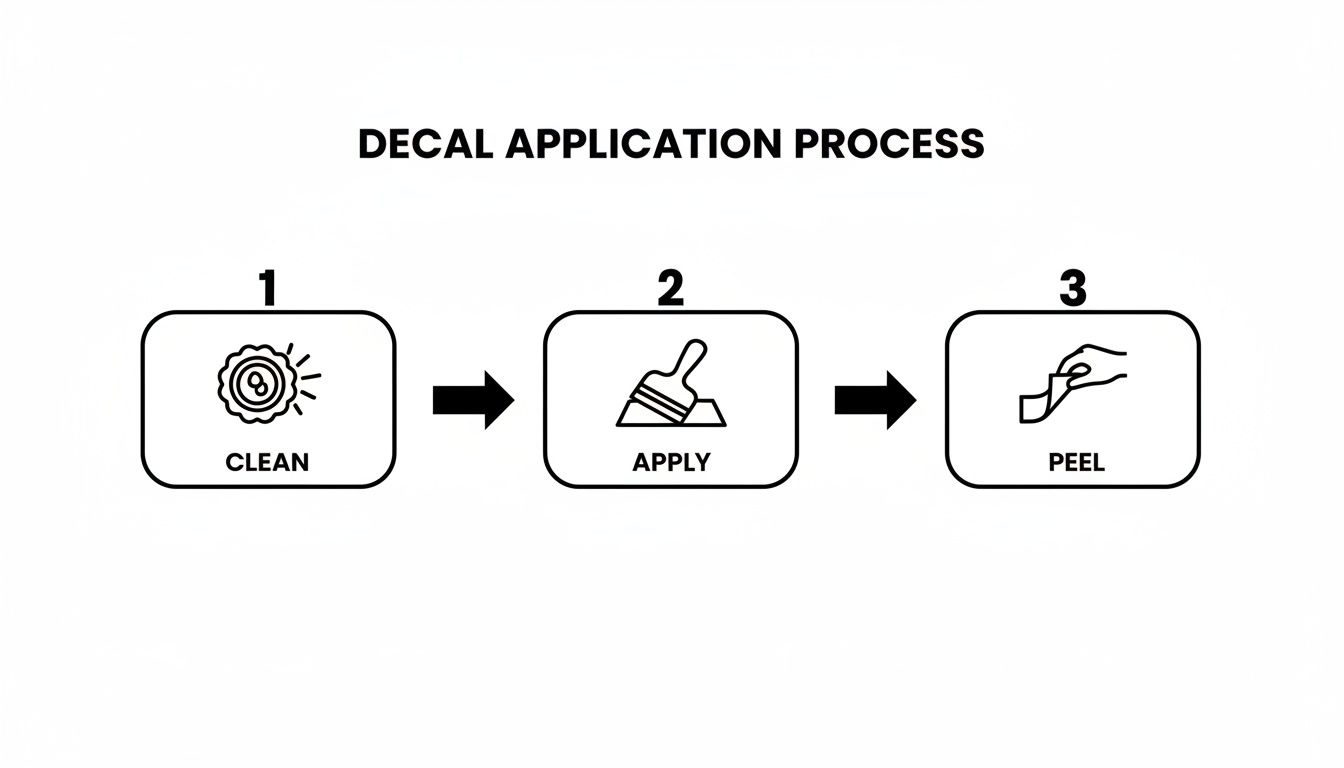
As you can see, starting with a clean surface is the key to a professional finish that lasts for years.
Can I Put My Decal Through a Car Wash?
Go right ahead. Our vinyl decals are tough enough to handle automatic car washes without a problem. That said, for the best long-term results, try to avoid aiming high-pressure water streams directly at the decal's edges, as that can cause lifting over time. Regular washing is perfectly fine and helps keep your tribute looking sharp.
A common misconception is that all "stickers" are the same. In reality, a premium vinyl decal is a high-performance graphic designed for automotive use, unlike a standard bumper sticker which may degrade in just a few months.
Can I Customize a Decal with a Name or Dates?
Of course. Personalization is what makes a decal a truly meaningful tribute. Many of our designs can be customized with a sailor's name, rank, ship, or years of service. This is how you turn a general symbol of Navy pride into a specific honor for an individual’s unique journey and commitment.
What Is the Best Temperature for Application?
For the best results, you'll want to apply your decal when the surface temperature is between 50°F and 90°F (10°C and 32°C). If it's too cold, the vinyl can become brittle and the adhesive won't bond properly. On the other hand, applying it in direct, hot sunlight can make the adhesive overly sticky and tough to handle. A nice, temperate day in the shade is perfect.
Ready to display your pride with a lasting tribute? Custom Sticker Shop is a veteran-friendly, family-run business that has delivered over one million American-made decals. Explore our collection and take advantage of our Buy 2 Get 1 Free offer at https://customstickershop.us.